WEEKLY MARKET MAYHEM🔥
For this week's market mayhem, here’s what we got for you today:
Together, they’re forming what looks like an emerging majority for a cut at the final meeting of the year.
The Dollar Doesn’t Care… Yet 💵
Here’s where things get weird:
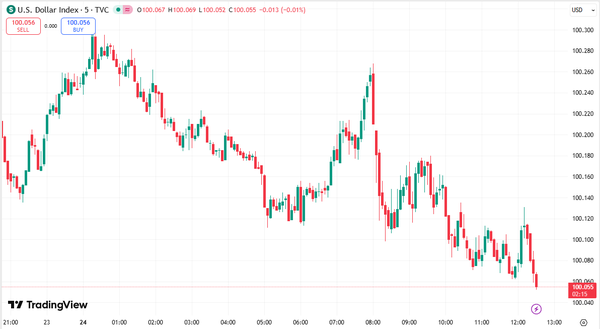
Despite rising odds of a December cut, the dollar ended the week stronger.
Why? Because markets aren’t obsessing over the next 30 days — they’re zooming out to the entire rate-path.
Investors know that:
- December’s cut doesn’t matter as much as
- how far the Fed goes in 2025, and
- whether the new projections show a deeper easing cycle.
That’s why analysts say the December meeting might look calm on the surface… but could still drop some heavy market-moving fireworks through updated dot plots and new economic projections.
Why Fed Politics Are Also Shaking the Outlook 🏛️
As if rate-cut drama wasn’t enough, Trump’s friction with the Fed is adding extra heat.
His plans to nominate Stephen Miran to the Board of Governors signal a shift toward more dovish, politically aligned leadership — meaning 2025’s Fed could look very different from today’s.
This is why traders are laser-focused on Bowman’s comments. She’s not just disagreeing on timing, she’s framing a bigger narrative:
Cut now, or risk cutting a lot more later.
Labor Market Weakening Faster Than Expected
Bowman highlighted a stat that got markets' attention:
• Job growth over the past 3 months: only 35,000 per month
That’s a dramatic slowdown, pushing rate-cut expectations above 98% for September, according to market pricing.
And while inflation isn’t fully cooperative, Bowman emphasized that tariff-related price spikes are temporary, meaning the Fed shouldn’t panic about those readings.
In other words:
Inflation noise can be ignored, labor deterioration cannot.
Expect:
- A softer dollar into year-end,
- Higher volatility around the December dot plot, and
- A greater likelihood that 2025 becomes a multi-cut cycle, not a one-and-done.
Traders should watch the September meeting closely, but the real market-moving moment may come from December’s updated economic projections.
The crypto market just got a harsh wake-up call. After months of excitement, institutional inflows, and “we’re so back” energy, the Bitcoin ETF machine has suddenly slammed into reverse.
And not just a tap on the brakes — more like someone yanked the handbrake at full speed.
Investors have pulled $3.5 billion from Bitcoin ETFs this month, putting November on track to become the worst outflow month in ETF history since the products launched nearly two years ago.
Let’s break down the mess.
A Historic Flood of Outflows
Spot Bitcoin ETFs were the golden child of crypto for nearly a year. They were the reason every chart suddenly looked vertical, the reason Wall Street rediscovered Bitcoin, and the reason BlackRock became crypto’s unofficial mascot.
But now?
IBIT alone — BlackRock’s giant — has bled $2.2 billion in November.
That’s nearly 60% of all ETF outflows.
This isn’t profit-taking.
This isn’t a “healthy correction.”
This is institutional exhaustion.
Bitcoin’s price action confirms it. The crypto king sank to $80,553, clawing back to the mid-$80Ks over the weekend, still down for the month and barely holding its 2024 gains.
The Vicious Cycle: ETF Outflows Make Drops Even Worse 🔄💣
Here’s the dangerous part:
When ETFs bleed, Bitcoin bleeds.
When Bitcoin bleeds, ETFs bleed more.
Citi Research quantified it:
Every $1B in ETF outflows = roughly a 3.4% drop in Bitcoin price.
And the reverse is true as well.
This feedback loop explains why Bitcoin hasn’t been able to recover despite favorable macro winds earlier this year.
With nearly $3.5B pulled and counting, Citi analysts even floated a bearish year-end target of $82,000 assuming inflows don’t return.
Right now?
They’re not returning.
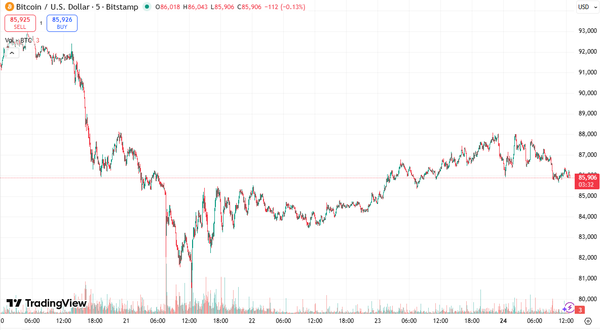
BTC/USD 5-day Chart as of November 24th, 2025 (Source: TradingView)
Why the Selling Flooded In
It’s not one reason — it’s a cocktail:
- Hotter inflation data pushed back rate-cut hopes
- Growing doubts about crypto valuations
- Hedge funds unwinding basis trades
- ETF users taking advantage of volatility to offset derivatives positions
- Gold rally stealing some of Bitcoin’s shine
Even with ETF trading volumes hitting a record $11.5 billion on Friday, the big takeaway wasn’t excitement…
It was fear.
Large volumes + large outflows =
Institutional buyers stepping back.
- AI plays
- Robotics
- Quantum Tech
- High-beta momentum stocks
- Meme names