What's up traders, Ezekiel here! Let's get straight into it, your quick market breakdown covering what's happening right now, why you should care, and how to navigate it like a seasoned trader:
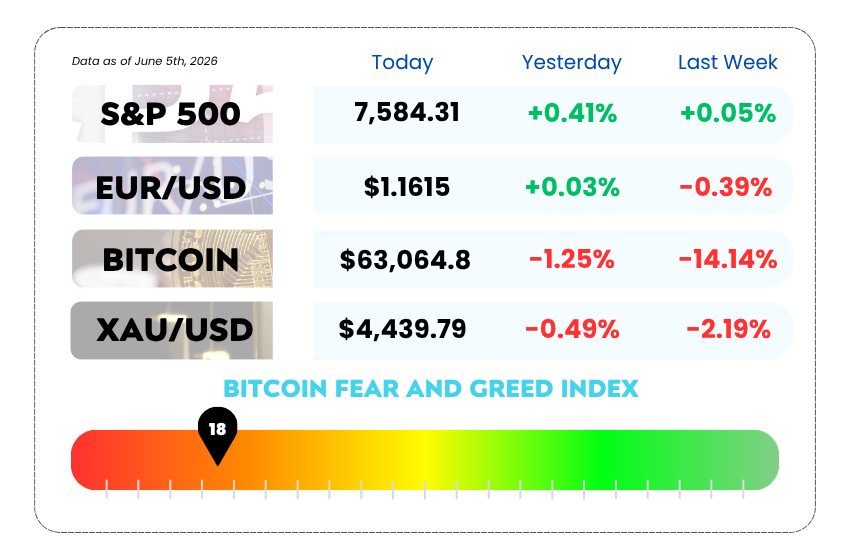
- Today's market mayhem. S&P 500, EUR/USD, Bitcoin, and XAU/USD today
- Alphabet just announced the largest tech equity raise in history, $85 billion to build AI infrastructure, with Berkshire Hathaway writing a $10 billion check
- Bitcoin flash-crashed below $68,000 after Michael Saylor's Strategy sold BTC for the first time in over three years, triggering $1.23 billion in liquidations
- Most traders think they have a strategy problem, but what they really have is a timing, location, and phase problem. Our latest video breaks down how to fix all three
WEEKLY MARKET MAYHEM🔥
For this week's market mayhem, here’s what we got for you today:

Alphabet Just Raised $85 Billion Because Apparently AI Infrastructure Costs More Than a Space Program
GM. ☕ Asia Forex Mentor here, where we thought $75 billion capex was wild until Google said “hold my server rack.”
If you want a single number that tells you where the global economy is headed, here it is: $84.75 billion. That's how much Alphabet, Google's parent company, just raised in what is now the largest tech equity offering in history. And they originally planned to raise $80 billion, then upsized it because demand was so strong. 🤯
The breakdown is staggering. $30 billion in underwritten public stock offerings. A $40 billion at-the-market program that will sell shares over time starting Q3 2026. And a $10 billion private placement from none other than Berkshire Hathaway, Warren Buffett's legendary conglomerate that has been quietly building its Alphabet position since Q3 2025.
Why does Google need this much money? Because, according to the company, demand for its AI products is literally exceeding available compute supply. Alphabet told investors its 2026 capital expenditure will hit $180-190 billion, and 2027 will be “significantly higher.” That's not a typo. One company is spending nearly $200 billion a year on infrastructure.
Markets loved it, mostly. The S&P 500 closed above 7,600 for the first time ever, hitting a new all-time record. AI infrastructure plays like Broadcom, Marvell, and chipmakers surged. But Alphabet's own stock actually dropped on the dilution concerns, because selling $85 billion worth of your own shares tends to weigh on the price per share.
Meanwhile, the JOLTS data showed job openings jumped 4.6% in April to 7.6 million, the highest in nearly two years. Strong labor market + sticky inflation + record AI spending = a Fed that has zero reason to cut rates anytime soon. In fact, traders are now pricing in a potential rate hike at the June meeting.
The AI arms race has officially gone nuclear. Goldman Sachs estimates that US tech giants will spend $800 billion combined on AI-related capital investment in 2026. As one analyst put it: “Under-investing in AI is an existential risk. Over-investing is merely expensive.”
🤔 Asia Forex Mentor Insights
For traders, this story is about capital flows and sector rotation. Money is flooding into AI infrastructure at the expense of everything else, including crypto, small caps, and traditional value plays. This is why the S&P 500 keeps hitting records while Bitcoin keeps making new lows. It's not that the economy is healthy across the board, it's that AI is vacuuming up all the capital in the room.
For forex traders, the strong JOLTS data reinforces USD strength. EUR/USD is stuck around 1.165 because the ECB is hiking into a slowdown while the Fed stays hawkish into strong data. The yield differential favors the dollar until something breaks. Watch the June 10-11 FOMC meeting for the next major directional move.
Michael Saylor Sold Bitcoin. The Market Had a Meltdown. Here's Why 32 BTC Shook $1.23 Billion Loose.
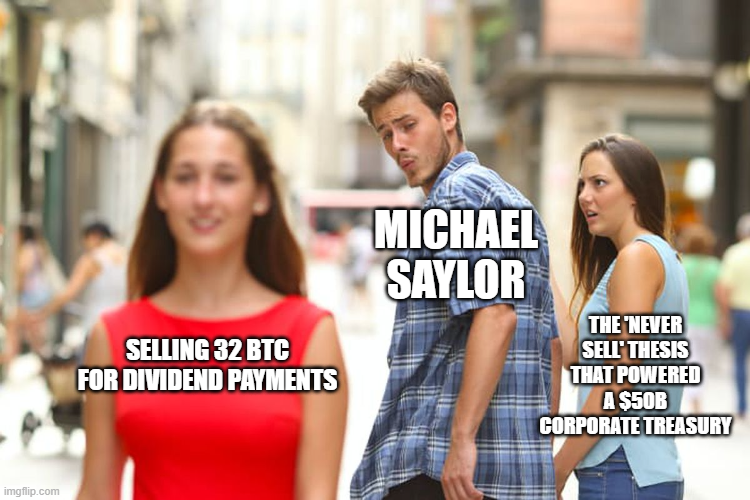
On Sunday, Strategy (formerly MicroStrategy, Michael Saylor's company) disclosed that it had sold 32 Bitcoin for $2.5 million to cover dividend obligations on its preferred stock. That's it. Thirty-two coins. Out of the roughly 555,000 BTC the company holds. Statistically, it's a rounding error. 📊
But psychologically? It was a nuclear bomb.
Saylor spent years building the most aggressive corporate Bitcoin accumulation strategy in history. His entire brand was built on one message: buy Bitcoin, never sell, stack forever. This was Strategy's first BTC sale in over three years, since December 2022. The symbolism was devastating.
Bitcoin plunged from $71,765 to $67,895 on Tuesday, a 5% drop that triggered $1.23 billion in crypto liquidations across the market. Nearly $394 million was wiped out in just one hour. Long positions accounted for roughly $700 million of the total losses.
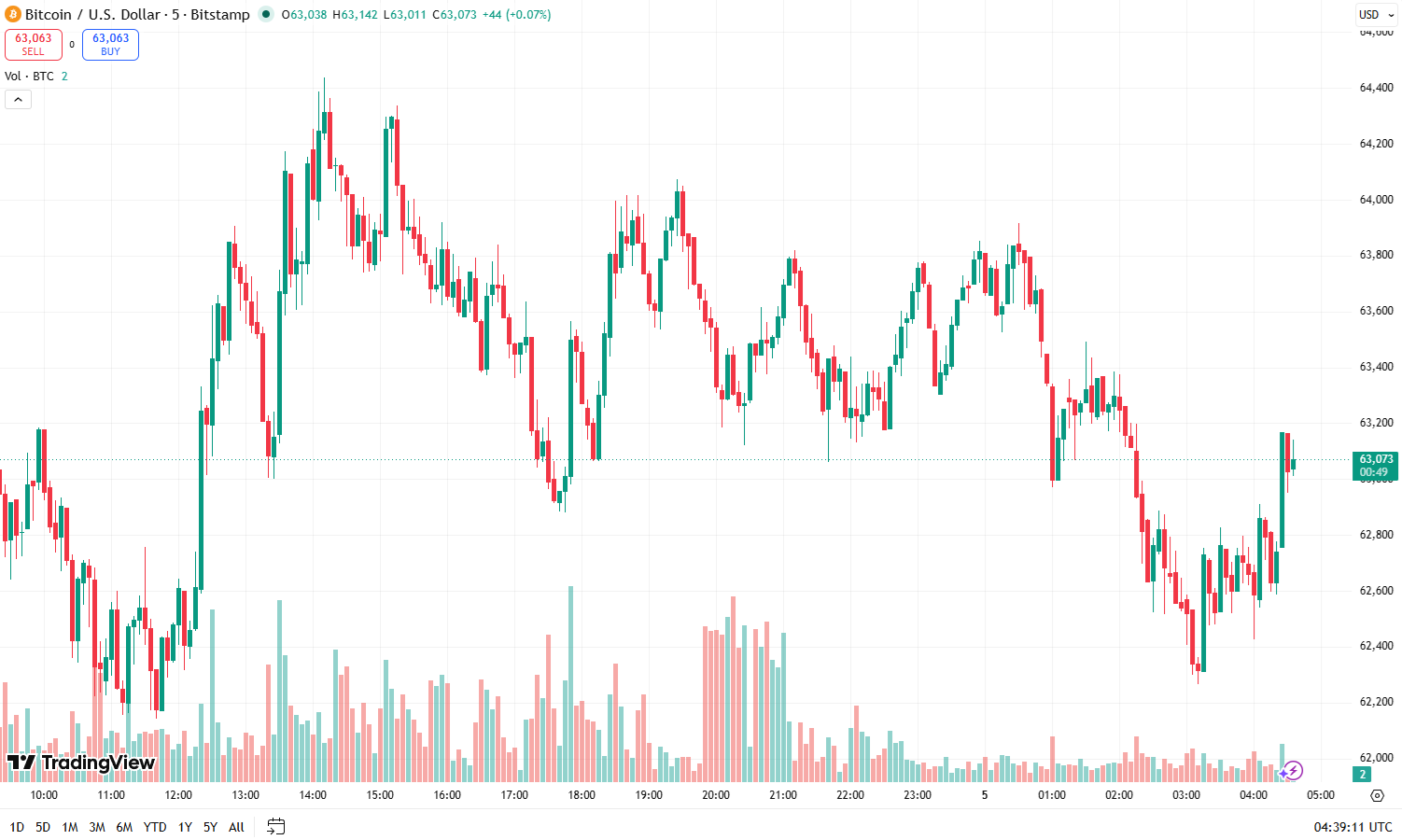
BTC/USD 1-Day Chart as of June 5th, 2026 GMT+8 (Source: TradingView)
And it didn't stop there. The selloff pushed Bitcoin through several critical on-chain support levels. According to Glassnode, BTC breached the short-term holder cost basis at $76,900, the true market mean at $78,000, and the active investors' mean at $85,100. All of these levels are now overhead resistance, meaning buyers who entered during the 2025 rally are now underwater and likely to sell into any bounce.
The ETF bleeding continued too. Spot Bitcoin ETFs have now recorded 11 consecutive trading days of net outflows. May's total outflows hit $2.3 billion, the largest monthly exit of 2026. The irony? Bitcoin only fell 3.7% in May, but institutions pulled out at a rate 10x larger than February's $206 million exit, when BTC dropped nearly 15%.
Crypto analyst Lark Davis identified six factors crushing Bitcoin: ETF outflows, Strategy's sale, Mt. Gox distributions, capital rotating into AI stocks, a technical breakdown, and the four-year cycle peaking. His sharpest observation? Bitcoin is now decoupling from tech stocks in the wrong direction. The Nasdaq is at record highs. Bitcoin is at multi-month lows. The “Bitcoin is a leveraged tech bet” thesis is dying in real time.
🤔 Asia Forex Mentor Insights
This is where most retail traders make their biggest mistake: they look at the size of the event (32 BTC) instead of the signal it sends. The Saylor sale wasn't about the $2.5 million. It was about the market discovering that even the most committed Bitcoin holder will sell when cash flow demands it. That narrative shift is worth billions in lost confidence.
The $65,000 level is now the critical support. If BTC loses that, options market structure suggests a self-reinforcing selloff into the $58,000-$60,000 range due to negative gamma positioning among dealers. On the upside, BTC needs to reclaim $73,900 (the 0.236 Fibonacci level) on a three-day close to neutralize the bearish setup.
For forex and equities traders watching from the sidelines: this is exactly why we focus on reading market structure, not chasing narratives. A $2.5 million sale shouldn't collapse a $1.3 trillion market. But when positioning is crowded and sentiment is fragile, even a small catalyst can trigger an outsized move. That's the lesson.
MEMES OF THE DAY 🤣
When “diamond hands” meets “preferred stock obligations”

May this energy not find me 💀