Traders, let’s get into it. Ezekiel here with a clear and quick market breakdown—what’s happening right now, why it matters, and how to position yourself wisely.
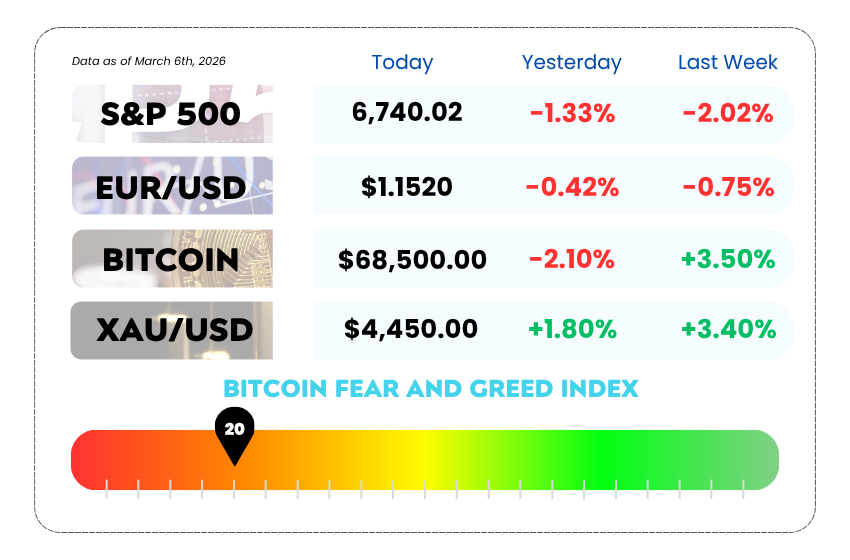
- Today's market mayhem. S&P 500, EUR/USD, Bitcoin, and XAU/USD today
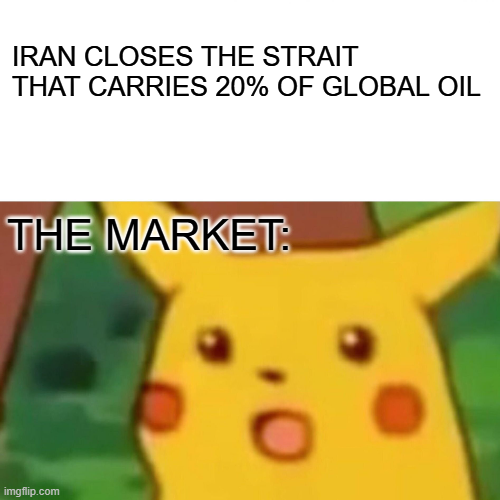
- The Strait of Hormuz just closed, oil surged 13% in a week, and 20% of the world's crude supply is now trapped
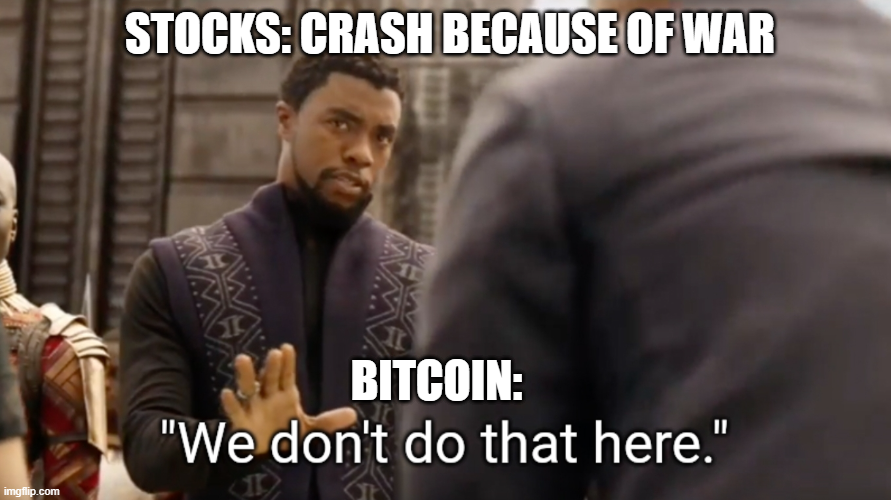
- Bitcoin just spiked above $70K while stocks crashed, and the safe-haven debate is back on the table
- Most traders use the Supertrend indicator like a traffic light, we show you the right way to use it in our video
WEEKLY MARKET MAYHEM🔥
For this week's market mayhem, here’s what we got for you today:

Iran Just Closed The World's Most Important Waterway And Week One Was Only The Beginning 🛢️
If you're wondering why every market on the planet moved violently this week, the answer is five words: the Strait of Hormuz is closed.
Let's rewind. On February 28, the U.S. and Israel launched strikes on Iran's energy infrastructure, officially starting the conflict. Six days later, on March 4, Iran closed the Strait of Hormuz to commercial traffic. That narrow waterway between Iran and Oman carries roughly 20% of the world's crude oil and a massive chunk of global LNG exports. When it shuts down, the entire global energy system starts breaking.
And break it did.
Brent crude surged 10-13% in the first few days to around $80-82 per barrel, then kept climbing. By Friday it briefly touched levels near $95 before pulling back slightly. The initial surge was one of the biggest weekly oil moves since the Russia-Ukraine war 📈

QatarEnergy declared force majeure on all its export contracts because LNG tankers literally cannot leave the Gulf. Internal sources say they may need to shut down gas liquefaction entirely, and restarting it would take weeks. Qatar is one of the world's largest LNG exporters, and this declaration sent shockwaves through global gas markets immediately.
The S&P 500 dropped 2.02% on the week to 6,740, its biggest weekly decline in months. Friday alone saw a 1.33% drop. The index is now firmly below its January highs and the selling pressure is accelerating as traders realize this conflict may not resolve quickly.
To make things even more complicated, the U.S. Treasury granted India a temporary 30-day emergency waiver on March 6, allowing India to purchase stranded Russian oil cargoes to stabilize domestic fuel prices. That tells you exactly how serious the global supply picture has become when the U.S. government is issuing emergency waivers to keep allied economies functioning.
The EUR/USD dropped 0.75% on the week as the dollar strengthened on safe-haven flows. Gold surged over 3% as investors scrambled for protection. The playbook is textbook war-risk: sell stocks, buy dollars, buy gold, and pray for a resolution.
🤔 Asia Forex Mentor Insights
This is Day 6 of the biggest oil supply disruption since the 1970s, and the market is still in the early stages of pricing it in. For forex traders, the dollar strength trade is just getting started. As long as Hormuz stays closed, safe-haven demand will support the greenback against virtually everything, especially currencies of energy-importing economies like EUR, JPY, and INR. For equity traders, the S&P 500's 2% weekly decline may seem manageable, but the risk is clearly skewed to the downside. If oil continues surging and the conflict escalates, we could be looking at a much deeper correction.
The key trigger to watch is any signal of ceasefire negotiations. Without that, the selling pressure likely continues into next week. Position sizes should be smaller than usual, stops should be tighter, and chasing moves in either direction is extremely risky in this kind of headline-driven environment.
Bitcoin Spiked Above $70K While Stocks Crashed, And The Safe-Haven Debate Just Got Very Interesting 🟠
Something weird happened this week. The kind of weird that makes you rethink assumptions.
Stocks cratered. The S&P 500 dropped 2% on the week. Oil surged. Safe-haven assets like gold and the dollar went up. That's the playbook everyone expected.
But then Bitcoin crossed $70,000 on Wednesday, marking its first time above that level in more than two weeks. BTC surged nearly 5% in a single session to $71,399, right as the geopolitical crisis was hitting its most intense point.

That's not how this is supposed to work. In previous crises, Bitcoin has consistently traded like a high-beta risk asset, falling harder and faster than stocks when fear spikes. But this time, investors are flocking to crypto amid the intensifying conflict, and spot Bitcoin ETFs are seeing major inflows.
The activity has revived questions of whether Bitcoin might actually serve as a decentralized safe haven of sorts, particularly as an alternative to more traditional assets like gold. Some analysts argue that in a world where governments are weaponizing currencies, seizing assets, and closing trade routes, a decentralized, censorship-resistant asset starts looking more attractive to a certain class of investor.
Now, let's be realistic. Bitcoin is still down more than 44% from its October 2025 all-time high of $126,080. One good week does not make a safe-haven asset. The Fear & Greed Index is still sitting at 20 (Extreme Fear), which means the broader crypto market is still terrified. And by Friday, BTC had pulled back from its $71K spike to around $68,500, giving back some of the gains as the euphoria faded.
But here's why this matters: even a partial decoupling from equities would be a massive narrative shift for Bitcoin. If institutional investors start viewing BTC as an uncorrelated asset rather than just “tech stocks on steroids,” it fundamentally changes how capital flows into crypto during risk-off events.
The ETF infrastructure is already in place. BlackRock's iShares Bitcoin Trust, Fidelity's FBTC, and a dozen other spot Bitcoin ETFs are making it easier than ever for traditional investors to gain exposure. And if those products start seeing consistent inflows during geopolitical crises, the safe-haven thesis goes from theory to reality.
For now, it's too early to declare the decoupling official. But this week gave us the first real data point suggesting Bitcoin might not just be “another risk asset” forever.
🤔 Asia Forex Mentor Insights
Bitcoin's behavior this week is worth watching closely, but not worth betting on yet. One week of outperformance during a crisis does not confirm a new regime. The safer approach is to monitor whether BTC can hold above $68,000 to $70,000 while equities continue to fall. If that divergence persists over the next two to three weeks, the decoupling narrative gains real credibility.
For traders, the $70,000 level is the key battleground. A sustained break above it with continued ETF inflows would signal genuine institutional demand during risk-off conditions. A failure to hold and a slide back toward $65,000 would confirm that Bitcoin is still trading as a risk asset, just with a lag. The Extreme Fear reading is a long-term contrarian signal, but in the short term, this market is being driven by war headlines, not fundamentals. Manage your risk accordingly.

MEMES OF THE DAY 🤣
When you follow the hype without doing your research

Scared to check my portfolio 😰