What’s up, traders? Ezekiel here. In this quick update, we’ll cover the latest market moves, why they matter, and how to navigate them with a sharper edge.
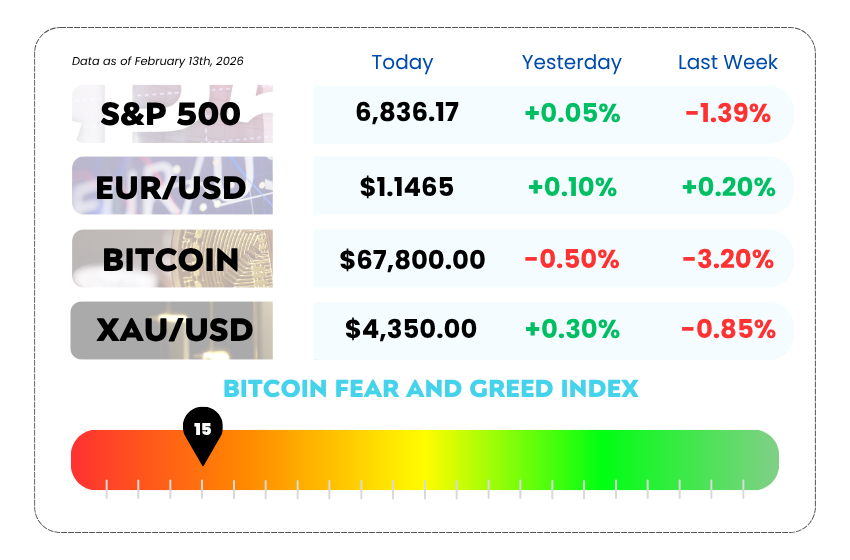
- Today's market mayhem. S&P 500, EUR/USD, Bitcoin, and XAU/USD today
- CPI came in cooler than expected at 2.4%, but the market barely flinched because AI disruption fears are swallowing everything
- Bitcoin is trapped between $64K and $71K after January's 30% crash, and the bounce is running out of steam
- Normal candles lie to you, we show you how Heiken Ashi reveals what's really happening in our video
WEEKLY MARKET MAYHEM🔥
For this week's market mayhem, here’s what we got for you today:

CPI Came In Cool, But The Market Doesn't Care Because AI Is Eating Everything Alive 📊🤖
Friday should have been a good day. The January CPI came in at 2.4% year-over-year, below the 2.5% expected, bringing inflation back to its lowest level since May 2025. Core CPI landed at 2.5%, right in line with forecasts. Rent, the single biggest component of CPI, rose just 0.1%, the smallest monthly increase since January 2021. Egg prices fell 7%. Energy dipped 1.5%.
This is objectively good inflation data. The kind of print that should have sent stocks higher and rate-cut expectations surging.
Instead, the S&P 500 gained a grand total of 0.05%. The Nasdaq actually fell 0.22%. The market looked at the best inflation print in nine months, shrugged, and went back to panicking about something else entirely.
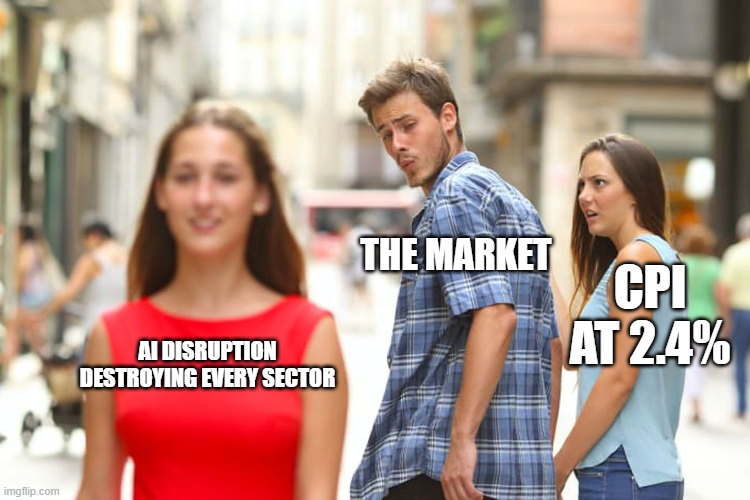
That something else is artificial intelligence, and the fear that it's about to eat entire industries alive.
This week, AI disruption fears spread beyond software and into real estate, trucking, and financial services. The damage was brutal: Charles Schwab dropped 10.8% on the week. Morgan Stanley fell 4.9%. Workday cratered 11%. The iShares Expanded Tech-Software ETF (IGV) had one of its worst weeks of the year.
The Dow had just crossed 50,000 for the first time ever the week before, and it was supposed to be a moment of celebration. Instead, the index has given back most of those gains as investors ask the question nobody wants to answer: if AI can replace financial advisors, software engineers, and trucking logistics, who exactly benefits besides the companies building the AI?
One portfolio manager put it perfectly: “How do we think that everyone was going to win and there wouldn't be a loser?” AI isn't just creating winners anymore, it's actively creating losers, and the market is rapidly repricing which companies fall on which side.
The Fed is widely expected to stay on hold until at least June after three rate cuts in late 2025 brought the benchmark to 3.50-3.75%. Today's cooler CPI print supports eventual cuts, but the Fed faces a strange new reality where inflation is falling partly because AI is putting downward pressure on wages and prices while simultaneously destroying demand in certain sectors.
🤔 Asia Forex Mentor Insights
The CPI print was objectively positive, but the market's inability to rally on good data is a warning sign. When good news can't produce a green day, it means the dominant narrative, in this case AI disruption, is overpowering fundamentals. For forex traders, the cooler CPI is mildly bearish for the dollar since it supports eventual rate cuts, but the effect is minimal as long as the Fed stays on hold. EUR/USD may drift slightly higher if European data stabilizes.
For equity traders, the AI rotation trade is the most important theme right now. Money is flowing out of companies perceived as AI losers (software, financial services, traditional tech) and into AI infrastructure plays. If you're holding positions in the software space, the risk is clearly elevated until the market gets more clarity on which business models survive.
Bitcoin Is Trapped In No-Man's-Land After January's 30% Crash, And The Bounce Is Running Out Of Gas ⛽📉
Let's catch up on what happened to Bitcoin, because the last few weeks have been violent.
BTC started 2026 above $93,000. Then, in late January, the floor fell out. Bitcoin crashed roughly 30% in a matter of days, briefly touching the $60,000 level before bouncing. The crash wiped approximately $450 billion from crypto's total market cap and sent the Fear & Greed Index plunging into single digits.
Since then, Bitcoin has been stuck in a frustrating $64,000 to $71,000 range, unable to reclaim its pre-crash levels but also refusing to break to new lows. As of Friday, BTC is sitting around $67,800, slowly drifting lower after a midweek bounce failed to hold above $68,000.
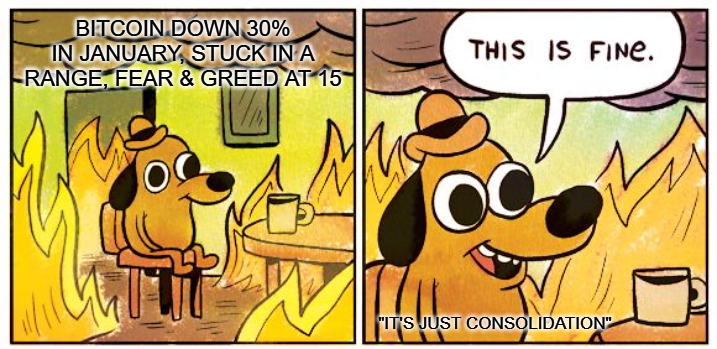
The Fear & Greed Index is at 15 (Extreme Fear), which tells you exactly how much confidence the market has right now. Spoiler: none.
The interesting thing is that today's cooler CPI data should have been bullish for Bitcoin. Lower inflation = more room for rate cuts = more liquidity = good for risk assets. But BTC barely reacted, gaining and then losing 0.5% in a session that went nowhere. When good macro data can't move Bitcoin, it means sentiment is broken and the market needs something bigger than an inflation print to change the mood.
The AI narrative that's crushing software stocks is actually creating a weird dynamic in crypto. On one hand, AI tokens like Render, Bittensor, and Internet Computer are outperforming as money rotates into anything with an AI label. On the other hand, Bitcoin miners that pivoted to AI infrastructure, companies like IREN, Core Scientific, and TeraWulf, are getting hit alongside the broader software selloff. The lines between crypto and AI are getting blurry, and not always in a good way.
From a structural perspective, Bitcoin is 44% below its October 2025 all-time high of $126,080. That's a deep correction by any measure, but not unprecedented in crypto cycles. The question traders are wrestling with is simple: is this the accumulation zone before the next leg higher, or the first floor of a multi-story building that's about to collapse?
Nobody has the answer yet. And that uncertainty is exactly why the Fear & Greed Index is where it is.
🤔 Asia Forex Mentor Insights
Bitcoin's range-bound behavior between $64,000 and $71,000 is a consolidation pattern that will resolve with a breakout in one direction. For traders, the key is not to predict which way it breaks, but to be ready for either outcome. A sustained move above $71,000 with volume would confirm the recovery is real and open the door toward $75,000-$78,000. A breakdown below $64,000 would target the January low near $60,000 and potentially lower.
The Extreme Fear reading at 15 is historically a zone where long-term accumulation has paid off, but the short-term environment is treacherous. Today's CPI print removes one headwind (inflation fear) but doesn't create a new catalyst. Bitcoin needs either a genuine macro shift, an ETF flow surge, or a sentiment reset to break out of this range. Until then, smaller position sizes and wider stops are the smart approach.
MEMES OF THE DAY 🤣
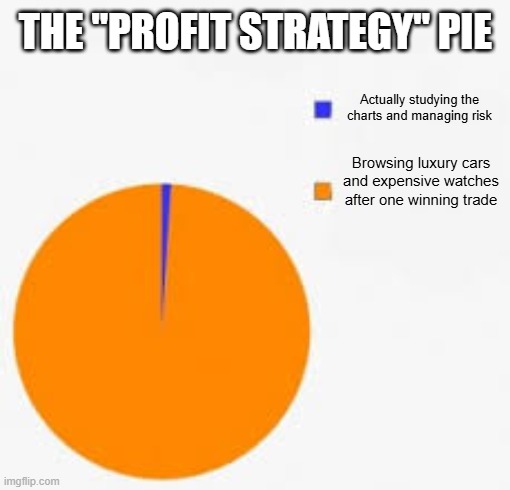
Success is 1% effort and 99% imagination

When support holds