Learn To Trade Forex • Best Forex Trading Course • AsiaForexMentor

The 25 Best Stock Brokers in Singapore in 2025: Your Complete Guide

Written by

Ezekiel Chew

Updated on

January 20, 2025

i

The 25 Best Stock Brokers in Singapore in 2025: Your Complete Guide

Overall Trust Index

Written by:

Last updated on:

January 20, 2025

Choosing the right stock broker in SG stocks can make or break your investment journey. In Singapore, a financial hub teeming with opportunities, selecting a top-tier broker ensures you get access to competitive fees, cutting-edge trading platforms, and excellent customer service in trading CFDs. Did you know that over 50% of investors in Singapore rely on brokers with a strong digital presence and trade value? Let’s dive into the best stock brokers in Singapore for 2025 and help you make an informed decision!


What Makes a Great Stock Broker in Singapore?


Key Features to Look For:

A great stock trading broker offers user-friendly trading platforms, responsive customer service, competitive fees, and a affordable brokerage account. Platforms should provide real-time data, intuitive interfaces, and analytical tools, while affordable fees and clear structures optimize investor returns.

Importance of Regulatory Compliance

Choose brokers regulated by the Monetary Authority of Singapore (MAS) for security and trust. MAS-regulated brokers adhere to strict guidelines in Singapore exchange and stock market, protecting client funds and ensuring fair practices in the financial market.

Tailoring Broker Services

Select a broker that aligns with your investment style, whether you’re a long-term investor or an active trader. Consider features like research tools, market access, and account types to match your financial goals, platform fees and trading preferences in the international markets.


#1: ABC Securities
What is ABC Securities?

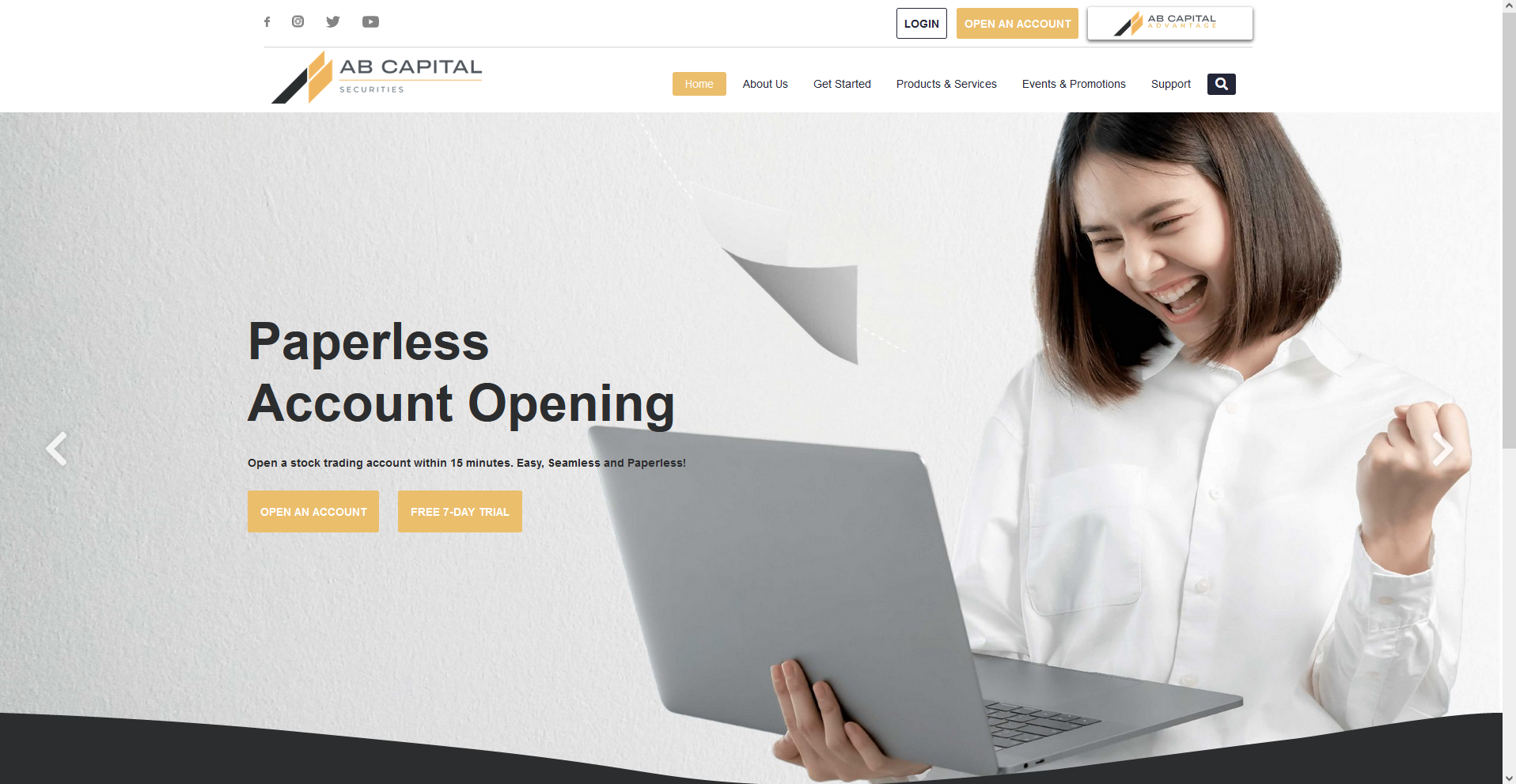
AB Capital Securities, Inc. (ABCSI) is one of the Philippines' oldest stock brokerage firms, with over 65 years of industry experience. It offers both institutional and retail clients services such as investment advice, efficient execution, and reliable customer support. ABCSI is recognized for its compliance, having received the “Full Compliance” citation from the Capital Markets Integrity Corporation (CMIC) for 22 consecutive years.

Advantages and Disadvantages of ABC Securities

  Advantages
  Disadvantage
  • Experienced brokerage firm
  • Comprehensive research reports
  • User-friendly online trading platform
  • Strong compliance record
  • Limited physical branch locations
  • Potential fees for certain services
  • Possible delays during high traffic periods
  • Limited international market access

ABC Securities Commissions and Fees

ABCSI offers a free 7-day trial for new users to experience their online trading platform. While specific commission rates and fees are not detailed in the provided information, clients are encouraged to contact their customer service for comprehensive details. The firm emphasizes transparent pricing and competitive rates to ensure client satisfaction.

OPEN AN ACCOUNT NOW WITH ABC SECURITIES AND GET YOUR WELCOME BONUS

#2: Moomoo
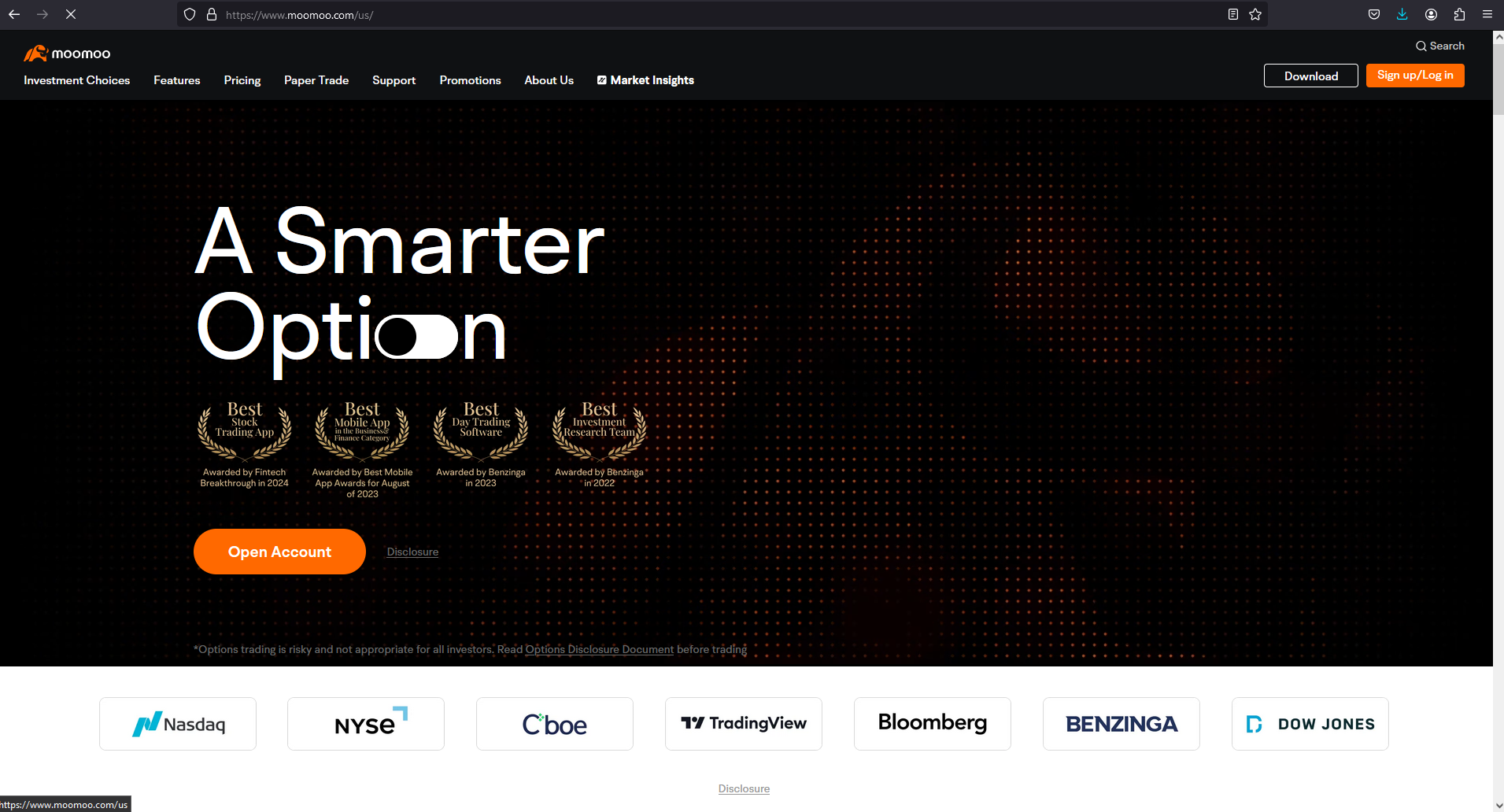
What is Moomoo?

Moomoo is a stock trading platform offering advanced tools and real-time data for investors. It provides commission-free trading for U.S. stocks, ETFs, and options, making it accessible to beginners and experienced traders. The platform is known for its robust research features, paper trading, and intuitive interface. Moomoo supports traders with an AI-powered news feed and technical analysis tools.

Advantages and Disadvantages of Moomoo

  Advantages
  Disadvantage
  • Commission-free
  • Advanced analytics
  • Real-time data
  • Intuitive interface
  • Limited asset types
  • No cryptocurrency
  • Geographic restrictions
  • No retirement accounts

Moomoo Commissions and Fees

Moomoo offers commission-free trading on U.S. stocks, ETFs, and options, appealing to cost-conscious investors. However, additional fees may apply for advanced market data and certain international trades. The platform has no minimum deposit requirements, ensuring accessibility for all traders. Transparent pricing and a focus on affordability make Moomoo a popular choice for diverse trading needs.

OPEN AN ACCOUNT NOW WITH MOOMOO AND GET YOUR WELCOME BONUS

#3: DELFT Investments
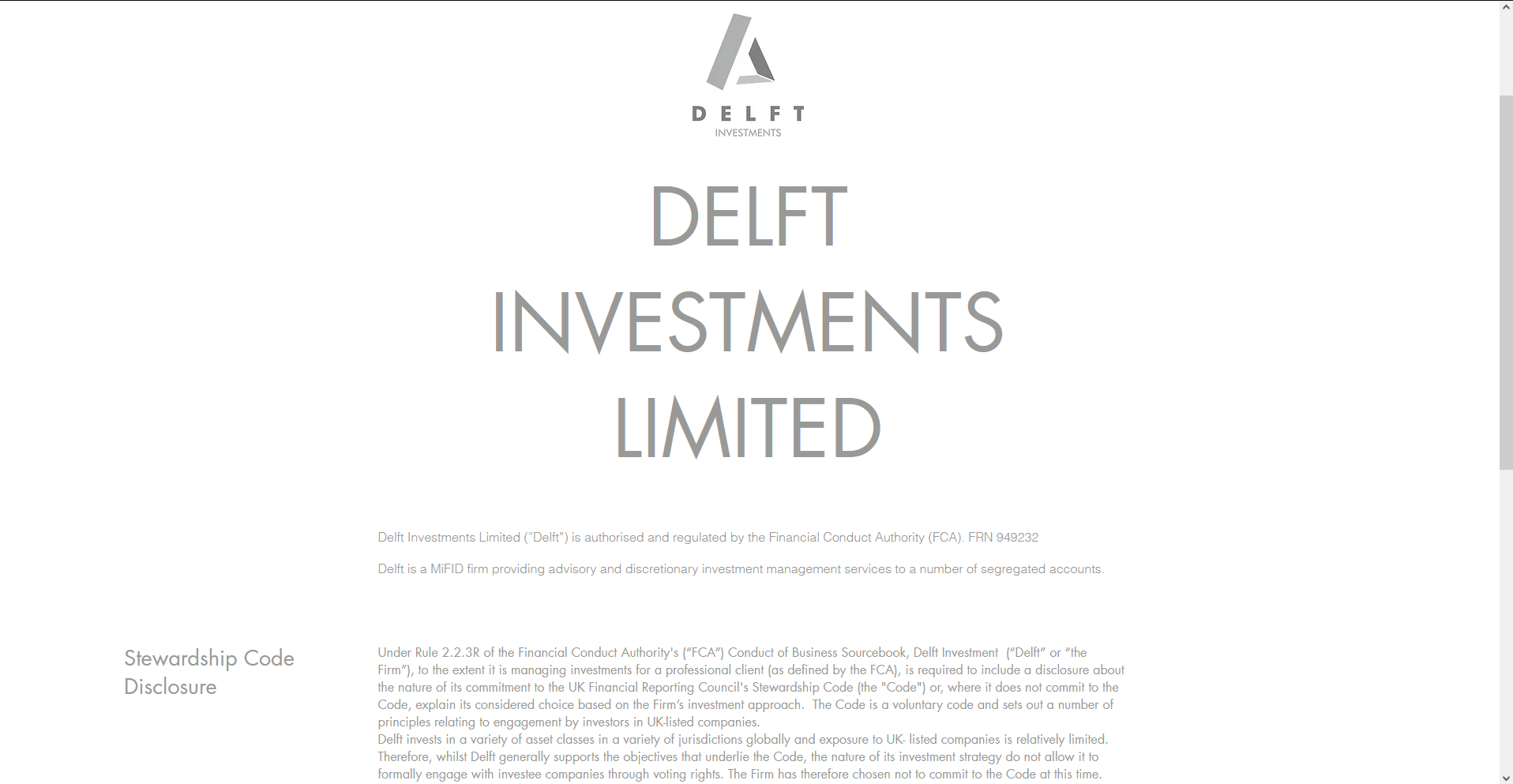
What is DELFT Investments?

DELFT Investments Limited is a private limited company based in London, United Kingdom, specializing in fund management activities. Incorporated on October 15, 2020, under company number 12952526, its registered office is located at 6-7 Hamilton Close, London, NW8 8QY. The company was previously known as DELFT Capital Limited until November 12, 2021.

Advantages and Disadvantages of DELFT Investments

  Advantages
  Disadvantage
  • Expertise
  • Location
  • Specialization
  • Experience
  • Limited information
  • New establishment
  • Small team
  • Niche focus

DELFT Investments Commissions and Fees

Specific details regarding commissions and fees for DELFT Investments Limited are not publicly disclosed. Clients are advised to contact the company directly to obtain comprehensive information about their fee structures and any associated costs. Engaging directly with the firm will provide potential clients with the most accurate and up-to-date details regarding their financial commitments.

OPEN AN ACCOUNT NOW WITH DELFT INVESTMENTS AND GET YOUR WELCOME BONUS

#4: GHI Markets
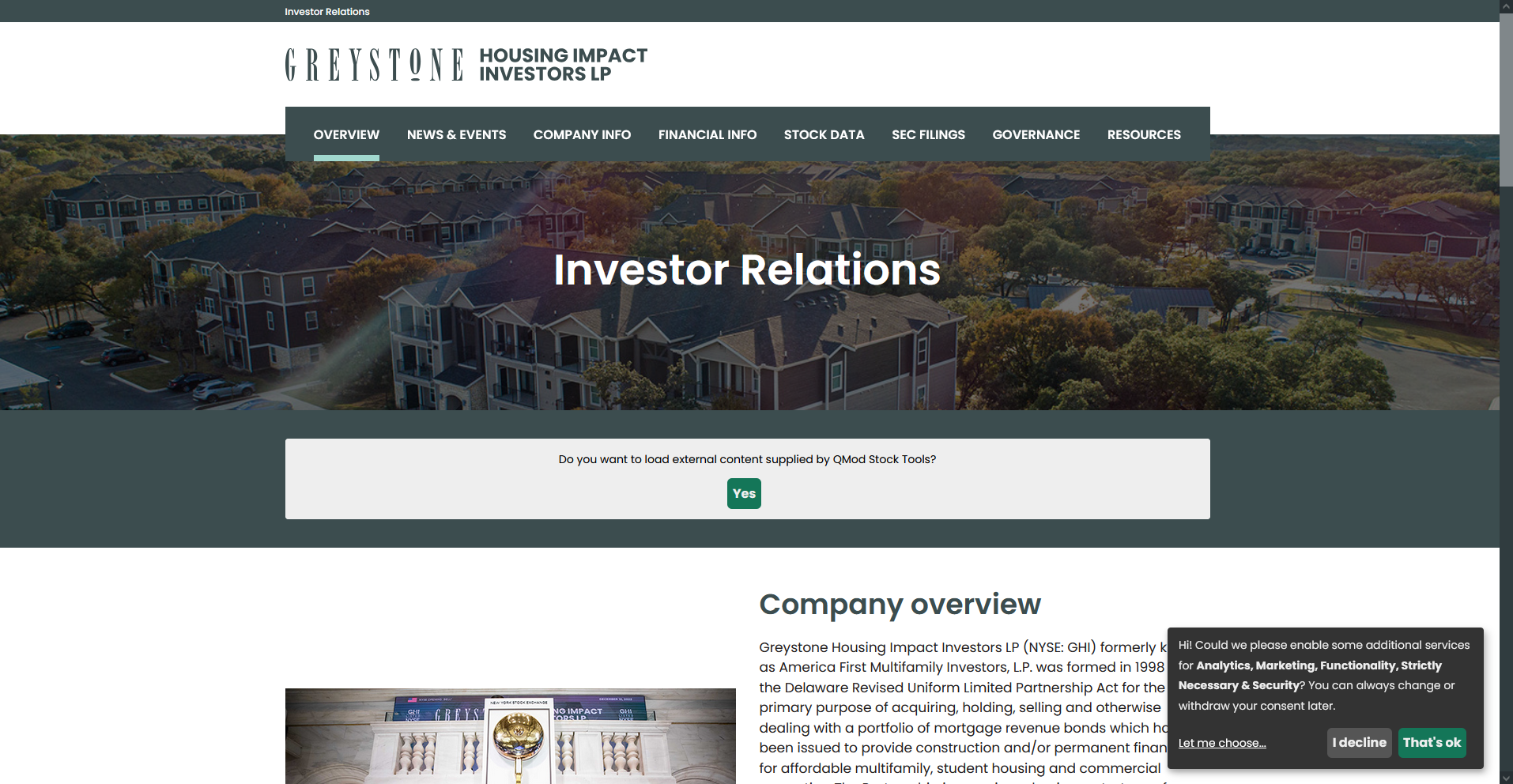
What is GHI Markets?

Greystone Housing Impact Investors LP (GHI) is a company that acquires and manages a portfolio of mortgage revenue bonds (MRBs) to finance multifamily, student, and senior housing, as well as skilled nursing and commercial properties across the United States. Operating through segments like Affordable Multifamily MRB Investments and Market-Rate Joint Venture Investments, GHI plays a significant role in the housing finance sector. The company was formerly known as America First Multifamily Investors, L.P. before rebranding to its current name in December 2022.

Advantages and Disadvantages of GHI Markets

  Advantages
  Disadvantage
  • High Dividend Yield
  • Tax-Advantaged Income
  • Diverse Portfolio
  • Experienced Management
  • Market Volatility
  • Interest Rate Sensitivity
  • Regulatory Risks
  • Limited Liquidity

GHI Markets Commissions and Fees

Investing in GHI involves understanding the commissions and fees associated with brokerage services. Many brokers now offer commission-free trading for U.S.-listed stocks and ETFs, but other fees may still apply. For instance, brokers might charge for trades made by phone, for stocks trading on over-the-counter (OTC) markets, or for options and mutual fund transactions not on a no-transaction-fee list. Additionally, fees such as inactivity fees, subscription fees, and expense ratios for mutual funds or ETFs can impact overall investment returns.

OPEN AN ACCOUNT NOW WITH GHI MARKETS AND GET YOUR WELCOME BONUS

#5: JKL Brokerage
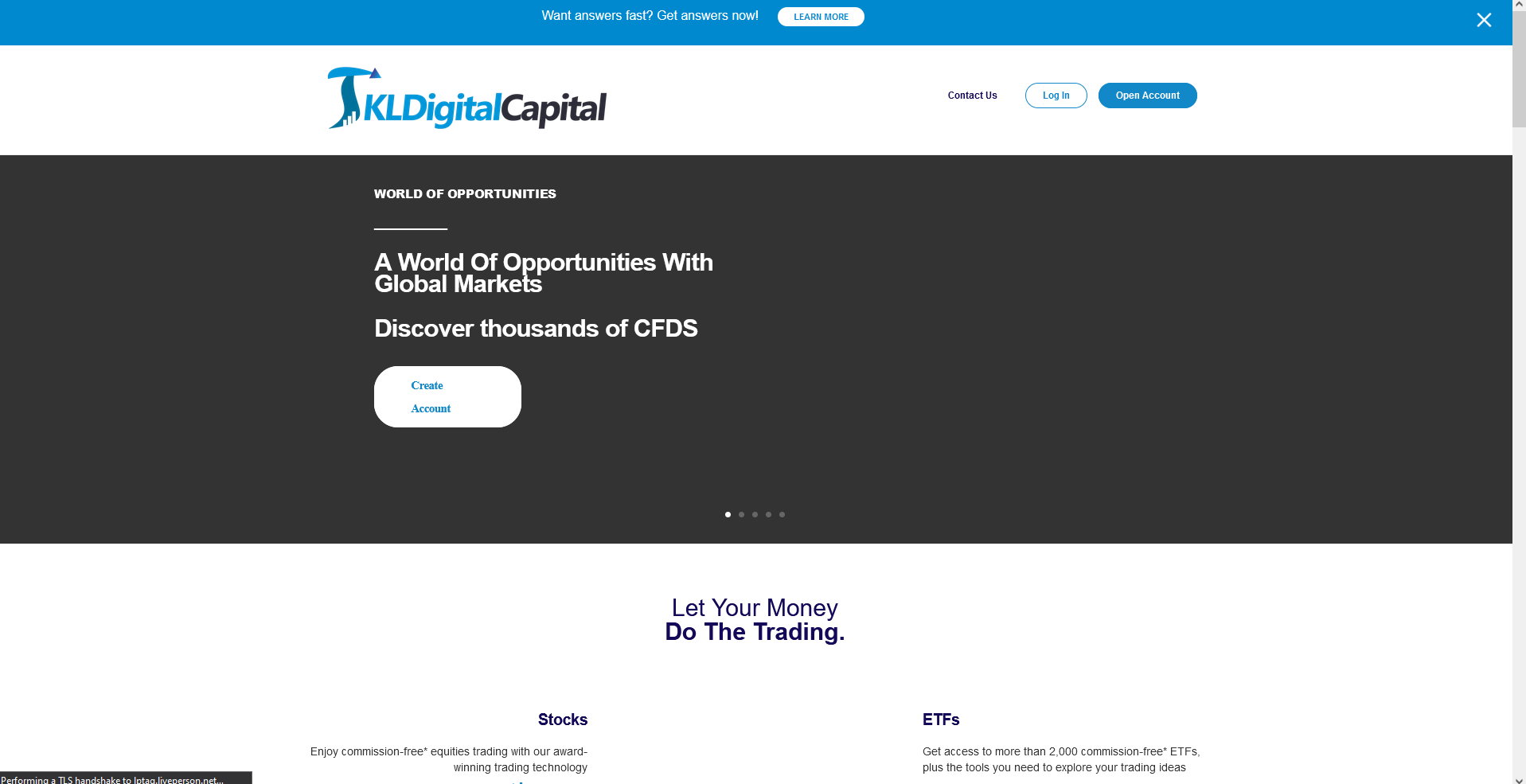
What is JKL Brokerage?

JKL Brokerage is a financial services firm offering a comprehensive suite of online trading and brokerage services. It provides self-directed investors access to a variety of financial instruments, including stocks, ETFs, options, futures, and cryptocurrencies. The firm emphasizes advanced trading technology, aiming to empower traders to achieve their financial objectives.

Advantages and Disadvantages of JKL Brokerage

  Advantages
  Disadvantage
  • Commission-free trades
  • Advanced platforms
  • Diverse product offerings
  • Educational resources
  • Inactivity fees
  • Complex fee structure
  • Limited customer support
  • Geographical restrictions

JKL Brokerage Commissions and Fees

JKL Brokerage offers commission-free trading for equities, with certain conditions. For trades exceeding 10,000 shares, a fee of $0.005 per share applies to the excess shares. Options trades incur a fee as low as $0.50 per contract, while futures contracts are charged at $0.85 per contract per side. Additional fees may apply for services like direct routing and market data subscriptions.

OPEN AN ACCOUNT NOW WITH JKL BROKERAGE AND GET YOUR WELCOME BONUS


Rank Name Description
6 Interactive Brokers Interactive Brokers is a leading stock broker in Singapore, offering award-winning platforms rated #1 for professional and international trading by StockBrokers.com 2025, Nerdwallet, Barron's 2023, and Investopedia 2024. Key features include low commissions with no added spreads, ticket charges, platform fees, or account minimums; zero-commission trades for US stocks and ETFs; margin rates up to 46% lower than industry; high interest up to USD 3.37% on cash; and extra income on lendable shares. Services encompass global access to 160 markets across 36 countries in 28 currencies, trading stocks, options, futures, currencies, bonds, and funds via unified platforms. Advantages feature powerful trading tools, 100+ order types, free research from 200+ providers, comprehensive reporting, and strong security with $19.5B equity capital and excess regulatory capital.
7 Tiger Brokers Tiger Brokers is a licensed stock broker in Singapore, regulated by the Monetary Authority of Singapore (MAS) and a Trading and Clearing Member of the SGX Group. It offers a next-generation trading app, Tiger Trade, enabling access to global markets including US, SGX, HK stocks, A-shares, and more. Key services include trading in stocks, ETFs, REITs, DLCs, warrants with fractional shares and IPO subscriptions; options with up to 4-leg strategies; futures across 100+ products; and over 1,500 unit trusts with $0 sales charges and platform fees. Features encompass real-time quotes, advanced analytical tools, AI assistant (TigerAI), demo accounts, and Tiger Vault for auto-investing from USD 2. Advantages include competitive fees, SIPC protection up to $500,000 for US securities, secure asset segregation, ISO27001/27701 certifications, and 2FA security. Setup is instant with Singpass. Awards: Singapore’s Top Fintech Companies 2026, Best Brokerage for Global Trading 2025.
8 Webull Webull Singapore, a subsidiary of Nasdaq-listed Webull Corporation, is a licensed and regulated broker under the Monetary Authority of Singapore (MAS) with a CMS Licence. It offers commission-free US stock and options trading with USD 0.9 per order, 1-year 0 commission on SG stocks, REITs, DLCs, warrants, and ETFs, plus low commissions for HK and A shares. Features include access to US, SG, and HK markets, diverse products like mutual funds, ETFs, US Treasuries, and powerful tools with real-time quotes via the app. Advantages: lowest fees, intuitive charting, and a one-stop investment hub.
9 Saxo Markets Saxo Markets is a stock broker in Singapore, MAS-regulated since 2006, offering an intuitive online trading and investing platform. Key features include access to over 71,000 instruments across global markets, such as stocks from New York, Hong Kong, and London; options on stocks, indices, and futures; forex, commodities, bonds, and crypto. Services encompass low and transparent commissions, real-time news, curated investment themes, and educational resources like podcasts and webinars. Advantages include being cheaper than banks, trusted reputation as a well-capitalised A- S&P rated institution, 24/5 multilingual support, and easy account setup via Singpass with multiple funding options.
10 POEMS (Phillip Securities) POEMS (Phillip Securities) is a trusted stock broker in Singapore with over 50 years of experience, serving more than 1 million clients worldwide and managing USD 2.5 billion in shareholder funds. It offers a cutting-edge online trading platform and mobile app for trading stocks, ETFs, CFDs, bonds, unit trusts, forex, and futures across global markets, with clearing membership to 55 exchanges in 31 countries. Regulated in 15 countries, POEMS provides full-service brokerage and wealth advisory. Key features include instant account opening via MyInfo, funding within 15 minutes, and the Excess Funds Management Facility (SMART Park) for idle cash, offering annualized returns like SGD 2.6565% p.a. Advantages include secure, user-friendly tools and access to multi-asset classes.
11 DBS Vickers DBS Vickers is a leading securities and derivatives brokerage firm in Singapore, part of DBS Bank. It offers access to key global stock markets, comprehensive investment products including equities, fixed income, unit trusts, and ETFs. Key features include an award-winning team, expert insights, and services across local and global capital markets. Advantages: user-friendly online trading platform, real-time news and promotions, no minimum balance, and robust security policies. As a rich Asian heritage firm, it provides securities brokerage to individuals, corporations, and institutions, with a focus on convenience and worldwide access.
12 OCBC Securities OCBC Securities is a leading stock broker in Singapore, offering global and online trading across 15 exchanges, accessible 24/7 via in-person, phone, or digital platforms like iOCBC Online and Mobile Trading. Key features include A.I. Oscar, an AI-powered virtual assistant providing personalized stock ideas for SG, US, and HK markets based on trading history. Services encompass charting with up to 10 years of historical data, 50+ drawing tools, stock fundamentals analysis (e.g., earnings, cash-flows), real-time portfolio monitoring with auto-adjustments, and exclusive market reports. Advantages: Insights from in-house experts via videos, webinars, and updates on Spotify/YouTube; awards like Best Securities House 2023-2025 and Best Mobile Trading Platform 2022-2025.
13 UOB Kay Hian UOB Kay Hian Holdings Limited is a Singapore-based brokerage firm providing stock and futures broking, investment trading, margin financing, nominee services, research. Backed by UOB Group, it's one of Asia’s largest with 80+ branches worldwide. Key features: UTRADE platform for stocks, shares, unit trusts, CFD, Forex, fixed income; access to multiple markets and products. Advantages: seamless trading tools, technology for securities including bonds, options; committed to excellence, integrity; established since 1970 via merger history.
14 Maybank Kim Eng Maybank Kim Eng (now Maybank Securities) is a corporate finance advisory and stock brokerage firm in Singapore, founded in 1972. It offers trading in stocks, warrants, ETFs, REITs, DLCs across global markets like SGX, LSE, NYSE, HKEx. Key features: advanced trading tools, comprehensive resources, and leading service standards. Advantages: first stockbroker listed on SGX in 1990, regional ASEAN hub, innovative products combining technology and user experience. Part of Maybank Group, it provides corporate finance, debt/equity markets, derivatives, and research, serving retail and institutional clients with operations in 11 markets.
15 CIMB Securities CGS iTrade, operated by CGS International Securities (Singapore) Pte Ltd, is an online stock broker in Singapore offering share trading services. Key features include access to online tutorials, a trading platform with mobile app enhancements like stock price alerts, and support for products such as Crypto ETFs (CETF) and Singapore Depository Receipts (SDRs). Services encompass margin trading with a revised maintenance ratio of 125% (effective 13 July 2025), enabling up to 5x leverage, alongside research, account management, and customer support via phone (1800 538 9889) or email (clientservices.sg@cgsi.com). Advantages include Two-Factor Authentication (2FA) for security, auto-enrollment from 29 April 2025, and promotions for ETF trading. Relevant details cover fraud alerts, server maintenance notices, and restricted counters.
16 Lim & Tan Securities Lim & Tan Securities is a stockbroking firm established in 1973, focusing on the retail market in Singapore. It offers online and mobile trading platforms with real-time prices, technical charting, alerts, and up to 10 years of data. Key features: iPhone, Android, iPad apps, LTS Station for charting and trade history. Advantages: low brokerage fees (0.08%), interest on balances, rewards for new accounts, and over 50 years of experience as the oldest independently-owned broker on SGX. Provides portfolio management, financial planning, and advisory services.
17 KGI Securities KGI Securities (Singapore) Pte. Ltd. is a brokerage firm offering stock broking, margin financing, futures, options, derivatives, and wealth management. Part of KGI Group, it provides wealth management, brokerage, investment banking, fixed income, asset management. Key features: pioneer member of SGX and ICE Futures, institutional transactions, algorithmic orders, DMA, bonds. Advantages: robust Asia footprint in Taiwan, Hong Kong, Singapore, Indonesia, Thailand; committed to broad financial products for corporate, institutional, individual clients. Regulated, with services including structured products, funds, equities, private markets, insurance.
18 RHB Securities RHB Securities Singapore Pte. Ltd. is a brokerage firm providing stock brokerage, margin financing, custody, nominee services, capital markets, corporate finance, institutional equities. Part of RHB Group, it's a member of SGX Securities Trading and Derivatives Clearing. Key features: trading equities and futures, preferred broker for retail, institutional, corporate entities since 1986. Advantages: amalgamated status, seamless services post-acquisition by Phillip Securities in 2020. Offers comprehensive financial solutions with a focus on regional investors.
19 eToro eToro is a stock broker in Singapore offering investments in thousands of stocks and ETFs through a single app. Key features include trading with 0% conversion fees until 31 December 2025, access to 20 global stock exchanges, and portfolio management in one place. Services encompass welcome rewards up to US$2800 (including Nvidia stock and eToro Club benefits) for deposits starting at US$5,000, plus free investing courses, podcasts, and webinars via eToro Academy. Advantages include eToro Club membership with expert insights, premium content, priority support, and lounge access. Funds are held with top-tier institutions like UBS, and eToro serves over 40 million users globally since 2007 with secure practices.
20 Plus500 Plus500 is a stock broker in Singapore offering futures trading with access to instruments like S&P 500, NASDAQ 100, Bitcoin, EUR/USD, Oil, and Gold. Key features include an easy-to-use app for beginners, a demo account for practice, swift registration, low commissions with 0 platform and market data fees, and a minimum deposit of $100. Services encompass 24/7 professional support, secure segregated accounts, and educational resources via Futures Academy. Advantages stem from 20 years of U.S. experience, regulation as a CME Group and NFA member, and reliability as a London Stock Exchange-listed firm serving over 32 million customers across 60+ countries with $800+ billion traded value.
21 IG IG is a leading online stock broker in Singapore, offering two platforms for wealth-building: the IG Markets app for investing in global shares and ETFs, and the IG trading platform for CFD trading with advanced tools. Key features include trading over 17,000 markets, access to forex, shares, indices, and weekend markets, plus specialist platforms like ProRealTime and MetaTrader 4. Services encompass mobile and online trading, 24/5 support, free education via IG Academy, and leverage up to 20:1. Advantages include earning 3% annual interest on shares and ETFs, a S$218 cash bonus for new users funding S$1,000 and making 2 trades, and over 50 years of expertise serving 2 million accounts worldwide.
22 Oanda OANDA is a MAS-regulated CFD broker in Singapore with over 10 years of local service, offering market-leading spreads on forex (EUR/USD from 0.6 pips), indices, 22 metals (gold/silver in SGD), cryptos (Bitcoin, Ether), and commodities (Brent oil from 3 points). Key features include access to TradingView, MT4, web, and mobile platforms; guaranteed stop-loss orders; and premium accounts with rebates, discounted financing, and dedicated managers. Advantages: effortless account opening, award-winning support (highest client satisfaction 2021), and a referral program rewarding up to S$2,888.
23 Longbridge Longbridge is a licensed stock broker regulated by the Monetary Authority of Singapore (MAS), offering $0 commission trades for US, HK, and SG stocks with no platform fees under promotions. It provides access to a wide range of investment products, including stocks, REITs, ETFs, warrants, CBBCs, options, and mutual funds across Singapore and international markets. Key features include fast trading with minimal delays, multi-platform support on iOS, Android, Windows, and macOS, and tools like data visualization, social live trading, and industry chain insights. Advantages encompass robust security with 2FA, ISO27001/27701 certifications, segregated client assets, and quick account opening in 3 minutes via MyInfo for eligible users.
24 uSMART uSMART Securities is a smart trading platform regulated by the Hong Kong SFC (CE number: BJA907), offering easy investing in Hong Kong and US stocks, options, ETFs, mutual funds, and margin trading. Key features include $0 commission on Hong Kong stocks, lifetime $0 commission on US stocks with a US$0.99 fixed fee per trade, support for fractional shares, and one-click copy trading with potential returns up to 24%. It provides 13 advanced smart orders like grid trading and stop-loss, instant in-app currency exchange (HKD/USD/SGD/CNH), and 24/7 online customer service in multiple languages. Advantages include quick online account opening in three minutes, EDDA for instant deposits/withdrawals, direct HKEX connection, and a HKD$500,000 Investor Compensation Fund for security.
25 FSMOne FSMOne, formerly Fundsupermart, is an online brokerage platform by iFAST Corporation, offering unit trusts, stocks, ETFs, bonds, managed portfolios, insurance. Access markets in SG, US, HK, CN, MY, UK with one account. Key features: flat commission (S$8.80 SGX), 0% fees for RSP ETFs, auto-sweep cash management, research articles, UI/UX friendly. Advantages: comprehensive products, low fees, CPF/SRS investments, events, responsive support. Suitable for beginners with RSP, professional guidance, or MAPS robo-advisory. Secure, MAS-regulated, no min deposit.

How to Choose the Right Broker for You


  • Key Factors to Prioritize: Consider costs, including commissions and fees; the availability and quality of trading tools; and how well the broker's services align with your investment goals and trading style.
  • Questions to Ask When Evaluating Brokers: Inquire about the range of available financial instruments, the robustness of the trading platform, customer support quality, and the broker's regulatory status.
  • Comparing Features and Benefits: Assess each broker's offerings, such as educational resources, research tools, account types, and additional services, to determine which best suits your specific trading needs and preferences.

Also Read: The 25 Best Crypto Exchanges in Singapore in 2025


Conclusion:


Singapore offers some of the most reliable and innovative stock brokers globally, but finding the right fit requires understanding your needs, trading involves risk, and the broker's offerings. The 25 best stock brokers in Singapore for 2025 each bring unique strengths, from advanced trading platforms to competitive fees. Ready to make your move? Start with a broker that aligns with your goals and take your investments to new heights today!


FAQ


What is a stock broker in Singapore?


A stock broker acts as an intermediary facilitating the buying and selling of securities on exchanges. In Singapore, they provide access to local and international markets, offering platforms for trading stocks, bonds, and other instruments. They handle order execution, provide market data, and ensure compliance with regulations. Choosing one involves assessing fees, platform usability, and services like research tools. Investors benefit from secure transactions and educational resources to make informed decisions, ultimately aiding in portfolio management and wealth growth through diversified investments.


How do I choose the right stock broker in Singapore?


Selecting a suitable stock broker requires evaluating several factors such as trading fees, platform features, and customer support. Consider your investment style, whether you're a beginner needing educational tools or an active trader requiring advanced analytics. Check for regulatory compliance to ensure fund safety. Compare account types, minimum deposits, and access to global markets. Reading user reviews and testing demo accounts can help gauge usability. Prioritize low costs and reliable execution to align with your financial goals and risk tolerance for optimal trading experience.


What regulatory body oversees stock brokers in Singapore?


The primary regulatory authority ensures stock brokers operate transparently and protect investor interests. It enforces strict guidelines on capital requirements, client fund segregation, and fair practices. Brokers must obtain licenses and undergo regular audits to maintain compliance. This oversight minimizes risks like fraud and promotes market integrity. Investors should verify a broker's registration status before opening an account. Such regulation fosters trust, providing recourse through complaint mechanisms and compensation schemes in case of disputes or broker insolvency.


What are the common fees associated with stock trading in Singapore?


Stock trading involves various fees including commissions per trade, platform usage charges, and custody fees for holding securities. Additional costs may arise from market data subscriptions, withdrawal fees, or inactivity penalties. Margin trading incurs interest on borrowed funds, while foreign exchange conversions add currency fees. Understanding the fee structure helps in calculating net returns. Opt for transparent pricing to avoid hidden costs, and compare options to minimize expenses, ensuring they align with your trading frequency and volume for cost-effective investing.


How can I open a brokerage account in Singapore?


To open a brokerage account, start by selecting a regulated provider and completing an online application form with personal details like identification and proof of address. Submit required documents for verification, which may include income proof for certain account types. Fund the account via bank transfer or other methods. Once approved, link it to a central depository for securities holding. The process typically takes a few days, after which you can access trading platforms and begin investing in stocks and other assets.


What is the difference between full-service and discount brokers?


Full-service brokers offer comprehensive support including personalized investment advice, research reports, and portfolio management, ideal for novices or those seeking guidance. They charge higher fees for these value-added services. Discount brokers, conversely, focus on low-cost execution with basic platforms, suitable for experienced self-directed investors. They provide minimal advisory but emphasize efficiency and affordability. Your choice depends on expertise level and need for assistance versus cost savings in managing trades independently.


Can Singapore residents trade international stocks?


Yes, residents can access global markets through local brokers offering international trading. This includes stocks from major exchanges in the US, Europe, and Asia. Ensure the broker supports multi-currency accounts to handle foreign transactions efficiently. Be aware of additional fees like currency conversion and overseas brokerage charges. Diversifying internationally can enhance portfolio returns but involves risks such as exchange rate fluctuations and geopolitical factors. Always research regulations and tax implications for cross-border investments.


What is CFD trading and how does it work in Singapore?


CFD trading allows speculating on price movements of assets without owning them, using leverage to amplify positions. In Singapore, it's regulated to protect investors from excessive risks. Traders enter contracts with brokers, profiting or losing based on price differences from open to close. It covers stocks, indices, commodities, and forex. Benefits include short-selling and no stamp duty, but high leverage can lead to significant losses. Understand margin requirements and use risk management tools like stop-loss orders for safer trading.


How does margin trading function for stocks in Singapore?


Margin trading enables borrowing funds from a broker to purchase more securities than your capital allows, increasing potential returns. In Singapore, it requires a margin account with initial and maintenance margins to cover positions. Interest accrues on borrowed amounts, and brokers may issue margin calls if equity falls below thresholds. It's suitable for experienced traders but heightens risks, as losses can exceed initial investment. Always monitor positions closely and employ strategies to mitigate volatility impacts.


What are the main risks involved in stock trading?


Stock trading carries risks like market volatility, where prices fluctuate unpredictably due to economic events. Liquidity risk arises if assets can't be sold quickly without loss. Diversification helps, but systemic risks affect entire markets. Emotional decisions can lead to poor outcomes; stick to researched strategies. Leverage amplifies gains and losses. Educate yourself on these to manage exposure through stop-losses and balanced portfolios, ensuring long-term financial stability despite short-term uncertainties.


How do trading platforms assist investors in Singapore?


Trading platforms provide real-time market data, charting tools, and order execution features for efficient investing. In Singapore, they support mobile and desktop access, enabling anytime trading. Features include technical indicators, news feeds, and portfolio trackers to inform decisions. User-friendly interfaces cater to beginners, while advanced options suit professionals. Security measures like two-factor authentication protect accounts. Regular updates enhance functionality, helping users analyze trends and execute strategies effectively for better investment outcomes.


What is a Central Depository accoun,t and why is it needed?


A Central Depository account holds electronic records of securities ownership, facilitating seamless transfers without physical certificates. In Singapore, it's essential for stock trading as it centralizes custody, reducing paperwork and risks. Linking it to your brokerage account enables buying, selling, and dividend collections. It ensures accurate transaction settlements and provides statements for tax purposes. Opening one is straightforward via authorized institutions, promoting efficiency and security in the investment process.


What are the tax implications of stock trading in Singapore?


Gains from stock trading are generally not taxed as capital gains in Singapore, but frequent trading may be deemed as income, attracting taxes. Dividends from local companies are tax-exempt if from approved sources, while foreign dividends might incur withholding taxes. Deductible expenses include commissions and interest on margin loans. Keep records for potential audits. Consult professionals for personalized advice, ensuring compliance with regulations to avoid penalties and optimize after-tax returns.


How can I diversify my investment portfolio in Singapore?


Diversification involves spreading investments across asset classes like stocks, bonds, and ETFs to reduce risk. In Singapore, access local and global markets for variety in sectors and geographies. Allocate based on risk tolerance, mix growth and defensive stocks. Use index funds for broad exposure. Regularly rebalance to maintain desired ratios amid market changes. This strategy mitigates losses from single asset underperformance, aiming for stable long-term growth through informed, balanced selections.


What are ETFs and how can I trade them in Singapore?


ETFs are funds tracking indices, commodities, or baskets of assets, traded like stocks on exchanges. In Singapore, they offer low-cost diversification and liquidity. Select based on underlying assets and expense ratios. Trading involves buying/selling during market hours via brokerage platforms. Benefits include intraday pricing and tax efficiency. Monitor performance and use limit orders for control. They're ideal for passive investing, providing exposure without managing individual securities.


Are mobile trading apps secure for use in Singapore?


Mobile trading apps employ encryption, biometric authentication, and secure servers to protect user data in Singapore. Regulated platforms adhere to strict standards, including fund segregation. Features like session timeouts and alerts enhance safety. Avoid public Wi-Fi and update apps regularly to prevent vulnerabilities. While convenient for on-the-go trading, combine with strong passwords and monitoring for unauthorized access. Overall, they offer reliable security for executing trades and managing portfolios efficiently.


Why is customer support important when choosing a broker?


Effective customer support resolves queries on accounts, transactions, and technical issues promptly, enhancing trading experience. In Singapore, look for multilingual, 24/7 availability via chat, phone, or email. It aids beginners with guidance and helps during market volatility. Reliable support builds trust, ensuring quick assistance in disputes or platform glitches. Prioritize brokers with responsive teams to minimize downtime and support informed decision-making for successful investing.


What are demo accounts and their benefits for new traders?


Demo accounts simulate real trading environments using virtual funds, allowing practice without financial risk. In Singapore, they're offered to familiarize with platforms, test strategies, and understand market dynamics. Benefits include building confidence, refining skills, and evaluating broker features before committing real money. Use them to experiment with orders, analyze charts, and learn risk management. Transition to live trading once proficient, ensuring a smoother entry into actual markets.


What investment strategies are suitable for beginners in Singapore?


Beginners should start with long-term strategies like buy-and-hold, focusing on blue-chip stocks for stability. Dollar-cost averaging invests fixed amounts regularly, reducing timing risks. Emphasize research, setting clear goals and risk limits. Diversify across sectors to spread exposure. Utilize educational resources for learning fundamentals. Avoid high-risk tactics like day trading initially. Regularly review and adjust based on performance, aiming for consistent growth through disciplined, informed approaches.


How can I effectively monitor my investment portfolio?


Monitoring involves regular reviews of asset performance, using platform tools for real-time updates and alerts. In Singapore, track metrics like returns, volatility, and diversification. Set benchmarks against indices and rebalance periodically to align with goals. Analyze news impacts and economic indicators. Maintain records for tax and strategy evaluation. This proactive approach identifies issues early, enabling adjustments for optimized outcomes and sustained financial health.

About Ezekiel Chew​

Ezekiel Chew, founder and head of training at Asia Forex Mentor, is a renowned forex expert, frequently invited to speak at major industry events. Known for his deep market insights, Ezekiel is one of the top traders committed to supporting the trading community. Making six figures per trade, he also trains traders working in banks, fund management, and prop trading firms.

Best Forex Trading Courses and Formations In New Zealand - AFM

Best Forex Trading Courses and Formations In New Zealand

Finding a quality forex trading course in New Zealand can make the difference between profitable trading and costly mistakes. Whether you’re new to currency markets or looking to sharpen your strategy, the right training program provides structured learning, risk management techniques, and proven methods to trade forex, stocks, and crypto

Read More
Best Forex Trading Courses and Formations in Australia - AFM

Best Forex Trading Courses and Formations in Australia

Finding a quality forex trading course in Australia can make the difference between losing money and building a sustainable trading income. Whether you’re starting fresh or looking to refine your strategies, learning professional trading methodologies with experienced mentors helps you avoid common mistakes that cost most retail traders their capital.

Read More
Best Forex Trading Courses and Formations In Hong Kong - AFM

Best Forex Trading Courses and Formations in Hong Kong

Finding a quality forex trading course in Hong Kong can transform your financial future, giving you the skills to trade profitably in one of the world’s leading financial hubs. Whether you’re a complete beginner or an experienced trader looking to refine your strategy, choosing the right program makes all the

Read More

Forex Trade Update After a 950% Crazy Growth Month

  What if one forex trade could change the way anyone sees the foreign exchange market? Many retail traders open a forex trading account with big expectations, yet face early setbacks. The constant movement of currency prices in the major currency pairs, like EUR USD or the Japanese yen, creates

Read More

Crypto Tax Cut in Japan Could Spark a New Trading Wave

Crypto traders in Japan just got a fresh reason to review their portfolios and call their accountant. Regulators are now exploring a major change in how crypto is treated, and that could transform trading. The shift could affect everyone holding digital coins in the country, especially those watching for clearer

Read More

What Just Sent Gold Prices Racing Again?

Gold price jumped strongly before the government shutdown, and even though it ended, the rally is not fading yet today. Analysts say strong investment demand mixed with steady uncertainty could keep pushing gold higher for the next several months ahead. Gold reached record levels this year, climbing to $4,360 on

Read More

The 25 Best Stock Brokers in Singapore in 2025: Your Complete Guide

4.0
Overall Trust Index

Written by:

Updated:

January 20, 2025
Choosing the right stock broker in SG stocks can make or break your investment journey. In Singapore, a financial hub teeming with opportunities, selecting a top-tier broker ensures you get access to competitive fees, cutting-edge trading platforms, and excellent customer service in trading CFDs. Did you know that over 50% of investors in Singapore rely on brokers with a strong digital presence and trade value? Let’s dive into the best stock brokers in Singapore for 2025 and help you make an informed decision!  

What Makes a Great Stock Broker in Singapore?


Key Features to Look For:

A great stock trading broker offers user-friendly trading platforms, responsive customer service, competitive fees, and a affordable brokerage account. Platforms should provide real-time data, intuitive interfaces, and analytical tools, while affordable fees and clear structures optimize investor returns.

Importance of Regulatory Compliance

Choose brokers regulated by the Monetary Authority of Singapore (MAS) for security and trust. MAS-regulated brokers adhere to strict guidelines in Singapore exchange and stock market, protecting client funds and ensuring fair practices in the financial market.

Tailoring Broker Services

Select a broker that aligns with your investment style, whether you’re a long-term investor or an active trader. Consider features like research tools, market access, and account types to match your financial goals, platform fees and trading preferences in the international markets.  

#1: ABC Securities

What is ABC Securities?

AB Capital Securities, Inc. (ABCSI) is one of the Philippines' oldest stock brokerage firms, with over 65 years of industry experience. It offers both institutional and retail clients services such as investment advice, efficient execution, and reliable customer support. ABCSI is recognized for its compliance, having received the "Full Compliance" citation from the Capital Markets Integrity Corporation (CMIC) for 22 consecutive years.

Advantages and Disadvantages of ABC Securities

  Advantages
  Disadvantage
  • Experienced brokerage firm
  • Comprehensive research reports
  • User-friendly online trading platform
  • Strong compliance record
  • Limited physical branch locations
  • Potential fees for certain services
  • Possible delays during high traffic periods
  • Limited international market access

ABC Securities Commissions and Fees

ABCSI offers a free 7-day trial for new users to experience their online trading platform. While specific commission rates and fees are not detailed in the provided information, clients are encouraged to contact their customer service for comprehensive details. The firm emphasizes transparent pricing and competitive rates to ensure client satisfaction.

OPEN AN ACCOUNT NOW WITH ABC SECURITIES AND GET YOUR WELCOME BONUS

#2: Moomoo

What is Moomoo?

Moomoo is a stock trading platform offering advanced tools and real-time data for investors. It provides commission-free trading for U.S. stocks, ETFs, and options, making it accessible to beginners and experienced traders. The platform is known for its robust research features, paper trading, and intuitive interface. Moomoo supports traders with an AI-powered news feed and technical analysis tools.

Advantages and Disadvantages of Moomoo

  Advantages
  Disadvantage
  • Commission-free
  • Advanced analytics
  • Real-time data
  • Intuitive interface
  • Limited asset types
  • No cryptocurrency
  • Geographic restrictions
  • No retirement accounts

Moomoo Commissions and Fees

Moomoo offers commission-free trading on U.S. stocks, ETFs, and options, appealing to cost-conscious investors. However, additional fees may apply for advanced market data and certain international trades. The platform has no minimum deposit requirements, ensuring accessibility for all traders. Transparent pricing and a focus on affordability make Moomoo a popular choice for diverse trading needs.

OPEN AN ACCOUNT NOW WITH MOOMOO AND GET YOUR WELCOME BONUS

#3: DELFT Investments

What is DELFT Investments?

DELFT Investments Limited is a private limited company based in London, United Kingdom, specializing in fund management activities. Incorporated on October 15, 2020, under company number 12952526, its registered office is located at 6-7 Hamilton Close, London, NW8 8QY. The company was previously known as DELFT Capital Limited until November 12, 2021.

Advantages and Disadvantages of DELFT Investments

  Advantages
  Disadvantage
  • Expertise
  • Location
  • Specialization
  • Experience
  • Limited information
  • New establishment
  • Small team
  • Niche focus

DELFT Investments Commissions and Fees

Specific details regarding commissions and fees for DELFT Investments Limited are not publicly disclosed. Clients are advised to contact the company directly to obtain comprehensive information about their fee structures and any associated costs. Engaging directly with the firm will provide potential clients with the most accurate and up-to-date details regarding their financial commitments.

OPEN AN ACCOUNT NOW WITH DELFT INVESTMENTS AND GET YOUR WELCOME BONUS

#4: GHI Markets

What is GHI Markets?

Greystone Housing Impact Investors LP (GHI) is a company that acquires and manages a portfolio of mortgage revenue bonds (MRBs) to finance multifamily, student, and senior housing, as well as skilled nursing and commercial properties across the United States. Operating through segments like Affordable Multifamily MRB Investments and Market-Rate Joint Venture Investments, GHI plays a significant role in the housing finance sector. The company was formerly known as America First Multifamily Investors, L.P. before rebranding to its current name in December 2022.

Advantages and Disadvantages of GHI Markets

  Advantages
  Disadvantage
  • High Dividend Yield
  • Tax-Advantaged Income
  • Diverse Portfolio
  • Experienced Management
  • Market Volatility
  • Interest Rate Sensitivity
  • Regulatory Risks
  • Limited Liquidity

GHI Markets Commissions and Fees

Investing in GHI involves understanding the commissions and fees associated with brokerage services. Many brokers now offer commission-free trading for U.S.-listed stocks and ETFs, but other fees may still apply. For instance, brokers might charge for trades made by phone, for stocks trading on over-the-counter (OTC) markets, or for options and mutual fund transactions not on a no-transaction-fee list. Additionally, fees such as inactivity fees, subscription fees, and expense ratios for mutual funds or ETFs can impact overall investment returns.

OPEN AN ACCOUNT NOW WITH GHI MARKETS AND GET YOUR WELCOME BONUS

#5: JKL Brokerage

What is JKL Brokerage?

JKL Brokerage is a financial services firm offering a comprehensive suite of online trading and brokerage services. It provides self-directed investors access to a variety of financial instruments, including stocks, ETFs, options, futures, and cryptocurrencies. The firm emphasizes advanced trading technology, aiming to empower traders to achieve their financial objectives.

Advantages and Disadvantages of JKL Brokerage

  Advantages
  Disadvantage
  • Commission-free trades
  • Advanced platforms
  • Diverse product offerings
  • Educational resources
  • Inactivity fees
  • Complex fee structure
  • Limited customer support
  • Geographical restrictions

JKL Brokerage Commissions and Fees

JKL Brokerage offers commission-free trading for equities, with certain conditions. For trades exceeding 10,000 shares, a fee of $0.005 per share applies to the excess shares. Options trades incur a fee as low as $0.50 per contract, while futures contracts are charged at $0.85 per contract per side. Additional fees may apply for services like direct routing and market data subscriptions.

OPEN AN ACCOUNT NOW WITH JKL BROKERAGE AND GET YOUR WELCOME BONUS

 
Rank Name Description
6 Interactive Brokers Interactive Brokers is a leading stock broker in Singapore, offering award-winning platforms rated #1 for professional and international trading by StockBrokers.com 2025, Nerdwallet, Barron's 2023, and Investopedia 2024. Key features include low commissions with no added spreads, ticket charges, platform fees, or account minimums; zero-commission trades for US stocks and ETFs; margin rates up to 46% lower than industry; high interest up to USD 3.37% on cash; and extra income on lendable shares. Services encompass global access to 160 markets across 36 countries in 28 currencies, trading stocks, options, futures, currencies, bonds, and funds via unified platforms. Advantages feature powerful trading tools, 100+ order types, free research from 200+ providers, comprehensive reporting, and strong security with $19.5B equity capital and excess regulatory capital.
7 Tiger Brokers Tiger Brokers is a licensed stock broker in Singapore, regulated by the Monetary Authority of Singapore (MAS) and a Trading and Clearing Member of the SGX Group. It offers a next-generation trading app, Tiger Trade, enabling access to global markets including US, SGX, HK stocks, A-shares, and more. Key services include trading in stocks, ETFs, REITs, DLCs, warrants with fractional shares and IPO subscriptions; options with up to 4-leg strategies; futures across 100+ products; and over 1,500 unit trusts with $0 sales charges and platform fees. Features encompass real-time quotes, advanced analytical tools, AI assistant (TigerAI), demo accounts, and Tiger Vault for auto-investing from USD 2. Advantages include competitive fees, SIPC protection up to $500,000 for US securities, secure asset segregation, ISO27001/27701 certifications, and 2FA security. Setup is instant with Singpass. Awards: Singapore’s Top Fintech Companies 2026, Best Brokerage for Global Trading 2025.
8 Webull Webull Singapore, a subsidiary of Nasdaq-listed Webull Corporation, is a licensed and regulated broker under the Monetary Authority of Singapore (MAS) with a CMS Licence. It offers commission-free US stock and options trading with USD 0.9 per order, 1-year 0 commission on SG stocks, REITs, DLCs, warrants, and ETFs, plus low commissions for HK and A shares. Features include access to US, SG, and HK markets, diverse products like mutual funds, ETFs, US Treasuries, and powerful tools with real-time quotes via the app. Advantages: lowest fees, intuitive charting, and a one-stop investment hub.
9 Saxo Markets Saxo Markets is a stock broker in Singapore, MAS-regulated since 2006, offering an intuitive online trading and investing platform. Key features include access to over 71,000 instruments across global markets, such as stocks from New York, Hong Kong, and London; options on stocks, indices, and futures; forex, commodities, bonds, and crypto. Services encompass low and transparent commissions, real-time news, curated investment themes, and educational resources like podcasts and webinars. Advantages include being cheaper than banks, trusted reputation as a well-capitalised A- S&P rated institution, 24/5 multilingual support, and easy account setup via Singpass with multiple funding options.
10 POEMS (Phillip Securities) POEMS (Phillip Securities) is a trusted stock broker in Singapore with over 50 years of experience, serving more than 1 million clients worldwide and managing USD 2.5 billion in shareholder funds. It offers a cutting-edge online trading platform and mobile app for trading stocks, ETFs, CFDs, bonds, unit trusts, forex, and futures across global markets, with clearing membership to 55 exchanges in 31 countries. Regulated in 15 countries, POEMS provides full-service brokerage and wealth advisory. Key features include instant account opening via MyInfo, funding within 15 minutes, and the Excess Funds Management Facility (SMART Park) for idle cash, offering annualized returns like SGD 2.6565% p.a. Advantages include secure, user-friendly tools and access to multi-asset classes.
11 DBS Vickers DBS Vickers is a leading securities and derivatives brokerage firm in Singapore, part of DBS Bank. It offers access to key global stock markets, comprehensive investment products including equities, fixed income, unit trusts, and ETFs. Key features include an award-winning team, expert insights, and services across local and global capital markets. Advantages: user-friendly online trading platform, real-time news and promotions, no minimum balance, and robust security policies. As a rich Asian heritage firm, it provides securities brokerage to individuals, corporations, and institutions, with a focus on convenience and worldwide access.
12 OCBC Securities OCBC Securities is a leading stock broker in Singapore, offering global and online trading across 15 exchanges, accessible 24/7 via in-person, phone, or digital platforms like iOCBC Online and Mobile Trading. Key features include A.I. Oscar, an AI-powered virtual assistant providing personalized stock ideas for SG, US, and HK markets based on trading history. Services encompass charting with up to 10 years of historical data, 50+ drawing tools, stock fundamentals analysis (e.g., earnings, cash-flows), real-time portfolio monitoring with auto-adjustments, and exclusive market reports. Advantages: Insights from in-house experts via videos, webinars, and updates on Spotify/YouTube; awards like Best Securities House 2023-2025 and Best Mobile Trading Platform 2022-2025.
13 UOB Kay Hian UOB Kay Hian Holdings Limited is a Singapore-based brokerage firm providing stock and futures broking, investment trading, margin financing, nominee services, research. Backed by UOB Group, it's one of Asia’s largest with 80+ branches worldwide. Key features: UTRADE platform for stocks, shares, unit trusts, CFD, Forex, fixed income; access to multiple markets and products. Advantages: seamless trading tools, technology for securities including bonds, options; committed to excellence, integrity; established since 1970 via merger history.
14 Maybank Kim Eng Maybank Kim Eng (now Maybank Securities) is a corporate finance advisory and stock brokerage firm in Singapore, founded in 1972. It offers trading in stocks, warrants, ETFs, REITs, DLCs across global markets like SGX, LSE, NYSE, HKEx. Key features: advanced trading tools, comprehensive resources, and leading service standards. Advantages: first stockbroker listed on SGX in 1990, regional ASEAN hub, innovative products combining technology and user experience. Part of Maybank Group, it provides corporate finance, debt/equity markets, derivatives, and research, serving retail and institutional clients with operations in 11 markets.
15 CIMB Securities CGS iTrade, operated by CGS International Securities (Singapore) Pte Ltd, is an online stock broker in Singapore offering share trading services. Key features include access to online tutorials, a trading platform with mobile app enhancements like stock price alerts, and support for products such as Crypto ETFs (CETF) and Singapore Depository Receipts (SDRs). Services encompass margin trading with a revised maintenance ratio of 125% (effective 13 July 2025), enabling up to 5x leverage, alongside research, account management, and customer support via phone (1800 538 9889) or email (clientservices.sg@cgsi.com). Advantages include Two-Factor Authentication (2FA) for security, auto-enrollment from 29 April 2025, and promotions for ETF trading. Relevant details cover fraud alerts, server maintenance notices, and restricted counters.
16 Lim & Tan Securities Lim & Tan Securities is a stockbroking firm established in 1973, focusing on the retail market in Singapore. It offers online and mobile trading platforms with real-time prices, technical charting, alerts, and up to 10 years of data. Key features: iPhone, Android, iPad apps, LTS Station for charting and trade history. Advantages: low brokerage fees (0.08%), interest on balances, rewards for new accounts, and over 50 years of experience as the oldest independently-owned broker on SGX. Provides portfolio management, financial planning, and advisory services.
17 KGI Securities KGI Securities (Singapore) Pte. Ltd. is a brokerage firm offering stock broking, margin financing, futures, options, derivatives, and wealth management. Part of KGI Group, it provides wealth management, brokerage, investment banking, fixed income, asset management. Key features: pioneer member of SGX and ICE Futures, institutional transactions, algorithmic orders, DMA, bonds. Advantages: robust Asia footprint in Taiwan, Hong Kong, Singapore, Indonesia, Thailand; committed to broad financial products for corporate, institutional, individual clients. Regulated, with services including structured products, funds, equities, private markets, insurance.
18 RHB Securities RHB Securities Singapore Pte. Ltd. is a brokerage firm providing stock brokerage, margin financing, custody, nominee services, capital markets, corporate finance, institutional equities. Part of RHB Group, it's a member of SGX Securities Trading and Derivatives Clearing. Key features: trading equities and futures, preferred broker for retail, institutional, corporate entities since 1986. Advantages: amalgamated status, seamless services post-acquisition by Phillip Securities in 2020. Offers comprehensive financial solutions with a focus on regional investors.
19 eToro eToro is a stock broker in Singapore offering investments in thousands of stocks and ETFs through a single app. Key features include trading with 0% conversion fees until 31 December 2025, access to 20 global stock exchanges, and portfolio management in one place. Services encompass welcome rewards up to US$2800 (including Nvidia stock and eToro Club benefits) for deposits starting at US$5,000, plus free investing courses, podcasts, and webinars via eToro Academy. Advantages include eToro Club membership with expert insights, premium content, priority support, and lounge access. Funds are held with top-tier institutions like UBS, and eToro serves over 40 million users globally since 2007 with secure practices.
20 Plus500 Plus500 is a stock broker in Singapore offering futures trading with access to instruments like S&P 500, NASDAQ 100, Bitcoin, EUR/USD, Oil, and Gold. Key features include an easy-to-use app for beginners, a demo account for practice, swift registration, low commissions with 0 platform and market data fees, and a minimum deposit of $100. Services encompass 24/7 professional support, secure segregated accounts, and educational resources via Futures Academy. Advantages stem from 20 years of U.S. experience, regulation as a CME Group and NFA member, and reliability as a London Stock Exchange-listed firm serving over 32 million customers across 60+ countries with $800+ billion traded value.
21 IG IG is a leading online stock broker in Singapore, offering two platforms for wealth-building: the IG Markets app for investing in global shares and ETFs, and the IG trading platform for CFD trading with advanced tools. Key features include trading over 17,000 markets, access to forex, shares, indices, and weekend markets, plus specialist platforms like ProRealTime and MetaTrader 4. Services encompass mobile and online trading, 24/5 support, free education via IG Academy, and leverage up to 20:1. Advantages include earning 3% annual interest on shares and ETFs, a S$218 cash bonus for new users funding S$1,000 and making 2 trades, and over 50 years of expertise serving 2 million accounts worldwide.
22 Oanda OANDA is a MAS-regulated CFD broker in Singapore with over 10 years of local service, offering market-leading spreads on forex (EUR/USD from 0.6 pips), indices, 22 metals (gold/silver in SGD), cryptos (Bitcoin, Ether), and commodities (Brent oil from 3 points). Key features include access to TradingView, MT4, web, and mobile platforms; guaranteed stop-loss orders; and premium accounts with rebates, discounted financing, and dedicated managers. Advantages: effortless account opening, award-winning support (highest client satisfaction 2021), and a referral program rewarding up to S$2,888.
23 Longbridge Longbridge is a licensed stock broker regulated by the Monetary Authority of Singapore (MAS), offering $0 commission trades for US, HK, and SG stocks with no platform fees under promotions. It provides access to a wide range of investment products, including stocks, REITs, ETFs, warrants, CBBCs, options, and mutual funds across Singapore and international markets. Key features include fast trading with minimal delays, multi-platform support on iOS, Android, Windows, and macOS, and tools like data visualization, social live trading, and industry chain insights. Advantages encompass robust security with 2FA, ISO27001/27701 certifications, segregated client assets, and quick account opening in 3 minutes via MyInfo for eligible users.
24 uSMART uSMART Securities is a smart trading platform regulated by the Hong Kong SFC (CE number: BJA907), offering easy investing in Hong Kong and US stocks, options, ETFs, mutual funds, and margin trading. Key features include $0 commission on Hong Kong stocks, lifetime $0 commission on US stocks with a US$0.99 fixed fee per trade, support for fractional shares, and one-click copy trading with potential returns up to 24%. It provides 13 advanced smart orders like grid trading and stop-loss, instant in-app currency exchange (HKD/USD/SGD/CNH), and 24/7 online customer service in multiple languages. Advantages include quick online account opening in three minutes, EDDA for instant deposits/withdrawals, direct HKEX connection, and a HKD$500,000 Investor Compensation Fund for security.
25 FSMOne FSMOne, formerly Fundsupermart, is an online brokerage platform by iFAST Corporation, offering unit trusts, stocks, ETFs, bonds, managed portfolios, insurance. Access markets in SG, US, HK, CN, MY, UK with one account. Key features: flat commission (S$8.80 SGX), 0% fees for RSP ETFs, auto-sweep cash management, research articles, UI/UX friendly. Advantages: comprehensive products, low fees, CPF/SRS investments, events, responsive support. Suitable for beginners with RSP, professional guidance, or MAPS robo-advisory. Secure, MAS-regulated, no min deposit.

How to Choose the Right Broker for You

 
  • Key Factors to Prioritize: Consider costs, including commissions and fees; the availability and quality of trading tools; and how well the broker's services align with your investment goals and trading style.
  • Questions to Ask When Evaluating Brokers: Inquire about the range of available financial instruments, the robustness of the trading platform, customer support quality, and the broker's regulatory status.
  • Comparing Features and Benefits: Assess each broker's offerings, such as educational resources, research tools, account types, and additional services, to determine which best suits your specific trading needs and preferences.
Also Read: The 25 Best Crypto Exchanges in Singapore in 2025  

Conclusion:

  Singapore offers some of the most reliable and innovative stock brokers globally, but finding the right fit requires understanding your needs, trading involves risk, and the broker's offerings. The 25 best stock brokers in Singapore for 2025 each bring unique strengths, from advanced trading platforms to competitive fees. Ready to make your move? Start with a broker that aligns with your goals and take your investments to new heights today!  

FAQ


What is a stock broker in Singapore?

  A stock broker acts as an intermediary facilitating the buying and selling of securities on exchanges. In Singapore, they provide access to local and international markets, offering platforms for trading stocks, bonds, and other instruments. They handle order execution, provide market data, and ensure compliance with regulations. Choosing one involves assessing fees, platform usability, and services like research tools. Investors benefit from secure transactions and educational resources to make informed decisions, ultimately aiding in portfolio management and wealth growth through diversified investments.  

How do I choose the right stock broker in Singapore?

  Selecting a suitable stock broker requires evaluating several factors such as trading fees, platform features, and customer support. Consider your investment style, whether you're a beginner needing educational tools or an active trader requiring advanced analytics. Check for regulatory compliance to ensure fund safety. Compare account types, minimum deposits, and access to global markets. Reading user reviews and testing demo accounts can help gauge usability. Prioritize low costs and reliable execution to align with your financial goals and risk tolerance for optimal trading experience.  

What regulatory body oversees stock brokers in Singapore?

  The primary regulatory authority ensures stock brokers operate transparently and protect investor interests. It enforces strict guidelines on capital requirements, client fund segregation, and fair practices. Brokers must obtain licenses and undergo regular audits to maintain compliance. This oversight minimizes risks like fraud and promotes market integrity. Investors should verify a broker's registration status before opening an account. Such regulation fosters trust, providing recourse through complaint mechanisms and compensation schemes in case of disputes or broker insolvency.  

What are the common fees associated with stock trading in Singapore?

  Stock trading involves various fees including commissions per trade, platform usage charges, and custody fees for holding securities. Additional costs may arise from market data subscriptions, withdrawal fees, or inactivity penalties. Margin trading incurs interest on borrowed funds, while foreign exchange conversions add currency fees. Understanding the fee structure helps in calculating net returns. Opt for transparent pricing to avoid hidden costs, and compare options to minimize expenses, ensuring they align with your trading frequency and volume for cost-effective investing.  

How can I open a brokerage account in Singapore?

  To open a brokerage account, start by selecting a regulated provider and completing an online application form with personal details like identification and proof of address. Submit required documents for verification, which may include income proof for certain account types. Fund the account via bank transfer or other methods. Once approved, link it to a central depository for securities holding. The process typically takes a few days, after which you can access trading platforms and begin investing in stocks and other assets.  

What is the difference between full-service and discount brokers?

  Full-service brokers offer comprehensive support including personalized investment advice, research reports, and portfolio management, ideal for novices or those seeking guidance. They charge higher fees for these value-added services. Discount brokers, conversely, focus on low-cost execution with basic platforms, suitable for experienced self-directed investors. They provide minimal advisory but emphasize efficiency and affordability. Your choice depends on expertise level and need for assistance versus cost savings in managing trades independently.  

Can Singapore residents trade international stocks?

  Yes, residents can access global markets through local brokers offering international trading. This includes stocks from major exchanges in the US, Europe, and Asia. Ensure the broker supports multi-currency accounts to handle foreign transactions efficiently. Be aware of additional fees like currency conversion and overseas brokerage charges. Diversifying internationally can enhance portfolio returns but involves risks such as exchange rate fluctuations and geopolitical factors. Always research regulations and tax implications for cross-border investments.  

What is CFD trading and how does it work in Singapore?

  CFD trading allows speculating on price movements of assets without owning them, using leverage to amplify positions. In Singapore, it's regulated to protect investors from excessive risks. Traders enter contracts with brokers, profiting or losing based on price differences from open to close. It covers stocks, indices, commodities, and forex. Benefits include short-selling and no stamp duty, but high leverage can lead to significant losses. Understand margin requirements and use risk management tools like stop-loss orders for safer trading.  

How does margin trading function for stocks in Singapore?

  Margin trading enables borrowing funds from a broker to purchase more securities than your capital allows, increasing potential returns. In Singapore, it requires a margin account with initial and maintenance margins to cover positions. Interest accrues on borrowed amounts, and brokers may issue margin calls if equity falls below thresholds. It's suitable for experienced traders but heightens risks, as losses can exceed initial investment. Always monitor positions closely and employ strategies to mitigate volatility impacts.  

What are the main risks involved in stock trading?

  Stock trading carries risks like market volatility, where prices fluctuate unpredictably due to economic events. Liquidity risk arises if assets can't be sold quickly without loss. Diversification helps, but systemic risks affect entire markets. Emotional decisions can lead to poor outcomes; stick to researched strategies. Leverage amplifies gains and losses. Educate yourself on these to manage exposure through stop-losses and balanced portfolios, ensuring long-term financial stability despite short-term uncertainties.  

How do trading platforms assist investors in Singapore?

  Trading platforms provide real-time market data, charting tools, and order execution features for efficient investing. In Singapore, they support mobile and desktop access, enabling anytime trading. Features include technical indicators, news feeds, and portfolio trackers to inform decisions. User-friendly interfaces cater to beginners, while advanced options suit professionals. Security measures like two-factor authentication protect accounts. Regular updates enhance functionality, helping users analyze trends and execute strategies effectively for better investment outcomes.  

What is a Central Depository accoun,t and why is it needed?

  A Central Depository account holds electronic records of securities ownership, facilitating seamless transfers without physical certificates. In Singapore, it's essential for stock trading as it centralizes custody, reducing paperwork and risks. Linking it to your brokerage account enables buying, selling, and dividend collections. It ensures accurate transaction settlements and provides statements for tax purposes. Opening one is straightforward via authorized institutions, promoting efficiency and security in the investment process.  

What are the tax implications of stock trading in Singapore?

  Gains from stock trading are generally not taxed as capital gains in Singapore, but frequent trading may be deemed as income, attracting taxes. Dividends from local companies are tax-exempt if from approved sources, while foreign dividends might incur withholding taxes. Deductible expenses include commissions and interest on margin loans. Keep records for potential audits. Consult professionals for personalized advice, ensuring compliance with regulations to avoid penalties and optimize after-tax returns.  

How can I diversify my investment portfolio in Singapore?

  Diversification involves spreading investments across asset classes like stocks, bonds, and ETFs to reduce risk. In Singapore, access local and global markets for variety in sectors and geographies. Allocate based on risk tolerance, mix growth and defensive stocks. Use index funds for broad exposure. Regularly rebalance to maintain desired ratios amid market changes. This strategy mitigates losses from single asset underperformance, aiming for stable long-term growth through informed, balanced selections.  

What are ETFs and how can I trade them in Singapore?

  ETFs are funds tracking indices, commodities, or baskets of assets, traded like stocks on exchanges. In Singapore, they offer low-cost diversification and liquidity. Select based on underlying assets and expense ratios. Trading involves buying/selling during market hours via brokerage platforms. Benefits include intraday pricing and tax efficiency. Monitor performance and use limit orders for control. They're ideal for passive investing, providing exposure without managing individual securities.  

Are mobile trading apps secure for use in Singapore?

  Mobile trading apps employ encryption, biometric authentication, and secure servers to protect user data in Singapore. Regulated platforms adhere to strict standards, including fund segregation. Features like session timeouts and alerts enhance safety. Avoid public Wi-Fi and update apps regularly to prevent vulnerabilities. While convenient for on-the-go trading, combine with strong passwords and monitoring for unauthorized access. Overall, they offer reliable security for executing trades and managing portfolios efficiently.  

Why is customer support important when choosing a broker?

  Effective customer support resolves queries on accounts, transactions, and technical issues promptly, enhancing trading experience. In Singapore, look for multilingual, 24/7 availability via chat, phone, or email. It aids beginners with guidance and helps during market volatility. Reliable support builds trust, ensuring quick assistance in disputes or platform glitches. Prioritize brokers with responsive teams to minimize downtime and support informed decision-making for successful investing.  

What are demo accounts and their benefits for new traders?

  Demo accounts simulate real trading environments using virtual funds, allowing practice without financial risk. In Singapore, they're offered to familiarize with platforms, test strategies, and understand market dynamics. Benefits include building confidence, refining skills, and evaluating broker features before committing real money. Use them to experiment with orders, analyze charts, and learn risk management. Transition to live trading once proficient, ensuring a smoother entry into actual markets.  

What investment strategies are suitable for beginners in Singapore?

  Beginners should start with long-term strategies like buy-and-hold, focusing on blue-chip stocks for stability. Dollar-cost averaging invests fixed amounts regularly, reducing timing risks. Emphasize research, setting clear goals and risk limits. Diversify across sectors to spread exposure. Utilize educational resources for learning fundamentals. Avoid high-risk tactics like day trading initially. Regularly review and adjust based on performance, aiming for consistent growth through disciplined, informed approaches.  

How can I effectively monitor my investment portfolio?

  Monitoring involves regular reviews of asset performance, using platform tools for real-time updates and alerts. In Singapore, track metrics like returns, volatility, and diversification. Set benchmarks against indices and rebalance periodically to align with goals. Analyze news impacts and economic indicators. Maintain records for tax and strategy evaluation. This proactive approach identifies issues early, enabling adjustments for optimized outcomes and sustained financial health.
ezekiel chew asiaforexmentor

About Ezekiel Chew

Ezekiel Chew, founder and head of training at Asia Forex Mentor, is a renowned forex expert, frequently invited to speak at major industry events. Known for his deep market insights, Ezekiel is one of the top traders committed to supporting the trading community. Making six figures per trade, he also trains traders working in banks, fund management, and prop trading firms.

RELATED ARTICLES

I consent to receiving emails and/or text message reminders for this event.

REGISTER FOR THE MASTERCLASS!