Learn To Trade Forex • Best Forex Trading Course • AsiaForexMentor

How Does Sector Rotation Work?

Written by

Ezekiel Chew

Updated on

January 29, 2025

i

How Does Sector Rotation Work?

Written by:

Last updated on:

January 29, 2025

Sector Rotation is when investors move some capital from their stock market portfolio to other stock market sectors. This is done by selling your stocks in one industry and using the funds to buy stocks in another sector. Investors tend to capitalize on changes in economic conditions using sector rotation to maximize their earnings.

According to the Global Industry Classification Standard, the stock market can be grouped into 11 different sectors. These sectors are real estate, financial sector, Information technology (ICT), consumer discretionary, energy, materials, consumer staples, health care, industrials, communication services, and utility sector.

sector 1
Photo Credit: ca.movies.yahoo.com

Sector rotation can be classified as a type of investment strategy because it involves the management of investment funds. Many investors move their capital to sectors that the economic cycle suggests would have better future performance.

Also Read: Learn How To Make Money with Sector Rotation

Contents

How Does Sector Rotation Work?

Sector rotation operates by cycling your capital away and into various sectors to benefit from the transitional changes in phases of the economic cycle or changes in the rate of economic growth, from the expansion phase or early cycle phase to the recession phase.

Certain sectors react faster to economic changes when compared to others, rotating capital in and out of these sectors may lead to higher yields or more profits.

Back to top

Economic Cycle that Triggers Sector Rotation

An economic cycle is also known as the business cycle. It indicates changes in activities in an economy. It is sometimes a vital determining factor of equity sector performance over a given period.

All economic cycles are unique and different. Historical performance proves that some patterns and trends in stocks usually reoccur. Oscillations in the stock market cycle are important and they represent an expansion in economic activity.

Unexpected events or announcements can interrupt or disrupt the trend of the stock markets. From past performance, a change in main indicators can help identify the different phases of economic cycles.

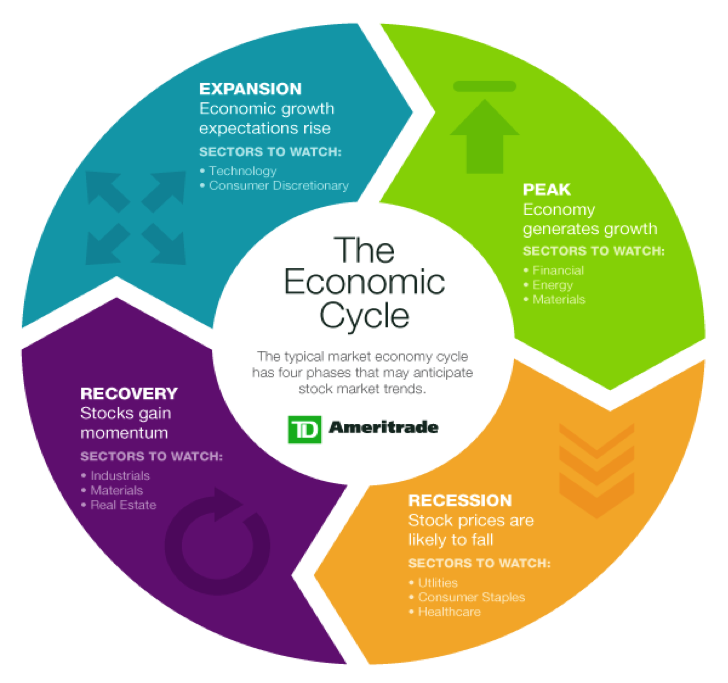
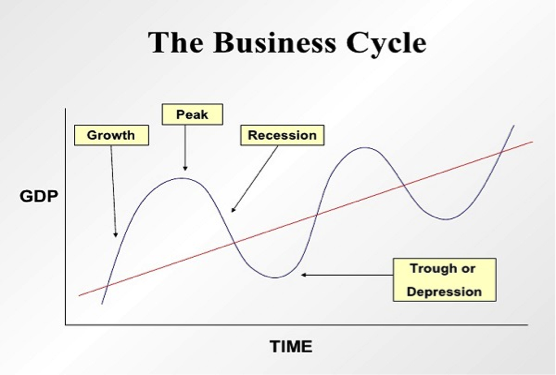
There are 4 different phases of a business cycle:
eco cycle
Photo Credit: tdameritrade.com

Early cycle phase

This is the recovery phase after the market bottom. This is when the market economy moves from negative growth to positive growth in economic activity. This growth can be measured by increases in Gross domestic product and industrial production.

early phase

During this stage, there is high sales volume and low inventory. These are the earlier stages of the business cycle and maybe the beginning of a bull market.

Mid-cycle phase

In this stage, the economy expands. This expanding economy phase is the longest phase of the cycle. Economic weakness goes away as the market gathers momentum and credibility. This is known as the expansion phase.

mid cycle

All monetary policy favors profitability, as the market cycle hits equilibrium. There is economic growth in inventory and sales. There are falling interest rates as the economy grows and creates inflationary pressures.

Late cycle Phase

This is the market top of the business cycle. At this level, inflation is high and the banks are trying to control increasing interest rates. The overall market in the business cycle has hit its peak, and this starts a new trend for the next cycle.
late cycle
Photo Credit: ecoaim.in

These slow economic growth, low available credits, and declining profit margins. The relative strength of Sales falls as inventory increases exponentially. Stock prices fall as investors take profit.

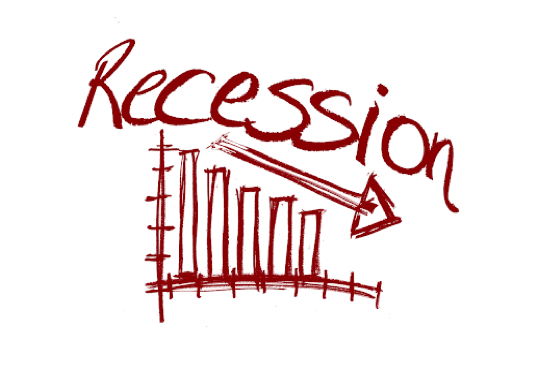
Recession

This is the final stage of the business cycle. This stage is also known as economic contraction. In the financial market is this stage can be seen as a bear market which could mean a financial crisis.

There are falling sales in this stage, higher interest rates, flat yield curve, and declining industrial activities which could lead to an increase in the unemployment rate.
recession
Photo Credit: differencebetween.net

During this stage of the business cycle, investors rotate their capital into other sectors of the financial markets.

Back to top

A Sector Rotation Strategy

A sector rotation strategy is a mapped-out plan used by investors to identify when to move their capital to another market sector, and the preferred sector to move to. Sector rotation strategy usually factors in past occurrences, market data, economic research, and business cycles in the same sector.

There are a lot of sector rotation strategies, most strategies are determined by the type of stocks and the sectors. These types of stocks can be classified into cyclical (e.g consumer discretionary) and defensive (e.g. consumer staples).

Back to top

How can Investors Take Advantage of Sector Rotations in the Stock Market?

Investors would see a business cycle in many sectors of the economy. They may even gain exposure by buying stocks of a particular sector and understanding how that sector operates. Investors who have a good understanding of a business cycle can make better decisions when buying stocks.

With proper knowledge of sector rotation, investors would be able to moderate their portfolio during euphoria. That way they would have more earnings to get a bigger position size for the next cycle.

To take advantage of sector rotation strategies, you can choose to buy either individual stock or ETFs (exchange-traded funds) that aims at various parts of the economy. After, you can adjust your stock portfolio based on your bias or thoughts about a particular sector. Whether they would expand or contract.

If you are looking to go into sector rotation but don't have sector rotation strategies. You can get managed exchange-traded funds from domestic and foreign markets or mutual funds. Though they may have higher fees, they take away the stress of managing a strategy.

Also Read: Investor Emotions And How It Affects The Stock Market

Back to top

Importance of Sector Rotation Strategies

Sector rotation can be very straightforward at times and other times complex. Investors can moderate their portfolio amongst two types of stocks. There are cyclical and defensive stocks (non-cyclical)

Cyclical stocks are assets of organizations that are in communication services, information technology, consumer discretionary, and real estate. Cyclical stocks tend to perform similarly poor during a recession.

Non-Cyclical stocks are assets of organizations that have stable stock prices during a recession. These include consumer staples, health care, and utilities.

strategy

When the economy is contracting, investors can rotate their investment from Cyclical stocks which might lose value to Defensive or Non-cyclical stocks which are more stable.

A common sector rotation strategy is during the mark-up phases or accumulation phases. Investors rotation into stocks during accumulation and sell their positions after growth, repeating this would bring about good future results.

Back to top

Conclusion

If you are looking to save your investment from changes in the economy, then you should get some sector rotation strategies. Rotating in and out of sectors based on what's going on in the economy is a popular technique to follow an active investment strategy.

A rotation may be a reasonably simple technique for the common investor to adopt a more tactical approach to investing and perhaps obtain greater returns by using mutual funds and ETFs.

This method may be utilized in conjunction with whatever portfolio management you're already performing to ensure you stay within your risk tolerance.

However, not all investors will benefit from sector rotation in specific industries. This is because, unlike a standard buy-and-hold plan, this form of investing strategy necessitates more periodic investment choices. It may also raise your portfolio's overall uncertainty, as well as increase transaction costs and taxes that you would normally save.

Back to top

FAQs

How long does sector rotation take?

A recession normally lasts three to four years, while each annual growth cycle usually lasts three to four years. Economic expansion takes a long time to cycle through. The growth phase began in 2008 and lasted 10 years, with the longest cyclical cycles occurring between 1981 and 1982.

How do you rotate funds in the stock market?

You can rotate funds in the stock market by selling the positions you invested in one sector and using the funds to reinvest in other sectors. This way you would rotate your funds amongst various sectors of the economy.

Does sector rotation beat the market?

Sector rotation strategies outperformed the S&P 500 more than half of the time. This goes to show that sector rotation can beat the market and reduce your overall risk if a proper strategy is implemented.

How does the US economy move?

The economy moves in various stages. There are specific periods where the economy contracts and expands, these periods determine how people invest.

When employment, consumer expenditure, and real gross domestic product, or GDP, rise, the economy expands. This is also known as a recovery in the economy.

When business activity slows or real GDP declines, the economy shrinks. The economy may see lower employment and lower consumer expenditure at this point.

The performance of various stock market sectors is influenced by these economic swings. Investors should hold holdings in firms that will outperform the broader market over economic cycles and avoid those that will underperform.

Back to top


About Ezekiel Chew​

Ezekiel Chew, founder and head of training at Asia Forex Mentor, is a renowned forex expert, frequently invited to speak at major industry events. Known for his deep market insights, Ezekiel is one of the top traders committed to supporting the trading community. Making six figures per trade, he also trains traders working in banks, fund management, and prop trading firms.

Best Forex Trading Courses and Formations In New Zealand - AFM

Best Forex Trading Courses and Formations In New Zealand

Finding a quality forex trading course in New Zealand can make the difference between profitable trading and costly mistakes. Whether you’re new to currency markets or looking to sharpen your strategy, the right training program provides structured learning, risk management techniques, and proven methods to trade forex, stocks, and crypto

Read More
Best Forex Trading Courses and Formations in Australia - AFM

Best Forex Trading Courses and Formations in Australia

Finding a quality forex trading course in Australia can make the difference between losing money and building a sustainable trading income. Whether you’re starting fresh or looking to refine your strategies, learning professional trading methodologies with experienced mentors helps you avoid common mistakes that cost most retail traders their capital.

Read More
Best Forex Trading Courses and Formations In Hong Kong - AFM

Best Forex Trading Courses and Formations in Hong Kong

Finding a quality forex trading course in Hong Kong can transform your financial future, giving you the skills to trade profitably in one of the world’s leading financial hubs. Whether you’re a complete beginner or an experienced trader looking to refine your strategy, choosing the right program makes all the

Read More

Forex Trade Update After a 950% Crazy Growth Month

  What if one forex trade could change the way anyone sees the foreign exchange market? Many retail traders open a forex trading account with big expectations, yet face early setbacks. The constant movement of currency prices in the major currency pairs, like EUR USD or the Japanese yen, creates

Read More

Crypto Tax Cut in Japan Could Spark a New Trading Wave

Crypto traders in Japan just got a fresh reason to review their portfolios and call their accountant. Regulators are now exploring a major change in how crypto is treated, and that could transform trading. The shift could affect everyone holding digital coins in the country, especially those watching for clearer

Read More

What Just Sent Gold Prices Racing Again?

Gold price jumped strongly before the government shutdown, and even though it ended, the rally is not fading yet today. Analysts say strong investment demand mixed with steady uncertainty could keep pushing gold higher for the next several months ahead. Gold reached record levels this year, climbing to $4,360 on

Read More

How Does Sector Rotation Work?

4.0
Overall Trust Index

Written by:

Updated:

January 29, 2025

Sector Rotation is when investors move some capital from their stock market portfolio to other stock market sectors. This is done by selling your stocks in one industry and using the funds to buy stocks in another sector. Investors tend to capitalize on changes in economic conditions using sector rotation to maximize their earnings.

According to the Global Industry Classification Standard, the stock market can be grouped into 11 different sectors. These sectors are real estate, financial sector, Information technology (ICT), consumer discretionary, energy, materials, consumer staples, health care, industrials, communication services, and utility sector.

sector 1
Photo Credit: ca.movies.yahoo.com

Sector rotation can be classified as a type of investment strategy because it involves the management of investment funds. Many investors move their capital to sectors that the economic cycle suggests would have better future performance.

Also Read: Learn How To Make Money with Sector Rotation

Contents

How Does Sector Rotation Work?

Sector rotation operates by cycling your capital away and into various sectors to benefit from the transitional changes in phases of the economic cycle or changes in the rate of economic growth, from the expansion phase or early cycle phase to the recession phase.

Certain sectors react faster to economic changes when compared to others, rotating capital in and out of these sectors may lead to higher yields or more profits.

Back to top

Economic Cycle that Triggers Sector Rotation

An economic cycle is also known as the business cycle. It indicates changes in activities in an economy. It is sometimes a vital determining factor of equity sector performance over a given period.

All economic cycles are unique and different. Historical performance proves that some patterns and trends in stocks usually reoccur. Oscillations in the stock market cycle are important and they represent an expansion in economic activity.

Unexpected events or announcements can interrupt or disrupt the trend of the stock markets. From past performance, a change in main indicators can help identify the different phases of economic cycles.

There are 4 different phases of a business cycle:

eco cycle
Photo Credit: tdameritrade.com

Early cycle phase

This is the recovery phase after the market bottom. This is when the market economy moves from negative growth to positive growth in economic activity. This growth can be measured by increases in Gross domestic product and industrial production.

early phase

During this stage, there is high sales volume and low inventory. These are the earlier stages of the business cycle and maybe the beginning of a bull market.

Mid-cycle phase

In this stage, the economy expands. This expanding economy phase is the longest phase of the cycle. Economic weakness goes away as the market gathers momentum and credibility. This is known as the expansion phase.

mid cycle

All monetary policy favors profitability, as the market cycle hits equilibrium. There is economic growth in inventory and sales. There are falling interest rates as the economy grows and creates inflationary pressures.

Late cycle Phase

This is the market top of the business cycle. At this level, inflation is high and the banks are trying to control increasing interest rates. The overall market in the business cycle has hit its peak, and this starts a new trend for the next cycle.

late cycle
Photo Credit: ecoaim.in

These slow economic growth, low available credits, and declining profit margins. The relative strength of Sales falls as inventory increases exponentially. Stock prices fall as investors take profit.

Recession

This is the final stage of the business cycle. This stage is also known as economic contraction. In the financial market is this stage can be seen as a bear market which could mean a financial crisis.

There are falling sales in this stage, higher interest rates, flat yield curve, and declining industrial activities which could lead to an increase in the unemployment rate.

recession
Photo Credit: differencebetween.net

During this stage of the business cycle, investors rotate their capital into other sectors of the financial markets.

Back to top

A Sector Rotation Strategy

A sector rotation strategy is a mapped-out plan used by investors to identify when to move their capital to another market sector, and the preferred sector to move to. Sector rotation strategy usually factors in past occurrences, market data, economic research, and business cycles in the same sector.

There are a lot of sector rotation strategies, most strategies are determined by the type of stocks and the sectors. These types of stocks can be classified into cyclical (e.g consumer discretionary) and defensive (e.g. consumer staples).

Back to top

How can Investors Take Advantage of Sector Rotations in the Stock Market?

Investors would see a business cycle in many sectors of the economy. They may even gain exposure by buying stocks of a particular sector and understanding how that sector operates. Investors who have a good understanding of a business cycle can make better decisions when buying stocks.

With proper knowledge of sector rotation, investors would be able to moderate their portfolio during euphoria. That way they would have more earnings to get a bigger position size for the next cycle.

To take advantage of sector rotation strategies, you can choose to buy either individual stock or ETFs (exchange-traded funds) that aims at various parts of the economy. After, you can adjust your stock portfolio based on your bias or thoughts about a particular sector. Whether they would expand or contract.

If you are looking to go into sector rotation but don't have sector rotation strategies. You can get managed exchange-traded funds from domestic and foreign markets or mutual funds. Though they may have higher fees, they take away the stress of managing a strategy.

Also Read: Investor Emotions And How It Affects The Stock Market

Back to top

Importance of Sector Rotation Strategies

Sector rotation can be very straightforward at times and other times complex. Investors can moderate their portfolio amongst two types of stocks. There are cyclical and defensive stocks (non-cyclical)

Cyclical stocks are assets of organizations that are in communication services, information technology, consumer discretionary, and real estate. Cyclical stocks tend to perform similarly poor during a recession.

Non-Cyclical stocks are assets of organizations that have stable stock prices during a recession. These include consumer staples, health care, and utilities.

strategy

When the economy is contracting, investors can rotate their investment from Cyclical stocks which might lose value to Defensive or Non-cyclical stocks which are more stable.

A common sector rotation strategy is during the mark-up phases or accumulation phases. Investors rotation into stocks during accumulation and sell their positions after growth, repeating this would bring about good future results.

Back to top

Conclusion

If you are looking to save your investment from changes in the economy, then you should get some sector rotation strategies. Rotating in and out of sectors based on what's going on in the economy is a popular technique to follow an active investment strategy.

A rotation may be a reasonably simple technique for the common investor to adopt a more tactical approach to investing and perhaps obtain greater returns by using mutual funds and ETFs.

This method may be utilized in conjunction with whatever portfolio management you're already performing to ensure you stay within your risk tolerance.

However, not all investors will benefit from sector rotation in specific industries. This is because, unlike a standard buy-and-hold plan, this form of investing strategy necessitates more periodic investment choices. It may also raise your portfolio's overall uncertainty, as well as increase transaction costs and taxes that you would normally save.

Back to top

FAQs

How long does sector rotation take?

A recession normally lasts three to four years, while each annual growth cycle usually lasts three to four years. Economic expansion takes a long time to cycle through. The growth phase began in 2008 and lasted 10 years, with the longest cyclical cycles occurring between 1981 and 1982.

How do you rotate funds in the stock market?

You can rotate funds in the stock market by selling the positions you invested in one sector and using the funds to reinvest in other sectors. This way you would rotate your funds amongst various sectors of the economy.

Does sector rotation beat the market?

Sector rotation strategies outperformed the S&P 500 more than half of the time. This goes to show that sector rotation can beat the market and reduce your overall risk if a proper strategy is implemented.

How does the US economy move?

The economy moves in various stages. There are specific periods where the economy contracts and expands, these periods determine how people invest.

When employment, consumer expenditure, and real gross domestic product, or GDP, rise, the economy expands. This is also known as a recovery in the economy.

When business activity slows or real GDP declines, the economy shrinks. The economy may see lower employment and lower consumer expenditure at this point.

The performance of various stock market sectors is influenced by these economic swings. Investors should hold holdings in firms that will outperform the broader market over economic cycles and avoid those that will underperform.

Back to top


ezekiel chew asiaforexmentor

About Ezekiel Chew

Ezekiel Chew, founder and head of training at Asia Forex Mentor, is a renowned forex expert, frequently invited to speak at major industry events. Known for his deep market insights, Ezekiel is one of the top traders committed to supporting the trading community. Making six figures per trade, he also trains traders working in banks, fund management, and prop trading firms.

RELATED ARTICLES

I consent to receiving emails and/or text message reminders for this event.

REGISTER FOR THE MASTERCLASS!