Learn To Trade Forex • Best Forex Trading Course • AsiaForexMentor

Alternative Trading System – Know in Detail

Written by

Ezekiel Chew

Updated on

January 29, 2024

i
Its a default text

Alternative Trading System – Know in Detail

Written by:

Ezekiel Chew

Last updated on:

January 29, 2024

trading system

Contents

What is an Alternative Trading System (ATS)?

An alternative trading system (ATS) is a non-exchange trading platform that has been recognized by the Securities and Exchange Commission (SEC) but is not regulated in the same way exchanges are.

On this trading platform, buyers and sellers are matched to find willing counterparties. ATS is a service that allows investors and traders to match their orders. Alternative trading systems are widely used in the United States and Canada. However, they are recognized as broker-dealers.
ATS
Photo Credit: investmentu.com

The most commonly used alternative trading systems in the US are the Electronic Communication Networks (ECNs). ECNs are automated processes that connect buy and sell bids in the market instantly.

Please note that North Americans use the term “ATS,” while Europeans use Multilateral Trading Facility (MTF).

Back to top

Understanding Alternative Trading Systems

Alternative trading systems play a vital role and are responsible for a large portion of the volume in publicly listed securities across the world. In Europe, they’re referred to as multilateral trading facilities, ECNs, cross networks, and call networks. Many ATS are licensed as broker-dealers instead of exchanges, and their primary goal is to identify transaction participants.

ATS, unlike certain national exchanges, does not set rules governing subscriber behaviour or discipline subscribers other than by denying them access to the trading venue. They’re vital since they provide an alternative means of getting money.

Instead of trading large blocks of securities on national securities exchange, institutional investors may utilize an ATS to discover peers for trades. Although ATS transactions do not reflect on national exchange order books, these moves may be intended to hide trade from the general public. The use of an ATS to perform such orders has the advantage of reducing the domino effect that huge trades may have on an equity’s price.

Also Read: What Are Trade In Derivatives?

Back to top

What Do Alternative Trading Systems Do?

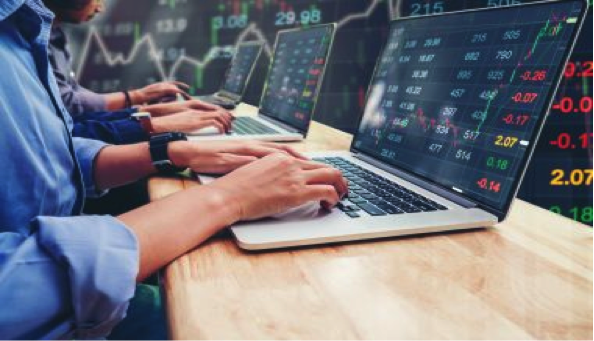
Alternative trading systems (ATS) are used in public markets to monitor liquidity in the market, or how fast an asset may be exchanged for goods or services. It is a substitute for traditional stock exchanges.
ATS 2
Photo Credit: news.bitcoin.com

An ATS is especially advantageous for persons who do a lot of trading, like investors and professional traders, because it avoids the misreporting of the market price that occurs on traditional stock exchanges.

Because ATS trading is not publicly visible and does not appear on national exchange order books, this is the case. Aside from the norms controlling behaviour, there are less regulations to follow.

Back to top

Examples of Alternative Trading Systems

There are several examples of ATS, and they include:

Electronic Communication Networks

Electronic Communication Networks (ECN) are an ATS that allows big brokerages and traders to exchange securities without dealing through an intermediary. As a result, merchants from all around the world may effortlessly carry out transactions.

Traders can make transactions based on off hours’ information since the system permits trades to take place outside of typical stock exchange trading hours. ECNs generate money by collecting entry fees and charges for each transaction, which is a disadvantage for traders because per-transaction expenses may quickly build up.

Dark Pools

Dark pools are a form of alternative trading system that is contentious since the transactions are done behind closed doors, obscuring the operations.

Institutional investors, such as mutual funds, retirement funds, and insurance firms, sometimes use private exchanges to trade a huge volume of securities through block transactions. 

Crossing Networks

Similar to dark pools, crossing networks allow trades to happen outside of the public eye. Since the details of the trade are not relayed through public channels, the security price is not affected and does not appear on order books.

Often, the accounts in which the trades are conducted can be anonymous, which is highly advantageous for traders. It should be noted that dark pools and crossing networks are legal, although they’ve undergone scrutiny by the financial press and news outlets in recent years.

Call Markets

Call markets are a type of ATS in which trades are grouped collectively until a certain quantity is achieved before the transaction is completed. As a result, trades are carried out at regular intervals.

The market-clearing price in a call market is determined by the quantity of securities issued and negotiated on by the sellers and buyers, correspondingly.

Auctioneers are an important part of call markets since they are in charge of balancing supply and demand for a traded security before reaching an average clearing price, or the cost at which market trades are exchanged.

Auction markets, as opposed to call markets, perform deals immediately a buyer and seller are discovered who decide on a certain price for the securities.

Also Read: Psychology of Market Cycles

Back to top

Conclusion

An alternative trading system is an automated marketplace that matches traders’ buy and sell orders with peers. Although ATS is not a countrywide exchange, it is required by the SEC to be regulated and licensed. ATSs are not regulated as platforms, but rather as broker-dealers.

Electronic communication networks, dark pools, crossover networks, and phone markets are all instances of alternative trading systems. Dealers use them all the time to discover counter-parties for trades.

ATS are particularly handy for investors and successful traders who deal in huge numbers. One of the key advantages of using an alternative trading system to trade huge volumes is that you avoid distorting the market price as you would with traditional stock exchanges.

Aside from the regulations controlling behaviour, there are fewer restrictions that subscribers must observe.

Back to top

FAQs

Are ATSs regulated by securities and exchange commission?

Alternative Trading Systems (ATSs) are computerized trading systems authorized by the Securities and Exchange Commission (SEC) that pair orders for buyers and sellers of securities. An alternative trading system (ATS) is not the same as a national securities exchange. An ATS, on the other hand, can petition the Securities and Exchange Commission to become a national securities exchange.

How does an alternative trading system work?

ATS, unlike certain federal exchanges, does not impose regulations limiting users’ behaviour or sanction them other than by banning them from trading. Instead of trading big blocks of securities on local stock exchanges, institutional investors can utilize an ATS to discover peers for transactions.

Are dark pools legal?

Dark pools are lawful and supervised by the SEC, but they’ve expressed worries among policymakers in the past because they can provide unfair informational advantages to the few corporate traders that conduct the most of dark-pool deals, which can be used to front run transactions.

Why is a dark pool legal?

Dark pools are secret markets where investors can trade securities that are not available to the general public. Dark pools were designed to make block trading easier for institutional investors who didn’t want their massive orders to disrupt the markets and result in lower prices for their trades.

Back to top


About Ezekiel Chew​

Ezekiel Chew, founder and head of training at Asia Forex Mentor, is a renowned forex expert, frequently invited to speak at major industry events. Known for his deep market insights, Ezekiel is one of the top traders committed to supporting the trading community. Making six figures per trade, he also trains traders working in banks, fund management, and prop trading firms.

How to Read Candlesticks (Most Traders Get This Wrong)

Most traders who spend months learning how to read candlesticks still lose on setups that looked textbook. The pattern was never the problem. Reading it without context was. ABOUT THIS GUIDE This guide covers three specific candlestick signals used in professional price action trading, the Fibonacci golden zone context tool,

Read More

What Profit Factor Tells You Before Going Live

Profit factor is calculated by dividing a strategy’s total gross profit by its total gross loss, and most experienced traders reject any system that reads below 1.5 before risking real capital. Most traders see any positive number and call it a green light. That is where the costly mistake starts.

Read More

6 Forex Trading Scams Every Beginner Should Know

The most effective forex trading scams do not announce themselves as threats. They arrive as opportunities, come through referrals and social media, and are often indistinguishable from legitimate services until the first withdrawal request is made. ABOUT THIS GUIDE This guide covers the six most common forex trading scams, the

Read More

How to Use Fibonacci Retracement Step by Step in 2026

Most traders learn how to use Fibonacci retracement and immediately draw it wrong. This tool comes from a mathematical sequence first documented in 1202, and institutional traders use it daily to plan entries at precise price levels. The majority of retail traders miss the one placement rule that makes every

Read More

Free Margin in Forex What the MT4 Panel Shows

Free margin in forex is the one figure on the MT4 or MT5 account panel that determines whether another position can open right now, and it is consistently the last number most traders learn to read. ABOUT THIS GUIDE This guide explains what free margin is and how it connects

Read More

Scalping Trading Strategy The Pros Actually Use

The scalping trading strategy most retail traders use is not actually scalping. They are gambling on 1-minute candles with no defined edge, no position-sizing rules, and no plan for when the losses come. ABOUT THIS GUIDE This guide covers what scalping is, how professional scalpers build a repeatable edge, and

Read More

AFM Trading Summit Live

Date: Coming Soon

Join us at the AFM Trading Summit Live and learn from top industry experts through live trading sessions, market insights, and actionable strategies.

Alternative Trading System – Know in Detail

4.0
Overall Trust Index

Written by:

Updated:

January 29, 2024

trading system

Contents

What is an Alternative Trading System (ATS)?

An alternative trading system (ATS) is a non-exchange trading platform that has been recognized by the Securities and Exchange Commission (SEC) but is not regulated in the same way exchanges are.

On this trading platform, buyers and sellers are matched to find willing counterparties. ATS is a service that allows investors and traders to match their orders. Alternative trading systems are widely used in the United States and Canada. However, they are recognized as broker-dealers.

ATS
Photo Credit: investmentu.com

The most commonly used alternative trading systems in the US are the Electronic Communication Networks (ECNs). ECNs are automated processes that connect buy and sell bids in the market instantly.

Please note that North Americans use the term "ATS," while Europeans use Multilateral Trading Facility (MTF).

Back to top

Understanding Alternative Trading Systems

Alternative trading systems play a vital role and are responsible for a large portion of the volume in publicly listed securities across the world. In Europe, they're referred to as multilateral trading facilities, ECNs, cross networks, and call networks. Many ATS are licensed as broker-dealers instead of exchanges, and their primary goal is to identify transaction participants.

ATS, unlike certain national exchanges, does not set rules governing subscriber behaviour or discipline subscribers other than by denying them access to the trading venue. They're vital since they provide an alternative means of getting money.

Instead of trading large blocks of securities on national securities exchange, institutional investors may utilize an ATS to discover peers for trades. Although ATS transactions do not reflect on national exchange order books, these moves may be intended to hide trade from the general public. The use of an ATS to perform such orders has the advantage of reducing the domino effect that huge trades may have on an equity's price.

Also Read: What Are Trade In Derivatives?

Back to top

What Do Alternative Trading Systems Do?

Alternative trading systems (ATS) are used in public markets to monitor liquidity in the market, or how fast an asset may be exchanged for goods or services. It is a substitute for traditional stock exchanges.

ATS 2
Photo Credit: news.bitcoin.com

An ATS is especially advantageous for persons who do a lot of trading, like investors and professional traders, because it avoids the misreporting of the market price that occurs on traditional stock exchanges.

Because ATS trading is not publicly visible and does not appear on national exchange order books, this is the case. Aside from the norms controlling behaviour, there are less regulations to follow.

Back to top

Examples of Alternative Trading Systems

There are several examples of ATS, and they include:

Electronic Communication Networks

Electronic Communication Networks (ECN) are an ATS that allows big brokerages and traders to exchange securities without dealing through an intermediary. As a result, merchants from all around the world may effortlessly carry out transactions.

Traders can make transactions based on off hours’ information since the system permits trades to take place outside of typical stock exchange trading hours. ECNs generate money by collecting entry fees and charges for each transaction, which is a disadvantage for traders because per-transaction expenses may quickly build up.

Dark Pools

Dark pools are a form of alternative trading system that is contentious since the transactions are done behind closed doors, obscuring the operations.

Institutional investors, such as mutual funds, retirement funds, and insurance firms, sometimes use private exchanges to trade a huge volume of securities through block transactions. 

Crossing Networks

Similar to dark pools, crossing networks allow trades to happen outside of the public eye. Since the details of the trade are not relayed through public channels, the security price is not affected and does not appear on order books.

Often, the accounts in which the trades are conducted can be anonymous, which is highly advantageous for traders. It should be noted that dark pools and crossing networks are legal, although they’ve undergone scrutiny by the financial press and news outlets in recent years.

Call Markets

Call markets are a type of ATS in which trades are grouped collectively until a certain quantity is achieved before the transaction is completed. As a result, trades are carried out at regular intervals.

The market-clearing price in a call market is determined by the quantity of securities issued and negotiated on by the sellers and buyers, correspondingly.

Auctioneers are an important part of call markets since they are in charge of balancing supply and demand for a traded security before reaching an average clearing price, or the cost at which market trades are exchanged.

Auction markets, as opposed to call markets, perform deals immediately a buyer and seller are discovered who decide on a certain price for the securities.

Also Read: Psychology of Market Cycles

Back to top

Conclusion

An alternative trading system is an automated marketplace that matches traders' buy and sell orders with peers. Although ATS is not a countrywide exchange, it is required by the SEC to be regulated and licensed. ATSs are not regulated as platforms, but rather as broker-dealers.

Electronic communication networks, dark pools, crossover networks, and phone markets are all instances of alternative trading systems. Dealers use them all the time to discover counter-parties for trades.

ATS are particularly handy for investors and successful traders who deal in huge numbers. One of the key advantages of using an alternative trading system to trade huge volumes is that you avoid distorting the market price as you would with traditional stock exchanges.

Aside from the regulations controlling behaviour, there are fewer restrictions that subscribers must observe.

Back to top

FAQs

Are ATSs regulated by securities and exchange commission?

Alternative Trading Systems (ATSs) are computerized trading systems authorized by the Securities and Exchange Commission (SEC) that pair orders for buyers and sellers of securities. An alternative trading system (ATS) is not the same as a national securities exchange. An ATS, on the other hand, can petition the Securities and Exchange Commission to become a national securities exchange.

How does an alternative trading system work?

ATS, unlike certain federal exchanges, does not impose regulations limiting users' behaviour or sanction them other than by banning them from trading. Instead of trading big blocks of securities on local stock exchanges, institutional investors can utilize an ATS to discover peers for transactions.

Are dark pools legal?

Dark pools are lawful and supervised by the SEC, but they've expressed worries among policymakers in the past because they can provide unfair informational advantages to the few corporate traders that conduct the most of dark-pool deals, which can be used to front run transactions.

Why is a dark pool legal?

Dark pools are secret markets where investors can trade securities that are not available to the general public. Dark pools were designed to make block trading easier for institutional investors who didn't want their massive orders to disrupt the markets and result in lower prices for their trades.
Back to top


ezekiel chew asiaforexmentor

About Ezekiel Chew

Ezekiel Chew, founder and head of training at Asia Forex Mentor, is a renowned forex expert, frequently invited to speak at major industry events. Known for his deep market insights, Ezekiel is one of the top traders committed to supporting the trading community. Making six figures per trade, he also trains traders working in banks, fund management, and prop trading firms.

RELATED ARTICLES

Alternative Trading System – Know in Detail

4.0
Overall Trust Index

Written by:

Updated:

January 29, 2024

trading system

Contents

What is an Alternative Trading System (ATS)?

An alternative trading system (ATS) is a non-exchange trading platform that has been recognized by the Securities and Exchange Commission (SEC) but is not regulated in the same way exchanges are.

On this trading platform, buyers and sellers are matched to find willing counterparties. ATS is a service that allows investors and traders to match their orders. Alternative trading systems are widely used in the United States and Canada. However, they are recognized as broker-dealers.

ATS
Photo Credit: investmentu.com

The most commonly used alternative trading systems in the US are the Electronic Communication Networks (ECNs). ECNs are automated processes that connect buy and sell bids in the market instantly.

Please note that North Americans use the term "ATS," while Europeans use Multilateral Trading Facility (MTF).

Back to top

Understanding Alternative Trading Systems

Alternative trading systems play a vital role and are responsible for a large portion of the volume in publicly listed securities across the world. In Europe, they're referred to as multilateral trading facilities, ECNs, cross networks, and call networks. Many ATS are licensed as broker-dealers instead of exchanges, and their primary goal is to identify transaction participants.

ATS, unlike certain national exchanges, does not set rules governing subscriber behaviour or discipline subscribers other than by denying them access to the trading venue. They're vital since they provide an alternative means of getting money.

Instead of trading large blocks of securities on national securities exchange, institutional investors may utilize an ATS to discover peers for trades. Although ATS transactions do not reflect on national exchange order books, these moves may be intended to hide trade from the general public. The use of an ATS to perform such orders has the advantage of reducing the domino effect that huge trades may have on an equity's price.

Also Read: What Are Trade In Derivatives?

Back to top

What Do Alternative Trading Systems Do?

Alternative trading systems (ATS) are used in public markets to monitor liquidity in the market, or how fast an asset may be exchanged for goods or services. It is a substitute for traditional stock exchanges.

ATS 2
Photo Credit: news.bitcoin.com

An ATS is especially advantageous for persons who do a lot of trading, like investors and professional traders, because it avoids the misreporting of the market price that occurs on traditional stock exchanges.

Because ATS trading is not publicly visible and does not appear on national exchange order books, this is the case. Aside from the norms controlling behaviour, there are less regulations to follow.

Back to top

Examples of Alternative Trading Systems

There are several examples of ATS, and they include:

Electronic Communication Networks

Electronic Communication Networks (ECN) are an ATS that allows big brokerages and traders to exchange securities without dealing through an intermediary. As a result, merchants from all around the world may effortlessly carry out transactions.

Traders can make transactions based on off hours’ information since the system permits trades to take place outside of typical stock exchange trading hours. ECNs generate money by collecting entry fees and charges for each transaction, which is a disadvantage for traders because per-transaction expenses may quickly build up.

Dark Pools

Dark pools are a form of alternative trading system that is contentious since the transactions are done behind closed doors, obscuring the operations.

Institutional investors, such as mutual funds, retirement funds, and insurance firms, sometimes use private exchanges to trade a huge volume of securities through block transactions. 

Crossing Networks

Similar to dark pools, crossing networks allow trades to happen outside of the public eye. Since the details of the trade are not relayed through public channels, the security price is not affected and does not appear on order books.

Often, the accounts in which the trades are conducted can be anonymous, which is highly advantageous for traders. It should be noted that dark pools and crossing networks are legal, although they’ve undergone scrutiny by the financial press and news outlets in recent years.

Call Markets

Call markets are a type of ATS in which trades are grouped collectively until a certain quantity is achieved before the transaction is completed. As a result, trades are carried out at regular intervals.

The market-clearing price in a call market is determined by the quantity of securities issued and negotiated on by the sellers and buyers, correspondingly.

Auctioneers are an important part of call markets since they are in charge of balancing supply and demand for a traded security before reaching an average clearing price, or the cost at which market trades are exchanged.

Auction markets, as opposed to call markets, perform deals immediately a buyer and seller are discovered who decide on a certain price for the securities.

Also Read: Psychology of Market Cycles

Back to top

Conclusion

An alternative trading system is an automated marketplace that matches traders' buy and sell orders with peers. Although ATS is not a countrywide exchange, it is required by the SEC to be regulated and licensed. ATSs are not regulated as platforms, but rather as broker-dealers.

Electronic communication networks, dark pools, crossover networks, and phone markets are all instances of alternative trading systems. Dealers use them all the time to discover counter-parties for trades.

ATS are particularly handy for investors and successful traders who deal in huge numbers. One of the key advantages of using an alternative trading system to trade huge volumes is that you avoid distorting the market price as you would with traditional stock exchanges.

Aside from the regulations controlling behaviour, there are fewer restrictions that subscribers must observe.

Back to top

FAQs

Are ATSs regulated by securities and exchange commission?

Alternative Trading Systems (ATSs) are computerized trading systems authorized by the Securities and Exchange Commission (SEC) that pair orders for buyers and sellers of securities. An alternative trading system (ATS) is not the same as a national securities exchange. An ATS, on the other hand, can petition the Securities and Exchange Commission to become a national securities exchange.

How does an alternative trading system work?

ATS, unlike certain federal exchanges, does not impose regulations limiting users' behaviour or sanction them other than by banning them from trading. Instead of trading big blocks of securities on local stock exchanges, institutional investors can utilize an ATS to discover peers for transactions.

Are dark pools legal?

Dark pools are lawful and supervised by the SEC, but they've expressed worries among policymakers in the past because they can provide unfair informational advantages to the few corporate traders that conduct the most of dark-pool deals, which can be used to front run transactions.

Why is a dark pool legal?

Dark pools are secret markets where investors can trade securities that are not available to the general public. Dark pools were designed to make block trading easier for institutional investors who didn't want their massive orders to disrupt the markets and result in lower prices for their trades.
Back to top


ezekiel chew asiaforexmentor

About Ezekiel Chew

Ezekiel Chew, founder and head of training at Asia Forex Mentor, is a renowned forex expert, frequently invited to speak at major industry events. Known for his deep market insights, Ezekiel is one of the top traders committed to supporting the trading community. Making six figures per trade, he also trains traders working in banks, fund management, and prop trading firms.

RELATED ARTICLES

Join the Live Event
Get Your Free Ticket Now

I consent to receiving emails and/or text message reminders for this event.

REGISTER FOR THE MASTERCLASS!