
Learn To Trade Forex • Best Forex Trading Course • AsiaForexMentor

August Market Volatility Ends on a High Note as S&P 500 Climbs 2.3%

Written by

Ezekiel Chew

Updated on

September 4, 2024

i
Its a default text

August Market Volatility Ends on a High Note as S&P 500 Climbs 2.3%

Written by:

Last updated on:

September 4, 2024

August Starts with a Sharp Decline and ends on a High Note

August kicked off with the worst market crash of the year, but despite a rocky start, all major indexes, except one, finished the month with gains. However, September has already begun with another challenging day for the markets.

August is usually a quiet period for stock markets, but this year saw heightened activity and volatility for the S&P 500 and other indexes. The month began dramatically with the worst trading day in two years. On Monday, August 5, the Dow Jones Industrial Average plunged 1,034 points, or 2.6%, which was less severe than the others.

The S&P 500 fell by 160 points, or 3%, while the Nasdaq Composite dropped 576 points, or 3.4%. The Russell 2000 also experienced a sharp decline, losing 70 points, or 3.3%.

This selloff was triggered by weak employment and manufacturing data, sparking fears of a potential recession, compounded by Japan’s decision to raise interest rates.

Markets Rebound Following Positive Inflation Data and Powell's Address

Despite the initial downturn, the markets quickly rebounded. By the end of the crash week, much of the losses had been recovered as investors bought on the dip, although all four major indexes remained down for the week.

The following week, the S&P 500 posted its best performance of the year, rising 3.9%. The Nasdaq surged 5.3%, and the Dow increased by 2.9%, marking these indexes' best week of the year. The Russell 2000 also gained 3.3%, though it wasn’t its best week.

These gains were largely driven by the July Consumer Price Index (CPI) report, which showed inflation falling below 3% for the first time in over three years, dipping to 2.9%. Positive news on retail sales and consumer sentiment further boosted market optimism.

The markets continued their positive momentum into the following two weeks, with the primary catalyst for the week of August 19 being Federal Reserve Chair Jerome Powell's speech at the Jackson Hole Economic Symposium. Powell's remarks were seen by some as a sign of the Fed's success in reducing inflation and achieving a soft landing. He indicated that “the time has come for policy to adjust,” hinting at potential interest rate cuts.

Good news persisted in the last week of August, with the July Personal Consumption Expenditures (PCE) index released on August 30 showing stable inflation at 2.5%, while core PCE fell to 2.6%, both beating expectations.

S&P 500 Climbs 2.3% in August

Historically, the average return for the S&P 500 in August, dating back to 1928, is 0.6%. However, in August 2024, the S&P 500 achieved a 2.3% gain, ending the month at 5,648. Year-to-date through August 30, the S&P 500 is up 18.4%.

The Dow Jones Industrial Average also had a solid month, up 1.7% to close August at an all-time high of 41,563. The Dow is up 10.3% YTD.

The Nasdaq gained 0.6% in August, closing at 17,713Through August, the Nasdaq has gained 18%.

The only major index to lose ground in August was the Russell 2000, which fell 1.6%Through August 30, the Russell 2000 has returned 9.4% YTD.

A Difficult Start to September

On the first full trading day of September, the markets experienced a significant downturn, particularly the Nasdaq, which was down 590 points, or 3.3%, as of 3:40 ET.

This decline may have been influenced by a weak manufacturing report, which had similarly driven down the markets about a month earlier on August 5. However, it likely has more to do with an overpriced tech sector undergoing a correction.

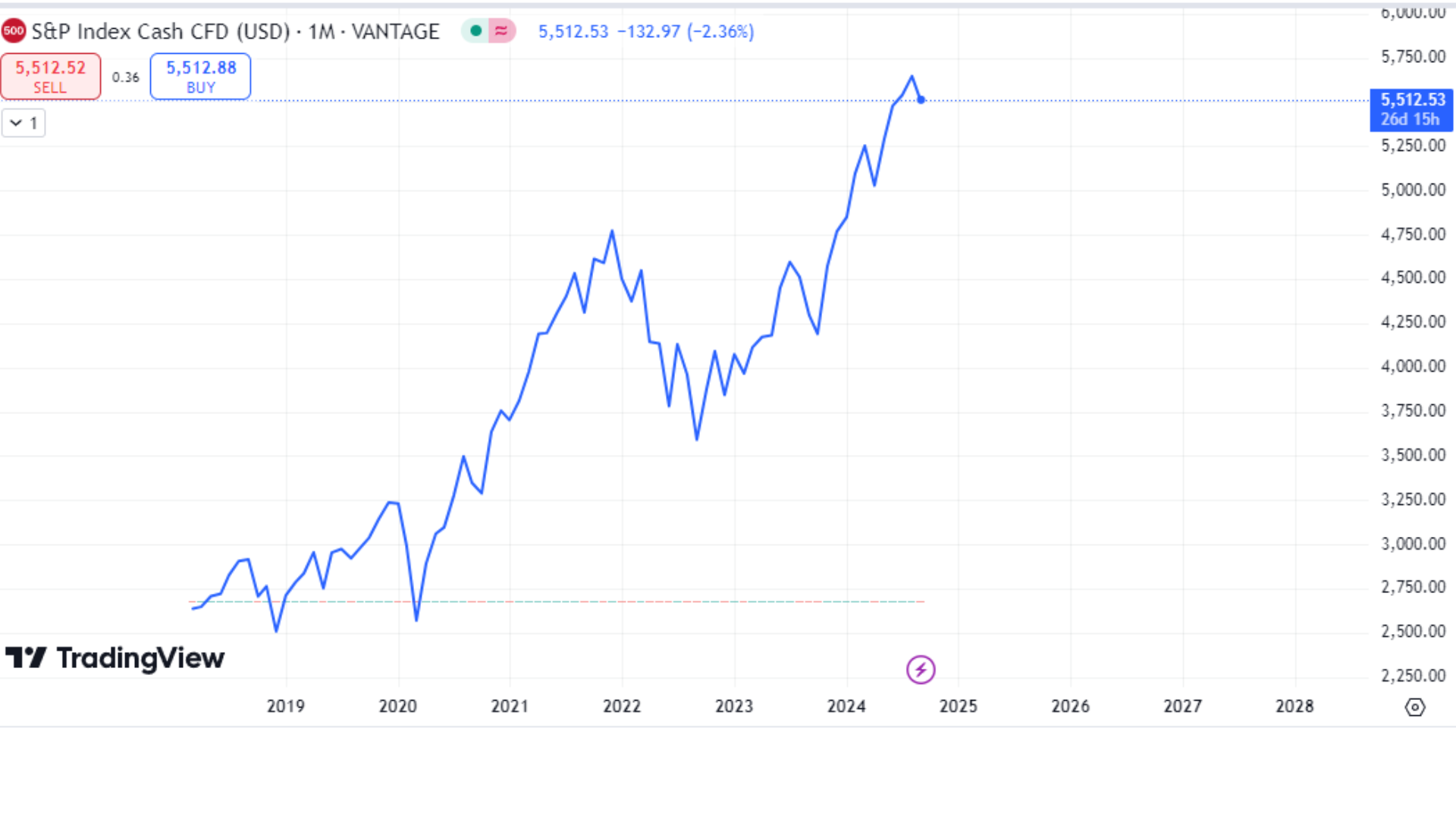
The S&P 500 was down 133 points, or 2.4%, on Tuesday, while the Dow dropped 747 points, or 1.8%, as of 3:40 p.m. ET. On Tuesday, the Russell 2000 was down 67 points, or 3%.

Will this early September crash lead to a stock market rally similar to those seen in August?
About Ezekiel Chew​

Ezekiel Chew, founder and head of training at Asia Forex Mentor, is a renowned forex expert, frequently invited to speak at major industry events. Known for his deep market insights, Ezekiel is one of the top traders committed to supporting the trading community. Making six figures per trade, he also trains traders working in banks, fund management, and prop trading firms.

Reversal Trading Strategy: How Market Reversals Really Happen

Hey, what’s up guys, traders. It’s Ezekiel Chew here. Let me hit you with this. Most traders think they are catching reversals, but in reality, they are catching traps. The market does not reverse randomly. It reverses when smart money sweeps liquidity, traps traders, and flips the move while retail

Read More

VWAP Trading Strategy and How Pros Use VWAP

Hey, what’s up guys? It’s Ezekiel Chew here. So let me hit you with this. If you’ve ever taken what felt like a perfect trade, only to watch price reverse the moment you enter, boom, that’s not bad luck. That’s you trading right into institutional zones. Most traders chase candles.

Read More

What Is Volume Profile Trading for Sniper Entries?

Hey, what’s up, traders! It’s Ezekiel Chew here, and today we’re going to talk about volume profile, one of the most powerful trading strategies that can make or break your success in the markets. Let me hit you with this: Most traders lose not because their strategy is broken, but

Read More

Maunto Review – Latest 2026 Review by Traders

            OPEN AN ACCOUNT             Maunto Review Maunto is an all-in-one online trading tool that lets you trade forex, commodities, indices, stocks, and other financial instruments and more about forex trading. Maunto is made to suit both new and expert traders,

Read More

Baxia Markets Review 2026 – REAL Traders Report

            OPEN AN ACCOUNT             Baxia Markets Review Choosing the right Forex broker is crucial for anyone serious about trading. A good broker can provide you with the necessary tools, support, and environment to succeed, while a poor choice can lead

Read More

AFM Trading Summit Live

Date: Coming Soon

Join us at the AFM Trading Summit Live and learn from top industry experts through live trading sessions, market insights, and actionable strategies.

August Market Volatility Ends on a High Note as S&P 500 Climbs 2.3%

4.0
Overall Trust Index

Written by:

Updated:

September 4, 2024

August Starts with a Sharp Decline and ends on a High Note

August kicked off with the worst market crash of the year, but despite a rocky start, all major indexes, except one, finished the month with gains. However, September has already begun with another challenging day for the markets. August is usually a quiet period for stock markets, but this year saw heightened activity and volatility for the S&P 500 and other indexes. The month began dramatically with the worst trading day in two years. On Monday, August 5, the Dow Jones Industrial Average plunged 1,034 points, or 2.6%, which was less severe than the others. The S&P 500 fell by 160 points, or 3%, while the Nasdaq Composite dropped 576 points, or 3.4%. The Russell 2000 also experienced a sharp decline, losing 70 points, or 3.3%. This selloff was triggered by weak employment and manufacturing data, sparking fears of a potential recession, compounded by Japan’s decision to raise interest rates.

Markets Rebound Following Positive Inflation Data and Powell's Address

Despite the initial downturn, the markets quickly rebounded. By the end of the crash week, much of the losses had been recovered as investors bought on the dip, although all four major indexes remained down for the week. The following week, the S&P 500 posted its best performance of the year, rising 3.9%. The Nasdaq surged 5.3%, and the Dow increased by 2.9%, marking these indexes' best week of the year. The Russell 2000 also gained 3.3%, though it wasn’t its best week. These gains were largely driven by the July Consumer Price Index (CPI) report, which showed inflation falling below 3% for the first time in over three years, dipping to 2.9%. Positive news on retail sales and consumer sentiment further boosted market optimism. The markets continued their positive momentum into the following two weeks, with the primary catalyst for the week of August 19 being Federal Reserve Chair Jerome Powell's speech at the Jackson Hole Economic Symposium. Powell's remarks were seen by some as a sign of the Fed's success in reducing inflation and achieving a soft landing. He indicated that "the time has come for policy to adjust," hinting at potential interest rate cuts. Good news persisted in the last week of August, with the July Personal Consumption Expenditures (PCE) index released on August 30 showing stable inflation at 2.5%, while core PCE fell to 2.6%, both beating expectations.

S&P 500 Climbs 2.3% in August

Historically, the average return for the S&P 500 in August, dating back to 1928, is 0.6%. However, in August 2024, the S&P 500 achieved a 2.3% gain, ending the month at 5,648. Year-to-date through August 30, the S&P 500 is up 18.4%. The Dow Jones Industrial Average also had a solid month, up 1.7% to close August at an all-time high of 41,563. The Dow is up 10.3% YTD. The Nasdaq gained 0.6% in August, closing at 17,713Through August, the Nasdaq has gained 18%. The only major index to lose ground in August was the Russell 2000, which fell 1.6%Through August 30, the Russell 2000 has returned 9.4% YTD.

A Difficult Start to September

On the first full trading day of September, the markets experienced a significant downturn, particularly the Nasdaq, which was down 590 points, or 3.3%, as of 3:40 ET. This decline may have been influenced by a weak manufacturing report, which had similarly driven down the markets about a month earlier on August 5. However, it likely has more to do with an overpriced tech sector undergoing a correction. The S&P 500 was down 133 points, or 2.4%, on Tuesday, while the Dow dropped 747 points, or 1.8%, as of 3:40 p.m. ET. On Tuesday, the Russell 2000 was down 67 points, or 3%. Will this early September crash lead to a stock market rally similar to those seen in August?
ezekiel chew asiaforexmentor

About Ezekiel Chew

Ezekiel Chew, founder and head of training at Asia Forex Mentor, is a renowned forex expert, frequently invited to speak at major industry events. Known for his deep market insights, Ezekiel is one of the top traders committed to supporting the trading community. Making six figures per trade, he also trains traders working in banks, fund management, and prop trading firms.

RELATED ARTICLES

August Market Volatility Ends on a High Note as S&P 500 Climbs 2.3%

4.0
Overall Trust Index

Written by:

Updated:

September 4, 2024

August Starts with a Sharp Decline and ends on a High Note

August kicked off with the worst market crash of the year, but despite a rocky start, all major indexes, except one, finished the month with gains. However, September has already begun with another challenging day for the markets. August is usually a quiet period for stock markets, but this year saw heightened activity and volatility for the S&P 500 and other indexes. The month began dramatically with the worst trading day in two years. On Monday, August 5, the Dow Jones Industrial Average plunged 1,034 points, or 2.6%, which was less severe than the others. The S&P 500 fell by 160 points, or 3%, while the Nasdaq Composite dropped 576 points, or 3.4%. The Russell 2000 also experienced a sharp decline, losing 70 points, or 3.3%. This selloff was triggered by weak employment and manufacturing data, sparking fears of a potential recession, compounded by Japan’s decision to raise interest rates.

Markets Rebound Following Positive Inflation Data and Powell's Address

Despite the initial downturn, the markets quickly rebounded. By the end of the crash week, much of the losses had been recovered as investors bought on the dip, although all four major indexes remained down for the week. The following week, the S&P 500 posted its best performance of the year, rising 3.9%. The Nasdaq surged 5.3%, and the Dow increased by 2.9%, marking these indexes' best week of the year. The Russell 2000 also gained 3.3%, though it wasn’t its best week. These gains were largely driven by the July Consumer Price Index (CPI) report, which showed inflation falling below 3% for the first time in over three years, dipping to 2.9%. Positive news on retail sales and consumer sentiment further boosted market optimism. The markets continued their positive momentum into the following two weeks, with the primary catalyst for the week of August 19 being Federal Reserve Chair Jerome Powell's speech at the Jackson Hole Economic Symposium. Powell's remarks were seen by some as a sign of the Fed's success in reducing inflation and achieving a soft landing. He indicated that "the time has come for policy to adjust," hinting at potential interest rate cuts. Good news persisted in the last week of August, with the July Personal Consumption Expenditures (PCE) index released on August 30 showing stable inflation at 2.5%, while core PCE fell to 2.6%, both beating expectations.

S&P 500 Climbs 2.3% in August

Historically, the average return for the S&P 500 in August, dating back to 1928, is 0.6%. However, in August 2024, the S&P 500 achieved a 2.3% gain, ending the month at 5,648. Year-to-date through August 30, the S&P 500 is up 18.4%. The Dow Jones Industrial Average also had a solid month, up 1.7% to close August at an all-time high of 41,563. The Dow is up 10.3% YTD. The Nasdaq gained 0.6% in August, closing at 17,713Through August, the Nasdaq has gained 18%. The only major index to lose ground in August was the Russell 2000, which fell 1.6%Through August 30, the Russell 2000 has returned 9.4% YTD.

A Difficult Start to September

On the first full trading day of September, the markets experienced a significant downturn, particularly the Nasdaq, which was down 590 points, or 3.3%, as of 3:40 ET. This decline may have been influenced by a weak manufacturing report, which had similarly driven down the markets about a month earlier on August 5. However, it likely has more to do with an overpriced tech sector undergoing a correction. The S&P 500 was down 133 points, or 2.4%, on Tuesday, while the Dow dropped 747 points, or 1.8%, as of 3:40 p.m. ET. On Tuesday, the Russell 2000 was down 67 points, or 3%. Will this early September crash lead to a stock market rally similar to those seen in August?
ezekiel chew asiaforexmentor

About Ezekiel Chew

Ezekiel Chew, founder and head of training at Asia Forex Mentor, is a renowned forex expert, frequently invited to speak at major industry events. Known for his deep market insights, Ezekiel is one of the top traders committed to supporting the trading community. Making six figures per trade, he also trains traders working in banks, fund management, and prop trading firms.

RELATED ARTICLES

I consent to receiving emails and/or text message reminders for this event.

REGISTER FOR THE MASTERCLASS!