
Learn To Trade Forex • Best Forex Trading Course • AsiaForexMentor

China’s Paradox: Why It Bans Bitcoin But Embraces Blockchain

Written by

Ezekiel Chew

Updated on

May 27, 2025

i
Its a default text

China’s Paradox: Why It Bans Bitcoin But Embraces Blockchain

Written by:

Last updated on:

May 27, 2025

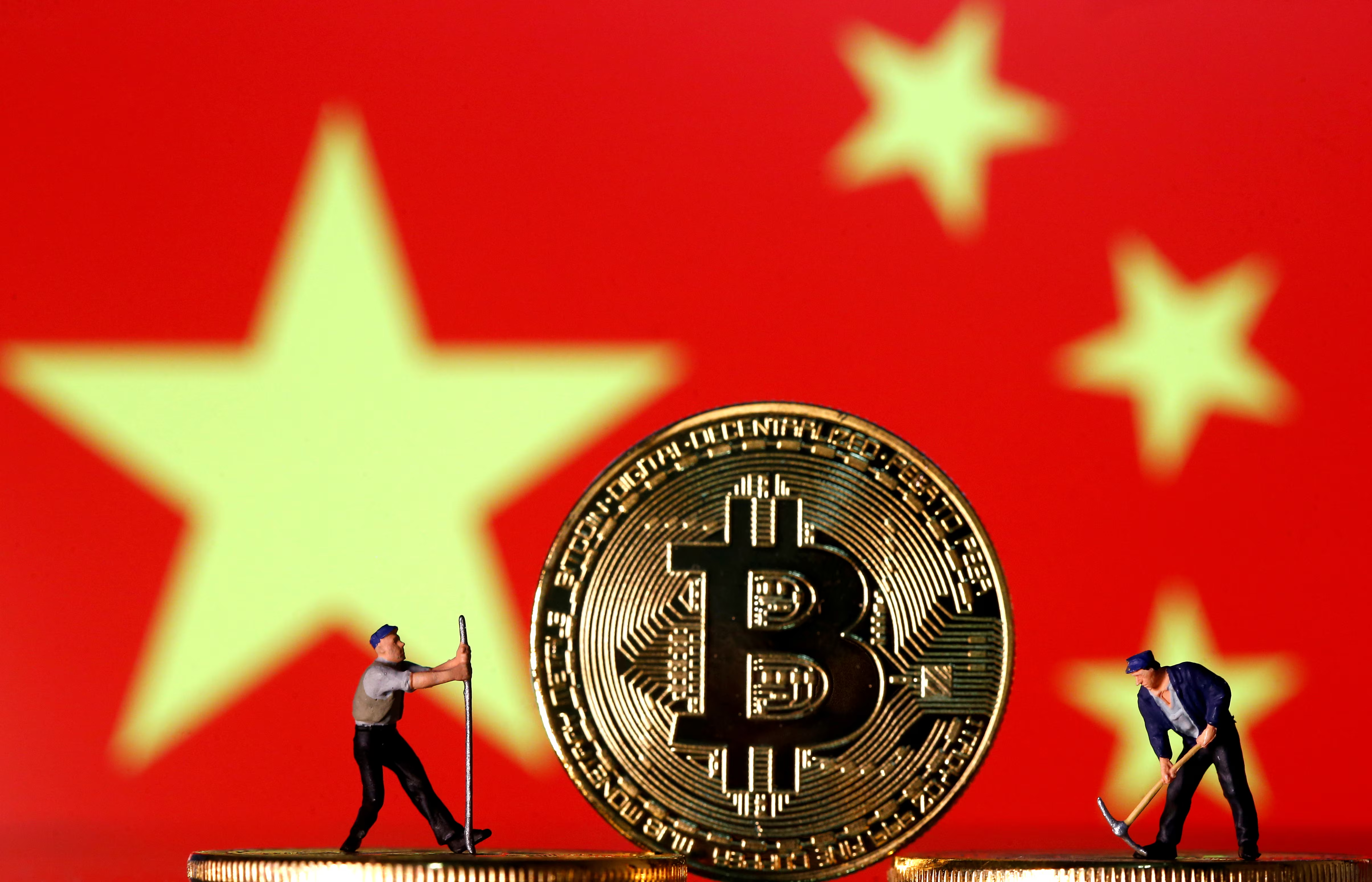
It's a curious dynamic, isn't it? On one hand, you have the Chinese government cracking down hard on cryptocurrency trading and Bitcoin mining. On the other hand, the same country is investing heavily in blockchain technology and pioneering its own digital currency. This perplexing relationship forms the core of China's unique approach to the digital asset world. Let's dive into why this paradox exists and what it means for the global industry.


The Crypto Crackdown: A Firm Hand on Digital Assets

For quite some time, China stood out by being very strong in crypto, especially in Bitcoin mining. Mainland China saw many huge farms churning out new coins, which made it a world leader. Things shifted drastically, though. The Chinese government started to consider cryptocurrency a serious danger.

The process started in mid-2017 but really heated up in 2021. Soon after, Initial Coin Offerings (ICOs) were banned and crypto trading through Bitcoin exchanges also became illegal. The monetary authority, the People’s Bank of China, said that digital currencies such as Bitcoin are not regarded as legal tender in the country. They thought it was best described as a virtual commodity, but there were limits.

The reasons? Plenty. All attention in Russia focused on issues such as financial crimes, illegal money raising, capital flight, and preserving firm government control over the financial sector. Those responsible for finances knew someone could use cryptocurrency to secretly transfer public funds, which broke their watch. As a result, mining Bitcoin was also heavily targeted, pushing many mining groups out of China. As a result, those within the People’s Republic of China cannot legally trade in crypto assets as an investment, but holding them may not always be considered a clear violation everywhere in the country, depending on the views of various local governments.


Embracing Blockchain: The Technology, Not the Tokens

Yet, while Bitcoin and other services related to decentralized digital currencies face severe restrictions, China has simultaneously become a global leader in blockchain technology development. This isn't a contradiction to the Chinese government; it's a strategic distinction. Beijing recognizes the value of blockchain as a powerful technology for data management, efficiency, and transparency.

The government is investing heavily in blockchain for applications in various sectors, from supply chain management to healthcare and even government services. They want to leverage this distributed ledger technology for its inherent benefits security, immutability, and efficiency, but under their direct control. They want the infrastructure, the data, and the improved processes without the speculative investment risks or the challenge to the established fiat currency, the Chinese yuan.


The Digital Yuan: China's Controlled Digital Money

The most prominent example of this embrace is the digital yuan, or e-CNY. This isn't a cryptocurrency like Bitcoin; it's a Central Bank Digital Currency (CBDC) issued by the People's Bank of China. It's fully centralized and represents a digital form of legal currency, just like physical cash.

China issued the digital yuan as an experimental digital money to modernize its payment systems, enhance financial inclusion, and offer a controlled alternative to private digital currencies. Unlike crypto, every e-CNY transaction is traceable by the monetary authority, giving the government unparalleled insight and control. It's designed to facilitate everything from small transactions to larger payments, gradually replacing physical cash. This allows the People's Bank of China to maintain complete monetary authority and oversee financial flows.

Pilot programs for the e-CNY have been expanding across various countries and regions, showcasing its potential for domestic retail payments and even cross-border transactions. It's an integral part of China's broader development strategy, aiming to solidify the yuan's global standing.


The Logic Behind the Paradox: Control and Stability

But why are traders using this approach? It’s about maintaining order and stability. The Chinese authorities consider decentralized cryptocurrency to be an enemy of their financial rule. Since the yuan is not tied to identifiable users, it could encourage crimes with money, illegal collection of funds, and the draining of resources outside China, making the yuan more unstable. Officials are concerned that virtual currency could have speculative value and pose risks to both investors and the entire financial system. Stopping people from trading or mining cryptocurrency and Bitcoin helps address these recognized risks.

Meanwhile, blockchain can provide major efficiency and transparency for the government. With the digital yuan, China has a token that sticks to digital currency technology but includes oversight from the government to control transactions, detect crime and put policies or tax collection into effect. As a result, the country can improve technology without going over budget.


The World Watches: Implications and Expectations

The bond between China and cryptocurrency is changing, affecting the global situation. Although rules in mainland China are strict, crypto activity in Hong Kong seems to suggest the authorities are considering more flexible approaches. A lot of observers are thinking of whether Beijing will open up its ban on Bitcoin and other assets.

Even into September and continuing through to January, the same tight stance is expected, and investors need to remain circumspect. The absence of relaxed regulations on crypto seems to have only made China strengthen its position in digital money and fintech, which is an interesting illustration of a country wanting strict control in building its future technologies.


About Ezekiel Chew​

Ezekiel Chew, founder and head of training at Asia Forex Mentor, is a renowned forex expert, frequently invited to speak at major industry events. Known for his deep market insights, Ezekiel is one of the top traders committed to supporting the trading community. Making six figures per trade, he also trains traders working in banks, fund management, and prop trading firms.

Bollinger Bands Trading Strategy and How to Trade Like Pros

Hey, what’s up guys, traders. It’s Ezekiel Chew here. Let me hit you with this. Most traders think they know how to use Bollinger Bands, but the Bands are actually the reason they keep blowing trades. They chase breakouts after the move is already gone. They short reversals before the

Read More

Reversal Trading Strategy: How Market Reversals Really Happen

Hey, what’s up guys, traders. It’s Ezekiel Chew here. Let me hit you with this. Most traders think they are catching reversals, but in reality, they are catching traps. The market does not reverse randomly. It reverses when smart money sweeps liquidity, traps traders, and flips the move while retail

Read More

VWAP Trading Strategy and How Pros Use VWAP

Hey, what’s up guys? It’s Ezekiel Chew here. So let me hit you with this. If you’ve ever taken what felt like a perfect trade, only to watch price reverse the moment you enter, boom, that’s not bad luck. That’s you trading right into institutional zones. Most traders chase candles.

Read More

What Is Volume Profile Trading for Sniper Entries?

Hey, what’s up, traders! It’s Ezekiel Chew here, and today we’re going to talk about volume profile, one of the most powerful trading strategies that can make or break your success in the markets. Let me hit you with this: Most traders lose not because their strategy is broken, but

Read More

Maunto Review – Latest 2026 Review by Traders

            OPEN AN ACCOUNT             Maunto Review Maunto is an all-in-one online trading tool that lets you trade forex, commodities, indices, stocks, and other financial instruments and more about forex trading. Maunto is made to suit both new and expert traders,

Read More

AFM Trading Summit Live

Date: Coming Soon

Join us at the AFM Trading Summit Live and learn from top industry experts through live trading sessions, market insights, and actionable strategies.

China’s Paradox: Why It Bans Bitcoin But Embraces Blockchain

4.0
Overall Trust Index

Written by:

Updated:

May 27, 2025

It's a curious dynamic, isn't it? On one hand, you have the Chinese government cracking down hard on cryptocurrency trading and Bitcoin mining. On the other hand, the same country is investing heavily in blockchain technology and pioneering its own digital currency. This perplexing relationship forms the core of China's unique approach to the digital asset world. Let's dive into why this paradox exists and what it means for the global industry.  

The Crypto Crackdown: A Firm Hand on Digital Assets

For quite some time, China stood out by being very strong in crypto, especially in Bitcoin mining. Mainland China saw many huge farms churning out new coins, which made it a world leader. Things shifted drastically, though. The Chinese government started to consider cryptocurrency a serious danger. The process started in mid-2017 but really heated up in 2021. Soon after, Initial Coin Offerings (ICOs) were banned and crypto trading through Bitcoin exchanges also became illegal. The monetary authority, the People’s Bank of China, said that digital currencies such as Bitcoin are not regarded as legal tender in the country. They thought it was best described as a virtual commodity, but there were limits. The reasons? Plenty. All attention in Russia focused on issues such as financial crimes, illegal money raising, capital flight, and preserving firm government control over the financial sector. Those responsible for finances knew someone could use cryptocurrency to secretly transfer public funds, which broke their watch. As a result, mining Bitcoin was also heavily targeted, pushing many mining groups out of China. As a result, those within the People’s Republic of China cannot legally trade in crypto assets as an investment, but holding them may not always be considered a clear violation everywhere in the country, depending on the views of various local governments.  

Embracing Blockchain: The Technology, Not the Tokens

Yet, while Bitcoin and other services related to decentralized digital currencies face severe restrictions, China has simultaneously become a global leader in blockchain technology development. This isn't a contradiction to the Chinese government; it's a strategic distinction. Beijing recognizes the value of blockchain as a powerful technology for data management, efficiency, and transparency. The government is investing heavily in blockchain for applications in various sectors, from supply chain management to healthcare and even government services. They want to leverage this distributed ledger technology for its inherent benefits security, immutability, and efficiency, but under their direct control. They want the infrastructure, the data, and the improved processes without the speculative investment risks or the challenge to the established fiat currency, the Chinese yuan.  

The Digital Yuan: China's Controlled Digital Money

The most prominent example of this embrace is the digital yuan, or e-CNY. This isn't a cryptocurrency like Bitcoin; it's a Central Bank Digital Currency (CBDC) issued by the People's Bank of China. It's fully centralized and represents a digital form of legal currency, just like physical cash. China issued the digital yuan as an experimental digital money to modernize its payment systems, enhance financial inclusion, and offer a controlled alternative to private digital currencies. Unlike crypto, every e-CNY transaction is traceable by the monetary authority, giving the government unparalleled insight and control. It's designed to facilitate everything from small transactions to larger payments, gradually replacing physical cash. This allows the People's Bank of China to maintain complete monetary authority and oversee financial flows. Pilot programs for the e-CNY have been expanding across various countries and regions, showcasing its potential for domestic retail payments and even cross-border transactions. It's an integral part of China's broader development strategy, aiming to solidify the yuan's global standing.  

The Logic Behind the Paradox: Control and Stability

But why are traders using this approach? It’s about maintaining order and stability. The Chinese authorities consider decentralized cryptocurrency to be an enemy of their financial rule. Since the yuan is not tied to identifiable users, it could encourage crimes with money, illegal collection of funds, and the draining of resources outside China, making the yuan more unstable. Officials are concerned that virtual currency could have speculative value and pose risks to both investors and the entire financial system. Stopping people from trading or mining cryptocurrency and Bitcoin helps address these recognized risks. Meanwhile, blockchain can provide major efficiency and transparency for the government. With the digital yuan, China has a token that sticks to digital currency technology but includes oversight from the government to control transactions, detect crime and put policies or tax collection into effect. As a result, the country can improve technology without going over budget.  

The World Watches: Implications and Expectations

The bond between China and cryptocurrency is changing, affecting the global situation. Although rules in mainland China are strict, crypto activity in Hong Kong seems to suggest the authorities are considering more flexible approaches. A lot of observers are thinking of whether Beijing will open up its ban on Bitcoin and other assets. Even into September and continuing through to January, the same tight stance is expected, and investors need to remain circumspect. The absence of relaxed regulations on crypto seems to have only made China strengthen its position in digital money and fintech, which is an interesting illustration of a country wanting strict control in building its future technologies.

ezekiel chew asiaforexmentor

About Ezekiel Chew

Ezekiel Chew, founder and head of training at Asia Forex Mentor, is a renowned forex expert, frequently invited to speak at major industry events. Known for his deep market insights, Ezekiel is one of the top traders committed to supporting the trading community. Making six figures per trade, he also trains traders working in banks, fund management, and prop trading firms.

RELATED ARTICLES

China’s Paradox: Why It Bans Bitcoin But Embraces Blockchain

4.0
Overall Trust Index

Written by:

Updated:

May 27, 2025

It's a curious dynamic, isn't it? On one hand, you have the Chinese government cracking down hard on cryptocurrency trading and Bitcoin mining. On the other hand, the same country is investing heavily in blockchain technology and pioneering its own digital currency. This perplexing relationship forms the core of China's unique approach to the digital asset world. Let's dive into why this paradox exists and what it means for the global industry.  

The Crypto Crackdown: A Firm Hand on Digital Assets

For quite some time, China stood out by being very strong in crypto, especially in Bitcoin mining. Mainland China saw many huge farms churning out new coins, which made it a world leader. Things shifted drastically, though. The Chinese government started to consider cryptocurrency a serious danger. The process started in mid-2017 but really heated up in 2021. Soon after, Initial Coin Offerings (ICOs) were banned and crypto trading through Bitcoin exchanges also became illegal. The monetary authority, the People’s Bank of China, said that digital currencies such as Bitcoin are not regarded as legal tender in the country. They thought it was best described as a virtual commodity, but there were limits. The reasons? Plenty. All attention in Russia focused on issues such as financial crimes, illegal money raising, capital flight, and preserving firm government control over the financial sector. Those responsible for finances knew someone could use cryptocurrency to secretly transfer public funds, which broke their watch. As a result, mining Bitcoin was also heavily targeted, pushing many mining groups out of China. As a result, those within the People’s Republic of China cannot legally trade in crypto assets as an investment, but holding them may not always be considered a clear violation everywhere in the country, depending on the views of various local governments.  

Embracing Blockchain: The Technology, Not the Tokens

Yet, while Bitcoin and other services related to decentralized digital currencies face severe restrictions, China has simultaneously become a global leader in blockchain technology development. This isn't a contradiction to the Chinese government; it's a strategic distinction. Beijing recognizes the value of blockchain as a powerful technology for data management, efficiency, and transparency. The government is investing heavily in blockchain for applications in various sectors, from supply chain management to healthcare and even government services. They want to leverage this distributed ledger technology for its inherent benefits security, immutability, and efficiency, but under their direct control. They want the infrastructure, the data, and the improved processes without the speculative investment risks or the challenge to the established fiat currency, the Chinese yuan.  

The Digital Yuan: China's Controlled Digital Money

The most prominent example of this embrace is the digital yuan, or e-CNY. This isn't a cryptocurrency like Bitcoin; it's a Central Bank Digital Currency (CBDC) issued by the People's Bank of China. It's fully centralized and represents a digital form of legal currency, just like physical cash. China issued the digital yuan as an experimental digital money to modernize its payment systems, enhance financial inclusion, and offer a controlled alternative to private digital currencies. Unlike crypto, every e-CNY transaction is traceable by the monetary authority, giving the government unparalleled insight and control. It's designed to facilitate everything from small transactions to larger payments, gradually replacing physical cash. This allows the People's Bank of China to maintain complete monetary authority and oversee financial flows. Pilot programs for the e-CNY have been expanding across various countries and regions, showcasing its potential for domestic retail payments and even cross-border transactions. It's an integral part of China's broader development strategy, aiming to solidify the yuan's global standing.  

The Logic Behind the Paradox: Control and Stability

But why are traders using this approach? It’s about maintaining order and stability. The Chinese authorities consider decentralized cryptocurrency to be an enemy of their financial rule. Since the yuan is not tied to identifiable users, it could encourage crimes with money, illegal collection of funds, and the draining of resources outside China, making the yuan more unstable. Officials are concerned that virtual currency could have speculative value and pose risks to both investors and the entire financial system. Stopping people from trading or mining cryptocurrency and Bitcoin helps address these recognized risks. Meanwhile, blockchain can provide major efficiency and transparency for the government. With the digital yuan, China has a token that sticks to digital currency technology but includes oversight from the government to control transactions, detect crime and put policies or tax collection into effect. As a result, the country can improve technology without going over budget.  

The World Watches: Implications and Expectations

The bond between China and cryptocurrency is changing, affecting the global situation. Although rules in mainland China are strict, crypto activity in Hong Kong seems to suggest the authorities are considering more flexible approaches. A lot of observers are thinking of whether Beijing will open up its ban on Bitcoin and other assets. Even into September and continuing through to January, the same tight stance is expected, and investors need to remain circumspect. The absence of relaxed regulations on crypto seems to have only made China strengthen its position in digital money and fintech, which is an interesting illustration of a country wanting strict control in building its future technologies.

ezekiel chew asiaforexmentor

About Ezekiel Chew

Ezekiel Chew, founder and head of training at Asia Forex Mentor, is a renowned forex expert, frequently invited to speak at major industry events. Known for his deep market insights, Ezekiel is one of the top traders committed to supporting the trading community. Making six figures per trade, he also trains traders working in banks, fund management, and prop trading firms.

RELATED ARTICLES

I consent to receiving emails and/or text message reminders for this event.

REGISTER FOR THE MASTERCLASS!