Position in Rating | Overall Rating | Trading Terminals |
196th 
| 4.5 Overall Rating | 
|
TradeStation Review
Picking the right broker is one of the most important decisions a trader can make — it affects your trading costs, access to markets, execution speed, tools available, and ultimately your ability to grow and protect your capital in all market conditions.
TradeStation is a well‑established online brokerage and trading platform known for its powerful, professional‑grade tools, advanced charting, and multi‑asset trading capabilities that appeal especially to active traders and experienced investors. TradeStation is a well-respected industry veteran that offers excellent technology and trading platforms. With $0 commissions on many stock and ETF trades and access to options, futures, and ETFs, TradeStation’s customizable desktop, web, and mobile platforms give traders flexibility and deep analytical features, including backtesting and algorithmic strategy support. The broker is regulated, offers strong account protection with SIPC coverage, and delivers robust trading tech, though some features may feel complex for beginners and there are fees for certain services like inactivity and transfers that you should consider before opening an account.
TradeStation's focus is primarily on active, high-volume traders and advanced trading tools, which may limit its appeal for investors seeking more comprehensive social responsibility or ESG research amenities. While TradeStation has made efforts to appeal to a broader group of traders and investors, the results have been mixed.
In this comprehensive review, I will thoroughly evaluate TradeStation. My aim is to give you valuable insights into this broker, drawing from expert analyses and real trader experiences to help you make an informed decision. If you want to see how TradeStation compares to other platforms, be sure to compare TradeStation to evaluate its features, fees, and performance against the competition.
What is TradeStation?
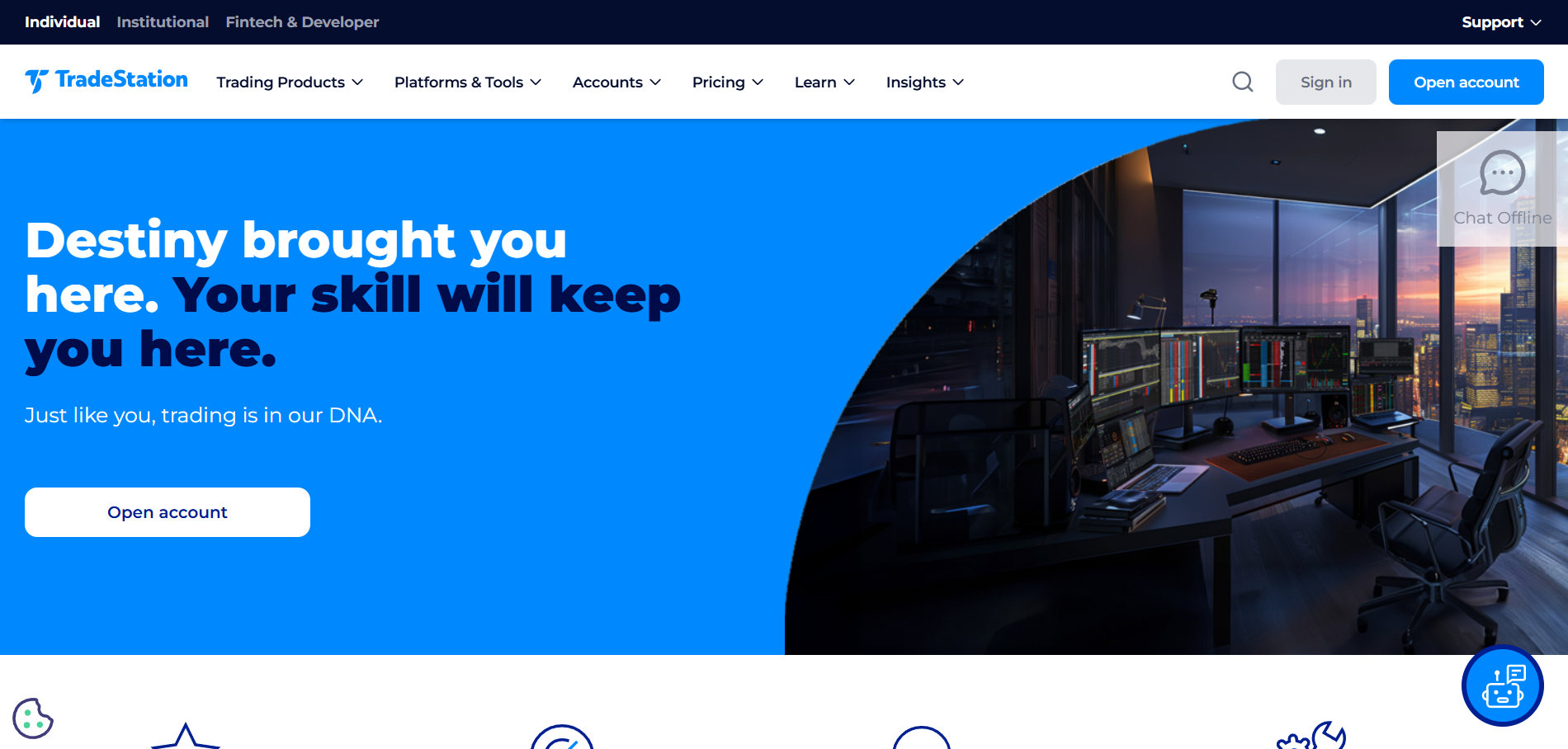
TradeStation is a long‑standing online brokerage and trading platform that gives traders and investors the ability to buy, sell, and manage a wide range of financial instruments, including stocks, ETFs, options, and futures, through powerful digital tools and interfaces. It’s widely recognized for its advanced charting, technical analysis, customizable dashboards, and automation features that support in‑depth market research and strategy execution.
Originally founded in 1982 as Omega Research by brothers William and Rafael Cruz, TradeStation began as software designed to help traders build, test, and automate trading strategies — long before online retail trading became mainstream. In the early 1990s, the company launched its flagship TradeStation platform and introduced EasyLanguage, a proprietary scripting language that makes it simpler for traders to create and backtest custom strategies without needing deep programming skills.
Over the decades, TradeStation evolved into a full brokerage firm and technology provider, eventually being acquired by Monex Group, a major financial services company based in Japan. TradeStation adheres to industry standards as a regulated broker, being overseen by FINRA, SEC, and CFTC, which ensures investor protection and operational reliability. There is no account minimum required to open a TradeStation account, making it accessible to a wide range of investors. Opening a TradeStation account is a straightforward process that involves online signup, verification steps, and selection of account types, with clear procedures for both U.S. and non-U.S. investors. What sets TradeStation apart is its professional‑grade analytical and execution tools — especially its backtesting and automation capabilities — combined with flexible desktop, web, and mobile platforms tailored to active and experienced traders seeking deep control over their trading workflows.
Benefits of Trading with TradeStation
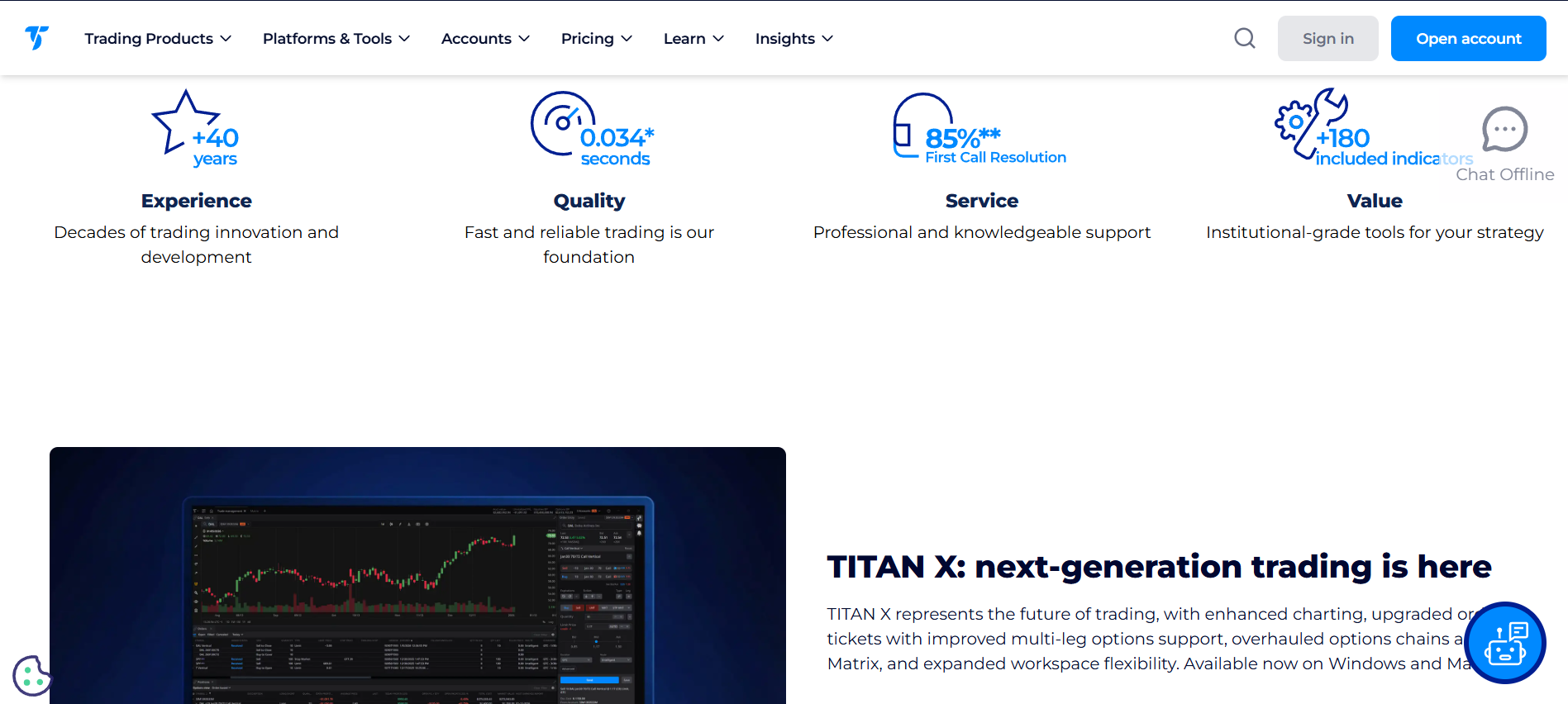
Trading with TradeStation gives you access to a full suite of professional‑grade tools and platforms that support stocks, ETFs, options, and futures trading all in one place. Key features include powerful charting, real‑time market analysis, customizable dashboards, multi-leg options trading, and dedicated futures trading platforms like FuturesPlus. These advanced features are especially valuable for active options traders and futures traders who require sophisticated tools for complex strategies and risk management. The platform includes automated strategy capabilities like backtesting and alerts, helping more serious traders explore and refine their trading ideas. TradeStation’s desktop, web, and mobile platforms are designed for flexibility and depth, letting you manage positions, scan markets, and execute trades efficiently from wherever you trade.
One major draw for active traders is competitive commission structures: TradeStation offers $0 commissions on many U.S. stock and ETF trades under its main pricing plan, providing commission free trading for cost-conscious investors. The platform is primarily designed for active traders, day traders, and professionals requiring high-performance tools and fast execution. TradeStation also provides fast execution and direct‑market access, which many active and professional traders value when timing is critical. Combined with optional market data and advanced trading tools, TradeStation’s pricing and performance make it a compelling choice for traders seeking both cost efficiency and high‑end functionality. However, TradeStation lacks certain features that may appeal to less experienced traders, such as fractional share trading and comprehensive fundamental research.
TradeStation Regulation and Safety
TradeStation operates as a regulated brokerage in the United States, with its main entity TradeStation Securities, Inc. licensed as a broker‑dealer with the exchange commission (SEC) and a futures commission merchant (FCM) with the commodity futures trading commission (CFTC), and it is a member of the financial industry regulatory authority (FINRA) and major U.S. exchanges. This means it must follow strict industry standards designed to protect investors and maintain transparent operations. TradeStation adheres to industry standards for investor protection and regulatory compliance.
Clients’ brokerage accounts with TradeStation are covered by the Securities Investor Protection Corporation (SIPC), which protects up to $500,000 per account, including up to $250,000 for cash held in connection with securities trading, in the unlikely event the firm fails. However, SIPC insurance does not protect futures accounts. Beyond SIPC, TradeStation has arranged extra insurance through private carriers that significantly increases coverage limits for eligible accounts, helping provide added peace of mind for large portfolios (subject to policy terms and aggregate firm limits).
Client funds and securities are kept segregated from the firm’s own assets, a regulatory requirement that helps protect your investments if the brokerage encounters financial trouble. TradeStation also implements standard security measures like encrypted communication and strong login verification to protect your account data and access.
TradeStation Pros and Cons
Pros
- Features industry-leading, highly customizable charting and analysis tools.
- Zero or low commissions on many stock and ETF trades, with competitive pricing for options and futures
- Integrated research and educational content available
- Offers $0 commission on many stock and ETF trades for some account types
Cons
- Operates under the Anjouan Offshore Financial Authority (AOFA), which offers limited investor protection compared to major regulators.
- Initial ID verification can take time.
- Do not provide as many learning materials or resources for beginners to improve their trading knowledge.
TradeStation Customer Reviews
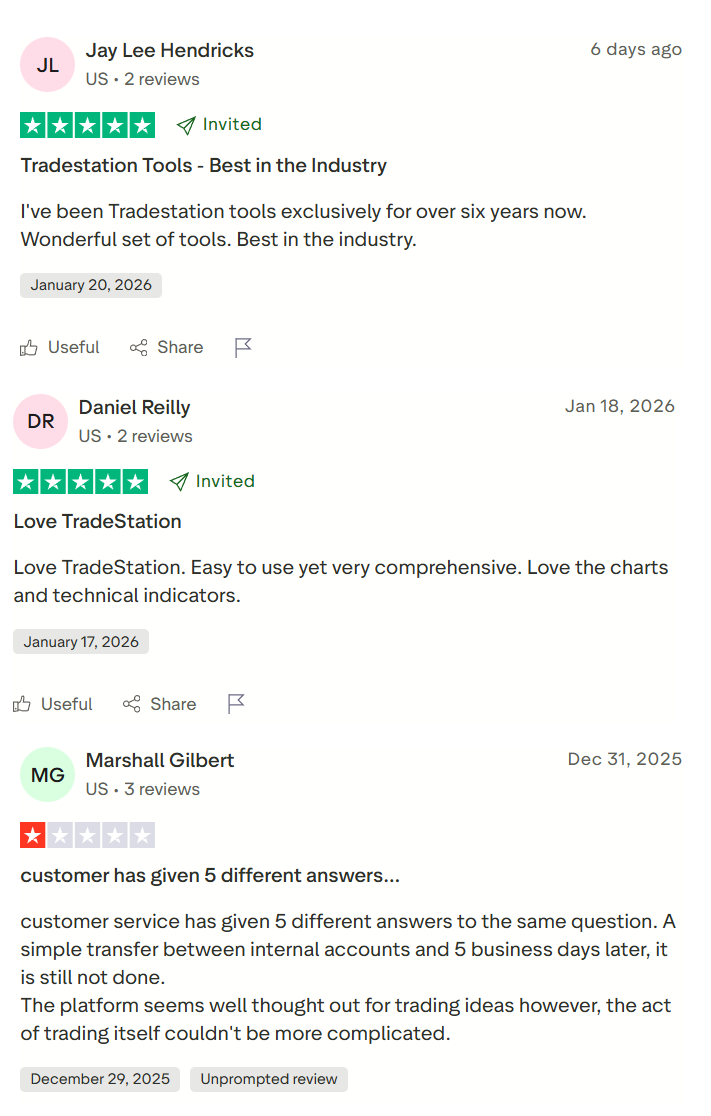
Many traders praise TradeStation’s powerful platform and advanced tools, noting that features like charting, customizable indicators, and automated trading capabilities stand out compared with other brokers. TradeStation's desktop platform is highly regarded by active traders for its robust features and suitability for day trading. Several long‑time users highlight strengths such as EasyLanguage for custom strategies, responsive platforms, and solid options and futures support — with some reviewers saying it’s one of the best platforms they’ve used for active trading. TradeStation's mobile app is well-designed and visually appealing, providing a smooth trading experience with strong security features, but it may not have all the features of the desktop platform.
However, customer feedback is mixed when it comes to support and usability. Some users report issues with customer service responsiveness, confusing account closures, or platform quirks that made trading harder than expected. TradeStation's execution quality on stock trades is significantly below the average among brokers reviewed and is below average compared to other brokers. A portion of reviews, especially on third‑party sites, mention frustrations with support quality, occasional bugs, or complicated processes for certain tasks. While many traders find the platform robust, others feel the experience could be smoother, particularly for beginners or those who expect uncomplicated support.
TradeStation Spreads, Fees, and Commissions
TradeStation’s pricing is designed to be competitive, especially for active traders. Under the TS Select pricing plan, eligible U.S. clients can trade stocks and ETFs with $0 commissions, meaning no base charge on many equity trades — though regulatory fees like the FINRA CAT fee still apply. Options trading costs are tiered based on volume, with typical per‑contract fees starting around $0.80 and dropping as your monthly volume grows, and additional small regulatory fees may apply per contract. Futures trading also uses a tiered structure, with fees per contract per side that start around $1.75 for standard futures and about $0.50 for micro futures, decreasing as volume increases. Other products such as fixed income or mutual funds carry separate transaction fees.
Beyond trading costs, there are account and service fees to consider. TradeStation charges a $10 monthly inactivity fee on many accounts if certain activity or balance thresholds aren’t met, though this can be waived with minimum trading activity or balance. There are also miscellaneous fees like outgoing transfer fees, wire transfer charges, and IRA maintenance fees that can add up if you use those services. Real‑time market data packages and optional services come with additional monthly costs depending on what markets and depth of data you subscribe to.
Overall, while TradeStation offers low direct trading costs — especially for equities and high‑volume traders — its fee structure includes tiered commissions, regulatory charges, and several ancillary fees that traders should review closely before opening an account.
Account Types
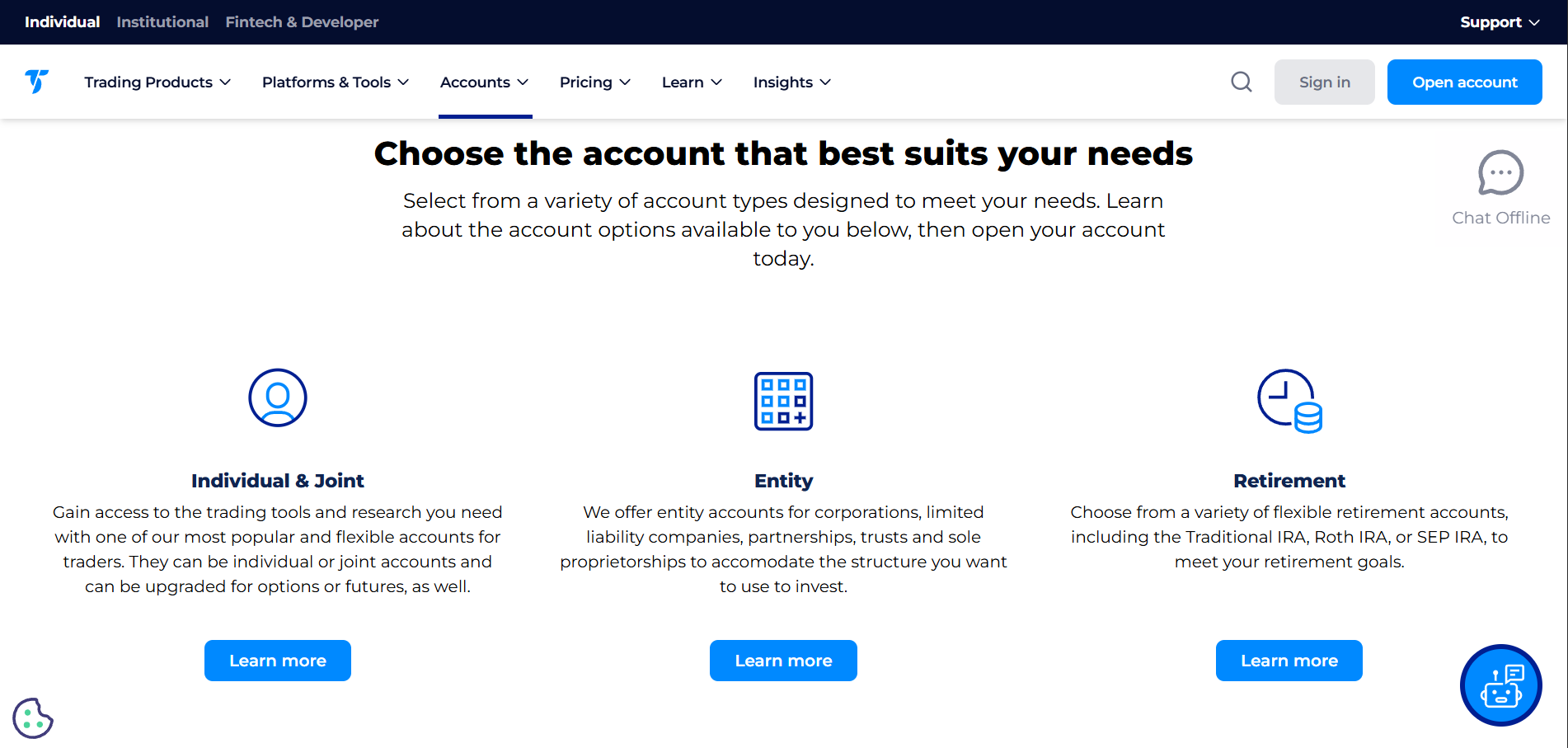
Individual Account
- Standard brokerage account for individual traders.
- Minimum deposit requirements vary based on the trading activity.
- $0 commissions on U.S. stock and ETF trades.
- Allows trading in stocks, ETFs, options, and futures.
- Ideal for retail traders looking for flexibility in managing their own investments.
Joint Account
- Shared ownership between two or more individuals.
- Same trading options as individual accounts, including stocks, ETFs, options, and futures.
- $0 commissions on U.S. stock and ETF trades.
- Best for partners or spouses who want to manage investments together.
- Joint filing tax treatment applies.
Retirement Account
- Includes Traditional IRA, Roth IRA, SEP IRA, SIMPLE IRA, and Rollover IRA.
- Same trading options as individual accounts (stocks, ETFs, options, futures).
- Tax benefits depending on the type (Traditional IRA offers tax-deferred growth, Roth IRA offers tax-free withdrawals).
- Long-term retirement-focused account with investment flexibility.
- Great for traders looking to save for retirement with tax advantages.
Entity Account
- Includes Trust, Corporation, Partnership, LLC, and Sole Proprietorship accounts.
- Ideal for trading through a business or entity rather than an individual.
- Same trading options available (stocks, ETFs, options, futures).
- Flexibility for business or investment group trading.
- Taxation varies based on the type of entity (corporate tax rates, trust taxes, etc.).
How to Open Your Account
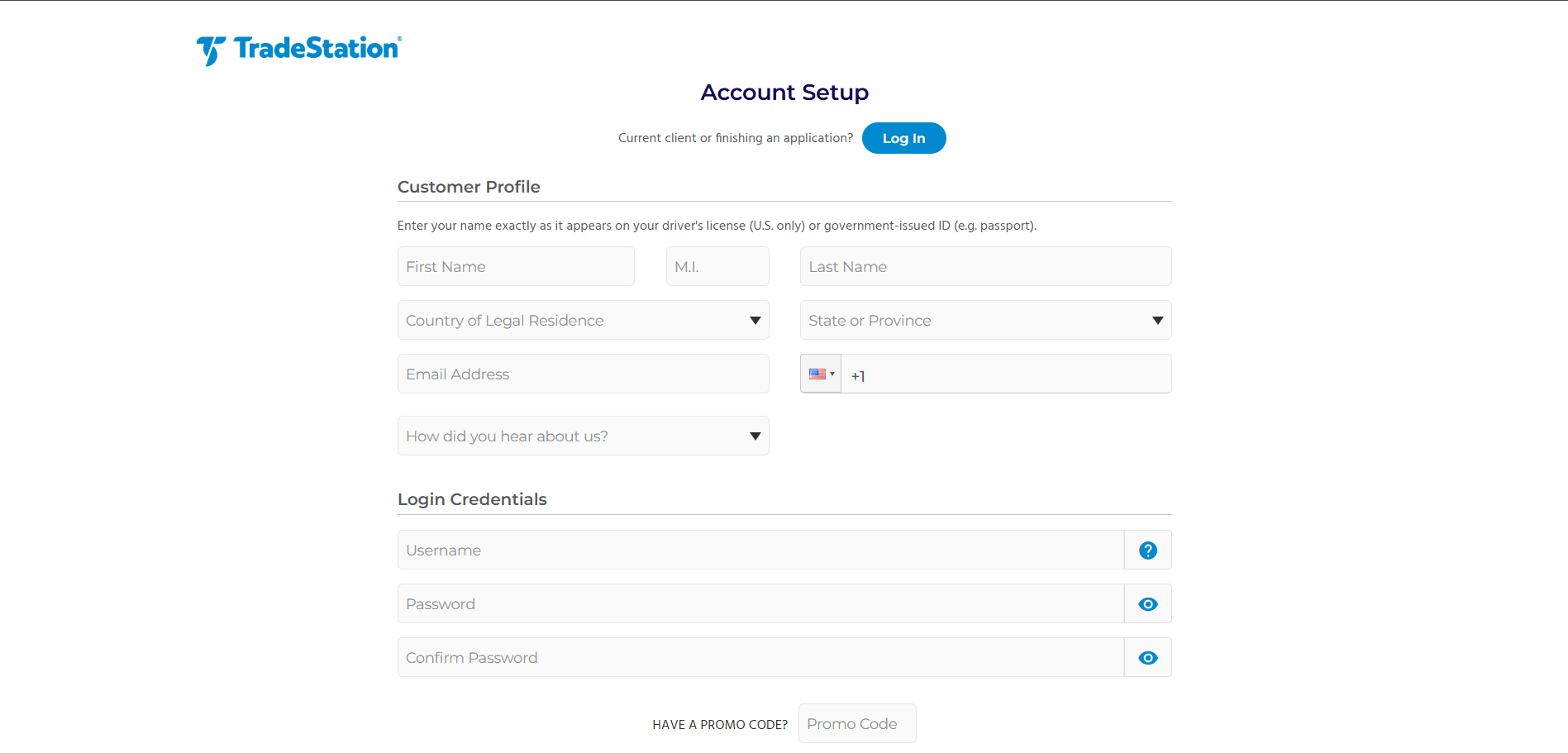
- Visit the TradeStation registration page and click the “Open Account” or “Get Started” button to begin your application.
- Choose your account type (e.g., individual, joint, retirement) depending on your trading goals and needs.
- Create your login credentials by entering your email, setting a secure password, and providing basic contact details.
- Fill in your personal information, including full name, address, date of birth, and government‑issued ID details for identity verification.
- Provide employment and financial information, answering questions about employment status, income, net worth, and trading experience.
- Verify your identity and documentation — upload required verification documents such as a driver’s license or passport and proof of address if prompted.
- Review and agree to Terms & Agreements, carefully reading all disclosures and then electronically signing to submit your application.
- Fund your account once approved — after TradeStation reviews and approves your application (often within 1–2 business days), you can deposit funds and start trading
TradeStation Trading Platforms
TradeStation’s trading platform ecosystem is built to support active and experienced traders with a suite of powerful tools and real‑time market access across multiple devices. The core offering includes a professional desktop platform that features advanced charting, real‑time scanning, customizable dashboards, and deep analysis tools like RadarScreen®, OptionStation® Pro, and the Matrix for market depth and precise order entry. Traders can also build, test, and automate custom strategies using EasyLanguage®, TradeStation’s proprietary scripting language, which makes it easier to convert trading ideas into algorithmic systems without needing high‑end programming skills.
In addition to the desktop software, TradeStation provides a web‑based platform and mobile app, giving traders flexibility to monitor markets, execute orders, and manage positions from any browser or smartphone. The web platform offers rich market data, built‑in hotlists, and customizable watchlists, while the mobile app brings much of the desktop’s functionality on the go with real‑time alerts, charting, and trade execution. While the desktop version remains the most feature‑rich — particularly for complex strategies and derivatives — the web and mobile platforms help ensure traders stay connected even when away from their main workstation.
Overall, TradeStation’s platform suite is designed for high‑control trading, with tools for everything from market scanning and advanced analysis to strategy automation and execution — making it especially appealing to technical traders and those who want a comprehensive, professional‑grade system.
What Can You Trade on TradeStation
TradeStation offers a broad selection of tradable markets designed to fit different trading styles, from active strategies to long‑term investing. Traders can access U.S. stocks and ETFs, allowing them to buy and sell shares and exchange‑traded funds with competitive pricing and execution. Additionally, options contracts across a variety of underlying assets are available for strategic trading like spreads, straddles, and other multi‑leg positions. Futures and futures options are also supported, giving traders access to markets like commodities, indices, and financial instruments that require deeper risk management tools.
For clients using TradeStation Global, there’s access to forex trading with direct interbank quotes, and major currency pairs through a single consolidated account — a feature that appeals to those who trade across global markets beyond U.S. equities and derivatives. Some account types and platforms may have slight differences in available products, but overall TradeStation’s range includes core markets favored by active and professional traders, providing flexibility to build diversified portfolios or advanced strategies.
TradeStation Customer Support
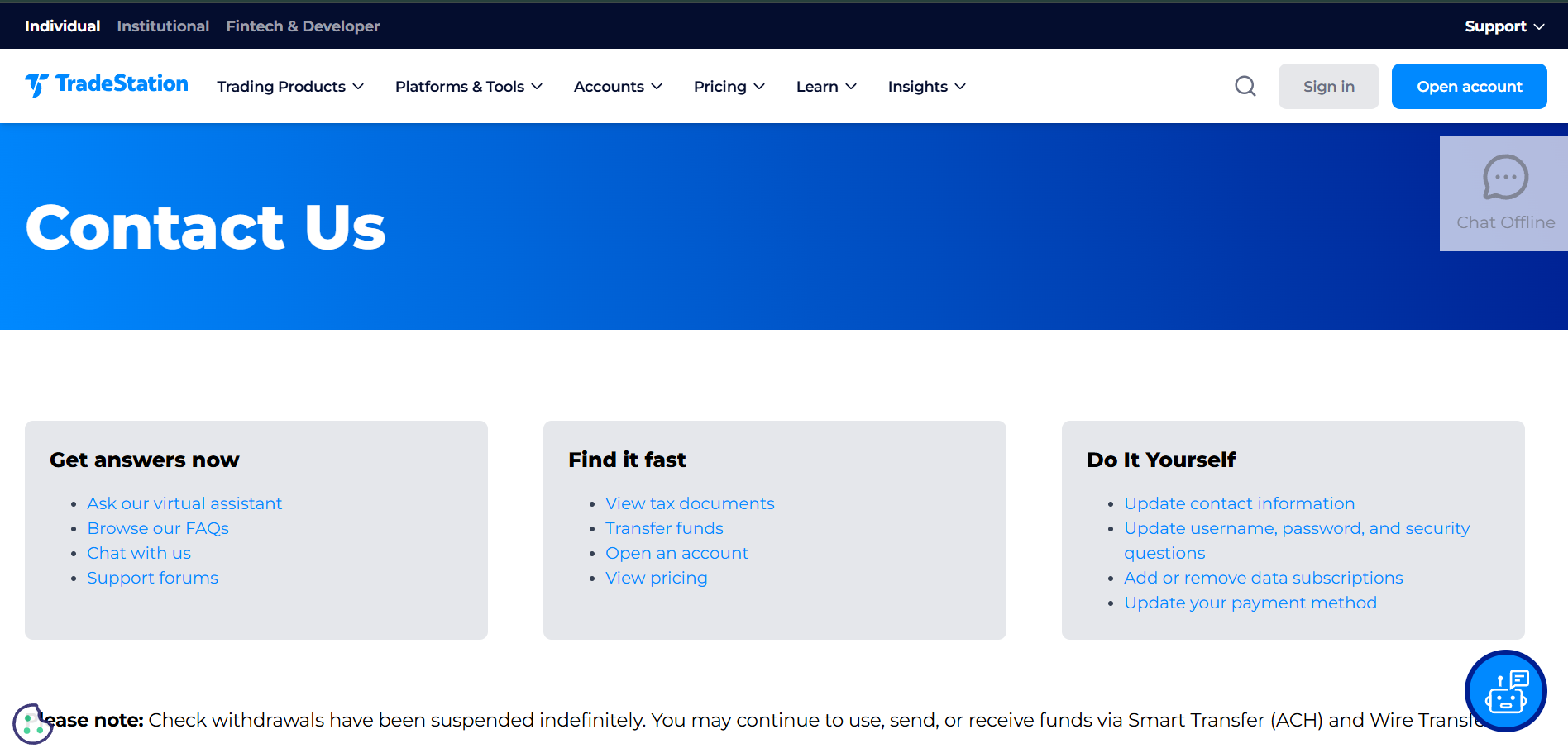
TradeStation provides customer support through multiple channels, including phone support, email, and online help resources, which are available to assist with account setup, platform navigation, and technical issues. The broker also maintains a library of educational articles and video guides covering everything from trade execution basics to advanced platform features, helping traders of all levels get help when they need it.
While many clients appreciate the depth of documentation and resources available, user‑reported experiences with support quality vary — some traders have expressed frustration over response times or problem resolution in community discussions, whereas others find support adequate for general questions and guidance. This mixed feedback suggests trade‑off experiences depending on the issue type and region, and many users supplement official support with community forums or third‑party tutorials when exploring complex features.
Advantages and Disadvantages of TradeStation Customer Support
 Advantages
 Disadvantages
Withdrawal Options and Fees
TradeStation allows clients to withdraw funds via common methods such as bank wire transfers or ACH transfers, with processing times that can range from a couple of business days up to a week depending on the method and verification requirements. Many users appreciate the ability to transfer funds directly to their linked bank accounts, and U.S. clients typically benefit from electronic withdrawal processes without unnecessary delay.
However, withdrawal fees can apply in certain situations. For example, wire transfers may incur a fee, and international transfers can involve additional bank or intermediary charges — which vary by region and banking partner. Unlike some brokers that offer free withdrawal options, TradeStation’s fee structure for outgoing transfers and certain service charges is outlined in its service fee schedule, so traders are encouraged to check specific costs before initiating a transfer.
TradeStation Vs Other Brokers
#1.TradeStation vs AvaTrade
TradeStation and AvaTrade are comparable in many ways, but TradeStation generally offers access to more markets and advanced analytical tools, while AvaTrade tends to have simpler deposit/withdrawal processes and stronger customer service quality. TradeStation’s trading platform suite is often seen as more powerful for active strategy execution, whereas AvaTrade provides a slightly easier overall user journey for beginners.
Verdict: Both brokers serve different trader needs — TradeStation leans toward active and analytical traders, and AvaTrade toward users who want broader CFD and forex options with a straightforward experience.
#2. TradeStation vs RoboForex
RoboForex is known for forex and CFD trading with tight spreads and high leverage, often appealing to forex‑focused or retail traders. In contrast, TradeStation’s core strength is in U.S. securities, options, and futures markets with advanced tools for strategy development. While RoboForex may offer more competitive spreads on currency pairs, TradeStation provides a broader product set and deeper platform features for complex trading.
Verdict: TradeStation may suit diversified traders seeking multi‑asset access and analytics, while RoboForex is typically chosen for dedicated forex and CFD execution environments.
#3. TradeStation vs Exness
Compared with Exness, TradeStation usually offers access to a wider range of traditional markets like stocks, ETFs, options, and futures, along with strong analytical tools and research. Exness often has lower fees, more seamless deposit/withdrawal processes, and simpler customer service experiences, but a narrower product list and less extensive research tools than TradeStation.
Verdict: Exness can be more cost‑efficient and easier to use in some respects, while TradeStation stands out for advanced analytics and broader market access.
Also Read: AvaTrade Review 2024- Expert Trader Insights
OPEN AN ACCOUNT WITH TRADESTATION
Conclusion: TradeStation Review
TradeStation is a well‑established brokerage and trading platform that caters strongly to active, professional, and data‑driven traders, offering access to stocks, ETFs, options, futures, and — through TradeStation Global — forex markets as well. Its advanced tools, customizable platforms, and deep analytical capabilities make it a robust choice for strategy‑oriented traders.
At the same time, TradeStation’s fee structures, support experiences, and platform learning curve may feel less approachable for casual or beginner traders compared with some brokers focused on simplicity. Withdrawal and service fees deserve attention when planning your trading costs, and customer support experiences vary by region and issue type.
Ultimately, TradeStation is best suited for users who value professional‑grade tools and multi‑asset market access, while those prioritizing low costs, ease of use, or a broad CFD/forex product set may find other brokers more fitting.
Also Read: MarketsVox Review 2024 – Expert Trader Insights
TradeStationX: FAQ’s
Is TradeStation regulated and safe to trade with?
Yes — it is regulated by top authorities like the SEC, FINRA, CFTC, and others in international jurisdictions.
What markets can I trade on TradeStation?
You can trade stocks, ETFs, options, futures, futures options, and through TradeStation Global, forex markets.
Are there withdrawal fees on TradeStation?
Withdrawal options like wire transfers may incur fees, and international transfers may involve additional bank charges.
Can beginners use TradeStation?
Yes, but its tools and features are more geared toward intermediate to advanced traders, and a learning curve exists.
OPEN AN ACCOUNT NOW WITH TRADESTATION AND GET YOUR BONUS