Learn To Trade Forex • Best Forex Trading Course • AsiaForexMentor

Trump’s Tariffs Take Effect: Is Now the Time to Buy Stocks?

Written by

Ezekiel Chew

Updated on

April 4, 2025

i

Trump’s Tariffs Take Effect: Is Now the Time to Buy Stocks?

Written by:

Ezekiel Chew

Last updated on:

April 4, 2025

Trump’s new tariffs have sent shock waves through the economy, and stock market reactions have been strong. The S&P 500, an important indicator of U.S. stock performance, has dropped 11% in value since the announcement, erasing $5 trillion in value. Many investors are concerned that these trade policies could trigger a global recession.

What brought about this development?

On April 2, Trump announced a series of sweeping new tariffs. Beginning April 5, most imported goods will incur a 10% tax, and, starting April 9, even heavier taxes will be paid on imports from dozens of countries. These “reciprocal tariffs” seek to protect American industries by leveling the playing field. However, they also serve to make other goods costlier for American businesses and consumers, thereby hurting their economy. Fitch Ratings noted that the average tax on U.S. imports right now is at its highest level since around 1910.

What do historical references tell?

Historically, there have been a few examples of even minor increases in tariffs producing large decreases in stock prices. Between 1955 and 1962, a small increase in tariffs accompanied four corrections and two bear markets. Once again, this in the early 1980s saw another increase, producing a 27% drop in the markets. The last round of tariffs, between 2017 and 2019, was also responsible for two corrections, and one of those was almost a 20% drop in the S&P 500. The latest hike, a 19-percentage-point jump in average import taxes, is much larger than in those earlier cases, raising the risk of even deeper market declines.

Here is something that cheers us up.

There has always been pain thanks to tariffs in the past, but it has always been proved that over a short period of time the stock market rises. So for every downturn related to trade tensions, history shows that such downswings turn out to be buying opportunities. Financial strategist David Kelly puts forth that tariffs can hurt growth and create instability worldwide, but the U.S. market has always proven resilient in the long run. Warren Buffett’s famous rule of thumb is “be fearful when others are greedy, and be greedy when others are fearful.” This advice is still followed by many long-term investors today.

What should you do now?

The best thing now is to maintain calmness. Panic selling often leads to regrets when the rebound happens in the market. Continuous investment and conviction for long-term, solid companies make eventual price declines show up as positives. This could mean great buying opportunities on the best stocks at discount prices for those who have a long horizon.

About Ezekiel Chew​

Ezekiel Chew, founder and head of training at Asia Forex Mentor, is a renowned forex expert, frequently invited to speak at major industry events. Known for his deep market insights, Ezekiel is one of the top traders committed to supporting the trading community. Making six figures per trade, he also trains traders working in banks, fund management, and prop trading firms.

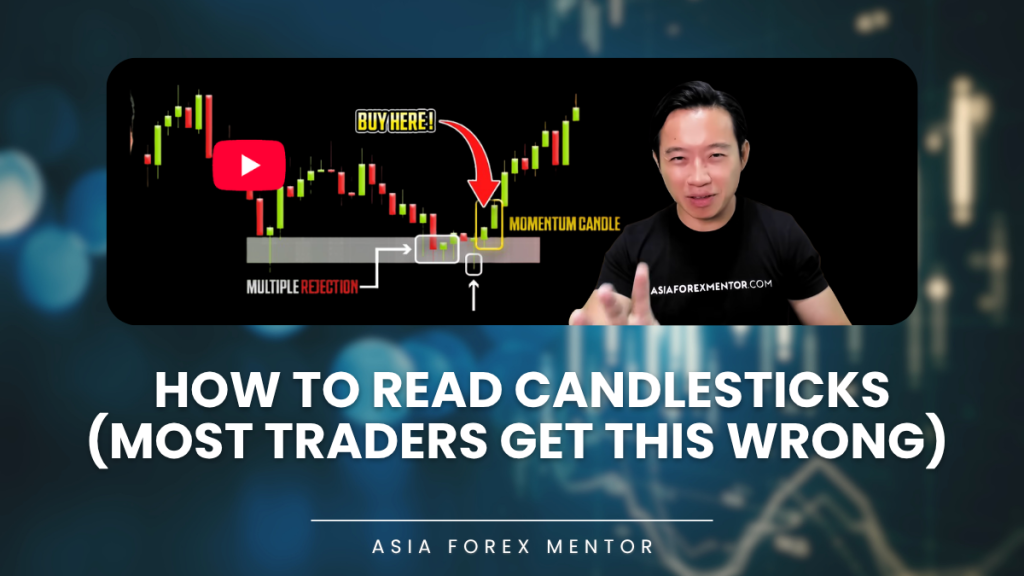
How to Read Candlesticks (Most Traders Get This Wrong)

Most traders who spend months learning how to read candlesticks still lose on setups that looked textbook. The pattern was never the problem. Reading it without context was. ABOUT THIS GUIDE This guide covers three specific candlestick signals used in professional price action trading, the Fibonacci golden zone context tool,

Read More

What Profit Factor Tells You Before Going Live

Profit factor is calculated by dividing a strategy’s total gross profit by its total gross loss, and most experienced traders reject any system that reads below 1.5 before risking real capital. Most traders see any positive number and call it a green light. That is where the costly mistake starts.

Read More

6 Forex Trading Scams Every Beginner Should Know

The most effective forex trading scams do not announce themselves as threats. They arrive as opportunities, come through referrals and social media, and are often indistinguishable from legitimate services until the first withdrawal request is made. ABOUT THIS GUIDE This guide covers the six most common forex trading scams, the

Read More

How to Use Fibonacci Retracement Step by Step in 2026

Most traders learn how to use Fibonacci retracement and immediately draw it wrong. This tool comes from a mathematical sequence first documented in 1202, and institutional traders use it daily to plan entries at precise price levels. The majority of retail traders miss the one placement rule that makes every

Read More

Free Margin in Forex What the MT4 Panel Shows

Free margin in forex is the one figure on the MT4 or MT5 account panel that determines whether another position can open right now, and it is consistently the last number most traders learn to read. ABOUT THIS GUIDE This guide explains what free margin is and how it connects

Read More

Scalping Trading Strategy The Pros Actually Use

The scalping trading strategy most retail traders use is not actually scalping. They are gambling on 1-minute candles with no defined edge, no position-sizing rules, and no plan for when the losses come. ABOUT THIS GUIDE This guide covers what scalping is, how professional scalpers build a repeatable edge, and

Read More

AFM Trading Summit Live

Date: Coming Soon

Join us at the AFM Trading Summit Live and learn from top industry experts through live trading sessions, market insights, and actionable strategies.

Trump’s Tariffs Take Effect: Is Now the Time to Buy Stocks?

4.0
Overall Trust Index

Written by:

Updated:

April 4, 2025

Trump's new tariffs have sent shock waves through the economy, and stock market reactions have been strong. The S&P 500, an important indicator of U.S. stock performance, has dropped 11% in value since the announcement, erasing $5 trillion in value. Many investors are concerned that these trade policies could trigger a global recession.

What brought about this development?

On April 2, Trump announced a series of sweeping new tariffs. Beginning April 5, most imported goods will incur a 10% tax, and, starting April 9, even heavier taxes will be paid on imports from dozens of countries. These "reciprocal tariffs" seek to protect American industries by leveling the playing field. However, they also serve to make other goods costlier for American businesses and consumers, thereby hurting their economy. Fitch Ratings noted that the average tax on U.S. imports right now is at its highest level since around 1910.

What do historical references tell?

Historically, there have been a few examples of even minor increases in tariffs producing large decreases in stock prices. Between 1955 and 1962, a small increase in tariffs accompanied four corrections and two bear markets. Once again, this in the early 1980s saw another increase, producing a 27% drop in the markets. The last round of tariffs, between 2017 and 2019, was also responsible for two corrections, and one of those was almost a 20% drop in the S&P 500. The latest hike, a 19-percentage-point jump in average import taxes, is much larger than in those earlier cases, raising the risk of even deeper market declines.

Here is something that cheers us up.

There has always been pain thanks to tariffs in the past, but it has always been proved that over a short period of time the stock market rises. So for every downturn related to trade tensions, history shows that such downswings turn out to be buying opportunities. Financial strategist David Kelly puts forth that tariffs can hurt growth and create instability worldwide, but the U.S. market has always proven resilient in the long run. Warren Buffett's famous rule of thumb is "be fearful when others are greedy, and be greedy when others are fearful." This advice is still followed by many long-term investors today.

What should you do now?

The best thing now is to maintain calmness. Panic selling often leads to regrets when the rebound happens in the market. Continuous investment and conviction for long-term, solid companies make eventual price declines show up as positives. This could mean great buying opportunities on the best stocks at discount prices for those who have a long horizon.
ezekiel chew asiaforexmentor

About Ezekiel Chew

Ezekiel Chew, founder and head of training at Asia Forex Mentor, is a renowned forex expert, frequently invited to speak at major industry events. Known for his deep market insights, Ezekiel is one of the top traders committed to supporting the trading community. Making six figures per trade, he also trains traders working in banks, fund management, and prop trading firms.

RELATED ARTICLES

Trump’s Tariffs Take Effect: Is Now the Time to Buy Stocks?

4.0
Overall Trust Index

Written by:

Updated:

April 4, 2025

Trump's new tariffs have sent shock waves through the economy, and stock market reactions have been strong. The S&P 500, an important indicator of U.S. stock performance, has dropped 11% in value since the announcement, erasing $5 trillion in value. Many investors are concerned that these trade policies could trigger a global recession.

What brought about this development?

On April 2, Trump announced a series of sweeping new tariffs. Beginning April 5, most imported goods will incur a 10% tax, and, starting April 9, even heavier taxes will be paid on imports from dozens of countries. These "reciprocal tariffs" seek to protect American industries by leveling the playing field. However, they also serve to make other goods costlier for American businesses and consumers, thereby hurting their economy. Fitch Ratings noted that the average tax on U.S. imports right now is at its highest level since around 1910.

What do historical references tell?

Historically, there have been a few examples of even minor increases in tariffs producing large decreases in stock prices. Between 1955 and 1962, a small increase in tariffs accompanied four corrections and two bear markets. Once again, this in the early 1980s saw another increase, producing a 27% drop in the markets. The last round of tariffs, between 2017 and 2019, was also responsible for two corrections, and one of those was almost a 20% drop in the S&P 500. The latest hike, a 19-percentage-point jump in average import taxes, is much larger than in those earlier cases, raising the risk of even deeper market declines.

Here is something that cheers us up.

There has always been pain thanks to tariffs in the past, but it has always been proved that over a short period of time the stock market rises. So for every downturn related to trade tensions, history shows that such downswings turn out to be buying opportunities. Financial strategist David Kelly puts forth that tariffs can hurt growth and create instability worldwide, but the U.S. market has always proven resilient in the long run. Warren Buffett's famous rule of thumb is "be fearful when others are greedy, and be greedy when others are fearful." This advice is still followed by many long-term investors today.

What should you do now?

The best thing now is to maintain calmness. Panic selling often leads to regrets when the rebound happens in the market. Continuous investment and conviction for long-term, solid companies make eventual price declines show up as positives. This could mean great buying opportunities on the best stocks at discount prices for those who have a long horizon.
ezekiel chew asiaforexmentor

About Ezekiel Chew

Ezekiel Chew, founder and head of training at Asia Forex Mentor, is a renowned forex expert, frequently invited to speak at major industry events. Known for his deep market insights, Ezekiel is one of the top traders committed to supporting the trading community. Making six figures per trade, he also trains traders working in banks, fund management, and prop trading firms.

RELATED ARTICLES

Join the Live Event
Get Your Free Ticket Now

I consent to receiving emails and/or text message reminders for this event.

REGISTER FOR THE MASTERCLASS!