
Learn To Trade Forex • Best Forex Trading Course • AsiaForexMentor

What Crypto to Invest In: Top Digital Assets to Watch in 2025

Written by

Ezekiel Chew

Updated on

May 16, 2025

i
Its a default text

What Crypto to Invest In: Top Digital Assets to Watch in 2025

Written by:

Ezekiel Chew

Last updated on:

May 16, 2025

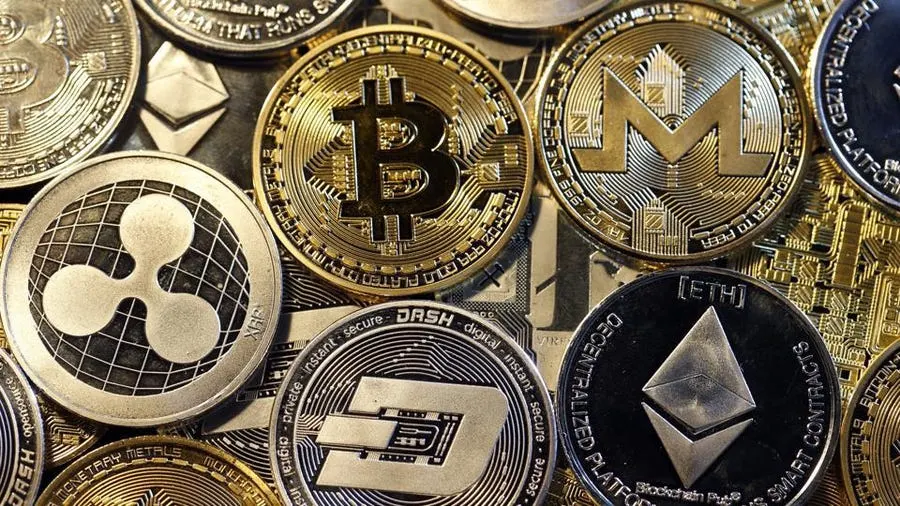
Investing in cryptocurrency remains in a stage of constant evolution as the blockchain technology redefines the way transactions in blockchain and digital currencies are conducted. No matter whether you are a seasoned investor or just an amateur in the crypto space, you should know the potential best cryptocurrency opportunities and the different kinds of risks that go along with that before you put your resources into it.

In 2025, many investors are on the same question mark: what crypto to invest in? Down below, we list three of the top contenders as per market cap, utility, and adoption trends. We also discuss how investments in cryptocurrencies are different from conventional investments, the role of regulatory demands, and how to reconcile investments with the tolerance of risks on your part.

1. Bitcoin (BTC)
For a lot of investors, Bitcoin is still the best cryptocurrency thanks to its previous track record and the fact that it is the first cryptocurrency. Being a decentralized crypto coin, it is not supported by any central bank and has a proof-of-work system for validating the transactions on the blockchain platform.

Why Bitcoin Is a Top Crypto Asset:

  • High Liquidity: Available on almost all the crypto exchanges, meaning one can trade it easily.
  • Bitcoin Futures: Trusted through futures contracts on regulated exchanges, such as CME, and delivering exposure without ownership.
  • Institutional Support: Increased use in the exchange-traded products such as the exchange-traded funds (ETFs).
  • Bitcoin Rewards: Some of the platforms offer BTC rewards, integrating crypto into operation and spending by businesses and even consumers.

Key Risks:

  • Highly Volatile: Bitcoin’s price also tends to fluctuate a lot, like most other crypto assets.
  • No FDIC or SIPC Protection: Virtual currencies such as Bitcoin are not covered with the same regulatory protection as mutual funds, companies registered under the Investment Company Act, or FDIC-insured companies under the Federal Deposit Insurance Corporation (FDIC) or the Securities Investor Protection Corporation (SIPC).

2. Ethereum (ETH)
The Ethereum blockchain powers a wide range of decentralized applications (dApps), smart contracts, and digital assets. It’s also the foundation for many innovations in supply chain management, crypto wallets, and NFTs.

Why Ethereum Stands Out:

  • Underlying Technology: Ethereum’s support for programmable contracts makes it central to the crypto industry.
  • Crypto Ecosystem Growth: Used as the underlying asset for many cryptocurrency-related products and exchange-traded funds.
  • Transition to Proof-of-Stake: Lower transaction fees and energy usage following the Ethereum 2.0 upgrade.

Investment Considerations:

  • Not a Registered Investment Company: Ethereum and other crypto coins lack backing from investment companies or futures accounts governed by traditional standards.
  • Market Price Volatility: ETH, like other digital currencies, is a highly speculative investment with exposure to various risks.

3. Solana (SOL)
Solana is a rising star in the crypto space, with fast transaction speeds and a rapidly growing developer base. Its innovative consensus mechanism and low fees make it a favorite for developers and investors alike.

Solana Highlights:

  • Blockchain Platform Performance: High throughput and fast finality for digital assets and dApps.
  • Growing Use Cases: Solana is used in decentralized finance (DeFi), gaming, and even crypto wallet integrations.
  • Alternative to Ethereum Network: Competes with Ethereum on speed and cost, offering a unique value proposition.

Risks to Watch:

  • Network Stability: Previous outages raise questions about reliability.
  • Regulatory Environment: As with all cryptocurrency investments, Solana operates in a space with evolving regulatory requirements and limited oversight.

Understanding the Broader Context

Before deciding what crypto to invest in, it’s essential to understand that cryptocurrency work differs significantly from traditional currencies or fiat currencies. Here are some key factors to consider:

  • Crypto Prices Are Highly Volatile: They can be affected by macroeconomic trends, network activity, and speculative trading.
  • No Investment Advice Guarantee: Unlike traditional investments, crypto assets aren’t offered through investment advice backed by regulatory institutions.
  • Lack of Regulatory Protections: Crypto does not fall under the same regulatory requirements or offer safeguards like a summary prospectus for mutual funds or exchange-traded products.

For a person to be able to make a decision on which crypto to invest in, it is important to note that cryptocurrency work is very different from other currencies or fiat currencies. Some of the important considerations here are:

  • Crypto Prices Are Highly Volatile: They are subject to macroeconomic trends, network activity, and speculative trading.
  • No Investment Advice Guarantee: Crypto assets are unlike the traditional investments that are not sold under investment advice given by regulatory institutions.
  • Lack of Regulatory Protections: Crypto is outside of the same requirements for regulation and protection through the likes of a summary prospectus for mutual funds or exchange-traded products.

Conclusion: Diversify, Research, and Align with Your Objectives

The cryptocurrency market consists of Bitcoin, Ethereum, and Solana, where Bitcoin is the largest cryptocurrency by capitalization and appeals to the financial community; Ethereum is dynamic and popular with the community, and Solana is a project with low costs. value storage, smart contract utility, and high-speed infrastructure. However, all of them have their own inherent cryptocurrencies, other threats, and challenges.

If you are thinking of investing your entire investment or a part of it, make sure your investments comply with your investment objectives and risk tolerance. The crypto world is still young, and even though innovation is high, the safeguards are not as empirically sound as those of the traditional investment world.

As usual, seek advice from a licensed financial advisor before making a major investment in this fledgling asset class.
About Ezekiel Chew​

Ezekiel Chew, founder and head of training at Asia Forex Mentor, is a renowned forex expert, frequently invited to speak at major industry events. Known for his deep market insights, Ezekiel is one of the top traders committed to supporting the trading community. Making six figures per trade, he also trains traders working in banks, fund management, and prop trading firms.

How to Read Candlesticks (Most Traders Get This Wrong)

Most traders who spend months learning how to read candlesticks still lose on setups that looked textbook. The pattern was never the problem. Reading it without context was. ABOUT THIS GUIDE This guide covers three specific candlestick signals used in professional price action trading, the Fibonacci golden zone context tool,

Read More

What Profit Factor Tells You Before Going Live

Profit factor is calculated by dividing a strategy’s total gross profit by its total gross loss, and most experienced traders reject any system that reads below 1.5 before risking real capital. Most traders see any positive number and call it a green light. That is where the costly mistake starts.

Read More

6 Forex Trading Scams Every Beginner Should Know

The most effective forex trading scams do not announce themselves as threats. They arrive as opportunities, come through referrals and social media, and are often indistinguishable from legitimate services until the first withdrawal request is made. ABOUT THIS GUIDE This guide covers the six most common forex trading scams, the

Read More

How to Use Fibonacci Retracement Step by Step in 2026

Most traders learn how to use Fibonacci retracement and immediately draw it wrong. This tool comes from a mathematical sequence first documented in 1202, and institutional traders use it daily to plan entries at precise price levels. The majority of retail traders miss the one placement rule that makes every

Read More

Free Margin in Forex What the MT4 Panel Shows

Free margin in forex is the one figure on the MT4 or MT5 account panel that determines whether another position can open right now, and it is consistently the last number most traders learn to read. ABOUT THIS GUIDE This guide explains what free margin is and how it connects

Read More

Scalping Trading Strategy The Pros Actually Use

The scalping trading strategy most retail traders use is not actually scalping. They are gambling on 1-minute candles with no defined edge, no position-sizing rules, and no plan for when the losses come. ABOUT THIS GUIDE This guide covers what scalping is, how professional scalpers build a repeatable edge, and

Read More

AFM Trading Summit Live

Date: Coming Soon

Join us at the AFM Trading Summit Live and learn from top industry experts through live trading sessions, market insights, and actionable strategies.

What Crypto to Invest In: Top Digital Assets to Watch in 2025

4.0
Overall Trust Index

Written by:

Updated:

May 16, 2025

Investing in cryptocurrency remains in a stage of constant evolution as the blockchain technology redefines the way transactions in blockchain and digital currencies are conducted. No matter whether you are a seasoned investor or just an amateur in the crypto space, you should know the potential best cryptocurrency opportunities and the different kinds of risks that go along with that before you put your resources into it. In 2025, many investors are on the same question mark: what crypto to invest in? Down below, we list three of the top contenders as per market cap, utility, and adoption trends. We also discuss how investments in cryptocurrencies are different from conventional investments, the role of regulatory demands, and how to reconcile investments with the tolerance of risks on your part.

1. Bitcoin (BTC)

For a lot of investors, Bitcoin is still the best cryptocurrency thanks to its previous track record and the fact that it is the first cryptocurrency. Being a decentralized crypto coin, it is not supported by any central bank and has a proof-of-work system for validating the transactions on the blockchain platform.

Why Bitcoin Is a Top Crypto Asset:

  • High Liquidity: Available on almost all the crypto exchanges, meaning one can trade it easily.
  • Bitcoin Futures: Trusted through futures contracts on regulated exchanges, such as CME, and delivering exposure without ownership.
  • Institutional Support: Increased use in the exchange-traded products such as the exchange-traded funds (ETFs).
  • Bitcoin Rewards: Some of the platforms offer BTC rewards, integrating crypto into operation and spending by businesses and even consumers.

Key Risks:

  • Highly Volatile: Bitcoin’s price also tends to fluctuate a lot, like most other crypto assets.
  • No FDIC or SIPC Protection: Virtual currencies such as Bitcoin are not covered with the same regulatory protection as mutual funds, companies registered under the Investment Company Act, or FDIC-insured companies under the Federal Deposit Insurance Corporation (FDIC) or the Securities Investor Protection Corporation (SIPC).

2. Ethereum (ETH)

The Ethereum blockchain powers a wide range of decentralized applications (dApps), smart contracts, and digital assets. It’s also the foundation for many innovations in supply chain management, crypto wallets, and NFTs.

Why Ethereum Stands Out:

  • Underlying Technology: Ethereum’s support for programmable contracts makes it central to the crypto industry.
  • Crypto Ecosystem Growth: Used as the underlying asset for many cryptocurrency-related products and exchange-traded funds.
  • Transition to Proof-of-Stake: Lower transaction fees and energy usage following the Ethereum 2.0 upgrade.

Investment Considerations:

  • Not a Registered Investment Company: Ethereum and other crypto coins lack backing from investment companies or futures accounts governed by traditional standards.
  • Market Price Volatility: ETH, like other digital currencies, is a highly speculative investment with exposure to various risks.

3. Solana (SOL)

Solana is a rising star in the crypto space, with fast transaction speeds and a rapidly growing developer base. Its innovative consensus mechanism and low fees make it a favorite for developers and investors alike.

Solana Highlights:

  • Blockchain Platform Performance: High throughput and fast finality for digital assets and dApps.
  • Growing Use Cases: Solana is used in decentralized finance (DeFi), gaming, and even crypto wallet integrations.
  • Alternative to Ethereum Network: Competes with Ethereum on speed and cost, offering a unique value proposition.

Risks to Watch:

  • Network Stability: Previous outages raise questions about reliability.
  • Regulatory Environment: As with all cryptocurrency investments, Solana operates in a space with evolving regulatory requirements and limited oversight.

Understanding the Broader Context

Before deciding what crypto to invest in, it’s essential to understand that cryptocurrency work differs significantly from traditional currencies or fiat currencies. Here are some key factors to consider:
  • Crypto Prices Are Highly Volatile: They can be affected by macroeconomic trends, network activity, and speculative trading.
  • No Investment Advice Guarantee: Unlike traditional investments, crypto assets aren’t offered through investment advice backed by regulatory institutions.
  • Lack of Regulatory Protections: Crypto does not fall under the same regulatory requirements or offer safeguards like a summary prospectus for mutual funds or exchange-traded products.
For a person to be able to make a decision on which crypto to invest in, it is important to note that cryptocurrency work is very different from other currencies or fiat currencies. Some of the important considerations here are:
  • Crypto Prices Are Highly Volatile: They are subject to macroeconomic trends, network activity, and speculative trading.
  • No Investment Advice Guarantee: Crypto assets are unlike the traditional investments that are not sold under investment advice given by regulatory institutions.
  • Lack of Regulatory Protections: Crypto is outside of the same requirements for regulation and protection through the likes of a summary prospectus for mutual funds or exchange-traded products.

Conclusion: Diversify, Research, and Align with Your Objectives

The cryptocurrency market consists of Bitcoin, Ethereum, and Solana, where Bitcoin is the largest cryptocurrency by capitalization and appeals to the financial community; Ethereum is dynamic and popular with the community, and Solana is a project with low costs. value storage, smart contract utility, and high-speed infrastructure. However, all of them have their own inherent cryptocurrencies, other threats, and challenges. If you are thinking of investing your entire investment or a part of it, make sure your investments comply with your investment objectives and risk tolerance. The crypto world is still young, and even though innovation is high, the safeguards are not as empirically sound as those of the traditional investment world. As usual, seek advice from a licensed financial advisor before making a major investment in this fledgling asset class.
ezekiel chew asiaforexmentor

About Ezekiel Chew

Ezekiel Chew, founder and head of training at Asia Forex Mentor, is a renowned forex expert, frequently invited to speak at major industry events. Known for his deep market insights, Ezekiel is one of the top traders committed to supporting the trading community. Making six figures per trade, he also trains traders working in banks, fund management, and prop trading firms.

RELATED ARTICLES

What Crypto to Invest In: Top Digital Assets to Watch in 2025

4.0
Overall Trust Index

Written by:

Updated:

May 16, 2025

Investing in cryptocurrency remains in a stage of constant evolution as the blockchain technology redefines the way transactions in blockchain and digital currencies are conducted. No matter whether you are a seasoned investor or just an amateur in the crypto space, you should know the potential best cryptocurrency opportunities and the different kinds of risks that go along with that before you put your resources into it. In 2025, many investors are on the same question mark: what crypto to invest in? Down below, we list three of the top contenders as per market cap, utility, and adoption trends. We also discuss how investments in cryptocurrencies are different from conventional investments, the role of regulatory demands, and how to reconcile investments with the tolerance of risks on your part.

1. Bitcoin (BTC)

For a lot of investors, Bitcoin is still the best cryptocurrency thanks to its previous track record and the fact that it is the first cryptocurrency. Being a decentralized crypto coin, it is not supported by any central bank and has a proof-of-work system for validating the transactions on the blockchain platform.

Why Bitcoin Is a Top Crypto Asset:

  • High Liquidity: Available on almost all the crypto exchanges, meaning one can trade it easily.
  • Bitcoin Futures: Trusted through futures contracts on regulated exchanges, such as CME, and delivering exposure without ownership.
  • Institutional Support: Increased use in the exchange-traded products such as the exchange-traded funds (ETFs).
  • Bitcoin Rewards: Some of the platforms offer BTC rewards, integrating crypto into operation and spending by businesses and even consumers.

Key Risks:

  • Highly Volatile: Bitcoin’s price also tends to fluctuate a lot, like most other crypto assets.
  • No FDIC or SIPC Protection: Virtual currencies such as Bitcoin are not covered with the same regulatory protection as mutual funds, companies registered under the Investment Company Act, or FDIC-insured companies under the Federal Deposit Insurance Corporation (FDIC) or the Securities Investor Protection Corporation (SIPC).

2. Ethereum (ETH)

The Ethereum blockchain powers a wide range of decentralized applications (dApps), smart contracts, and digital assets. It’s also the foundation for many innovations in supply chain management, crypto wallets, and NFTs.

Why Ethereum Stands Out:

  • Underlying Technology: Ethereum’s support for programmable contracts makes it central to the crypto industry.
  • Crypto Ecosystem Growth: Used as the underlying asset for many cryptocurrency-related products and exchange-traded funds.
  • Transition to Proof-of-Stake: Lower transaction fees and energy usage following the Ethereum 2.0 upgrade.

Investment Considerations:

  • Not a Registered Investment Company: Ethereum and other crypto coins lack backing from investment companies or futures accounts governed by traditional standards.
  • Market Price Volatility: ETH, like other digital currencies, is a highly speculative investment with exposure to various risks.

3. Solana (SOL)

Solana is a rising star in the crypto space, with fast transaction speeds and a rapidly growing developer base. Its innovative consensus mechanism and low fees make it a favorite for developers and investors alike.

Solana Highlights:

  • Blockchain Platform Performance: High throughput and fast finality for digital assets and dApps.
  • Growing Use Cases: Solana is used in decentralized finance (DeFi), gaming, and even crypto wallet integrations.
  • Alternative to Ethereum Network: Competes with Ethereum on speed and cost, offering a unique value proposition.

Risks to Watch:

  • Network Stability: Previous outages raise questions about reliability.
  • Regulatory Environment: As with all cryptocurrency investments, Solana operates in a space with evolving regulatory requirements and limited oversight.

Understanding the Broader Context

Before deciding what crypto to invest in, it’s essential to understand that cryptocurrency work differs significantly from traditional currencies or fiat currencies. Here are some key factors to consider:
  • Crypto Prices Are Highly Volatile: They can be affected by macroeconomic trends, network activity, and speculative trading.
  • No Investment Advice Guarantee: Unlike traditional investments, crypto assets aren’t offered through investment advice backed by regulatory institutions.
  • Lack of Regulatory Protections: Crypto does not fall under the same regulatory requirements or offer safeguards like a summary prospectus for mutual funds or exchange-traded products.
For a person to be able to make a decision on which crypto to invest in, it is important to note that cryptocurrency work is very different from other currencies or fiat currencies. Some of the important considerations here are:
  • Crypto Prices Are Highly Volatile: They are subject to macroeconomic trends, network activity, and speculative trading.
  • No Investment Advice Guarantee: Crypto assets are unlike the traditional investments that are not sold under investment advice given by regulatory institutions.
  • Lack of Regulatory Protections: Crypto is outside of the same requirements for regulation and protection through the likes of a summary prospectus for mutual funds or exchange-traded products.

Conclusion: Diversify, Research, and Align with Your Objectives

The cryptocurrency market consists of Bitcoin, Ethereum, and Solana, where Bitcoin is the largest cryptocurrency by capitalization and appeals to the financial community; Ethereum is dynamic and popular with the community, and Solana is a project with low costs. value storage, smart contract utility, and high-speed infrastructure. However, all of them have their own inherent cryptocurrencies, other threats, and challenges. If you are thinking of investing your entire investment or a part of it, make sure your investments comply with your investment objectives and risk tolerance. The crypto world is still young, and even though innovation is high, the safeguards are not as empirically sound as those of the traditional investment world. As usual, seek advice from a licensed financial advisor before making a major investment in this fledgling asset class.

ezekiel chew asiaforexmentor

About Ezekiel Chew

Ezekiel Chew, founder and head of training at Asia Forex Mentor, is a renowned forex expert, frequently invited to speak at major industry events. Known for his deep market insights, Ezekiel is one of the top traders committed to supporting the trading community. Making six figures per trade, he also trains traders working in banks, fund management, and prop trading firms.

RELATED ARTICLES

Join the Live Event
Get Your Free Ticket Now

I consent to receiving emails and/or text message reminders for this event.

REGISTER FOR THE MASTERCLASS!