Looking for the best trading platforms in Malaysia for 2026? You’re in the right place. With so many options available, picking the right online trading platform can feel overwhelming. Whether you're into stock trading, forex trading, or just starting your investment journey, choosing the right platform makes a huge difference. From trading Malaysian stocks on Bursa Malaysia to exploring global markets, finding a platform with a user-friendly interface, real-time updates, and transparent fee structures is crucial. We've done the homework to help you focus on what matters—trading opportunities.
In this list, we’ll cover the most popular trading platforms for Malaysian investors, catering to both beginners and advanced traders. These platforms offer a wide range of tools like real-time market data, seamless currency conversion, and access to currency pairs for the forex market. Whether you’re managing a brokerage account or analyzing trading strategies, the platforms we highlight deliver top-notch features. With options designed to simplify processes like using the central depository system, you’ll have what you need to make informed investment decisions.
Why Choosing the Best Trading Platforms in Malaysia is Important
With so many investment options available, from stocks to crypto assets, picking the right platform can be the key difference in reaching your financial goals. Whether you're a beginner looking to start investing or a long-term investor, the right platform should offer reliable tools, low fees, and robust security measures to protect your investments. The right platform should offer reliable tools, low fees, and robust security measures to protect your investments.
Here’s why the right platform matters:
- Security measures: Protecting your data and funds should be a priority when you start trading.
- Low fees: Look for platforms with reasonable charges, including commission fees, to maximize your profits.
- Wide investment opportunities: A good platform gives access to stocks, crypto assets, and more to suit your goals.
- Technical analysis tools: These help investors evaluate trends and improve trading strategies.
- User-friendly design: A simple interface ensures both new customers and seasoned traders can use it without hassle.
- Additional features: Some platforms offer perks like educational resources or demo accounts for practice.
- Trusted brokers: Make sure the platform works with reputable brokers for smooth transactions.
The 25 Best Trading Platforms in Malaysia
#1. Interactive Brokers
What is Interactive Brokers?
Interactive Brokers (IBKR) is a global brokerage firm offering low-cost access to a wide range of financial instruments, including stocks, options, futures, currencies, bonds, and funds, on over 135 markets worldwide. It is known for its sophisticated trading platforms, such as Trader Workstation (TWS), and its competitive margin rates. IBKR is regulated by top-tier financial authorities, including the Securities and Exchange Commission (SEC) in the US and the Financial Conduct Authority (FCA) in the UK, providing a high level of investor protection. Its comprehensive offerings, advanced technology, and strong regulatory oversight make it a popular choice for active traders and investors in Malaysia.
Advantages and Disadvantages of Interactive Brokers
 Advantages
 Disadvantage
Interactive Brokers Commissions and Fees
IBKR Lite and IBKR Pro are Interactive Brokers' two main price plans. For new buyers, IBKR Lite lets them trade U.S.-listed stocks and ETFs without having to pay any fees. IBKR Pro is made for professional traders and has a tiered commission structure with rates as low as $0.005 per share, based on how many trades happen each month. The platform doesn't charge extra for spreads, tickets, platform fees, or account minimums, which makes it a good choice for busy traders who want to save money.
OPEN AN ACCOUNT NOW WITH INTERACTIVE BROKERS AND GET YOUR BONUS
#2. Saxo Bank
What is Saxo Bank?
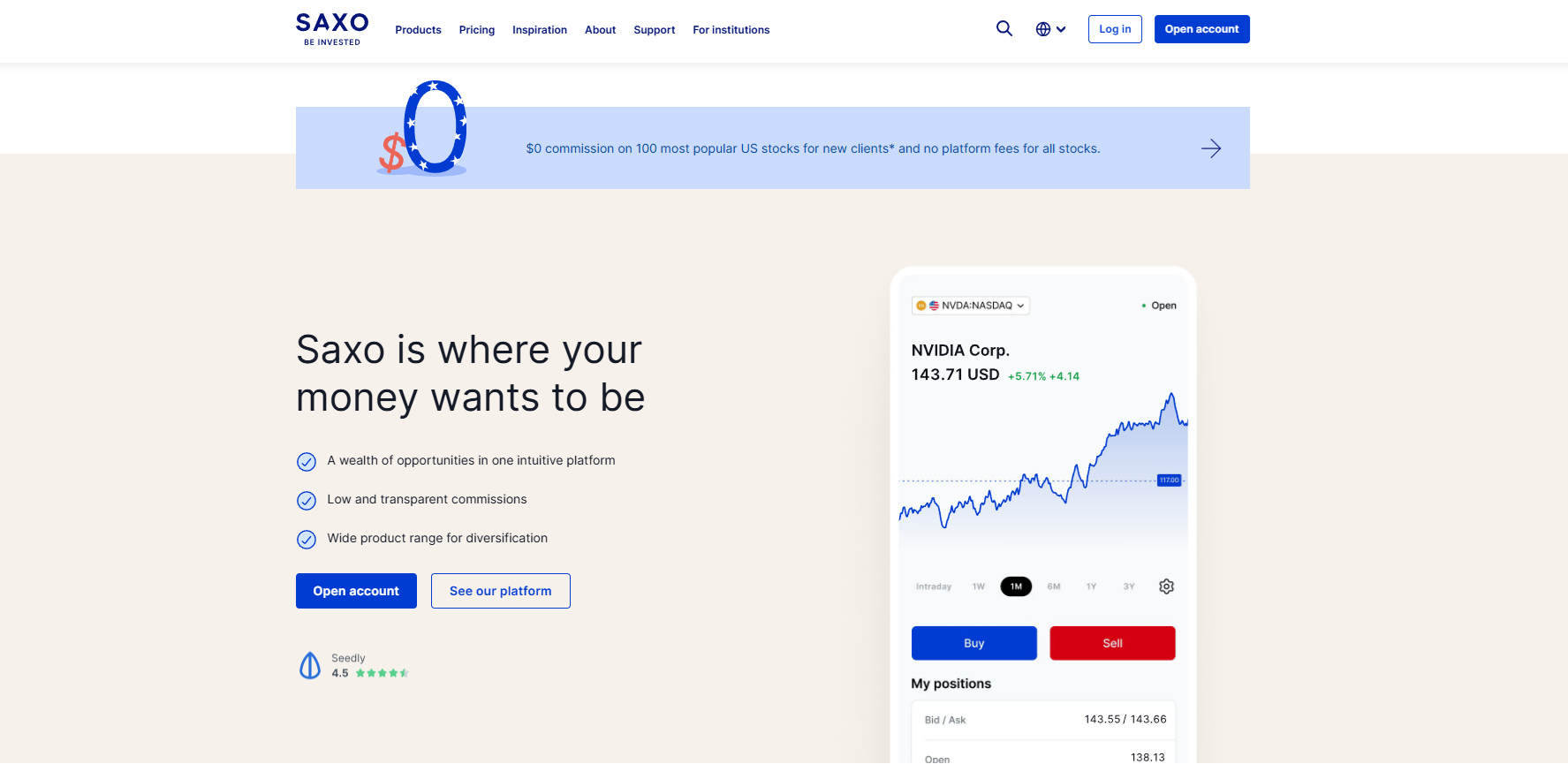
Saxo Bank is a Danish investment bank specializing in online trading and investments. It offers access to a wide range of markets, including stocks, bonds, forex, CFDs, and futures, through its award-winning SaxoTraderGO platform. Saxo Bank is regulated by several financial authorities, including the Danish Financial Supervisory Authority and the FCA in the UK. Its focus on technology, research, and customer service makes it a popular choice for traders and investors in Malaysia.
Advantages and Disadvantages of Saxo Bank
Saxo Bank Commissions and Fees
Saxo Bank uses a commission system that is based on volume and is tailored to different types of assets. Fees for selling stocks can be anywhere from 0.05% to 0.10% per trade, with a minimum of $10 to $20. The exact amount depends on the market. Forex trades usually have spreads that start at 0.6 pips, and some financial products may have extra fees. The fee structure is fair for traders who do a lot of trading, but people who don't trade as much may not like it as much because of the higher minimums and inactivity charges.
OPEN AN ACCOUNT NOW WITH SAXO BANK AND GET YOUR BONUS
#3. XTB
What is XTB?
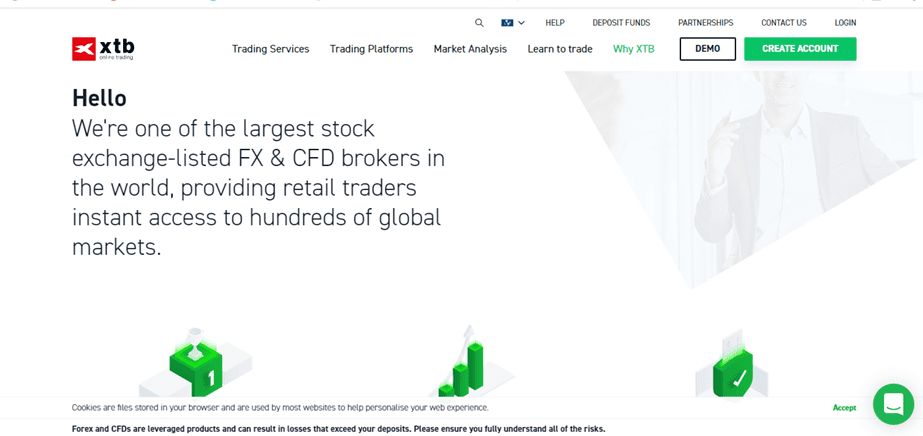
XTB is one of the best brokers in Europe that offer an optimized trading platform for traders. It is known for offering over 2,100 different assets that can be traded, such as stocks, forex, commodities, indices, and cryptocurrency. XTB has been around since 2002 and is regulated by the FCA in the UK and the FSC in Mauritius. The broker is known for its own trading software, XStation 5. It is easy to use and has a lot of advanced tools, so it can be used by both new and experienced traders.
Advantages and Disadvantages of XTB
XTB Commissions and Fees
XTB offers commission-free trading on stocks and ETFs, which can be attractive to some investors. However, they primarily generate revenue through spreads on forex and CFDs. These spreads can vary depending on market volatility and liquidity. XTB may also charge swap fees for holding positions overnight.
OPEN AN ACCOUNT NOW WITH XTB AND GET YOUR WELCOME BONUS
#4. Pepperstone

What is Pepperstone?
Pepperstone is an Australian forex and CFD broker offering access to a wide range of instruments, including forex, indices, commodities, and cryptocurrencies. It is known for its tight spreads and fast execution speeds. Pepperstone is regulated by the Australian Securities and Investments Commission (ASIC) and the FCA. Its focus on providing a professional trading environment makes it a popular choice for experienced traders in Malaysia.
Advantages and Disadvantages of Pepperstone
Pepperstone Commissions and Fees
Pepperstone is known for its tight spreads, particularly on forex pairs. They offer a variety of account types with different commission structures, including a commission-based account with raw spreads and a spread-only account. Pepperstone may also charge swap fees for holding positions overnight.
OPEN AN ACCOUNT NOW WITH PEPPERSTONE AND GET YOUR WELCOME BONUS
#5. Moomoo
What is Moomoo?
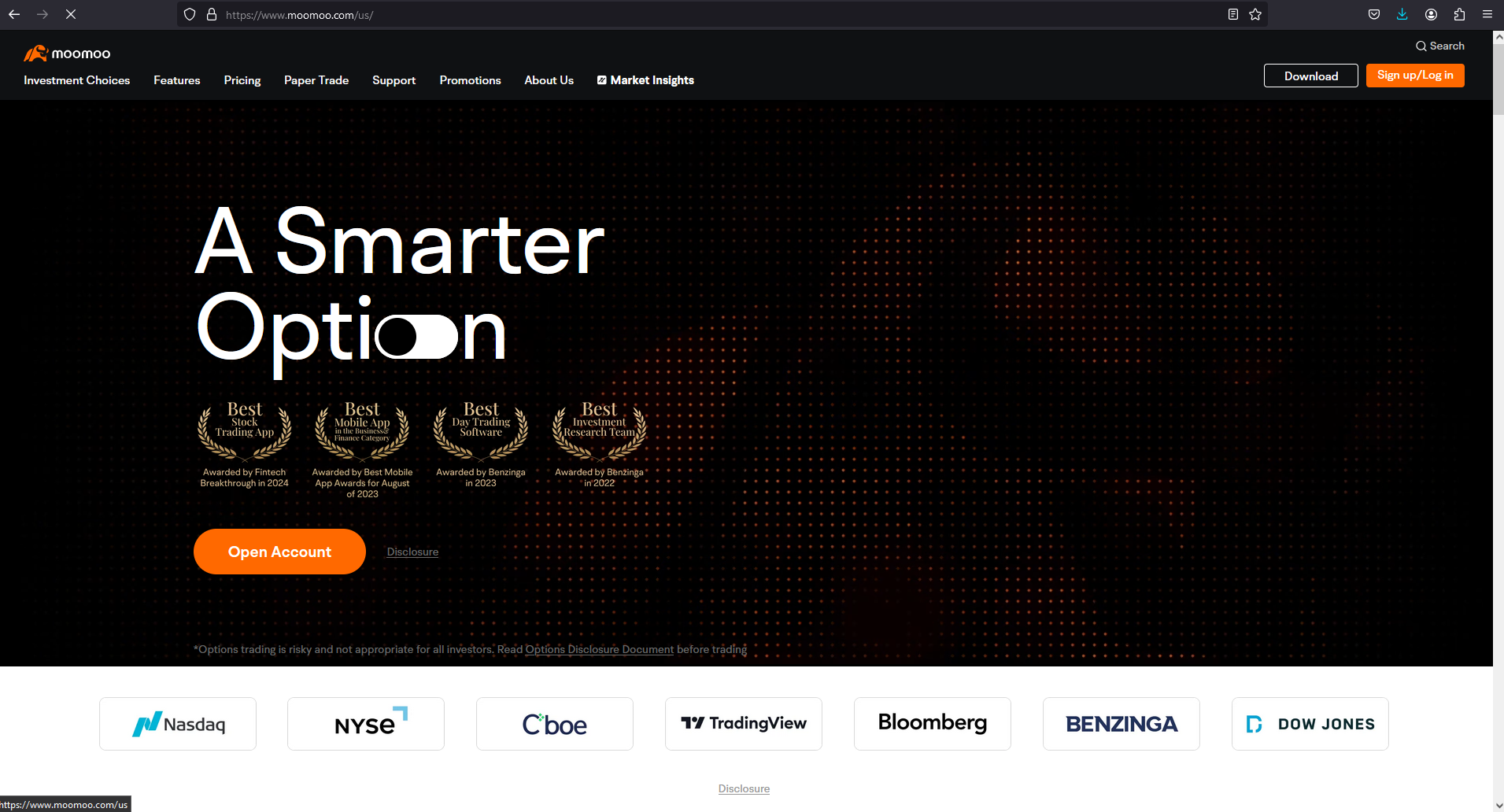
Moomoo is a trading platform offered by Moomoo Technologies Inc., a subsidiary of Futu Holdings Ltd, which is listed on the Nasdaq. It offers access to stocks, ETFs, options, and other instruments in the US, Hong Kong, and Singapore markets. moomoo is known for its advanced charting tools, real-time data, and active trading community. It is regulated by the SEC and other financial authorities. Its focus on technology and user experience makes it a popular choice for younger investors in Malaysia.
Advantages and Disadvantages of Moomoo
Moomoo Commissions and Fees
Moomoo offers commission-free trading on US stocks, ETFs, and options. They also provide access to other markets, such as Hong Kong and Singapore, with varying commission fees. moomoo may charge platform fees for certain features and currency conversion fees for trading in foreign markets.
| Rank | Name | Description |
| 6 | IG | IG is the world’s No.1 CFD provider, offering access to over 17,000 markets including forex, indices, shares, commodities, cryptocurrencies, and ETFs. Traders can go long or short on assets like EUR/USD, US 500, gold, and Bitcoin, with spreads from 0.1 points and 24/7 availability. Key features include longer trading hours on shares, no wallet needed for crypto, and rewards like up to $150 cashback on first trades, referral bonuses up to $10,000, and volume-based rebates. As a FTSE 250-listed company with 50+ years’ experience and 18 global offices, it serves 400,000+ traders. CFDs carry high risk, with 71% of retail accounts losing money due to leverage. Fees involve spreads and commissions, with rebates for high-volume trading. Available for Malaysian traders via IG International. |
| 7 | eToro | eToro is a trading platform offering stocks, cryptocurrencies, ETFs, and more in one app, with access to 20 global stock exchanges and 100 cryptocurrencies. Key features include CopyTrader™ for replicating top investors' moves, eToro Academy for free financial education via courses, podcasts, and webinars, and earning up to 3.8% annual interest on cash balances. It supports diversification across asset classes and provides top-tier security with funds held at renowned banks. Regulated globally since 2007, it serves over 40 million users in more than 100 countries. Advantages: user-friendly, transparent fees, social investing. Disadvantages: trading risks, other fees apply. Fees include fixed transparent crypto fees and optional subscriptions. Available for Malaysian traders as part of its global services. |
| 8 | Plus500 | Plus500 is a trading platform with over 32 million customers worldwide, offering access to 2800+ instruments including futures on S&P 500, NASDAQ 100, Bitcoin, EUR/USD, Oil, and Gold. It provides futures trading with attractive day margins, a demo account for practice, swift registration, and 24/7 support. Key features include 0 platform and market data fees, low commissions, and accounts starting at $100. Advantages: easy-to-use app for beginners, 20 years of U.S. experience, professional support, and secure segregated funds. Disadvantages: not explicitly stated. Fees: low trading commissions with no hidden platform or data fees. Regulated as a full member of CME Group and National Futures Association, listed on London Stock Exchange. Available for Malaysian traders, as instrument availability is subject to jurisdiction but no specific restriction mentioned. |
| 9 | AvaTrade | AvaTrade is a world-class trading platform offering FX, stocks, commodities, crypto, indices, and options. It provides advanced tools like WebTrader, MetaTrader 4/5, DupliTrade, and AvaOptions, with tight spreads, up to 400:1 leverage, low commissions, and instant execution. Regulated across nine jurisdictions including CySEC, CBI, ASIC, and FSCA, it ensures security and compliance. Key features include hedging without restrictions, scalping, Expert Advisors, copy trading, AvaProtect risk management, and 24/7 crypto trading. Advantages: educational resources via AvaAcademy, webinars, market analysis, and over 1 million clients. Disadvantages: not explicitly stated. Fees involve low commissions and tight spreads, with no mention of specific costs. Available for Malaysian traders as part of its global presence. |
| 10 | FP Markets | FP Markets, founded in 2005 in Sydney, Australia, is a global CFD trading and forex broker offering over 10,000 instruments across seven asset classes. It provides advanced platforms like MetaTrader 4 (MT4), MetaTrader 5 (MT5), cTrader, and TradingView, with features including social trading to follow and copy top performers, low spreads from 0.0 pips, fast execution, and 24/7 multilingual support. Regulated by ASIC, CySec, FSCA, FSA, CMA, FSC, and SCB, it ensures segregated funds and transparent conditions. Advantages include 20+ years of experience, 60+ awards, and mobile app access. Disadvantages are not detailed. Fees feature competitive pricing with spreads as low as 0.0 pips. It is available for Malaysian traders via FSCA regulation. |
| 11 | IC Markets | IC Markets is a multi-asset trading platform offering CFDs on Forex (61 products), commodities (24), stocks (+2100), indices (25), bonds (9), cryptocurrencies (21), and futures (4), totaling over 2250 tradable instruments. It provides spreads from 0.0 pips, 1:500 leverage, 0.01 micro lot trading, fast execution under 40ms, and free low-latency VPS. Regulation details are not specified in the content. Key features include powerful terminals (Windows, Web, Android, MAC, iOS), 24/7 support, and support for automated trading with 60% algo trades. Advantages: high trading volume (US$2.05 trillion in October 2025), 3,600,000 daily trades, instant deposits, fast withdrawals, 0% commission. Disadvantages: none listed. Fees: raw spreads from 0.0 pips, no commission details beyond 0%. Available for Malaysian traders, as no restrictions are mentioned. |
| 12 | Tickmill | Tickmill is a trading platform offering access to over 600 CFDs across Forex (60+ pairs, spreads from 0.0 pips, leverage up to 1:1000), commodities, cryptocurrencies (leverage up to 1:200, zero commissions), stock indices (20+ global, leverage up to 1:100), stocks/ETFs (500+ symbols, leverage up to 1:20), bonds, and futures/options (low deposit $1,000, competitive commissions under Tickmill UK Ltd). It provides MT4, MT5, TradingView, and Tickmill Trader platforms with features like ultra-fast execution (0.15 sec average), tight spreads, zero commissions on Classic account, and dedicated support. Regulation includes FCA (UK), CySEC (Europe), FSA Seychelles, and FSCA South Africa. Advantages: low starting deposit ($100), multiple base currencies (USD, EUR, GBP, ZAR), crypto deposits. Disadvantages: not specified. Fees: Raw account $3/lot/side commission, TradingView Raw $3.5/lot/side. Available for Malaysian traders via global entities. |
| 13 | FxPro | FxPro is a trusted online trading platform established in 1999, serving over 11.2 million client accounts across 173 countries. It offers CFD trading on forex, indices, stocks, metals, crypto, energy, and ETFs through award-winning platforms with ultra-low latency and deep liquidity. Key features include a mobile app (rated 4.7, over 15 million downloads on iOS and Android), 24/5 multilingual customer support, and operations under five industry regulations, including FCA authorization in the UK. Advantages encompass 133+ awards for service quality and diverse account types. Disadvantages are not specified. Fees are not detailed. It is available for Malaysian traders, as it serves 173 countries worldwide. |
| 14 | Webull | Webull is a commission-free trading platform offering stocks (U.S., international ADRs, fractional, OTC), options with real-time quotes and Greeks, ETFs via screener and research tools, and crypto (70+ coins). Regulated by SEC, FINRA, and SIPC member. Key features include advanced charting, Level 2 quotes, extended hours trading, paper trading, community, and learning resources. Advantages: zero commissions on stocks/ETFs/options (intra-day), multi-platform access (mobile/web/desktop), various account types (Traditional/Roth/Rollover IRA, cash/margin). Disadvantages: regulatory, exchange, and option contract fees apply; no margin interest or short selling fees mentioned for extended trading. Available for Malaysian traders via app and web. |
| 15 | CMC Markets | CMC Markets, established in 1989, is an award-winning CFD trading platform serving over 1 million global clients as a FTSE 250 group. It offers trading on forex, indices, commodities, cryptos, shares, and more via MetaTrader 4 (MT4), MT5, a web platform, mobile app, or TradingView integration, with over 12,000 instruments. Regulated as a FTSE 250 entity, it provides superior execution (0.066s MT4 median trade time, 97.876% fill rate, 99.99% uptime) and low spreads from 0.0 pips on major forex pairs with fixed commissions. Key features include leverage trading and high reliability. Advantages: pioneering technology, acclaimed customer service, multiple platforms. Disadvantages: not specified. Fees: spreads from 0.0 pips and $2.50 per $100,000 commission on FX Active. Available for Malaysian traders as part of global access. |
| 16 | FOREX.com | FOREX.com is a leading forex trading platform, subsidiary of StoneX Group Inc., operating since 2001. It offers 80 forex products and selected futures, with competitive spreads as low as 0.0 pips on major pairs via RAW Spread pricing, plus a $7 USD commission per $100k traded. Regulated as the #1 US broker per CFTC reports, it ensures financial stability. Key features include TradingView charts, Performance Analytics tools, MT5 support, and superior customer service via phone, email, or chat. Advantages: low costs, fast execution, up to 4% APY on margin, and rewards. Disadvantages: higher spreads during volatility and unavailability for some pairs like USD/RUB. Fees involve commissions and potential wider spreads. Available for Malaysian traders as a global platform. |
| 17 | Fusion Markets | Fusion Markets is a low-cost Forex and CFD broker offering $2.25 per side commission, no deposit fees, and no minimum account size. It provides access to 90+ currency pairs, energy commodities like Crude Oil and Natural Gas, precious metals such as Gold and Silver, equity indices, and 110+ US share CFDs with $0 commissions. Regulated by the Vanuatu Financial Services Commission (40256), Financial Services Authority of Seychelles (SD096), and Australian Securities and Investment Commission (385620), it features lightning-fast execution, white glove support, and copy trading via Fusion+. Platforms include TradingView for direct trading. Advantages include tight spreads from 0.0 on majors and cost savings up to 36% lower than competitors. Disadvantages are not detailed. Fees cover $2.25 per side commission with no dealing desk. It is available for Malaysian traders as no regional restrictions are specified. |
| 18 | BlackBull Markets | BlackBull Markets is a trading platform offering an institutional trading experience with spreads from 0.0 pips, leverage up to 1:500, and 26,000+ tradable instruments across 80+ markets. It provides access to platforms like TradingView, MetaTrader 4, MetaTrader 5, cTrader, BlackBull CopyTrader, and BlackBull Invest for shares, options, ETFs, and bonds. Key features include $0 minimum deposit, segregated client accounts, <100ms execution speeds, 24/7 support, and Equinix servers in New York, London, and Tokyo. Account types are Standard (from 1.5 pips, no commission, $50 min), Raw (from 0.0 pips, $3 commission, $100 min), and Pro (from 0.6 pips, no commission, $500 min). Advantages: high leverage, vast instruments, fast execution, swap-free options. Disadvantages: not explicitly stated. Fees vary by account; no minimum deposit. Available for Malaysian traders as no restrictions noted. |
| 19 | Axi | Axi is a global online trading broker established in 2007, offering CFDs and Forex trading to thousands of traders in over 100 countries. It provides ultra-competitive pricing, raw spreads, high liquidity, flexible leverage, and lightning-fast execution on high-performance platforms like MT4. Key features include award-winning 24/7 customer service, free education, a self-service portal, and multilingual support. Advantages encompass innovative technology, rock-solid platforms, and resources for skill improvement. Disadvantages are not specified. Fees focus on fairer charges to maximize market investment, though details are unavailable. Axi is available for Malaysian traders via its localized site at http://www.axiedge.site/en-my . |
| 20 | FBS | FBS is a Forex trading platform offering over 550 instruments with leverage up to 1:3000, zero commission, spreads from 0.7 pips, and order execution from 0.01 seconds. It provides free education via FBS Academy, market analytics, VIP insights, and 24/7 support. Key features include intuitive charts, no requotes, VPS hosting, and an all-in-one app. Advantages: low $5 deposit, Islamic accounts, community events, webinars, and awards for reliability, education, and support. Disadvantages: not specified. Fees: trading commission 0, deposit from $5. Available for Malaysian traders, with Southeast Asia recognitions. |
| 21 | Swissquote | Swissquote is a Swiss investment bank offering access to many markets and products, with relevant and fast customer service and a rock-solid background. Features: Broad product portfolio in a professional environment. Advantages: High safety and reliability. Disadvantages: Higher fees. Fees: Average spreads (e.g., 1.6 on EURUSD), no account fees, free deposits/withdrawals. Suitable for affluent Malaysian investors prioritizing security over low costs. |
| 22 | CapTrader | CapTrader is a global broker providing all asset classes, with low stock/ETF fees, wide product range, and many great research tools. Features: Sophisticated trading platforms. Advantages: Cost-effective for stocks/ETFs. Disadvantages: Longer account opening (>3 days). Fees: Low stock/ETF commissions, no account fees, free deposits. Suitable for Malaysian investors/traders seeking low-fee, research-rich platforms. |
| 23 | MEXEM | MEXEM is a global stockbroker with low stock/ETF fees, excellent multilingual customer support, and extensive product selection. Features: Sophisticated tools for investors. Advantages: Low costs and support. Disadvantages: Average platform scores in some areas. Fees: Low stock/ETF fees, no account fees, free deposits. Suitable for Malaysian investors looking for affordable, multilingual assistance in broad markets. |
| 24 | tastytrade | tastytrade is the best options trading platform for beginners in Malaysia in 2026. Low trading fees. Great educational materials. Good research tools. Fees: Some of the lowest fees in options trading; minimum deposit $0; deposit/withdrawal via bank transfer; withdrawal fee $0; no inactivity fee. Pros: Advanced platforms for fast execution; Options Wizard for strategy fitting. Cons: Limited to 8 available options markets. |
| 25 | TradeZero | TradeZero provides low stock and ETF fees, quick account opening, and excellent education/support. Recommended for commission-free trading focused on US stocks and options. Fees: Minimum deposit $250; deposit/withdrawal via bank transfer; withdrawal fee $15; no inactivity fee. Pros: Quick and easy account opening; excellent education and customer support; trading platform score 4.4 stars; 10 available options markets. Cons: Higher withdrawal fee and minimum deposit requirement. |
How to Get Started with a Trading Platform in Malaysia
Starting your trading journey can seem daunting, but with the right steps, it can be pretty straightforward. Here's a simple guide to getting started with a trading platform in Malaysia:
Step 1: Figure Out Your Trading Style
Before you jump into the market, think about what kind of trader you want to be. Are you in it for the long haul, investing in stable companies over years? Or are you looking for quicker gains with short-term trades? This will help you choose the right platform and strategies. Consider things like how much time you can dedicate to trading, how much risk you're comfortable with, and what kind of assets you're interested in (like stocks, forex, or commodities). This basic planning is important!
Step 2: Research and Choose a Trading Platform
There are tons of trading platforms available in Malaysia, each with its own features, fees, and strengths. Do your homework! Look for platforms that are regulated by reputable authorities like the Securities Commission Malaysia. Check out online reviews and compare things like:
- Fees and commissions: How much will you pay for each trade?
- Available markets: Can you trade the assets you're interested in?
- Trading tools and features: Does the platform have charts, analysis tools, and other helpful features?
- User-friendliness: Is the platform easy to use, especially if you're a beginner?
- Customer support: Can you easily get help if you need it?
Choosing the right platform is a big first step.
Step 3: Open a Trading Account
Once you've chosen a platform, you'll need to open an account. This usually involves filling out an online application form and providing some personal information and identification documents. Some platforms may also require you to deposit a minimum amount of money to activate your account. This account opening process is usually quite simple.
Step 4: Fund Your Account
Now that your account is open, it's time to put some money in it. Most platforms offer various deposit methods, such as bank transfers, credit/debit cards, and e-wallets. Choose the method that's most convenient for you. Be aware of any potential fees associated with depositing funds. Funding your account is how you get ready to trade.
Step 5: Learn the Platform
Before you start making real trades, take some time to get familiar with the platform. Most platforms offer demo accounts or paper trading, which allow you to practice trading with virtual money. This is a great way to learn how the platform works without risking any of your own funds. Play around with the features, try placing some practice trades, and get comfortable with the interface.
Step 6: Start Trading (Small!)
Once you feel comfortable with the platform, you can start making real trades. It's a good idea to start small and gradually increase your trading size as you gain more experience and confidence. Don't rush into big trades right away. Starting small lets you learn without big risks.
Step 7: Keep Learning
The trading journey is a continuous learning process. Keep up with market news, learn new trading strategies, and stay informed about the assets you're trading. There are tons of resources available online, such as articles, tutorials, and webinars. Continuous learning is key to long-term success.
Conclusion
Choosing the right trading platform in Malaysia depends on your individual needs and trading style. Whether you prioritize low fees, advanced tools, user-friendly interfaces, or specific asset classes, careful research is key. Consider factors like regulation, available markets, platform features, and customer support before making a decision. Trying out demo accounts can help you get comfortable with a platform before committing real funds. Ultimately, the best platform empowers you to achieve your financial goals while managing risk effectively, so take your time to compare options and choose wisely.
Also Read: The 5 Best Binary Brokers in Malaysia in 2026
FAQ
What factors should I consider when selecting a trading platform in Malaysia?
When choosing a trading platform in Malaysia, prioritize regulation by authorities like the Securities Commission to ensure legitimacy and investor protection. Evaluate user-friendly interfaces for ease of navigation, especially for beginners. Assess available markets, such as local stocks on Bursa Malaysia or global forex and commodities. Check fee structures, including commissions, spreads, and withdrawal charges, to minimize costs. Look for robust security features like two-factor authentication and encrypted data. Educational resources, demo accounts, and responsive customer support can enhance your experience. Finally, consider mobile accessibility for on-the-go trading and compatibility with your devices.
How can I verify if a trading platform is regulated in Malaysia?
To verify regulation, check if the platform is licensed by the Securities Commission Malaysia (SCM) through their official website's list of approved entities. Look for affiliations with international regulators if offering global access. Ensure the platform displays clear regulatory information on its site, including license numbers. Avoid platforms without transparent details, as unregulated ones pose higher risks. Research user reviews and independent ratings for red flags. Contact SCM directly for confirmation if needed. Proper regulation ensures fund segregation, fair practices, and recourse in disputes, safeguarding your investments in the Malaysian market.
What are the common types of fees associated with trading platforms in Malaysia?
Common fees include commission charges per trade, which vary based on volume and asset type. Spreads represent the difference between buy and sell prices, impacting forex and CFD trades. Withdrawal and deposit fees may apply, especially for international transfers. Inactivity fees penalize dormant accounts, while currency conversion charges occur for foreign assets. Overnight or swap fees affect positions held beyond trading hours. Some platforms impose platform usage or data subscription fees. Always review the fee schedule to understand total costs, as low advertised rates might hide additional charges that erode profits.
Is it possible to trade cryptocurrencies on platforms available in Malaysia?
Yes, many platforms in Malaysia offer cryptocurrency trading, allowing access to popular digital assets like Bitcoin and Ethereum. Ensure the platform complies with local regulations, as crypto trading involves high volatility and risks. Features may include spot trading, CFDs, or futures contracts. Use secure wallets and enable two-factor authentication for protection. Educate yourself on market trends and tax implications under Malaysian laws. Start with small investments and diversify to manage risks. Demo accounts can help practice without real funds. Always monitor regulatory updates, as crypto rules evolve rapidly in the region.
How do I open a trading account in Malaysia?
To open an account, select a regulated platform and complete the online registration form with personal details like name, address, and identification. Submit required documents, such as a national ID or passport, for verification under KYC rules. Some platforms require proof of address. Choose an account type suited to your experience level. Fund the account via bank transfer, e-wallets, or cards, noting any minimum deposit. Activate the account upon approval, which may take a few days. Familiarize yourself with the interface using tutorials or demo modes before live trading.
What risks are involved in online trading in Malaysia?
Online trading carries risks like market volatility, where asset prices fluctuate rapidly, leading to potential losses. Leverage amplifies gains but also magnifies losses, possibly exceeding initial investments. Liquidity risks occur in illiquid markets, affecting trade execution. Cybersecurity threats, such as hacking, endanger funds and data. Regulatory non-compliance can result in scams or unfair practices. Emotional decision-making often leads to poor strategies. Diversify portfolios, use stop-loss orders, and educate yourself on risk management. Never invest more than you can afford to lose, and stay informed on economic events impacting Malaysian markets.
Can beginners use trading platforms effectively in Malaysia?
Yes, beginners can succeed by starting with user-friendly platforms offering educational tools like tutorials, webinars, and glossaries. Demo accounts allow practice without financial risk, simulating real market conditions. Focus on basic strategies, such as long-term investing in stable assets. Understand key concepts like technical analysis and risk management. Set realistic goals and start small to build confidence. Seek advice from financial experts or join online communities for insights. Regularly review performance and adjust approaches. With discipline and continuous learning, novices can navigate Malaysian markets, including Bursa Malaysia stocks and forex, effectively over time.
What tools are essential for technical analysis on trading platforms?
Essential tools include charting software for visualizing price trends with candlestick, line, or bar formats. Indicators like moving averages, RSI, and MACD help identify momentum and overbought conditions. Drawing tools for trend lines, support/resistance levels, and Fibonacci retracements aid pattern recognition. Real-time data feeds ensure accurate market updates. Backtesting features test strategies on historical data. Customizable watchlists track preferred assets. Economic calendars highlight events influencing markets. Integrate these for informed decisions in Malaysian trading, but combine with fundamental analysis for balanced insights, always considering local economic factors.
How does leverage work in trading platforms for Malaysian users?
Leverage allows controlling larger positions with smaller capital, such as 1:100 ratio meaning $1 controls $100 worth of assets. It boosts potential profits but equally increases losses, as even small market moves amplify outcomes. Malaysian regulations cap leverage to protect retail traders, varying by asset class. Use it cautiously, starting low to manage risks. Platforms display margin requirements, the minimum capital needed to open positions. Monitor margin calls to avoid forced closures. Educate on volatility impacts, especially in forex and CFDs. Responsible use aligns with risk tolerance and overall strategy.
What is the role of demo accounts in trading platforms?
Demo accounts simulate real trading environments using virtual funds, allowing practice without financial risk. They help familiarize with platform interfaces, test strategies, and understand market dynamics. Ideal for beginners to build skills and confidence. Experienced traders use them to refine techniques or explore new assets. Features mirror live accounts, including real-time data and tools. Transition to live trading once comfortable, starting small. In Malaysia, demos aid compliance with local rules by promoting informed decisions. Regularly evaluate demo performance to identify strengths and weaknesses before committing real capital.
How can I manage risks effectively while trading in Malaysia?
Effective risk management involves setting stop-loss orders to automatically close positions at predetermined levels, limiting losses. Diversify across asset classes like stocks, forex, and commodities to spread exposure. Use position sizing to risk only a small percentage of capital per trade. Stay informed on Malaysian economic indicators and global events via news feeds. Employ hedging strategies where permitted. Maintain a trading journal to analyze past decisions. Avoid emotional trading by adhering to plans. Regularly review and adjust strategies based on performance. Education and discipline are key to sustaining long-term success.
What are the tax implications of trading profits in Malaysia?
Trading profits in Malaysia may be subject to income tax if considered business income, especially for frequent traders. Capital gains from stocks are generally tax-exempt, but forex and derivatives might differ. Report earnings accurately to the Inland Revenue Board (IRB). Deductible expenses include commissions and educational costs. Keep detailed records of transactions for audits. Consult tax professionals for personalised advice, as rules can change. Non-residents face withholding taxes on certain income. Understand the reliefs or exemptions available. Proper compliance avoids penalties, ensuring trading remains financially viable within the local framework.
How do economic events impact trading in Malaysia?
Economic events like interest rate changes by Bank Negara Malaysia influence currency strength and stock values. Global events, such as US Fed decisions or oil price shifts, affect commodities and indices. Local GDP reports, inflation data, and trade balances signal market health. Earnings seasons for Bursa-listed companies drive volatility. Geopolitical tensions can cause uncertainty. Monitor calendars for announcements to anticipate movements. Use this information for strategic entries/exits. In volatile times, reduce leverage and tighten stops. Staying informed helps Malaysian traders capitalise on opportunities while mitigating risks from macroeconomic shifts.
What mobile features should I look for in a trading platform?
Look for intuitive apps with real-time quotes, charting tools, and order placement capabilities. Push notifications for price alerts and news updates keep you informed. Secure login with biometrics enhances safety. Portfolio tracking and performance analytics aid decision-making. Seamless synchronization between desktop and mobile ensures continuity. Customizable interfaces suit personal preferences. In Malaysia, ensure compatibility with local networks for reliable access. Offline modes for viewing data when connected intermittently. Quick deposit/withdrawal options via mobile banking. These features enable efficient trading anytime, aligning with busy lifestyles.
How can I improve my trading strategies in the Malaysian market?
Improve strategies by analyzing historical data from Bursa Malaysia and global exchanges. Incorporate technical indicators with fundamental analysis, like company financials. Backtest ideas on demo accounts to validate effectiveness. Diversify across sectors like technology, finance, and commodities. Set clear entry/exit rules and risk parameters. Learn from past trades via journals. Stay updated on local regulations and economic policies. Join forums or courses for insights. Adapt to market conditions, such as bull or bear phases. Consistent review and refinement lead to better outcomes in Malaysia's dynamic trading landscape.
What is the importance of customer support in trading platforms?
Reliable customer support resolves technical issues, account queries, and trading concerns promptly, minimizing downtime. Multilingual options cater to Malaysia's diverse population. 24/7 availability suits global market hours. Channels like chat, email, and phone ensure accessibility. Knowledgeable agents provide guidance on features and regulations. Quick response times build trust. In emergencies, such as fund discrepancies, efficient support protects interests. Evaluate reviews for service quality. Strong support enhances user experience, especially for beginners navigating complex trades, contributing to overall satisfaction and long-term platform loyalty.
How do I choose between forex and stock trading in Malaysia?
Choose based on goals: forex suits short-term, high-liquidity trades with 24/5 access, ideal for volatility seekers. Stocks favor long-term growth via Bursa Malaysia listings or global shares. Assess risk tolerance—forex leverage amplifies outcomes, while stocks involve company-specific risks. Consider time commitment; forex requires constant monitoring, stocks allow passive holding. Evaluate costs: forex spreads vs. stock commissions. Diversify if possible. Start with education on each market's dynamics. Malaysian regulations support both, but ensure platform compliance. Align choice with financial objectives and experience level.
What security measures should trading platforms have in Malaysia?
Platforms should employ encryption for data transmission and storage to protect sensitive information. Two-factor authentication adds login security. Segregated client funds prevent misuse by the provider. Regular audits and compliance with Securities Commission standards ensure integrity. Firewall and anti-malware systems guard against cyber threats. User education on phishing avoidance is beneficial. In Malaysia, adherence to anti-money laundering rules is mandatory. Monitor for unusual activity alerts. These measures safeguard investments, fostering confidence in online trading amid rising digital risks.
Can I trade internationally from Malaysia using local platforms?
Yes, many platforms enable international trading, accessing global stocks, forex, and commodities. Ensure compliance with Malaysian foreign exchange controls and tax laws. Platforms handle currency conversions, but watch for fees. Diversify portfolios beyond Bursa Malaysia for broader opportunities. Understand time zone differences affecting market hours. Use VPNs if needed for access, but verify legality. Research restrictions on certain assets. International exposure can hedge local risks, but involves additional volatility from geopolitical factors. Start small and monitor regulations for seamless cross-border trading.
How often should I review my trading performance in Malaysia?
Review performance weekly or monthly, depending on activity level. Analyze win/loss ratios, return on investment, and strategy effectiveness. Track fees' impact on profits. Compare against benchmarks like Bursa indices. Adjust based on economic shifts or personal goals. Use platform analytics for insights. Maintain a journal noting decisions and outcomes. In volatile Malaysian markets, frequent reviews catch issues early. Annual assessments align with tax reporting. Consistent evaluation promotes discipline, identifies patterns, and enhances long-term success without overreacting to short-term fluctuations.