Learn To Trade Forex • Best Forex Trading Course • AsiaForexMentor

How to Trade the Bump and Run Pattern

Written by

Ezekiel Chew

Updated on

January 20, 2025

i

How to Trade the Bump and Run Pattern

Written by:

Last updated on:

January 20, 2025

The bump and run pattern is a chart pattern used in technical analysis to identify potential trend reversals in financial markets. This pattern is especially useful in very fast moving markets and provides traders with a clear framework to make informed trading decisions. By understanding the distinct phases of this pattern and the trading strategies involved, traders can enhance their overall performance rank in the market.

What is the Bump and Run Pattern?
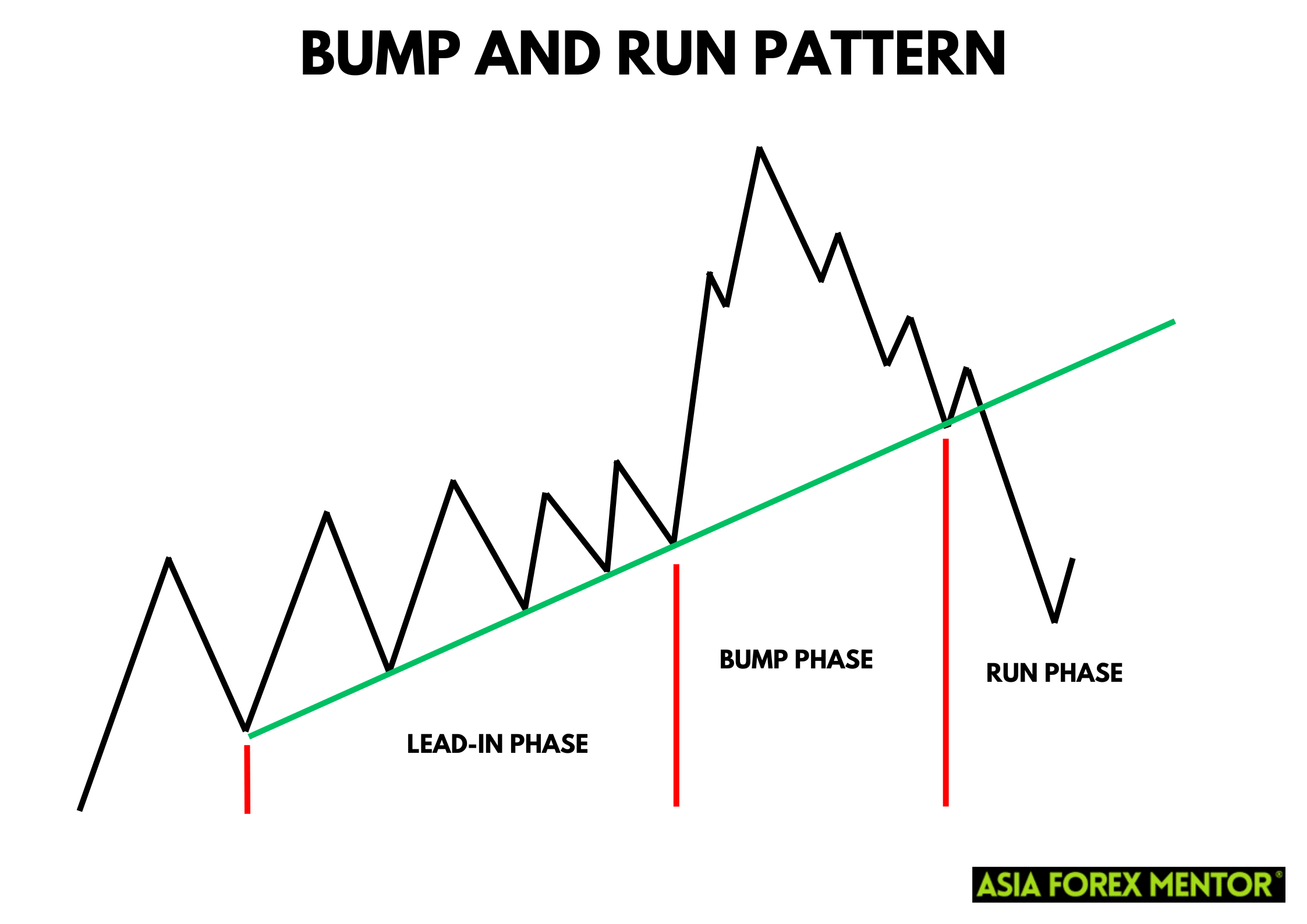
The bump and run pattern, also known as the bump and run reversal pattern, is a technical chart pattern developed by Thomas Bulkowski in 1996. It consists of three distinct phases: the lead-in phase, the bump phase, and the run phase. This pattern can indicate both bullish and bearish trend reversals, making it a versatile tool for traders.

Also Read: Mastering Japanese Candlestick Patterns

Lead-in Phase

The lead-in phase is characterized by a standard bullish trend or bearish trend with a moderate slope. The trendline formed during this phase is known as the lead-in trendline. This phase sets the stage for the bump phase, and the price action prior to the bump is crucial for identifying the pattern.

Bump Phase

The bump phase is marked by a large price hike or a rapid price drop, which deviates significantly from the preceding trend. This phase is driven by excessive speculation and strong buying pressure in a bullish pattern, or selling pressure in a bearish pattern. The bump pattern forms when the price action reverses direction after this sharp move, indicating a potential trend reversal.

Run Phase

The run phase begins when the price breaks the lead-in trendline, signaling a reversal. In a bullish bump and run reversal, the price rises after breaking the trendline, while in a bearish bump and run reversal, the price drops rapidly. This phase confirms the reversal and provides traders with an entry point for their trades.

How to Spot the Bump and Run Pattern

Spotting the bump and run pattern involves analyzing historical data and looking for specific price action characteristics. The pattern starts with the lead-in trendline, followed by the bump phase, and concludes with the run phase. Here are the steps to identify the pattern:

  1. Identify the Lead-in Trendline: Look for a trending stock with a moderate slope in its price chart.
  2. Spot the Bump: Look for a sharp price movement that deviates significantly from the lead-in trendline. Measure vertical distances to assess the bump height.
  3. Confirm the Run Phase: Identify the point where the price action reverses and breaks the lead-in trendline. This breakout point is crucial for confirming the pattern.

How to Trade the Bump and Run Pattern
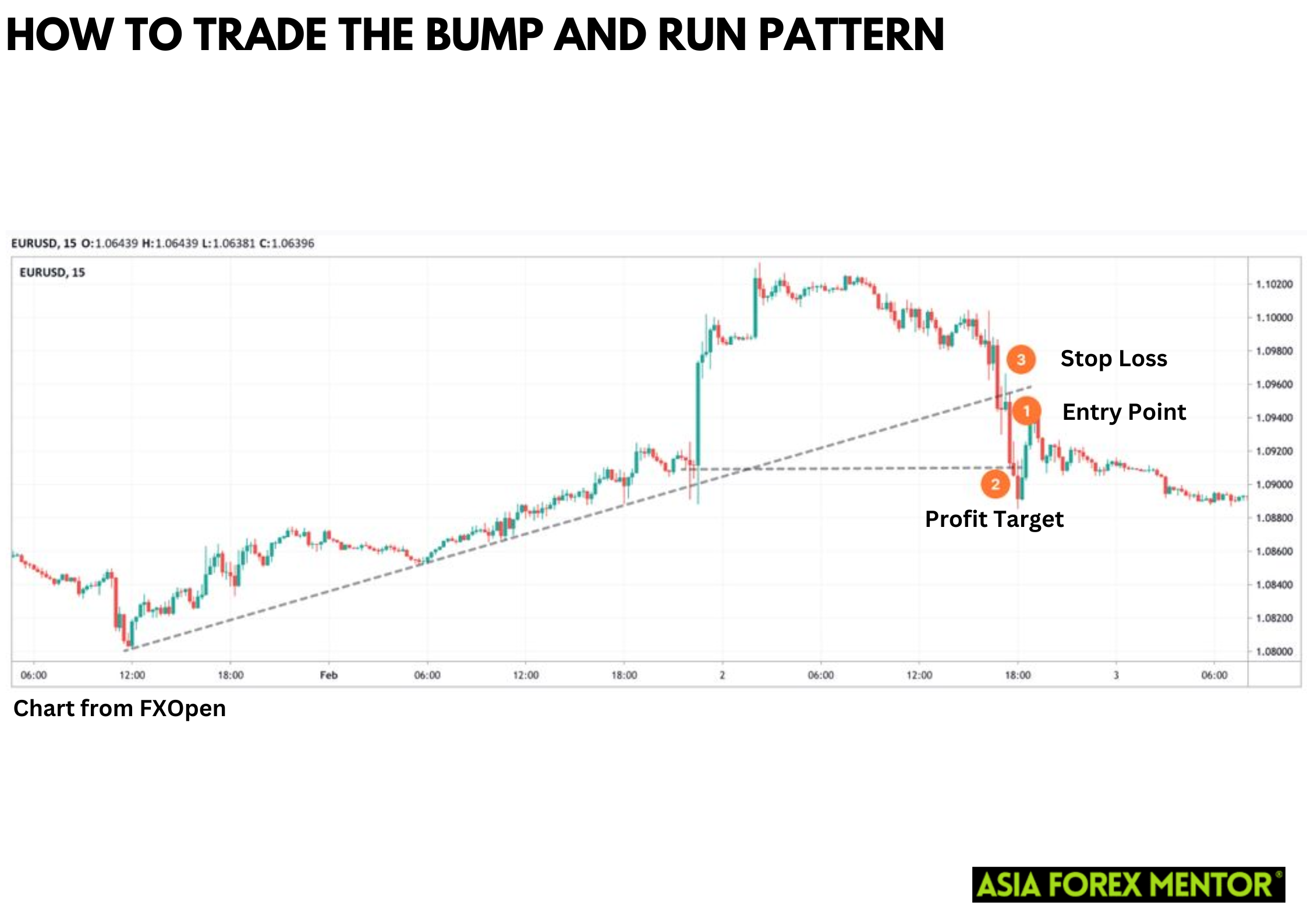
Trading the bump and run pattern involves specific strategies for entry, stop loss, and profit target. Here’s a step-by-step guide:

Entry Point

The entry point for a trade is when the price breaks the lead-in trendline during the run phase. Traders should wait for actual confirmation of the breakout before entering the trade.

Stop Loss

Set a stop loss level to manage risk. For a bullish bump and run, place the stop loss below the breakout trendline. For a bearish bump and run, place the stop loss above the breakout trendline.

Profit Target

The profit target should be set based on the vertical distance of the bump phase. This can be measured from the lead-in trendline to the peak or trough of the bump. This ensures a favorable risk-to-reward ratio.

Pros and Cons of the Bump and Run Pattern

Pros

  • The pattern provides a clear visual representation of price movements
  • It can be applied to various financial markets including stocks, commodities, and cryptocurrencies
  • Works well in very fast-moving markets due to its quick identification and execution

Cons

  • Identifying and trading the pattern accurately requires experience and practice
  • There is a risk of false breakouts, leading to potential losses

Indicators to Use to Confirm the Pattern

Using technical indicators can help confirm the bump and run pattern. Key indicators include:

  • Volume Indicators: Increased volume during the bump phase can confirm the strength of the move.
  • Moving Averages: Help identify the trend direction and potential breakout points.
  • Relative Strength Index (RSI): Indicates overbought or oversold conditions, providing additional confirmation for the reversal.

Conclusion

The bump and run pattern is a powerful tool in technical analysis, offering traders a structured approach to identify and trade potential trend reversals. By understanding the pattern's phases and employing effective trading strategies, traders can improve their success rate and overall performance rank.

Also Read: How to Trade the Fry Pan Bottom Pattern

FAQs

What is the best time frame to use for the bump and run pattern?

The bump and run pattern can be used on various time frames, but it is most effective on daily or weekly charts to capture significant price movements.

Can the bump and run pattern be used for all financial markets?

Yes, the bump and run pattern can be applied to stocks, forex, commodities, and cryptocurrencies, making it a versatile tool for traders.

How do I minimize the risk when trading the bump and run pattern?

To minimize risk, use a favorable risk-to-reward ratio, set appropriate stop loss levels, and confirm the pattern with technical indicators before entering a trade.



Top 5 Forex Brokers Ranked by Traders in 2025

About Ezekiel Chew​

Ezekiel Chew, founder and head of training at Asia Forex Mentor, is a renowned forex expert, frequently invited to speak at major industry events. Known for his deep market insights, Ezekiel is one of the top traders committed to supporting the trading community. Making six figures per trade, he also trains traders working in banks, fund management, and prop trading firms.

Giraffe Markets Review 2026 – REAL Traders Report

            OPEN AN ACCOUNT             Giraffe Markets Review Giraffe Markets positions itself as a CFD trading broker and a brokerage firm focused on giving traders access to multiple markets from one place, including forex, indices, commodities, and crypto. As a company

Read More

Freedom24 Review 2026 – REAL Traders Report

            OPEN AN ACCOUNT             Freedom24 Review This Freedom24 review looks at what the broker offers, who it is built for, and the key facts that matter before opening an account. Freedom24 presents itself as an online broker for investing in

Read More

EverTrader Review 2026 – REAL Traders Report

            OPEN AN ACCOUNT               EverTrader Review EverTrader offers traders a streamlined way to enter the world of professional trading without the need for personal capital. Their Instant Funding program provides immediate access to funded accounts ranging from $10,000 to

Read More

Forex Trade Update After a 950% Crazy Growth Month

Imagine a single forex trade changing how you see on the foreign exchange market. Many retail traders dive into a forex trading account with high hopes but quickly encounter challenges. The constant price changes of major currency pairs, like EUR USD or the Japanese yen, create chances and challenges. As

Read More

Understanding Monad in Crypto: A New Chapter of Blockchain Innovation

As blockchain technology continues to evolve, new concepts and frameworks appear, targeting the traditional challenges of blockchain scalability, decentralization, and transaction efficiency. One such concept rising in interest in the cryptocurrency market is Monad. But what exactly is Monad as related to crypto? Let’s take a look at how Monad

Read More

FXCentrum Review 2026 – REAL Traders Report

            OPEN AN ACCOUNT             FXCentrum Review FXCentrum (FXC) is an online broker that offers 2,200 trading instruments, these includes Forex, stocks, indices, commodities, metals, cryptocurrencies, and CFDs. Traders can use the Trader platform of FXCentrum, available for both desktop and

Read More

AFM Trading Summit Live

Date: Coming Soon

Join us at the AFM Trading Summit Live and learn from top industry experts through live trading sessions, market insights, and actionable strategies.

How to Trade the Bump and Run Pattern

4.0
Overall Trust Index

Written by:

Updated:

January 20, 2025
The bump and run pattern is a chart pattern used in technical analysis to identify potential trend reversals in financial markets. This pattern is especially useful in very fast moving markets and provides traders with a clear framework to make informed trading decisions. By understanding the distinct phases of this pattern and the trading strategies involved, traders can enhance their overall performance rank in the market.

What is the Bump and Run Pattern?

The bump and run pattern, also known as the bump and run reversal pattern, is a technical chart pattern developed by Thomas Bulkowski in 1996. It consists of three distinct phases: the lead-in phase, the bump phase, and the run phase. This pattern can indicate both bullish and bearish trend reversals, making it a versatile tool for traders. Also Read: Mastering Japanese Candlestick Patterns

Lead-in Phase

The lead-in phase is characterized by a standard bullish trend or bearish trend with a moderate slope. The trendline formed during this phase is known as the lead-in trendline. This phase sets the stage for the bump phase, and the price action prior to the bump is crucial for identifying the pattern.

Bump Phase

The bump phase is marked by a large price hike or a rapid price drop, which deviates significantly from the preceding trend. This phase is driven by excessive speculation and strong buying pressure in a bullish pattern, or selling pressure in a bearish pattern. The bump pattern forms when the price action reverses direction after this sharp move, indicating a potential trend reversal.

Run Phase

The run phase begins when the price breaks the lead-in trendline, signaling a reversal. In a bullish bump and run reversal, the price rises after breaking the trendline, while in a bearish bump and run reversal, the price drops rapidly. This phase confirms the reversal and provides traders with an entry point for their trades.

How to Spot the Bump and Run Pattern

Spotting the bump and run pattern involves analyzing historical data and looking for specific price action characteristics. The pattern starts with the lead-in trendline, followed by the bump phase, and concludes with the run phase. Here are the steps to identify the pattern:
  1. Identify the Lead-in Trendline: Look for a trending stock with a moderate slope in its price chart.
  2. Spot the Bump: Look for a sharp price movement that deviates significantly from the lead-in trendline. Measure vertical distances to assess the bump height.
  3. Confirm the Run Phase: Identify the point where the price action reverses and breaks the lead-in trendline. This breakout point is crucial for confirming the pattern.

How to Trade the Bump and Run Pattern

Trading the bump and run pattern involves specific strategies for entry, stop loss, and profit target. Here’s a step-by-step guide:

Entry Point

The entry point for a trade is when the price breaks the lead-in trendline during the run phase. Traders should wait for actual confirmation of the breakout before entering the trade.

Stop Loss

Set a stop loss level to manage risk. For a bullish bump and run, place the stop loss below the breakout trendline. For a bearish bump and run, place the stop loss above the breakout trendline.

Profit Target

The profit target should be set based on the vertical distance of the bump phase. This can be measured from the lead-in trendline to the peak or trough of the bump. This ensures a favorable risk-to-reward ratio.

Pros and Cons of the Bump and Run Pattern

Pros

  • The pattern provides a clear visual representation of price movements
  • It can be applied to various financial markets including stocks, commodities, and cryptocurrencies
  • Works well in very fast-moving markets due to its quick identification and execution

Cons

  • Identifying and trading the pattern accurately requires experience and practice
  • There is a risk of false breakouts, leading to potential losses

Indicators to Use to Confirm the Pattern

Using technical indicators can help confirm the bump and run pattern. Key indicators include:
  • Volume Indicators: Increased volume during the bump phase can confirm the strength of the move.
  • Moving Averages: Help identify the trend direction and potential breakout points.
  • Relative Strength Index (RSI): Indicates overbought or oversold conditions, providing additional confirmation for the reversal.

Conclusion

The bump and run pattern is a powerful tool in technical analysis, offering traders a structured approach to identify and trade potential trend reversals. By understanding the pattern's phases and employing effective trading strategies, traders can improve their success rate and overall performance rank. Also Read: How to Trade the Fry Pan Bottom Pattern

FAQs

What is the best time frame to use for the bump and run pattern?

The bump and run pattern can be used on various time frames, but it is most effective on daily or weekly charts to capture significant price movements.

Can the bump and run pattern be used for all financial markets?

Yes, the bump and run pattern can be applied to stocks, forex, commodities, and cryptocurrencies, making it a versatile tool for traders.

How do I minimize the risk when trading the bump and run pattern?

To minimize risk, use a favorable risk-to-reward ratio, set appropriate stop loss levels, and confirm the pattern with technical indicators before entering a trade.


Top 5 Forex Brokers Ranked by Traders in 2025

ezekiel chew asiaforexmentor

About Ezekiel Chew

Ezekiel Chew, founder and head of training at Asia Forex Mentor, is a renowned forex expert, frequently invited to speak at major industry events. Known for his deep market insights, Ezekiel is one of the top traders committed to supporting the trading community. Making six figures per trade, he also trains traders working in banks, fund management, and prop trading firms.

RELATED ARTICLES

How to Trade the Bump and Run Pattern

4.0
Overall Trust Index

Written by:

Updated:

January 20, 2025
The bump and run pattern is a chart pattern used in technical analysis to identify potential trend reversals in financial markets. This pattern is especially useful in very fast moving markets and provides traders with a clear framework to make informed trading decisions. By understanding the distinct phases of this pattern and the trading strategies involved, traders can enhance their overall performance rank in the market.

What is the Bump and Run Pattern?

The bump and run pattern, also known as the bump and run reversal pattern, is a technical chart pattern developed by Thomas Bulkowski in 1996. It consists of three distinct phases: the lead-in phase, the bump phase, and the run phase. This pattern can indicate both bullish and bearish trend reversals, making it a versatile tool for traders. Also Read: Mastering Japanese Candlestick Patterns

Lead-in Phase

The lead-in phase is characterized by a standard bullish trend or bearish trend with a moderate slope. The trendline formed during this phase is known as the lead-in trendline. This phase sets the stage for the bump phase, and the price action prior to the bump is crucial for identifying the pattern.

Bump Phase

The bump phase is marked by a large price hike or a rapid price drop, which deviates significantly from the preceding trend. This phase is driven by excessive speculation and strong buying pressure in a bullish pattern, or selling pressure in a bearish pattern. The bump pattern forms when the price action reverses direction after this sharp move, indicating a potential trend reversal.

Run Phase

The run phase begins when the price breaks the lead-in trendline, signaling a reversal. In a bullish bump and run reversal, the price rises after breaking the trendline, while in a bearish bump and run reversal, the price drops rapidly. This phase confirms the reversal and provides traders with an entry point for their trades.

How to Spot the Bump and Run Pattern

Spotting the bump and run pattern involves analyzing historical data and looking for specific price action characteristics. The pattern starts with the lead-in trendline, followed by the bump phase, and concludes with the run phase. Here are the steps to identify the pattern:
  1. Identify the Lead-in Trendline: Look for a trending stock with a moderate slope in its price chart.
  2. Spot the Bump: Look for a sharp price movement that deviates significantly from the lead-in trendline. Measure vertical distances to assess the bump height.
  3. Confirm the Run Phase: Identify the point where the price action reverses and breaks the lead-in trendline. This breakout point is crucial for confirming the pattern.

How to Trade the Bump and Run Pattern

Trading the bump and run pattern involves specific strategies for entry, stop loss, and profit target. Here’s a step-by-step guide:

Entry Point

The entry point for a trade is when the price breaks the lead-in trendline during the run phase. Traders should wait for actual confirmation of the breakout before entering the trade.

Stop Loss

Set a stop loss level to manage risk. For a bullish bump and run, place the stop loss below the breakout trendline. For a bearish bump and run, place the stop loss above the breakout trendline.

Profit Target

The profit target should be set based on the vertical distance of the bump phase. This can be measured from the lead-in trendline to the peak or trough of the bump. This ensures a favorable risk-to-reward ratio.

Pros and Cons of the Bump and Run Pattern

Pros

  • The pattern provides a clear visual representation of price movements
  • It can be applied to various financial markets including stocks, commodities, and cryptocurrencies
  • Works well in very fast-moving markets due to its quick identification and execution

Cons

  • Identifying and trading the pattern accurately requires experience and practice
  • There is a risk of false breakouts, leading to potential losses

Indicators to Use to Confirm the Pattern

Using technical indicators can help confirm the bump and run pattern. Key indicators include:
  • Volume Indicators: Increased volume during the bump phase can confirm the strength of the move.
  • Moving Averages: Help identify the trend direction and potential breakout points.
  • Relative Strength Index (RSI): Indicates overbought or oversold conditions, providing additional confirmation for the reversal.

Conclusion

The bump and run pattern is a powerful tool in technical analysis, offering traders a structured approach to identify and trade potential trend reversals. By understanding the pattern's phases and employing effective trading strategies, traders can improve their success rate and overall performance rank. Also Read: How to Trade the Fry Pan Bottom Pattern

FAQs

What is the best time frame to use for the bump and run pattern?

The bump and run pattern can be used on various time frames, but it is most effective on daily or weekly charts to capture significant price movements.

Can the bump and run pattern be used for all financial markets?

Yes, the bump and run pattern can be applied to stocks, forex, commodities, and cryptocurrencies, making it a versatile tool for traders.

How do I minimize the risk when trading the bump and run pattern?

To minimize risk, use a favorable risk-to-reward ratio, set appropriate stop loss levels, and confirm the pattern with technical indicators before entering a trade.


Top 5 Forex Brokers Ranked by Traders in 2025

ezekiel chew asiaforexmentor

About Ezekiel Chew

Ezekiel Chew, founder and head of training at Asia Forex Mentor, is a renowned forex expert, frequently invited to speak at major industry events. Known for his deep market insights, Ezekiel is one of the top traders committed to supporting the trading community. Making six figures per trade, he also trains traders working in banks, fund management, and prop trading firms.

RELATED ARTICLES

I consent to receiving emails and/or text message reminders for this event.

REGISTER FOR THE MASTERCLASS!