Learn To Trade Forex • Best Forex Trading Course • AsiaForexMentor

- Best Forex BrokersRaw spreads, ECN execution and regulation — tested on live accounts.Best Stock BrokersCommissions, market access and platform depth, compared.Best Prop FirmsFunding rules, drawdown limits and real payout records.Best Crypto BrokersFees, custody and coin coverage across the major exchanges.AFM Top Pick
Every other site ranks ten brokers. We rank one — and show you exactly why.
See the #1 pick → - Articles
- Awards
- Newsletter
 Singapore
 Malaysia
 Indonesia
 Philippines
 Thailand
 Vietnam
 Cambodia
 Myanmar
 Brunei
 China
China Japan
Japan South Korea
 Taiwan
 India
India Australia
  New Zealand
 United Kingdom
 Switzerland
 Italy
Italy Spain
Spain UAE
UAE United States
 Mexico
 Argentina
 South Africa
 IC Markets
 Axon Markets
 Pepperstone
 AvaTrade
 XM
XM Plus500
 RoboForex
 TMGM
TMGM Exness
 JustMarkets
 Orbex
Orbex Interactive Brokers
 Saxo
Saxo Tiger Brokers
 Binance
 Coinbase
 Gemini Exchange
 Kraken
 iFunds
 IC Funded
 The 5%ers
 TopStep
 IQ Option
 Pocket Option
 RaceOption
 IQCent
CIBC Investor’s Edge Review 2026
CIBC Investor’s Edge makes the strongest case for investors who want a self-directed brokerage with clear pricing and common portfolio products in one place. It highlights costs of up to $6.95 per online stock or ETF trade and says there is no minimum account balance, which lowers the barrier to getting started. For investing choices, it lists access to stocks, ETFs, options, mutual funds, GICs, fixed income, and more, which should cover most long-term investing needs.
Risk warning: your capital is at risk. Forex and CFDs carry the potential for gains, but statistically only 11–25% of traders profit while 74–89% lose their investment. AFM earns a commission if you open an account through our links — it never changes how we score a broker.
- Low online commissions: Up to $6.95 per online stock or ETF trade.
- No minimum balance: Can start without needing a large deposit.
- Watchlists and alerts: Track prices and set custom alerts for key levels.
- Charting tools: Supports technical analysis with customizable charting.
- Wide investment selection: Includes stocks, ETFs, options, mutual funds, GICs, fixed income and more.
- Multiple account types: Supports a range of account options for different goals.
- Pricing can vary by activity
- Self-directed means self-responsibility
- Platform learning curve
- This review was written by the Asia Forex Mentor team and has been reformatted into our current layout. The analysis below is our earlier work on CIBC Investor’s Edge, presented more clearly.
- It has not been re-verified against CIBC Investor’s Edge’s current published terms. Spreads, fees, leverage caps and account rules change, and so does the legal entity that serves a given country.
- Treat every figure here as a starting point for your own checks rather than a live quote.
- Before depositing, confirm the details on CIBC Investor’s Edge’s own site — above all, which company your client agreement names. That determines your regulator, your protections and who you can complain to.
- The score shown is Asia Forex Mentor’s own published rating for CIBC Investor’s Edge, carried over from this article and expressed out of 10. It reflects our earlier assessment, not a fresh re-scoring.
Reformatted September 2026. The details in this review have not been independently re-verified since it was written, so check CIBC Investor’s Edge’s own site before acting on anything here. Spotted something out of date? Tell us.

Ezekiel has traded foreign exchange for over two decades and built the One Core Program, the trading curriculum Asia Forex Mentor teaches to retail and institutional traders across Asia. He sets the scoring criteria these broker reviews are graded against.
On this page
- CIBC Investor’s Edge Review
- What is CIBC Investor’s Edge?
- Benefits of Trading with CIBC Investor’s Edge
- CIBC Investor’s Edge Regulation and Safety
- CIBC Investor’s Edge Customer Reviews
- Account Types
- CIBC Investor’s Edge Trading Platforms
- What Can You Trade on CIBC Investor’s Edge
- CIBC Investor’s Edge Customer Support
- Withdrawal Options and Fees
- Conclusion: CIBC Investor’s Edge Review
- FAQs
- Verdict
CIBC Investor’s Edge Review
CIBC Investor’s Edge is a self-directed online brokerage that lets investors place trades through a web platform and mobile trading experience. This CIBC Investor’s Edge review introduction focuses on what the platform says it offers and what that means for everyday investors who want to manage their own portfolio. On pricing, Investor’s Edge promotes low commissions of up to $6.95 per online stock or ETF trade, plus no minimum account balance. For anyone comparing brokerage fees, those two points usually matter first because they affect how costly it is to start and keep investing. As a platform, it highlights research tools like watchlists, alerts, headline news, and charting to help evaluate trades and track markets. It also positions itself for both beginners and more experienced traders who want ideas and market updates in one place. Investor’s Edge also lists a wide menu of products such as stocks, ETFs, mutual funds, GICs, options, and fixed income, plus multiple account types under its Accounts and Investments section. In a full review, these details matter because they determine how flexible the broker is for different goals and investing styles.
What is CIBC Investor’s Edge?
CIBC Investor’s Edge is a self-directed online brokerage from CIBC that lets investors build their own portfolio and place trades using its online and mobile trading platform. It’s designed for people who want to choose their own investments instead of having someone manage the account for them. On the platform, it highlights tools to help make decisions, like research, watchlists, alerts, and market news feeds. It also says it supports different experience levels, so beginners can learn while more active traders can still use advanced features. Investor’s Edge also offers access to common investment products like stocks, ETFs, options, mutual funds, and other choices across various account types. Pricing is promoted as up to $6.95 per online stock or ETF trade, and it states there is no minimum account balance, which matters for people starting small. 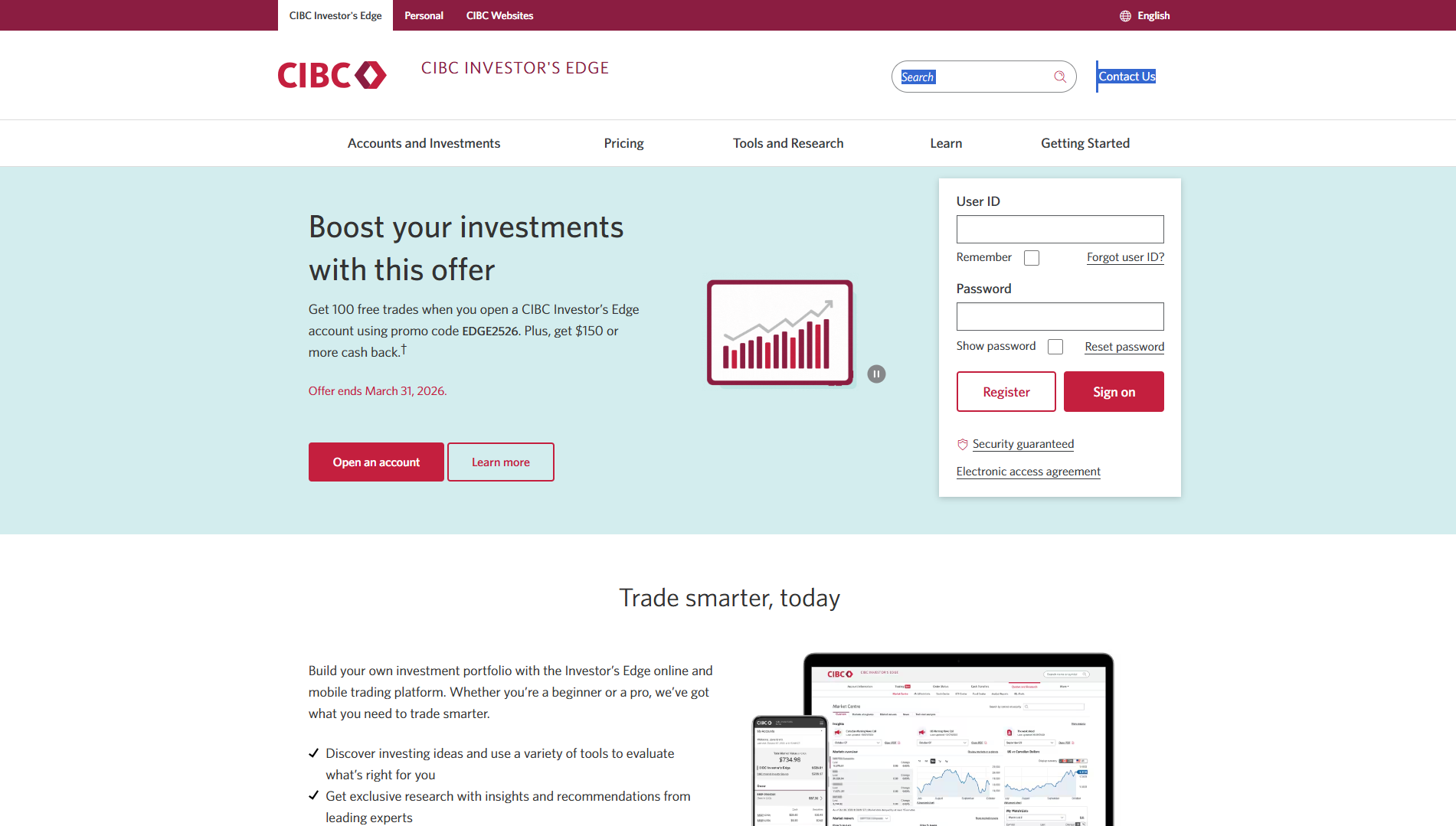
Benefits of Trading with CIBC Investor’s Edge
One clear benefit is low online trading fees, with pricing promoted as up to $6.95 per online stock or ETF trade and no minimum account balance. That combination can help new investors start without needing a large deposit, while still keeping trading costs predictable. Another advantage is the platform’s built-in tools and research, which can make day-to-day investing easier. Investor’s Edge highlights watchlists, custom alerts, and newsfeeds, plus charting tools that support technical analysis for tracking price movement. For convenience, CIBC Investor’s Edge positions itself as an online and mobile trading platform, meaning trades and portfolio checks can be done from a phone or computer. It also promotes the ability to monitor investments on the go, which matters for investors who want quick access when markets move. A practical benefit is the range of investment choices available through the platform, including products like stocks, ETFs, mutual funds, GICs, options, and fixed income. This helps investors keep more of their investing in one place instead of needing separate accounts for different products. 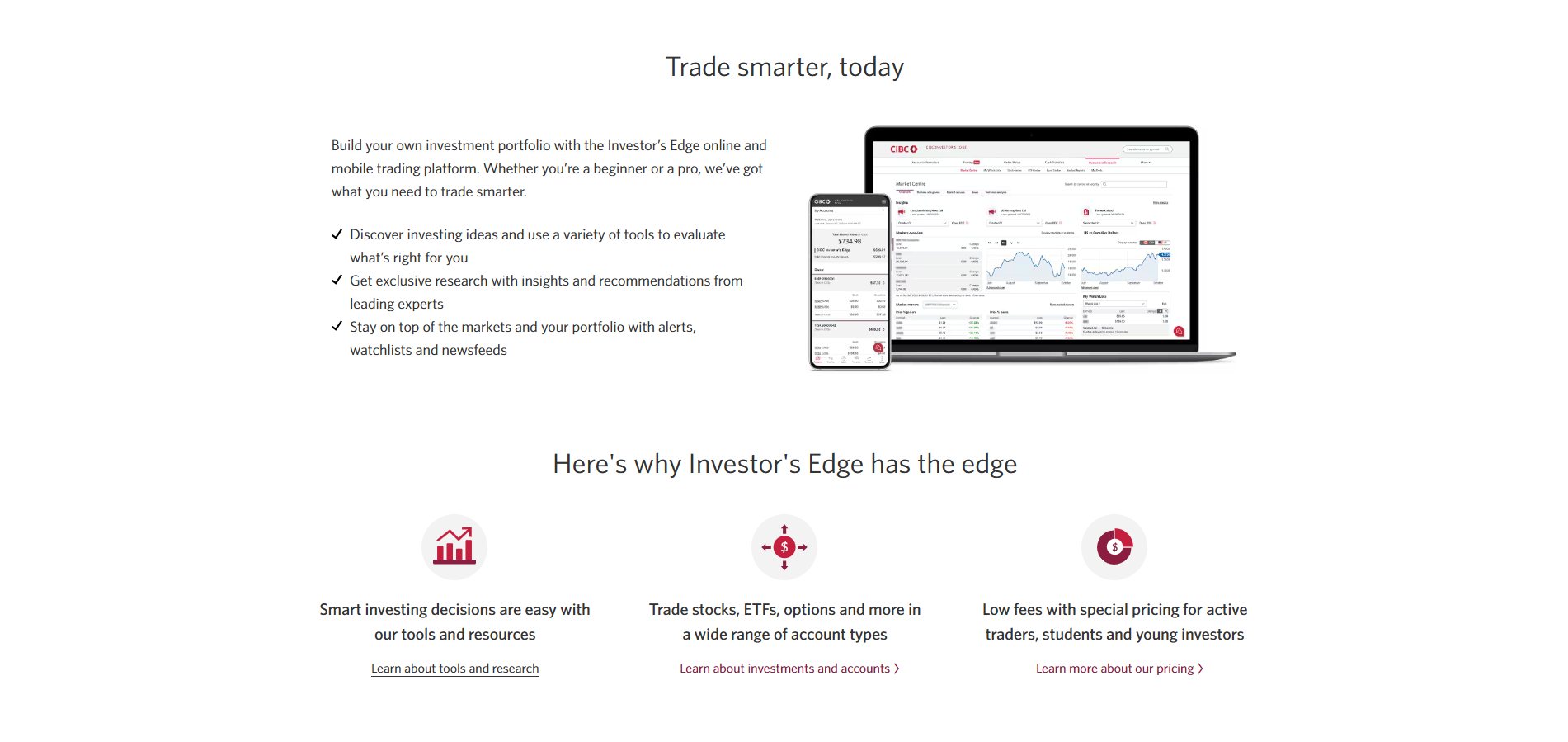
CIBC Investor’s Edge Regulation and Safety
CIBC Investor’s Edge is presented as a division of CIBC Investor Services Inc., which is part of CIBC. From a regulation standpoint, its disclosures indicate the business is licensed through the Canadian Investment Regulatory Organization (CIRO) for investment dealer activities, which is the main self-regulatory body overseeing investment dealers and trading activity. On investor protection, Investor’s Edge points clients to CIPF resources, which is relevant because CIPF is designed to cover missing property (like cash and securities held by a member firm) if a member firm becomes insolvent. This is not the same as protecting you from losing money due to market moves, bad timing, or an investment going down. From a safety lens, the useful takeaway is this: regulation and CIPF coverage are meant to reduce the risk of a brokerage failure impacting client assets, but they do not remove normal investing risk. So, “safe” here mainly means regulated oversight and insolvency protection, not guaranteed profits or protection from volatility.
CIBC Investor’s Edge Customer Reviews
When people search for CIBC Investor’s Edge customer reviews, they usually want to know two things: how reliable the platform feels day to day and how support handles problems. On Trustpilot, there is a listing tied to CIBC’s online brokerage domain, but the review count shown there is very small, so it should be treated as a limited sample. A broader set of public feedback appears under CIBC’s main Trustpilot page, where recurring complaints often mention long wait times and slow issue resolution. This does not prove the trading platform itself is broken, but it does highlight that customer experience can depend heavily on support responsiveness when something goes wrong. In investing forums, feedback is mixed, which is typical for big brokerages. Some users say they have no major issues using Investor’s Edge, while others describe customer service frustrations or the platform feeling too basic for advanced needs. One important note about the Trustpilot link provided for Scotia iTRADE is that it is a different broker, so those ratings and comments should not be used as CIBC Investor’s Edge reviews. If comparing brokers, that page can be useful for context, but it does not represent Investor’s Edge customer feedback. 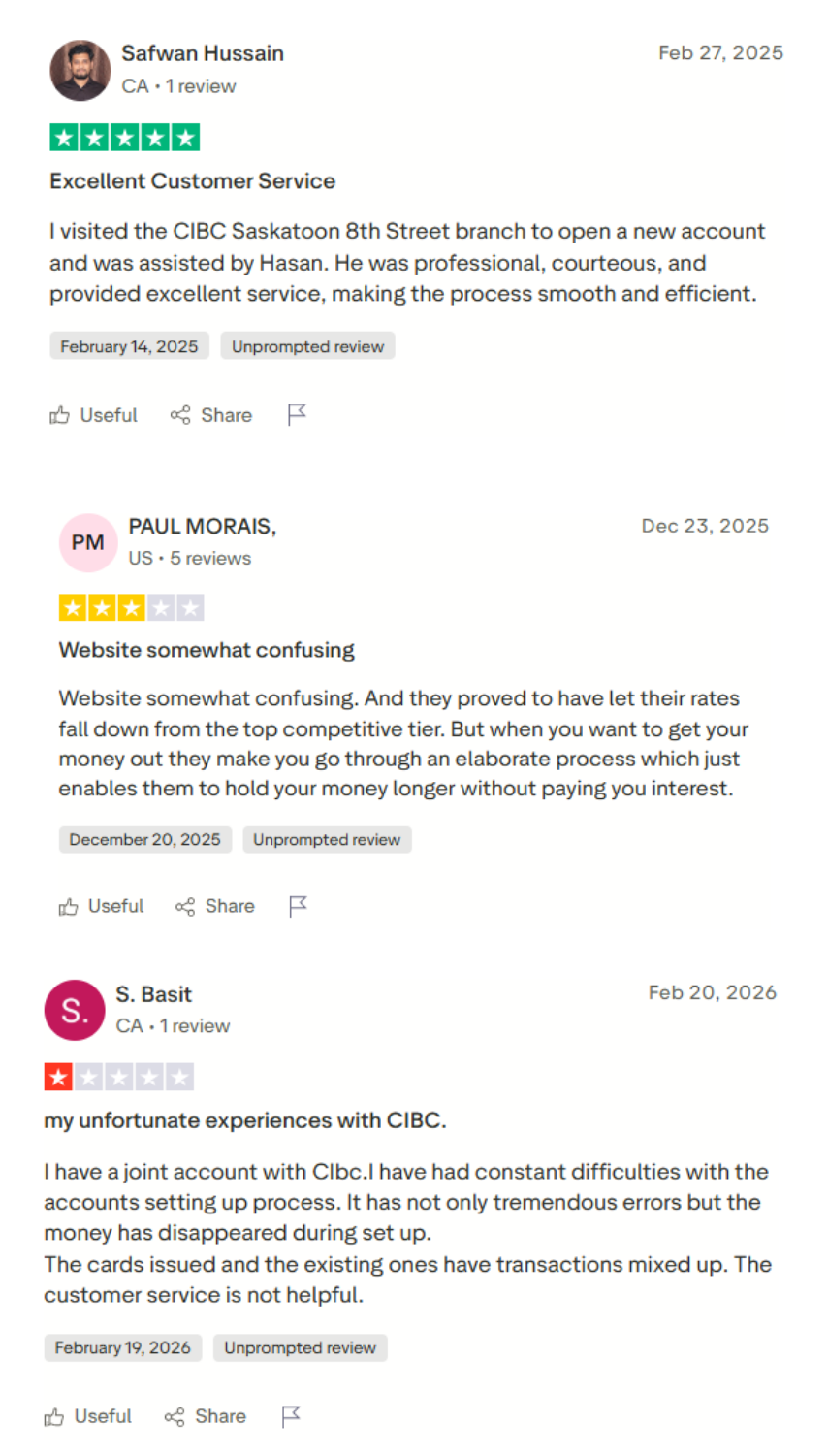
Account Types
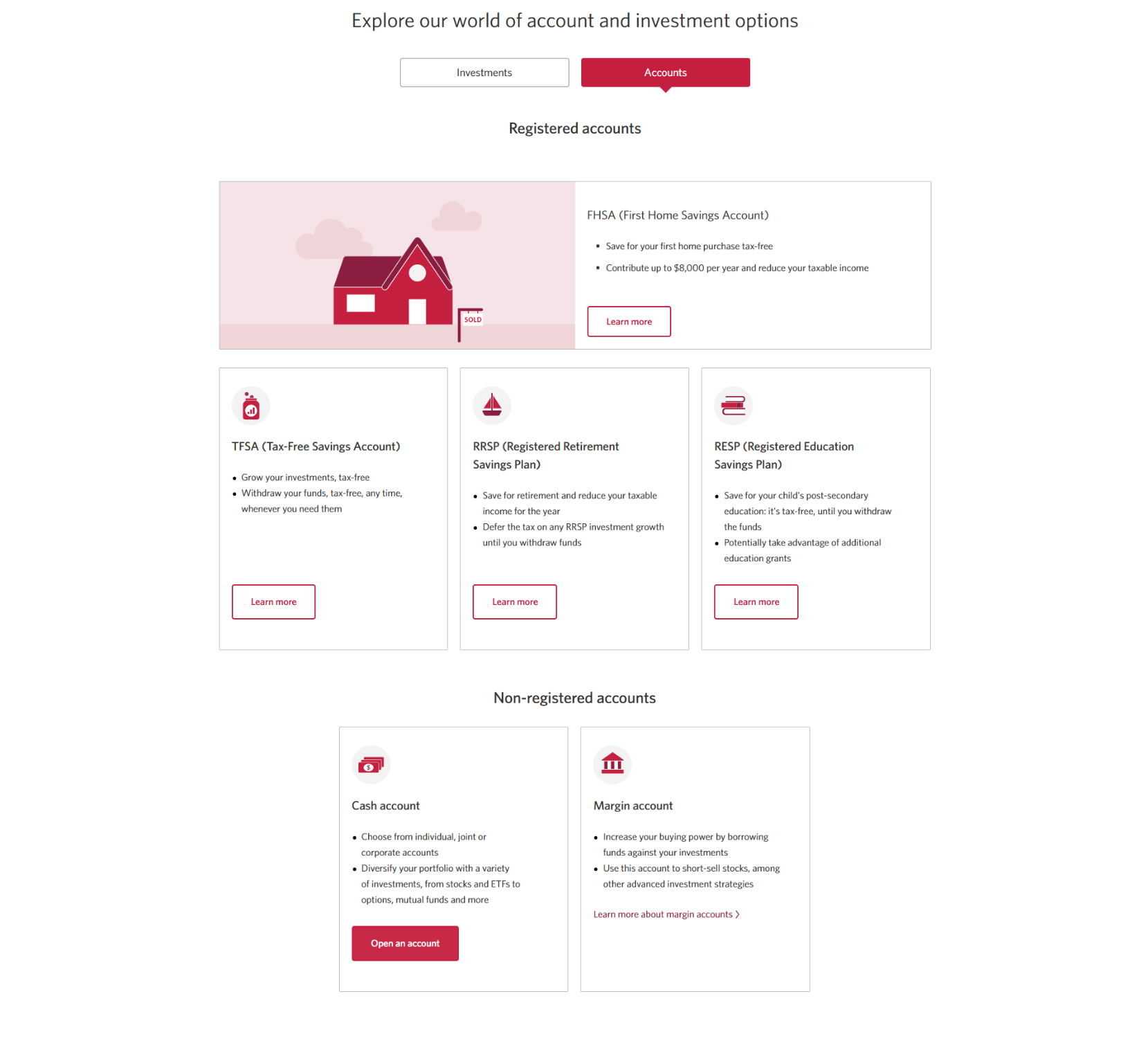
FHSA (First Home Savings Account)
- Save for a first home purchase tax-free, with contributions that can reduce taxable income.
TFSA (Tax-Free Savings Account)
- Grow investments tax-free and withdraw funds tax-free anytime.
RRSP (Registered Retirement Savings Plan)
- Save for retirement, reduce taxable income for the year, and defer tax on growth until withdrawal.
Cash account
- Choose individual, joint, or corporate, and invest in products like stocks, ETFs, options, mutual funds, and more.
Margin account
- Borrow against investments to increase buying power and use advanced strategies like short-selling.
CIBC Investor’s Edge Trading Platforms
CIBC Investor’s Edge is built around an online trading platform designed for self-directed investing, so trades and portfolio checks can be done in one place. The site highlights platform features like advanced order types and support for options strategies, which can matter for investors who want more control over how orders are placed. It also promotes trading through a mobile app so account access is not limited to a desktop. For investors who want to react faster to market moves, the platform also offers extended hours trading for eligible U.S. stocks and ETFs, and it lists the extended-hours window as 8:05 am to 6:00 pm ET. A fair note as a reviewer: these features are useful, but extended-hours trading can be riskier because prices can move quickly outside normal sessions and not every product is eligible. Investor’s Edge specifically limits extended-hours online trading to U.S.-listed stocks and ETFs on certain exchanges, and excludes products like options and mutual funds during those hours.
What Can You Trade on CIBC Investor’s Edge
CIBC Investor’s Edge is a self-directed brokerage that says it supports trading stocks, ETFs, and options, plus other investment products in a range of account types. For most investors, this covers the core building blocks needed to create a diversified portfolio. Beyond the basics, Investor’s Edge lists access to mutual funds, GICs, fixed income (such as bonds), and other products like IPOs, precious metals, and “more” under its investments offering. This is a plus for investors who want both long-term investing choices and more active trading instruments in one platform. If trading on mobile is important, the CIBC Mobile Wealth app listing also notes that Investor’s Edge clients can place orders for bonds and GICs, place mutual fund orders, and view New Issues and IPOs. That matters because some brokers limit certain products to desktop only.
CIBC Investor’s Edge Customer Support
CIBC Investor’s Edge offers customer support through phone, secure chat (after sign-on), and online request forms for non-urgent needs. The contact page also highlights an Asian Trading Desk that supports Mandarin and Cantonese, available Monday to Friday, 8:30 am to 6:00 pm ET. For general help, the site lists a toll-free number for Investor’s Edge support, plus an option to message chat agents once signed in. This setup is practical for quick questions, but it can be limiting if help is needed without logging in. For order-related issues or account instructions, Investor’s Edge directs clients to call a dedicated number, and the request-help form warns that response times are a minimum of 3 business days. As a reviewer, that’s a real downside for time-sensitive problems, because markets do not wait. 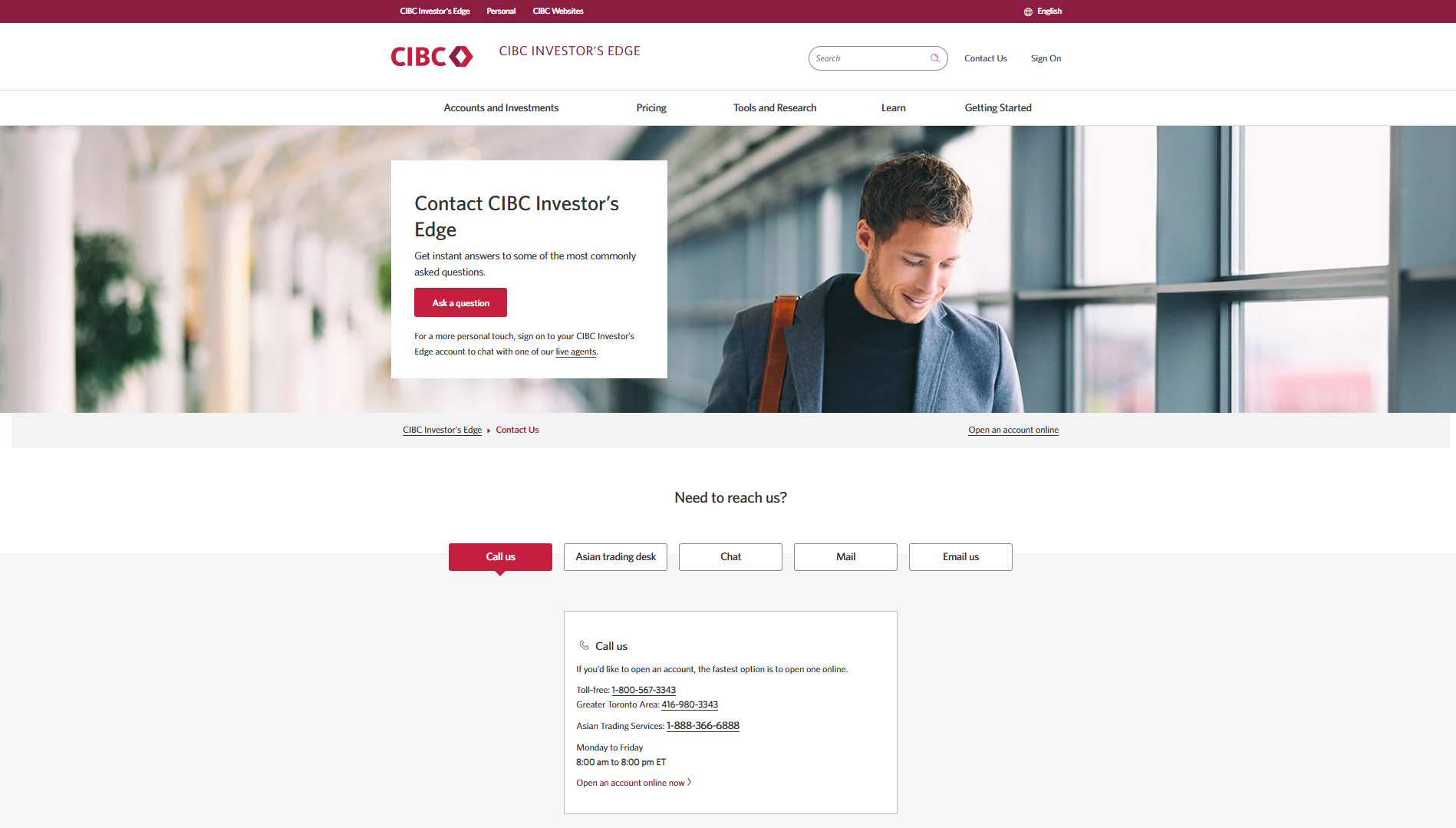
Withdrawal Options and Fees
For CIBC Investor’s Edge withdrawal options, the most direct method is moving cash using the platform’s transfer tools, including cash transfers to a CIBC bank account and cash transfers to other institutions (electronic). According to its fees booklet, both of these cash transfer options are listed at $0. If a paper payout is needed, Investor’s Edge also lists a cheque request at $0, while a cheque stop payment costs $10 if done within 10 business days of issuance. These details matter for investors who still prefer cheque-based withdrawals or need to cancel a cheque quickly. Where costs can show up is when assets are moved out rather than cash. The booklet lists an external transfer out to other institutions (partial or full) at $150, with a note that the transfer fee is waived if the account is transferred within the CIBC group. For registered accounts, fees depend on the type of withdrawal. The booklet lists RRSP deregistration fees of $100 for a full plan withdrawal and $50 for a partial plan withdrawal, while certain program withdrawals like HBP and LLP are listed at $0.
Conclusion: CIBC Investor’s Edge Review
CIBC Investor’s Edge makes the strongest case for investors who want a self-directed brokerage with clear pricing and common portfolio products in one place. It highlights costs of up to $6.95 per online stock or ETF trade and says there is no minimum account balance, which lowers the barrier to getting started. For investing choices, it lists access to stocks, ETFs, options, mutual funds, GICs, fixed income, and more, which should cover most long-term investing needs. It also supports extended hours online trading for eligible U.S.-listed stocks and ETFs, which can be useful, but it comes with extra risk and product limits outside regular market hours. The biggest watch-out is fees that appear when moving accounts out rather than just trading inside the platform. The disclosure booklet lists an external transfer out fee of $150, so anyone who expects to switch brokers later should factor that into the decision.
CIBC Investor’s Edge Review FAQs
What is CIBC Investor’s Edge?
CIBC Investor’s Edge is an online and mobile trading platform built for self-directed investing, meaning account holders choose and manage their own investments. It is positioned for both beginners and experienced investors who want tools like alerts, watchlists, and research in one place.
How much does CIBC Investor’s Edge cost to use?
CIBC Investor’s Edge advertises trading fees of up to $6.95 per online stock or ETF trade. It also states there is no minimum account balance, which makes it easier to start investing with any amount.
Can you trade outside regular market hours on Investor’s Edge?
Yes, Investor’s Edge offers extended hours trading for eligible U.S. stocks and ETFs. The extended sessions are listed as 8:05 am to 9:29 am ET (pre-market) and 4:00 pm to 6:00 pm ET (after-hours) on regular U.S. market days. OPEN AN ACCOUNT NOW WITH CIBC INVESTORS EDGE AND GET YOUR BONUS
The verdict on CIBC Investor’s Edge
CIBC Investor’s Edge makes the strongest case for investors who want a self-directed brokerage with clear pricing and common portfolio products in one place. It highlights costs of up to $6.95 per online stock or ETF trade and says there is no minimum account balance, which lowers the barrier to getting started. For investing choices, it lists access to stocks, ETFs, options, mutual funds, GICs, fixed income, and more, which should cover most long-term investing needs.
More stock brokers we’ve reviewed

Get Ezekiel Chew’s 5 Day Email Course on “How to be in the Top 10% league of Forex Traders”
100% Free – Delivered to your inbox
Subscribe to the most popular Forex Trading blog online, join thousands of readers
