Position in Rating | Overall Rating | Trading Terminals |
4th  | 4.0 Overall Rating |   |
Kraken Review
Kraken offers a range of trading platforms for currency and crypto exchange designed to meet the needs of both beginners and advanced traders. Kraken's primary platform, Kraken Web, provides a straightforward interface, allowing users to buy, sell, and trade digital assets with ease. It supports spot trading and is accessible through any web browser.
For more experienced traders, Kraken Pro offers advanced charting tools, in-depth market analysis, and lower fees for high-volume trades. This platform is ideal for those who need robust tools for technical analysis and faster order execution. Additionally, Kraken's mobile app brings both the basic and advanced trading features to your smartphone, enabling convenient access to your portfolio on the go.
Kraken also provides futures trading, allowing foreign and crypto investors to go long or short on popular cryptocurrencies with leverage. This feature is suitable for those looking to hedge or speculate on market movements. Overall, Kraken’s platforms cater to diverse trading needs, providing flexibility and security for all types of traders.
What is Kraken?
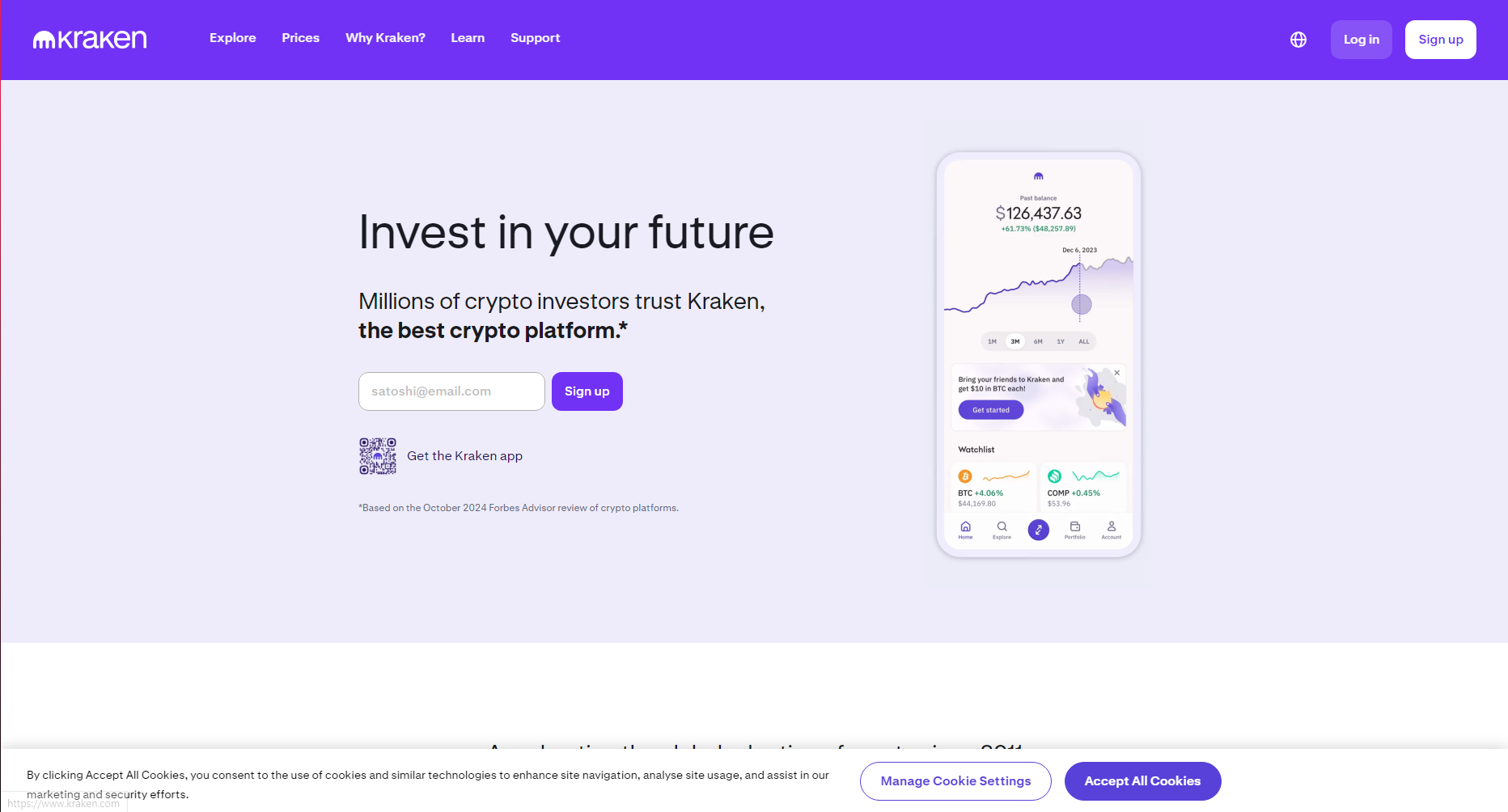
Kraken is a prominent crypto exchange founded in 2011 and launched in 2013. Kraken offers a platform for buying, selling, and trading a wide array of digital assets, including popular cryptocurrencies like Bitcoin and Ethereum. Over the years, Kraken has expanded its services to include spot trading, margin trading, futures trading, and staking, catering to both novice and experienced traders.
The platform is known for its strong security measures and commitment to regulatory compliance, operating in over 190 countries. Kraken supports more than 290 cryptocurrencies and over 780 trading pairs, providing users with diverse investment opportunities. Additionally, Kraken offers trading in multiple fiat currencies, such as U.S. dollars, euros, British pounds, Japanese yen, Swiss francs, Canadian dollars, and Australian dollars, facilitating global accessibility.
Kraken's user-friendly interface and advanced trading tools make it a versatile platform for a broad spectrum of users, from beginners to professional traders. Its comprehensive suite of services and dedication to security have established Kraken as a trusted name in the cryptocurrency industry.
Kraken Regulation and Safety
Kraken is a well-established crypto exchanges known for its strong commitment to security and regulatory compliance. The platform employs a comprehensive security approach to protect user funds and personal information. This includes features such as two-factor authentication (2FA), SSL encryption, and real-time monitoring for suspicious activity. Additionally, Kraken stores the majority of user funds in offline, air-gapped cold storage to safeguard against potential cyber threats.
In terms of regulatory compliance, Kraken operates under various licenses and registrations across multiple jurisdictions. For instance, in the United States, it is registered as a Money Services Business (MSB) with the Financial Crimes Enforcement Network (FinCEN). In Europe, Kraken is registered as a Virtual Asset Service Provider (VASP) in several countries, including Ireland and the Netherlands. These registrations ensure that Kraken adheres to local laws and regulations, providing users with a secure and compliant trading environment.
Despite its proactive stance on security and compliance, Kraken has faced regulatory challenges. In November 2023, the U.S. Securities and Exchange Commission (SEC) charged Kraken for operating its trading platform as an unregistered securities exchange, broker, dealer, and clearing agency. The SEC alleged that Kraken facilitated the buying and selling of crypto exchanges asset securities without proper registration, depriving investors of significant protections. Kraken has responded to these allegations, maintaining that the assets in question do not meet the legal definition of securities under U.S. law.
Kraken Pros and Cons
Pros
- Security
- Diverse assets
- 24/7 support
- Advanced tools
Cons
- High fees
- Limited regions
- Support delays
- Complex interface
Benefits of Trading with Kraken
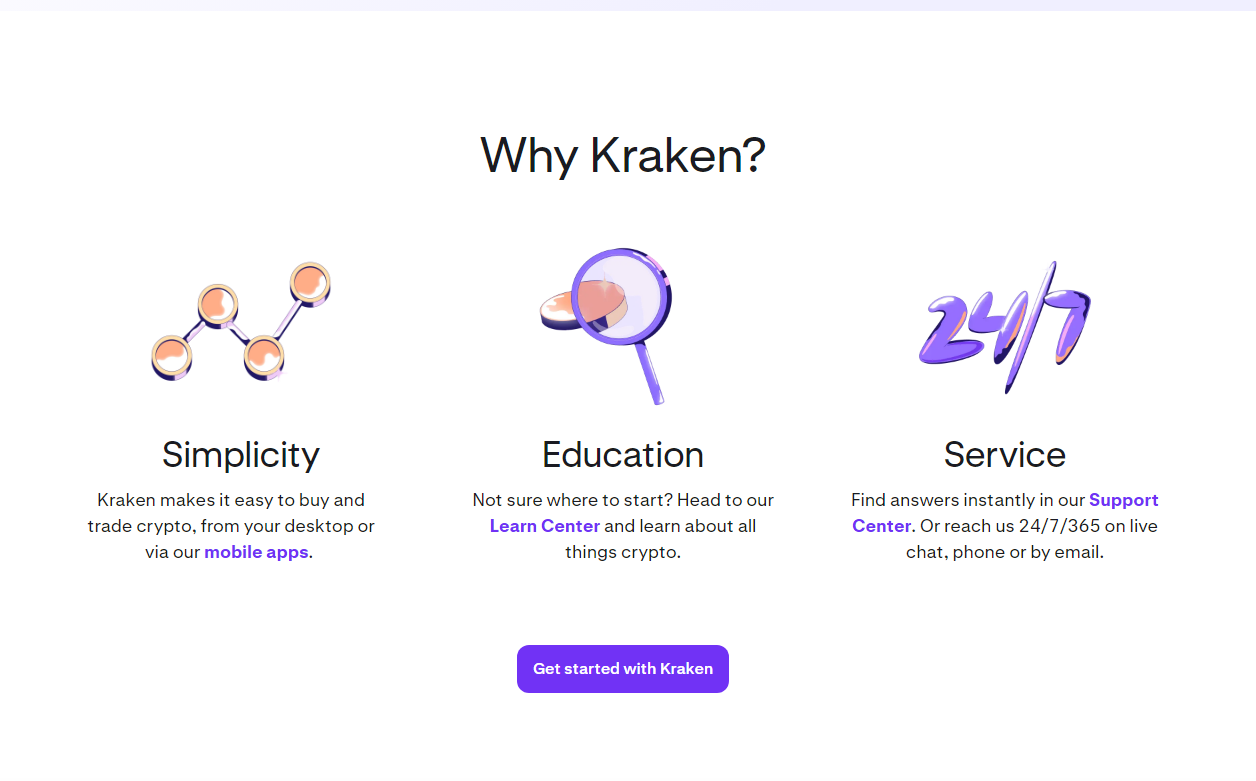
Kraken offers a range of benefits for cryptocurrency traders looking for a secure and versatile platform. With over 290 cryptocurrencies and more than 780 trading pairs, Kraken provides ample options for those wanting to diversify their investments. This extensive crypto asset securities selection allows users to explore various markets and opportunities in one place.
For different trading strategies, Kraken caters to both beginners and advanced traders by offering spot trading, margin trading with up to 5x leverage, and futures trading. These options give traders flexibility in how they approach the market, whether they’re buying and selling directly or leveraging their positions. Kraken's advanced charting tools and market analysis make it easy to navigate, making it suitable for traders at all experience levels.
Security is a top priority on Kraken, which employs strong measures like two-factor authentication and cold storage to protect user funds. Operating in over 190 countries, Kraken supports multiple fiat currencies like USD, EUR, GBP, and more, making deposits and withdrawals simple for global users. With 24/7 customer support available, Kraken ensures traders have assistance whenever they need it, making it a reliable choice for crypto trading.
Kraken Customer Reviews
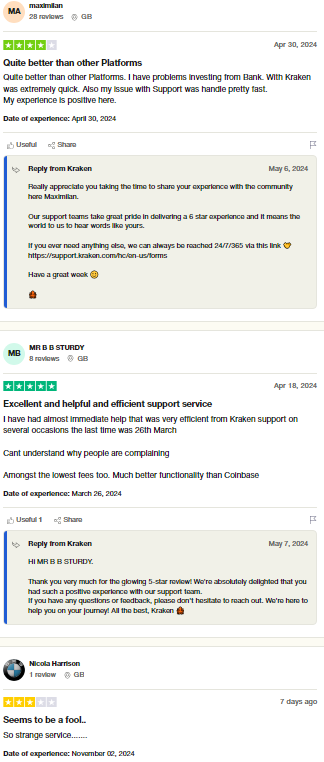
Kraken has received a mix of customer reviews across various platforms. On review sites, Kraken holds an average rating, with some users raising concerns about account accessibility and response times from customer support. Complaints also highlight occasional issues with fund withdrawals and unexpected account restrictions, which some users have found frustrating.
Despite these critiques, many users praise Kraken for its strong security measures and the wide variety of cryptocurrencies available. The platform's advanced trading features, including margin and futures trading, are appreciated by experienced traders who benefit from the additional tools Kraken provides for strategic trading.
It’s essential to consider that negative reviews represent only a portion of Kraken's large user base. The platform remains popular among both novice and seasoned traders, thanks to its comprehensive services and commitment to security. Overall, Kraken continues to be a reliable choice for those engaging in cryptocurrency trading.
Kraken Spreads, Fees, and Commissions
Kraken fees are structured that varies based on the trading platform and services utilized. For spot trading on Kraken Pro, fees are determined by a maker-taker model and your 30-day trading volume. Maker fees range from 0.16% to 0.00%, while taker fees range from 0.26% to 0.10%, with higher trading volumes benefiting from lower fees.
When using Kraken's Instant Buy feature, fees are higher. Purchases made via this service incur a fee of 1.5% for most cryptocurrencies and 0.9% for stable coins. Additional processing fees apply when using payment methods like credit or debit cards. This makes Kraken fees are way more higher than the other brokerage services.
For margin trading, Kraken charges opening and rollover fees. Opening fees range from 0.01% to 0.02%, and rollover fees are applied every four hours at similar rates. Futures trading fees on Kraken also follow a tiered structure, with maker fees starting at 0.0200% and taker fees at 0.0500%, decreasing with higher trading volumes.
It's important to note that Kraken may include spreads in the pricing of certain transactions, especially when using the Instant Buy feature. These spreads can vary based on market conditions and the specific cryptocurrency being traded. Therefore, Kraken exchange review shows what traders need before exchanging in Kraken.
Account Types
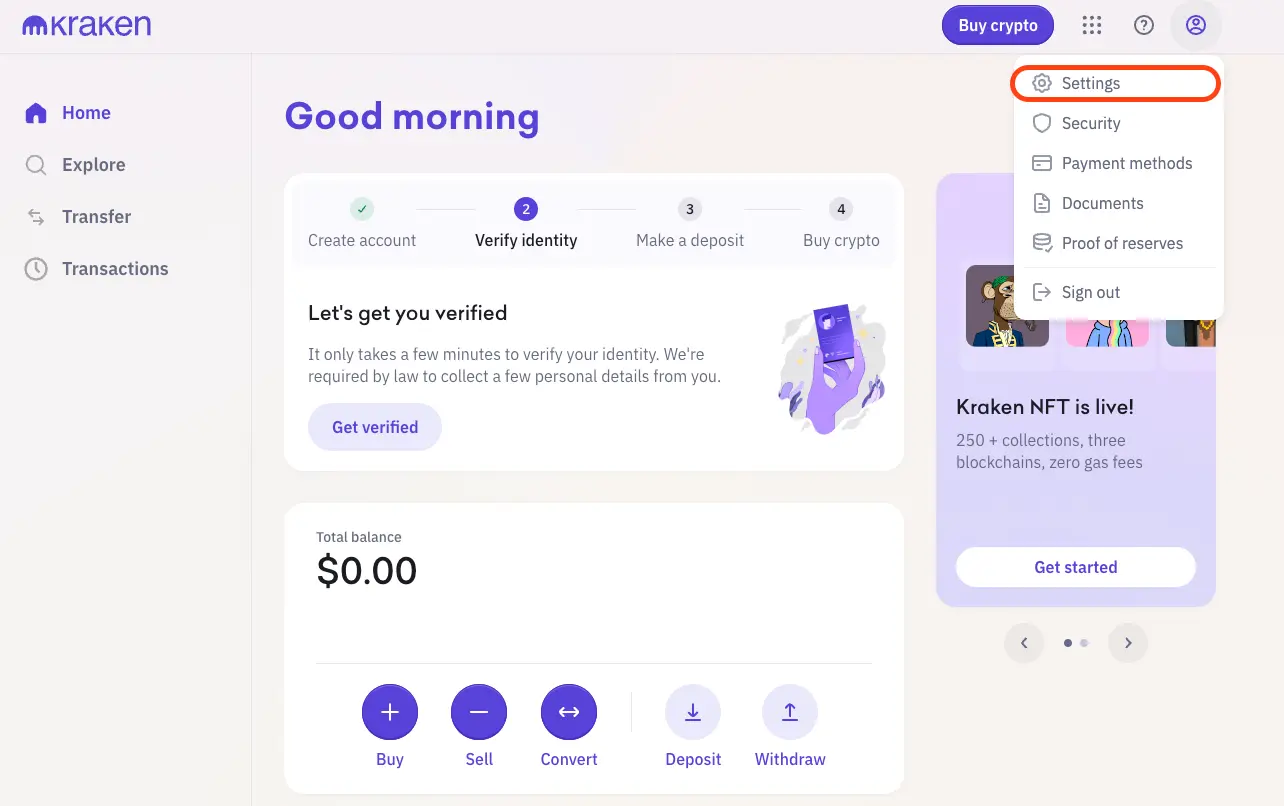
Kraken offers two primary account types to accommodate different user needs:
Personal Accounts
Personal accounts are designed for individual users who wish to trade cryptocurrencies for personal investment purposes. These accounts provide access to Kraken's trading platforms, including spot trading, margin trading, and staking services. Users can manage their portfolios, execute trades, and utilize various tools and resources tailored for individual investors.
Business Accounts
Business accounts cater to corporate entities, institutional investors, and organizations seeking to engage in cryptocurrency trading. These accounts offer features such as higher funding limits, access to over-the-counter (OTC) trading desks, and dedicated account management services. Business accounts are ideal for entities requiring advanced trading capabilities and personalized support to meet their organizational objectives.
Both account types require users to complete Kraken's verification process, which includes providing identification documents and, for business accounts, additional corporate documentation. This ensures compliance with regulatory standards and enhances the security of the platform.
How to Open Your Account
By following these steps, you can successfully open and secure your Kraken account, ready to engage in cryptocurrency trading.
Step 1: Visit the Kraken Website
Navigate to Kraken's official website. Ensure you're on the correct site to protect your personal information.
Step 2: Initiate the Sign-Up Process
Click the “Sign Up” button located in the upper-right corner of the homepage. This action will direct you to the account creation page.
Step 3: Provide Your Email and Create a Password
Enter a valid email address and create a strong, unique password. A robust password enhances the security of your account.
Step 4: Agree to Terms of Service
Review Kraken's Terms of Service and Privacy Policy. If you agree, check the corresponding box to proceed.
Step 5: Activate Your Account
After submission, Kraken will send an activation email to the address provided. Open this email and click the activation link to verify your account.
Step 6: Secure Your Account
Upon activation, log in and set up two-factor authentication (2FA) to add an extra layer of security. This step is crucial for protecting your account from unauthorized access.
Step 7: Complete Identity Verification
To access all features, complete Kraken's identity verification process by providing necessary personal information and identification documents. This process ensures compliance with regulatory standards.
After following these steps, the new trader is now officially belong to the Kraken users. Also, after creating an account, Kraken offers margin trading that experienced traders might find interesting. However, this is not recommended for beginning crypto investors if Kraken offer margin trading.
Kraken Trading Platforms
Kraken provides several trading crypto platforms to meet the needs of different types of traders. Its primary platform, Kraken Web, offers a straightforward interface that allows users to easily buy, sell, and trade digital assets. This platform is designed for spot trading and is accessible from any web browser, making it convenient for users seeking quick and simple transactions.
For more experienced traders, Kraken Pro delivers advanced tools, including in-depth market analysis, sophisticated charting, and lower fees for high-volume trades. Kraken Pro is ideal for those needing detailed data for technical analysis or who require faster order execution. This platform provides a more comprehensive experience for traders who want to maximize their strategies.
Additionally, this broker also offers Kraken app that combines basic and advanced trading features for on-the-go access with low trading fees. The app allows users to manage their portfolios, execute trades, and monitor the markets directly from their smartphones. Overall, Kraken’s platforms provide flexibility and convenience, accommodating both beginner and advanced trading needs.
What Can You Trade on Kraken
Kraken provides a variety of trading options to meet different investment goals and strategies. Here’s a detailed look at each category available for trading on Kraken.
Major Cryptocurrencies
Kraken offers popular cryptocurrencies like Bitcoin (BTC), Ethereum (ETH), and Ripple (XRP), which are known for their liquidity and stability. These assets are commonly used in portfolios for reliable market value.
Altcoins and Emerging Cryptocurrencies
Kraken provides a range of altcoins, including Solana (SOL) and Chainlink (LINK), appealing to traders interested in growth and emerging blockchain projects. Altcoins offer diversification but may carry more volatility.
Stablecoins
Stablecoins like Tether (USDT) and USD Coin (USDC) are available on Kraken for those seeking stability. Pegged to fiat currencies, these assets are ideal for consistent trading without large price swings.
Fiat Currencies
Kraken supports fiat trading with currencies like U.S. dollars (USD) and euros (EUR), allowing for easy deposits and withdrawals. This option simplifies purchasing cryptocurrencies directly.
Futures and Margin Trading
Experienced traders can access futures and margin trading on Kraken, with leverage options up to 5x. These advanced features offer higher potential returns but come with added risks.
Kraken Customer Support
Kraken provides customer support designed to assist users with their trading needs and resolve any issues they encounter. With 24/7 support through live chat and email, Kraken aims to be available at all hours, helping users from various time zones. This round-the-clock service allows traders to get timely assistance whenever they need it.
For common questions and basic troubleshooting, Kraken offers a comprehensive support center on its website. This resource includes FAQs, guides, and articles to help users navigate the platform, handle account settings, and learn more about trading options. By providing these resources, Kraken empowers users to find quick answers without needing direct support.
While Kraken’s customer support is generally responsive, some users report varying experiences, particularly during high-traffic periods. Kraken continuously works to improve its support processes to ensure all users get prompt, effective assistance. Overall, Kraken's support options make it a reliable platform for those needing help with their cryptocurrency trading journey.
Advantages and Disadvantages of Kraken Customer Support
 Advantages
 Disadvantage
Withdrawal Options and Fees
Kraken offers various withdrawal options to accommodate different user preferences, each with associated fees and processing times.
Bank Account Withdrawals
Users can withdraw funds directly to their bank accounts via methods like SWIFT, SEPA, and domestic wire transfers. Processing times and fees vary depending on the currency and region; for example, SEPA withdrawals in euros are typically faster and more cost-effective for European users.
Cryptocurrency Withdrawals
Withdrawing cryptocurrencies from Kraken involves transferring digital assets to an external crypto wallet. Each cryptocurrency has its own network fee, which Kraken passes on to the user; these fees fluctuate based on network congestion. Processing times depend on the blockchain's current activity, with some transactions completing in minutes and others taking longer.
Debit Card Withdrawals
In certain regions, Kraken supports withdrawals to linked debit cards. This option provides quick access to funds, often within minutes, but may incur higher fees compared to bank transfers. Availability and fees for debit card withdrawals depend on the user's location and the specific card issuer's policies.
It's important for users to review Kraken's official fee schedule and consider processing times when choosing a withdrawal method, as these factors can impact the overall cost and speed of accessing funds.
Kraken Vs Other Brokers
#1. Kraken vs AvaTrade
Kraken and AvaTrade are both prominent platforms in the trading industry, each catering to different markets and trader preferences. Kraken, established in 2011, is a cryptocurrency exchange offering over 290 digital assets, including major cryptocurrencies like Bitcoin and Ethereum, as well as various altcoins and stablecoins. It provides services such as spot trading, margin trading with up to 5x leverage, and futures trading, appealing to both novice and experienced crypto traders. AvaTrade, founded in 2006, is a forex and CFD broker offering a wide range of financial instruments, including forex pairs, stocks, commodities, indices, and cryptocurrencies. It provides access to multiple trading platforms, such as MetaTrader 4 and 5, and offers features like automated trading and educational resources, catering to traders interested in diverse asset classes beyond cryptocurrencies.
Verdict: Kraken is best suited for those focused on cryptocurrency trading, offering an extensive selection of digital assets and tailored crypto features. In contrast, AvaTrade is ideal for traders looking to diversify across multiple asset classes, including forex, stocks, and commodities, making it a more versatile choice for broader market exposure.
#2. Kraken vs RoboForex
Kraken and RoboForex are both established trading platforms, each catering to distinct markets and trader preferences. Kraken, founded in 2011, is a cryptocurrency exchange offering over 290 digital assets, including major cryptocurrencies like Bitcoin and Ethereum, as well as various altcoins and stablecoins. It provides services such as spot trading, margin trading with up to 5x leverage, and futures trading, appealing to both novice and experienced crypto traders. RoboForex, established in 2009, is a forex and CFD broker offering a wide range of financial instruments, including forex pairs, stocks, commodities, indices, and ETFs. It provides access to multiple trading platforms, such as MetaTrader 4 and 5, and offers features like automated trading and educational resources, catering to traders interested in diverse asset classes beyond cryptocurrencies.
Verdict: Kraken is ideal for those dedicated to cryptocurrency trading, offering a specialized platform with extensive crypto-focused features. On the other hand, RoboForex is better suited for traders who want to access a wide variety of assets, including forex, stocks, and commodities, providing greater market diversity.
#3. Kraken vs Exness
Kraken and Exness are both prominent trading platforms, each catering to different markets and trader preferences. Kraken, established in 2011, is a cryptocurrency exchange offering over 290 digital assets, including major cryptocurrencies like Bitcoin and Ethereum, as well as various altcoins and stablecoins. It provides services such as spot trading, margin trading with up to 5x leverage, and futures trading, appealing to both novice and experienced crypto traders. Exness, founded in 2008, is a forex and CFD broker offering a wide range of financial instruments, including forex pairs, stocks, commodities, indices, and cryptocurrencies. It provides access to multiple trading platforms, such as MetaTrader 4 and 5, and offers features like automated trading and educational resources, catering to traders interested in diverse asset classes beyond cryptocurrencies.
Verdict: Kraken is best suited for traders focused on cryptocurrencies, offering a specialized platform with extensive digital asset options and crypto-specific features. Meanwhile, Exness is ideal for those looking for a broader selection of financial instruments, including forex and CFDs, making it a more versatile choice for multi-asset trading.
Also Read: AvaTrade Review 2024 – Expert Trader Insights
Conclusion: Kraken Review
In summary, Kraken stands out as a versatile cryptocurrency exchange offering a wide selection of assets and advanced trading features. With over 290 cryptocurrencies and multiple fiat options, Kraken appeals to both new and experienced traders who want diverse investment opportunities. Its platform also provides features like margin trading, futures, and staking, allowing users to explore various trading strategies.
Kraken is known for its robust security measures, including two-factor authentication and cold storage, which help protect user funds. Operating in over 190 countries, Kraken ensures accessibility for global traders, making it easy to deposit and withdraw in major fiat currencies. This focus on security and accessibility makes Kraken a reliable option in the crypto market.
While some users have raised concerns about customer support response times, Kraken continues to improve its services to meet user needs. Overall, Kraken security remains a trusted and comprehensive platform, offering strong security, a broad asset range, and trading options for different skill levels in terms of foreign exchange and cryptocurrency investing and cryptocurrency exchanges.
Kraken Review: FAQs
What is Kraken?
Kraken is a cryptocurrency exchange offering a platform for trading digital assets, including spot, margin, and futures trading.
Is Kraken Safe?
Yes, Kraken prioritizes security with measures like two-factor authentication and cold storage.
What Fees Does Kraken Charge?
Kraken charges fees based on trading volume and type, with lower rates on Kraken Pro and higher rates for Instant Buy.
OPEN AN ACCOUNT NOW WITH KRAKEN AND GET YOUR BONUS