Learn To Trade Forex • Best Forex Trading Course • AsiaForexMentor

What are the Different Types of Traders?

Written by

Ezekiel Chew

Updated on

January 29, 2025

i

What are the Different Types of Traders?

Written by:

Last updated on:

January 29, 2025

The forex trading market is the largest trading market in the entire world. It’s worth trillions of dollars, significantly more than the stock market. Moreover, it’s open 24/7 for about 5 days a week. So, forex traders have a lot of opportunities to invest in currency trading pairs.

Forex Market
flickr.com

Also Read: 10 Traits on How to be a Successful Trader

Contents

Trading Strategies

There are 2 categories of traders: swing traders and long-term traders. Swing traders will trade their assets when the market gathers or loses momentum. Their profit is based on short-term price differences between their entry and exit points. The long-term investors just buy and hold their assets for periods of a year or more.

Back to Top

Swing Traders: Scalpers, Day Traders, Position Traders

Traders 1
lh3.googleusercontent.com

Swing traders are divided into 3 types of traders. The three types are scalpers, day traders, and position traders. Each type is defined by how often they trade at least 90% of their account’s capital. The definition of each trader type is set by FINRA. FINRA distinguishes between traders who trade several times per day, multiple times per week, every few weeks to a couple of months, over a period of several months, and for over a year.

Back to Top

Scalpers (a.k.a. Noise Traders)

Traders 2
flickr.com

Scalpers are people whose trades are made within seconds to hours. The short-term trades are made based on differences in price. Their goal is to make a lot of short-term traders with small profits that grow into substantial profit over time.

These traders try to quickly identify patterns in the market data and exploit them. Often they will study 5, 15, 30, and 60 minute market charts to get a feel for the market and the price direction of the assets of interest to you.

This is a time-consuming, energy draining activity that requires traders to act quickly and make assumptions about market movements and the longevity of the market trends. Since they cannot watch the trends for a lengthy period of time, they must combine their instinct, chart reading skills, and luck to get the most from their short-term investments. Over time, these traders’ goal is to have their profits be significantly greater than their losses.

Scalpers do not hold their positions overnight or through the weekend. Since their positions are closed by the end of the trading day, their positions in the market are not affected by events that happen overnight and during the weekend.

A major concern with this trading strategy is the cost of trading related fees. Since scalpers make a lot of short-term trades, they will pay higher trading fees than other traders and any other fees associated with frequent trading.

 Back to Top

Day Traders/Intraday Traders

Trader 3
flickr.com

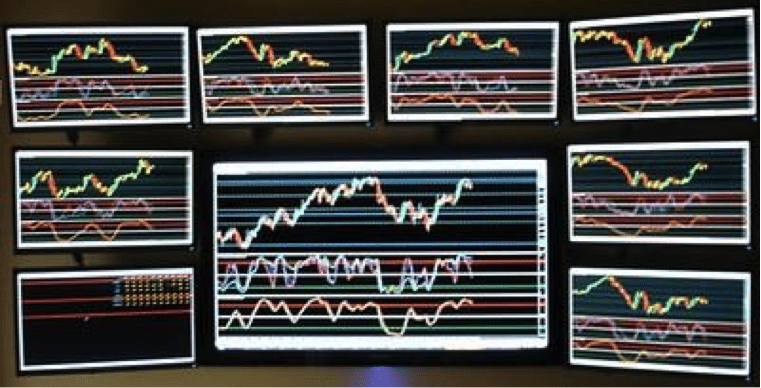
Day traders trade their assets over a period of hours, but close almost all of their positions by the end of the day. The longer trading period gives them a chance to find better entry and exit market points.

While day traders can take advantage of greater price differences, they must still find the optimal times to and exit the market. To do this, they use 60-minute charts and charts that span hours. Their trading is not as hectic, frenzied and stressful as the scalpers’ trading strategy.

In addition, they are not required to spend as much time staring at market charts and making trades. Their short-term trades must still be timed well so that they can make a profit. This means that they can spread their trades throughout the day. Also, they can be a bit more relaxed about when they trade, as long as they don’t lose money during the trade, and it covers their trade-related fees.

Since they do leave a few positions open overnight and/or through the weekend, they are exposed to market surprises that may affect asset prices. The events that can affect asset prices are wars, natural disasters, corporate mergers, economic sanctions or sudden economic downturns.

Like scalpers, they pay higher commission fees than traders who trade over a longer period of time. The issue here is that the profits from the day trades should cover the trader’s market losses and any trade-related fees.

Also Read: Day Trading Computer Set Up

Back to Top

Position Traders

Trader 4
investing-network.com

Position traders trade assets over a period of time that can be as short as a day to as long as several weeks. They plan to trade the asset at a set point in the market that they expect will occur during the period of time that they have allotted for the trade.

Since the trader has an extended period of time to make the trade, there is less stress and much less time spent studying market charts. For example, the trader may study market charts that cover 2-, 4-, 6-hour time periods. If the trader can find a market trend that is gaining momentum over time, the best entry and exit positions can be decided, and the trader can just focus on the price points of interest.

This type of trading carries different risks than those faced by the scalpers and day traders. Their risk comes from holding their position from a day to several weeks. During that time period, traders know that the value of the asset will fluctuate. Their willingness to hold the asset until it reaches the trader’s (targeted) price point, or a better one.  

These traders can have their asset prices affected by events and news that affect the asset’s price. These events may not affect the trader’s plans for the asset, but they could also trigger some price changes that motivate the trader to sell the asset before it reaches a profitable price point.

The other risk is that the expected price point may not be reached in the market. If this happens, the trader may regret not taking advantage of earlier changes in the market that would have been in their best interest but not as profitable as the expected/desired price point. Ultimately, these traders are waiting for a day that may never come, but they hope it comes so that they can get their planned return on investment.

Back to Top

Long-Term Investors

Trader 4
flickr.com

Long-Term investors (LTIs) don’t care about the short-term price fluctuations of an asset. They want to own the asset for an extended period of time. They may sell it in less than a year or just not hold it for a long time because there have been some changes in the market or at the company that affect its potential performance and/or profitability.

Unlike scalpers, day traders, and position traders, LTIs focus solely on financial analysis. To them, it is more important to look at a company’s management, financials, industry, and competitors than its historical market performance.

For the LTIs, the biggest risks are when to buy and when to sell the asset. Since they buy and hold the asset, the charts may review daily market charts and those covering weeks or months. The bulk of their time is spent finding assets that they may be interested in purchasing and performing an in-depth financial analysis on the assets of interest.

Back to Top

Conclusion

Technical analysis tools are preferred by many traders because they are events driven traders. An event driven trader is a momentum trader who likes to trade frequently and exploit price swings.

New traders, especially younger ones, are likely to be swing traders. As they become more familiar with fundamental analysis and develop an understanding of how fundamental factors affect an asset's market performance, they are more likely to make longer-term investments.
Back to Top


About Ezekiel Chew​

Ezekiel Chew, founder and head of training at Asia Forex Mentor, is a renowned forex expert, frequently invited to speak at major industry events. Known for his deep market insights, Ezekiel is one of the top traders committed to supporting the trading community. Making six figures per trade, he also trains traders working in banks, fund management, and prop trading firms.

Is Forex Trading Profitable for Most Traders

Is forex trading profitable? The honest answer is yes, but not in the way most people entering the market expect it to be. Forex trading is profitable for a minority of traders. Most retail traders lose money. That is not a secret. Brokers in the European Union must disclose the

Read More

Understanding What Is Price Action Trading in 2026

What is price action trading and why do institutional traders rely on it while most retail traders still lose money with indicators? Price action trading is the method of making trading decisions based entirely on the market’s price chart. No lagging indicators, moving averages. No RSI or MACD cluttering the

Read More

What Is Revenge Trading And How To Prevent It In Forex

ABOUT THIS GUIDE Written by Ezekiel Chew, founder of Asia Forex Mentor and a former bank trader with over 20 years of experience. Ezekiel has coached more than 100,000 students across Singapore, the Philippines, Malaysia, Indonesia, and over 50 countries through the AFM One Core Program. Revenge trading is one

Read More

What Is a Stop Loss Before You Lose Another Trade

What is a stop loss? It is the one trading instruction that separates traders who survive from those who blow their accounts. Most traders understand the concept. Far fewer use it correctly. A stop loss is not just a safety net. It is a pre-defined decision made before emotion enters

Read More

7 Best Trading Strategies That Actually Work in 2026

Most traders cycle through the best trading strategies they find online — and still blow their accounts within six months. The trading strategy itself is rarely the problem. The problem is how it gets taught. Most sources strip out the institutional logic, skip the risk management, and hand over a

Read More

Liquidity in Trading Smart Money Is Using It Against You

Liquidity in trading is the one concept smart money uses against retail traders every single day, and most traders have no idea it is happening. Most traders learn that liquidity means how easily a financial asset can be bought or sold without causing a significant price movement. That is technically

Read More

AFM Trading Summit Live

Date: Coming Soon

Join us at the AFM Trading Summit Live and learn from top industry experts through live trading sessions, market insights, and actionable strategies.

What are the Different Types of Traders?

4.0
Overall Trust Index

Written by:

Updated:

January 29, 2025

The forex trading market is the largest trading market in the entire world. It’s worth trillions of dollars, significantly more than the stock market. Moreover, it’s open 24/7 for about 5 days a week. So, forex traders have a lot of opportunities to invest in currency trading pairs.

Forex Market
flickr.com

Also Read: 10 Traits on How to be a Successful Trader

Contents

Trading Strategies

There are 2 categories of traders: swing traders and long-term traders. Swing traders will trade their assets when the market gathers or loses momentum. Their profit is based on short-term price differences between their entry and exit points. The long-term investors just buy and hold their assets for periods of a year or more.

Back to Top

Swing Traders: Scalpers, Day Traders, Position Traders

Traders 1
lh3.googleusercontent.com

Swing traders are divided into 3 types of traders. The three types are scalpers, day traders, and position traders. Each type is defined by how often they trade at least 90% of their account’s capital. The definition of each trader type is set by FINRA. FINRA distinguishes between traders who trade several times per day, multiple times per week, every few weeks to a couple of months, over a period of several months, and for over a year.

Back to Top

Scalpers (a.k.a. Noise Traders)

Traders 2
flickr.com

Scalpers are people whose trades are made within seconds to hours. The short-term trades are made based on differences in price. Their goal is to make a lot of short-term traders with small profits that grow into substantial profit over time.

These traders try to quickly identify patterns in the market data and exploit them. Often they will study 5, 15, 30, and 60 minute market charts to get a feel for the market and the price direction of the assets of interest to you.

This is a time-consuming, energy draining activity that requires traders to act quickly and make assumptions about market movements and the longevity of the market trends. Since they cannot watch the trends for a lengthy period of time, they must combine their instinct, chart reading skills, and luck to get the most from their short-term investments. Over time, these traders’ goal is to have their profits be significantly greater than their losses.

Scalpers do not hold their positions overnight or through the weekend. Since their positions are closed by the end of the trading day, their positions in the market are not affected by events that happen overnight and during the weekend.

A major concern with this trading strategy is the cost of trading related fees. Since scalpers make a lot of short-term trades, they will pay higher trading fees than other traders and any other fees associated with frequent trading.

 Back to Top

Day Traders/Intraday Traders

Trader 3
flickr.com

Day traders trade their assets over a period of hours, but close almost all of their positions by the end of the day. The longer trading period gives them a chance to find better entry and exit market points.

While day traders can take advantage of greater price differences, they must still find the optimal times to and exit the market. To do this, they use 60-minute charts and charts that span hours. Their trading is not as hectic, frenzied and stressful as the scalpers’ trading strategy.

In addition, they are not required to spend as much time staring at market charts and making trades. Their short-term trades must still be timed well so that they can make a profit. This means that they can spread their trades throughout the day. Also, they can be a bit more relaxed about when they trade, as long as they don’t lose money during the trade, and it covers their trade-related fees.

Since they do leave a few positions open overnight and/or through the weekend, they are exposed to market surprises that may affect asset prices. The events that can affect asset prices are wars, natural disasters, corporate mergers, economic sanctions or sudden economic downturns.

Like scalpers, they pay higher commission fees than traders who trade over a longer period of time. The issue here is that the profits from the day trades should cover the trader’s market losses and any trade-related fees.

Also Read: Day Trading Computer Set Up

Back to Top

Position Traders

Trader 4
investing-network.com

Position traders trade assets over a period of time that can be as short as a day to as long as several weeks. They plan to trade the asset at a set point in the market that they expect will occur during the period of time that they have allotted for the trade.

Since the trader has an extended period of time to make the trade, there is less stress and much less time spent studying market charts. For example, the trader may study market charts that cover 2-, 4-, 6-hour time periods. If the trader can find a market trend that is gaining momentum over time, the best entry and exit positions can be decided, and the trader can just focus on the price points of interest.

This type of trading carries different risks than those faced by the scalpers and day traders. Their risk comes from holding their position from a day to several weeks. During that time period, traders know that the value of the asset will fluctuate. Their willingness to hold the asset until it reaches the trader’s (targeted) price point, or a better one.  

These traders can have their asset prices affected by events and news that affect the asset’s price. These events may not affect the trader’s plans for the asset, but they could also trigger some price changes that motivate the trader to sell the asset before it reaches a profitable price point.

The other risk is that the expected price point may not be reached in the market. If this happens, the trader may regret not taking advantage of earlier changes in the market that would have been in their best interest but not as profitable as the expected/desired price point. Ultimately, these traders are waiting for a day that may never come, but they hope it comes so that they can get their planned return on investment.

Back to Top

Long-Term Investors

Trader 4
flickr.com

Long-Term investors (LTIs) don’t care about the short-term price fluctuations of an asset. They want to own the asset for an extended period of time. They may sell it in less than a year or just not hold it for a long time because there have been some changes in the market or at the company that affect its potential performance and/or profitability.

Unlike scalpers, day traders, and position traders, LTIs focus solely on financial analysis. To them, it is more important to look at a company’s management, financials, industry, and competitors than its historical market performance.

For the LTIs, the biggest risks are when to buy and when to sell the asset. Since they buy and hold the asset, the charts may review daily market charts and those covering weeks or months. The bulk of their time is spent finding assets that they may be interested in purchasing and performing an in-depth financial analysis on the assets of interest.

Back to Top

Conclusion

Technical analysis tools are preferred by many traders because they are events driven traders. An event driven trader is a momentum trader who likes to trade frequently and exploit price swings.

New traders, especially younger ones, are likely to be swing traders. As they become more familiar with fundamental analysis and develop an understanding of how fundamental factors affect an asset's market performance, they are more likely to make longer-term investments.
Back to Top


ezekiel chew asiaforexmentor

About Ezekiel Chew

Ezekiel Chew, founder and head of training at Asia Forex Mentor, is a renowned forex expert, frequently invited to speak at major industry events. Known for his deep market insights, Ezekiel is one of the top traders committed to supporting the trading community. Making six figures per trade, he also trains traders working in banks, fund management, and prop trading firms.

RELATED ARTICLES

What are the Different Types of Traders?

4.0
Overall Trust Index

Written by:

Updated:

January 29, 2025

The forex trading market is the largest trading market in the entire world. It’s worth trillions of dollars, significantly more than the stock market. Moreover, it’s open 24/7 for about 5 days a week. So, forex traders have a lot of opportunities to invest in currency trading pairs.

Forex Market
flickr.com

Also Read: 10 Traits on How to be a Successful Trader

Contents

Trading Strategies

There are 2 categories of traders: swing traders and long-term traders. Swing traders will trade their assets when the market gathers or loses momentum. Their profit is based on short-term price differences between their entry and exit points. The long-term investors just buy and hold their assets for periods of a year or more.

Back to Top

Swing Traders: Scalpers, Day Traders, Position Traders

Traders 1
lh3.googleusercontent.com

Swing traders are divided into 3 types of traders. The three types are scalpers, day traders, and position traders. Each type is defined by how often they trade at least 90% of their account’s capital. The definition of each trader type is set by FINRA. FINRA distinguishes between traders who trade several times per day, multiple times per week, every few weeks to a couple of months, over a period of several months, and for over a year.

Back to Top

Scalpers (a.k.a. Noise Traders)

Traders 2
flickr.com

Scalpers are people whose trades are made within seconds to hours. The short-term trades are made based on differences in price. Their goal is to make a lot of short-term traders with small profits that grow into substantial profit over time.

These traders try to quickly identify patterns in the market data and exploit them. Often they will study 5, 15, 30, and 60 minute market charts to get a feel for the market and the price direction of the assets of interest to you.

This is a time-consuming, energy draining activity that requires traders to act quickly and make assumptions about market movements and the longevity of the market trends. Since they cannot watch the trends for a lengthy period of time, they must combine their instinct, chart reading skills, and luck to get the most from their short-term investments. Over time, these traders’ goal is to have their profits be significantly greater than their losses.

Scalpers do not hold their positions overnight or through the weekend. Since their positions are closed by the end of the trading day, their positions in the market are not affected by events that happen overnight and during the weekend.

A major concern with this trading strategy is the cost of trading related fees. Since scalpers make a lot of short-term trades, they will pay higher trading fees than other traders and any other fees associated with frequent trading.

 Back to Top

Day Traders/Intraday Traders

Trader 3
flickr.com

Day traders trade their assets over a period of hours, but close almost all of their positions by the end of the day. The longer trading period gives them a chance to find better entry and exit market points.

While day traders can take advantage of greater price differences, they must still find the optimal times to and exit the market. To do this, they use 60-minute charts and charts that span hours. Their trading is not as hectic, frenzied and stressful as the scalpers’ trading strategy.

In addition, they are not required to spend as much time staring at market charts and making trades. Their short-term trades must still be timed well so that they can make a profit. This means that they can spread their trades throughout the day. Also, they can be a bit more relaxed about when they trade, as long as they don’t lose money during the trade, and it covers their trade-related fees.

Since they do leave a few positions open overnight and/or through the weekend, they are exposed to market surprises that may affect asset prices. The events that can affect asset prices are wars, natural disasters, corporate mergers, economic sanctions or sudden economic downturns.

Like scalpers, they pay higher commission fees than traders who trade over a longer period of time. The issue here is that the profits from the day trades should cover the trader’s market losses and any trade-related fees.

Also Read: Day Trading Computer Set Up

Back to Top

Position Traders

Trader 4
investing-network.com

Position traders trade assets over a period of time that can be as short as a day to as long as several weeks. They plan to trade the asset at a set point in the market that they expect will occur during the period of time that they have allotted for the trade.

Since the trader has an extended period of time to make the trade, there is less stress and much less time spent studying market charts. For example, the trader may study market charts that cover 2-, 4-, 6-hour time periods. If the trader can find a market trend that is gaining momentum over time, the best entry and exit positions can be decided, and the trader can just focus on the price points of interest.

This type of trading carries different risks than those faced by the scalpers and day traders. Their risk comes from holding their position from a day to several weeks. During that time period, traders know that the value of the asset will fluctuate. Their willingness to hold the asset until it reaches the trader’s (targeted) price point, or a better one.  

These traders can have their asset prices affected by events and news that affect the asset’s price. These events may not affect the trader’s plans for the asset, but they could also trigger some price changes that motivate the trader to sell the asset before it reaches a profitable price point.

The other risk is that the expected price point may not be reached in the market. If this happens, the trader may regret not taking advantage of earlier changes in the market that would have been in their best interest but not as profitable as the expected/desired price point. Ultimately, these traders are waiting for a day that may never come, but they hope it comes so that they can get their planned return on investment.

Back to Top

Long-Term Investors

Trader 4
flickr.com

Long-Term investors (LTIs) don’t care about the short-term price fluctuations of an asset. They want to own the asset for an extended period of time. They may sell it in less than a year or just not hold it for a long time because there have been some changes in the market or at the company that affect its potential performance and/or profitability.

Unlike scalpers, day traders, and position traders, LTIs focus solely on financial analysis. To them, it is more important to look at a company’s management, financials, industry, and competitors than its historical market performance.

For the LTIs, the biggest risks are when to buy and when to sell the asset. Since they buy and hold the asset, the charts may review daily market charts and those covering weeks or months. The bulk of their time is spent finding assets that they may be interested in purchasing and performing an in-depth financial analysis on the assets of interest.

Back to Top

Conclusion

Technical analysis tools are preferred by many traders because they are events driven traders. An event driven trader is a momentum trader who likes to trade frequently and exploit price swings.

New traders, especially younger ones, are likely to be swing traders. As they become more familiar with fundamental analysis and develop an understanding of how fundamental factors affect an asset's market performance, they are more likely to make longer-term investments.
Back to Top


ezekiel chew asiaforexmentor

About Ezekiel Chew

Ezekiel Chew, founder and head of training at Asia Forex Mentor, is a renowned forex expert, frequently invited to speak at major industry events. Known for his deep market insights, Ezekiel is one of the top traders committed to supporting the trading community. Making six figures per trade, he also trains traders working in banks, fund management, and prop trading firms.

RELATED ARTICLES

Join the Live Event
Get Your Free Ticket Now

I consent to receiving emails and/or text message reminders for this event.

REGISTER FOR THE MASTERCLASS!