
Learn To Trade Forex • Best Forex Trading Course • AsiaForexMentor

Elon Musk’s Trump Exit: Ideology Clashes with Policy

Written by

Ezekiel Chew

Updated on

May 29, 2025

i
Its a default text

Elon Musk’s Trump Exit: Ideology Clashes with Policy

Written by:

Ezekiel Chew

Last updated on:

May 29, 2025

Billionaire entrepreneur Elon Musk has announced he was stepping down from a central advisory position in the Trump administration. His resignation, announced last night, closes the chapter of a tumultuous period during which the billionaire attempted to fundamentally transform the federal bureaucracy. At its core, the resignation highlights the underlying conflict between the deeply rooted libertarian philosophy of Musk and the day-to-day, often messy, realities of government policy.

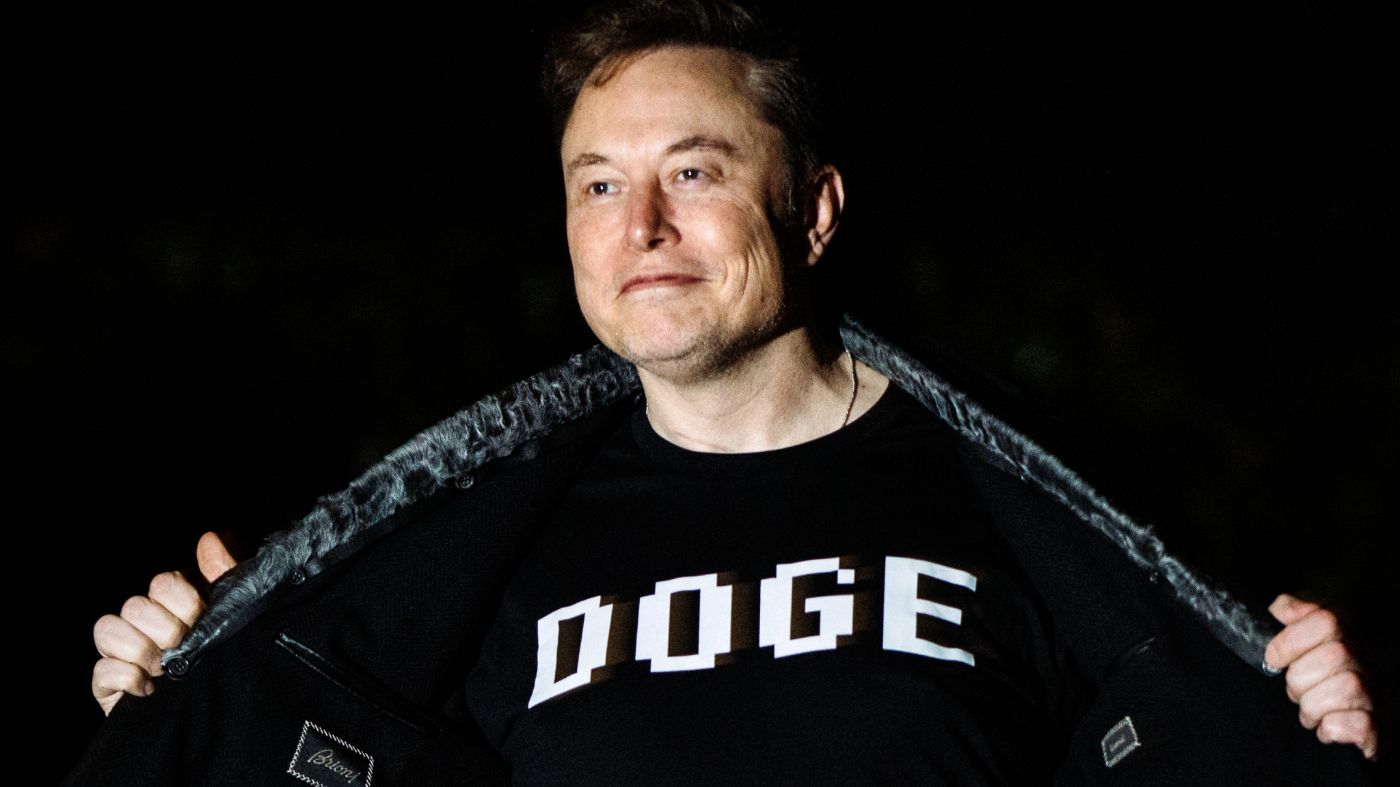
Musk came on board in the Trump administration to head the new ‘Department of Government Efficiency’ (DOGE) with a mission: to eliminate wasteful expenditures, reduce red tape, and make federal operations leaner, with trillions of dollars in planned reductions to start. It was a mission that played to Musk’s long-established public image as an efficiency-championing innovator who disparages the government waste he sees as unnecessary and bureaucratic. He regularly touted bringing the lean, flexible practices of his private-sector companies to the massive government machine.

Then the ideal of radical efficiency came up against the realities of political maneuvering and legislative compromise. The tipping point, as disclosed by Musk himself, was the government’s ‘One Big, Beautiful Bill Act.’ The sweeping piece of legislation, a linchpin of the agenda of the government, combined tax cuts and increased immigration enforcement. Praised by some as a landmark piece of legislation, Musk spoke out against it in public, calling it a ‘massive spending bill’ that would add to the budget deficit and ‘detract from the work the DOGE team is doing.’ His straightforward opinion—’I think a bill can be big or it might be beautiful, but I don’t know if it might be both’—precisely captured the ideological divide.

It was no secret how frustrated Musk was with the federal bureaucracy during his time in office. He reportedly found the system much more deeply rooted and intractable than he expected, frequently in conflict with other top administrators. Exhaustive efforts, which saw thousands of federal employees dropped off payrolls, notwithstanding, Musk conceded that DOGE didn’t live up to its lofty expectations, becoming, as he put it, a ‘whipping boy’ for systemwide problems.

Though his ‘Special Government Employee’ term was to end, this public disagreement most definitely tarnishes his exit. It highlights the inescapable conflict that exists between a visionary of the private world, accustomed to rapid, top-down decision-making, attempting to navigate the Byzantine, consensus-based realm of government. The bill’s ‘big government’ policies were obviously an insult to the underlying views of Musk, as he often couches his endeavors in the language of advancing civilizations and optimizing efficiency. Musk’s resignation is a potent reminder of the endless struggle to reconcile the imperatives of public policy and the ideologies of open markets, as well as his own personal choice to refocus his attention on his companies, including SpaceX and Tesla. It invites consideration of the possibility of such a dramatic internal upheaval and whether efficiency can actually thrive in the midst of the intricate dance of legislative reality with political compromise.


About Ezekiel Chew​

Ezekiel Chew, founder and head of training at Asia Forex Mentor, is a renowned forex expert, frequently invited to speak at major industry events. Known for his deep market insights, Ezekiel is one of the top traders committed to supporting the trading community. Making six figures per trade, he also trains traders working in banks, fund management, and prop trading firms.

How to Read Candlesticks (Most Traders Get This Wrong)

Most traders who spend months learning how to read candlesticks still lose on setups that looked textbook. The pattern was never the problem. Reading it without context was. ABOUT THIS GUIDE This guide covers three specific candlestick signals used in professional price action trading, the Fibonacci golden zone context tool,

Read More

What Profit Factor Tells You Before Going Live

Profit factor is calculated by dividing a strategy’s total gross profit by its total gross loss, and most experienced traders reject any system that reads below 1.5 before risking real capital. Most traders see any positive number and call it a green light. That is where the costly mistake starts.

Read More

6 Forex Trading Scams Every Beginner Should Know

The most effective forex trading scams do not announce themselves as threats. They arrive as opportunities, come through referrals and social media, and are often indistinguishable from legitimate services until the first withdrawal request is made. ABOUT THIS GUIDE This guide covers the six most common forex trading scams, the

Read More

How to Use Fibonacci Retracement Step by Step in 2026

Most traders learn how to use Fibonacci retracement and immediately draw it wrong. This tool comes from a mathematical sequence first documented in 1202, and institutional traders use it daily to plan entries at precise price levels. The majority of retail traders miss the one placement rule that makes every

Read More

Free Margin in Forex What the MT4 Panel Shows

Free margin in forex is the one figure on the MT4 or MT5 account panel that determines whether another position can open right now, and it is consistently the last number most traders learn to read. ABOUT THIS GUIDE This guide explains what free margin is and how it connects

Read More

Scalping Trading Strategy The Pros Actually Use

The scalping trading strategy most retail traders use is not actually scalping. They are gambling on 1-minute candles with no defined edge, no position-sizing rules, and no plan for when the losses come. ABOUT THIS GUIDE This guide covers what scalping is, how professional scalpers build a repeatable edge, and

Read More

AFM Trading Summit Live

Date: Coming Soon

Join us at the AFM Trading Summit Live and learn from top industry experts through live trading sessions, market insights, and actionable strategies.

Elon Musk’s Trump Exit: Ideology Clashes with Policy

4.0
Overall Trust Index

Written by:

Updated:

May 29, 2025
Billionaire entrepreneur Elon Musk has announced he was stepping down from a central advisory position in the Trump administration. His resignation, announced last night, closes the chapter of a tumultuous period during which the billionaire attempted to fundamentally transform the federal bureaucracy. At its core, the resignation highlights the underlying conflict between the deeply rooted libertarian philosophy of Musk and the day-to-day, often messy, realities of government policy. Musk came on board in the Trump administration to head the new 'Department of Government Efficiency' (DOGE) with a mission: to eliminate wasteful expenditures, reduce red tape, and make federal operations leaner, with trillions of dollars in planned reductions to start. It was a mission that played to Musk's long-established public image as an efficiency-championing innovator who disparages the government waste he sees as unnecessary and bureaucratic. He regularly touted bringing the lean, flexible practices of his private-sector companies to the massive government machine. Then the ideal of radical efficiency came up against the realities of political maneuvering and legislative compromise. The tipping point, as disclosed by Musk himself, was the government's 'One Big, Beautiful Bill Act.' The sweeping piece of legislation, a linchpin of the agenda of the government, combined tax cuts and increased immigration enforcement. Praised by some as a landmark piece of legislation, Musk spoke out against it in public, calling it a 'massive spending bill' that would add to the budget deficit and 'detract from the work the DOGE team is doing.' His straightforward opinion—'I think a bill can be big or it might be beautiful, but I don't know if it might be both'—precisely captured the ideological divide. It was no secret how frustrated Musk was with the federal bureaucracy during his time in office. He reportedly found the system much more deeply rooted and intractable than he expected, frequently in conflict with other top administrators. Exhaustive efforts, which saw thousands of federal employees dropped off payrolls, notwithstanding, Musk conceded that DOGE didn't live up to its lofty expectations, becoming, as he put it, a 'whipping boy' for systemwide problems. Though his 'Special Government Employee' term was to end, this public disagreement most definitely tarnishes his exit. It highlights the inescapable conflict that exists between a visionary of the private world, accustomed to rapid, top-down decision-making, attempting to navigate the Byzantine, consensus-based realm of government. The bill's 'big government' policies were obviously an insult to the underlying views of Musk, as he often couches his endeavors in the language of advancing civilizations and optimizing efficiency. Musk's resignation is a potent reminder of the endless struggle to reconcile the imperatives of public policy and the ideologies of open markets, as well as his own personal choice to refocus his attention on his companies, including SpaceX and Tesla. It invites consideration of the possibility of such a dramatic internal upheaval and whether efficiency can actually thrive in the midst of the intricate dance of legislative reality with political compromise.

ezekiel chew asiaforexmentor

About Ezekiel Chew

Ezekiel Chew, founder and head of training at Asia Forex Mentor, is a renowned forex expert, frequently invited to speak at major industry events. Known for his deep market insights, Ezekiel is one of the top traders committed to supporting the trading community. Making six figures per trade, he also trains traders working in banks, fund management, and prop trading firms.

RELATED ARTICLES

Elon Musk’s Trump Exit: Ideology Clashes with Policy

4.0
Overall Trust Index

Written by:

Updated:

May 29, 2025
Billionaire entrepreneur Elon Musk has announced he was stepping down from a central advisory position in the Trump administration. His resignation, announced last night, closes the chapter of a tumultuous period during which the billionaire attempted to fundamentally transform the federal bureaucracy. At its core, the resignation highlights the underlying conflict between the deeply rooted libertarian philosophy of Musk and the day-to-day, often messy, realities of government policy. Musk came on board in the Trump administration to head the new 'Department of Government Efficiency' (DOGE) with a mission: to eliminate wasteful expenditures, reduce red tape, and make federal operations leaner, with trillions of dollars in planned reductions to start. It was a mission that played to Musk's long-established public image as an efficiency-championing innovator who disparages the government waste he sees as unnecessary and bureaucratic. He regularly touted bringing the lean, flexible practices of his private-sector companies to the massive government machine. Then the ideal of radical efficiency came up against the realities of political maneuvering and legislative compromise. The tipping point, as disclosed by Musk himself, was the government's 'One Big, Beautiful Bill Act.' The sweeping piece of legislation, a linchpin of the agenda of the government, combined tax cuts and increased immigration enforcement. Praised by some as a landmark piece of legislation, Musk spoke out against it in public, calling it a 'massive spending bill' that would add to the budget deficit and 'detract from the work the DOGE team is doing.' His straightforward opinion—'I think a bill can be big or it might be beautiful, but I don't know if it might be both'—precisely captured the ideological divide. It was no secret how frustrated Musk was with the federal bureaucracy during his time in office. He reportedly found the system much more deeply rooted and intractable than he expected, frequently in conflict with other top administrators. Exhaustive efforts, which saw thousands of federal employees dropped off payrolls, notwithstanding, Musk conceded that DOGE didn't live up to its lofty expectations, becoming, as he put it, a 'whipping boy' for systemwide problems. Though his 'Special Government Employee' term was to end, this public disagreement most definitely tarnishes his exit. It highlights the inescapable conflict that exists between a visionary of the private world, accustomed to rapid, top-down decision-making, attempting to navigate the Byzantine, consensus-based realm of government. The bill's 'big government' policies were obviously an insult to the underlying views of Musk, as he often couches his endeavors in the language of advancing civilizations and optimizing efficiency. Musk's resignation is a potent reminder of the endless struggle to reconcile the imperatives of public policy and the ideologies of open markets, as well as his own personal choice to refocus his attention on his companies, including SpaceX and Tesla. It invites consideration of the possibility of such a dramatic internal upheaval and whether efficiency can actually thrive in the midst of the intricate dance of legislative reality with political compromise.

ezekiel chew asiaforexmentor

About Ezekiel Chew

Ezekiel Chew, founder and head of training at Asia Forex Mentor, is a renowned forex expert, frequently invited to speak at major industry events. Known for his deep market insights, Ezekiel is one of the top traders committed to supporting the trading community. Making six figures per trade, he also trains traders working in banks, fund management, and prop trading firms.

RELATED ARTICLES

Join the Live Event
Get Your Free Ticket Now

I consent to receiving emails and/or text message reminders for this event.

REGISTER FOR THE MASTERCLASS!