Learn To Trade Forex • Best Forex Trading Course • AsiaForexMentor

 English
 简体中文
简体中文 繁體中文
繁體中文 日本語
日本語 한국어
한국어 Bahasa Melayu
 Bahasa Indonesia
 Filipino
 ไทย
ไทย Tiếng Việt
 हिन्दी
 العربية
 Italiano
 Português
 Русский
 Español
 Français
- Best Forex BrokersRaw spreads, ECN execution and regulation — tested on live accounts.Best Stock BrokersCommissions, market access and platform depth, compared.Best Prop FirmsFunding rules, drawdown limits and real payout records.Best Crypto BrokersFees, custody and coin coverage across the major exchanges.AFM Top Pick
Every other site ranks ten brokers. We rank one — and show you exactly why.
See the #1 pick → - Articles
- Awards
- Events
- Newsletter
 Singapore
 Cambodia
 Myanmar
 Brunei
 Australia
  New Zealand
 Switzerland
 UAE
UAE United States
 Mexico
 Argentina
 South Africa
 IC Markets
 Pepperstone
 AvaTrade
 XM
XM Plus500
 RoboForex
 TMGM
TMGM Exness
 JustMarkets
 Orbex
Orbex Interactive Brokers
 Saxo
Saxo Tiger Brokers
 Binance
 Coinbase
 Gemini Exchange
 Kraken
 iFunds
 IC Funded
 The 5%ers
 TopStep
 IQ Option
 Pocket Option
 RaceOption
 IQCent
Kuda Bank Review 2026
Kuda Bank is best seen as a digital bank with stock access, not a full-service brokerage. It gives users a way to buy US stocks through the Kuda app, use a separate trading account, invest from relatively low minimums, and earn from price moves or dividends, which makes it more approachable for beginners than many traditional investing platforms. Kuda Bank still feels limited when compared with a dedicated stock broker.
Risk warning: your capital is at risk. Forex and CFDs carry the potential for gains, but statistically only 11–25% of traders profit while 74–89% lose their investment. AFM earns a commission if you open an account through our links — it never changes how we score a broker.
- Easy stock access through the same app used for banking and savings.
- Fractional shares make US stocks easier to buy with a smaller amount of money.
- Low entry point for investing, with help-page minimums of $20 to fund and $10 to buy shares.
- Banking, transfers, bills, and investing all sit inside one app, which is practical for beginners.
- Stock access is currently limited to US stocks, which means users do not get the broader market reach that some traditional brokers offer.
- Kuda charges a 2% commission on all trades, which is a notable cost if someone plans to trade often instead of investing occasionally.
- Kuda Business customers cannot buy stocks, which reduces flexibility for users who hoped to invest through a business profile.
- Kuda charges a 2% commission on all trades, which is a notable cost if someone plans to trade often instead of investing occasionally.
- This review was written by the Asia Forex Mentor team and has been reformatted into our current layout. The analysis below is our earlier work on Kuda Bank, presented more clearly.
- It has not been re-verified against Kuda Bank’s current published terms. Spreads, fees, leverage caps and account rules change, and so does the legal entity that serves a given country.
- Treat every figure here as a starting point for your own checks rather than a live quote.
- Before depositing, confirm the details on Kuda Bank’s own site — above all, which company your client agreement names. That determines your regulator, your protections and who you can complain to.
- The score shown is Asia Forex Mentor’s own published rating for Kuda Bank, carried over from this article and expressed out of 10. It reflects our earlier assessment, not a fresh re-scoring.
Reformatted September 2026. The details in this review have not been independently re-verified since it was written, so check Kuda Bank’s own site before acting on anything here. Spotted something out of date? Tell us.

Ezekiel has traded foreign exchange for over two decades and built the One Core Program, the trading curriculum Asia Forex Mentor teaches to retail and institutional traders across Asia. He sets the scoring criteria these broker reviews are graded against.
On this page
- Kuda Bank Review
- What is Kuda Bank?
- Benefits of Trading with Kuda Bank
- Kuda Bank Regulation and Safety
- Kuda Bank Customer Reviews
- Kuda Bank Spreads, Fees, and Commissions
- Account Types
- Kuda Bank Trading Platforms
- What Can You Trade on Kuda Bank
- Kuda Bank Customer Support
- Withdrawal Options and Fees
- Conclusion: Kuda Bank Review
- FAQs
- Verdict
Kuda Bank Review
Picking the right broker matters more than many new investors realize because it can shape trading costs, ease of use, and overall results over time. A reliable broker should make investing simple, offer transparent fees, and provide a platform that does not create extra friction or unexpected charges while managing a portfolio.
Kuda Bank is a digital bank that also gives users access to investing features through the Kuda app. While Kuda is best known for banking, transfers, savings, and bill payments, it also lets customers access US stocks and fractional investing from the same app, which is why it can still appear in conversations about stock investing platforms.
This Kuda Bank review looks at the platform’s main features, investing fees, available investment products, and overall setup to give readers a clearer view of what Kuda Bank offers. The aim is to present clear and balanced information so investors can decide whether Kuda fits their needs for US stocks and simple app-based investing.
What is Kuda Bank?
Kuda Bank began as a savings-focused app before becoming a licensed banking business. On its official About page, Kuda says it first launched around the idea of helping people save, then built Kuda Microfinance Bank, which now offers banking services under a Central Bank license.
Today, Kuda offers a Kuda bank account, debit card services, money transfers, bill payments, savings tools, loans, overdraft features, and investing access. For stock users, the important detail is that Kuda says customers can invest in US stocks and fractional shares, but its own page also states that users may buy an investment product from Bamboo using a Kuda account, which suggests Kuda is acting more as an access point than a fully independent stock broker.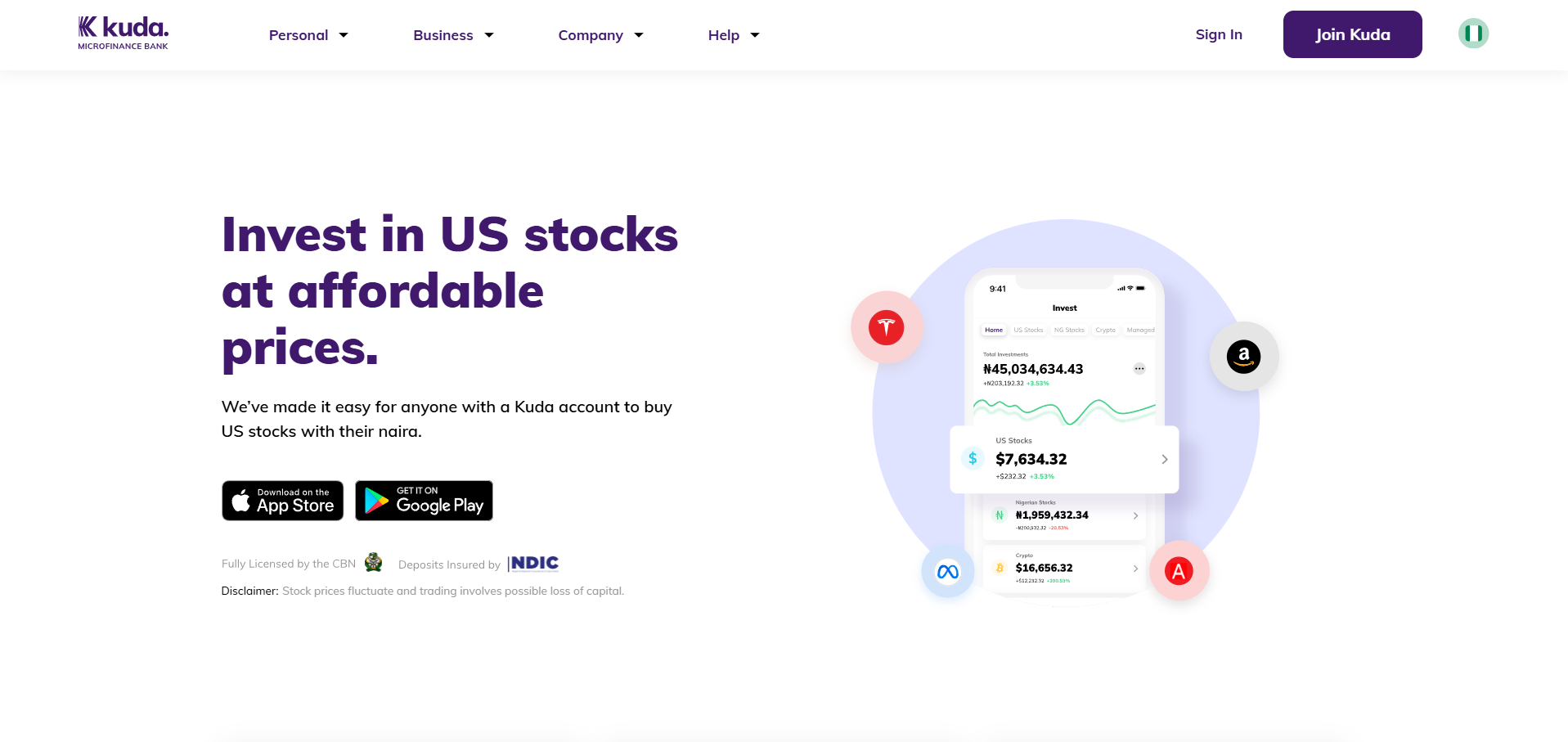
Benefits of Trading with Kuda Bank
The strongest benefit for stock investors is convenience. A user can open a Kuda account, fund it from the same app, and move into investing without dealing with a separate broker interface, which makes the process easier for people who are new to the market.
Kuda also supports fractional shares, which lowers the starting barrier for users who cannot afford full shares of expensive US companies. Its help content says the minimum trading account deposit is $20, the minimum stock purchase is $10, and users can withdraw from the trading account from $5, which makes the stock feature more accessible than many people may expect. Another benefit is that Kuda combines investing with broader banking functions. Customers can add money, send money, receive money, track spending habits, use savings tools, and then access stock investing inside one app, which may feel simpler than managing banking with one company and investing with another.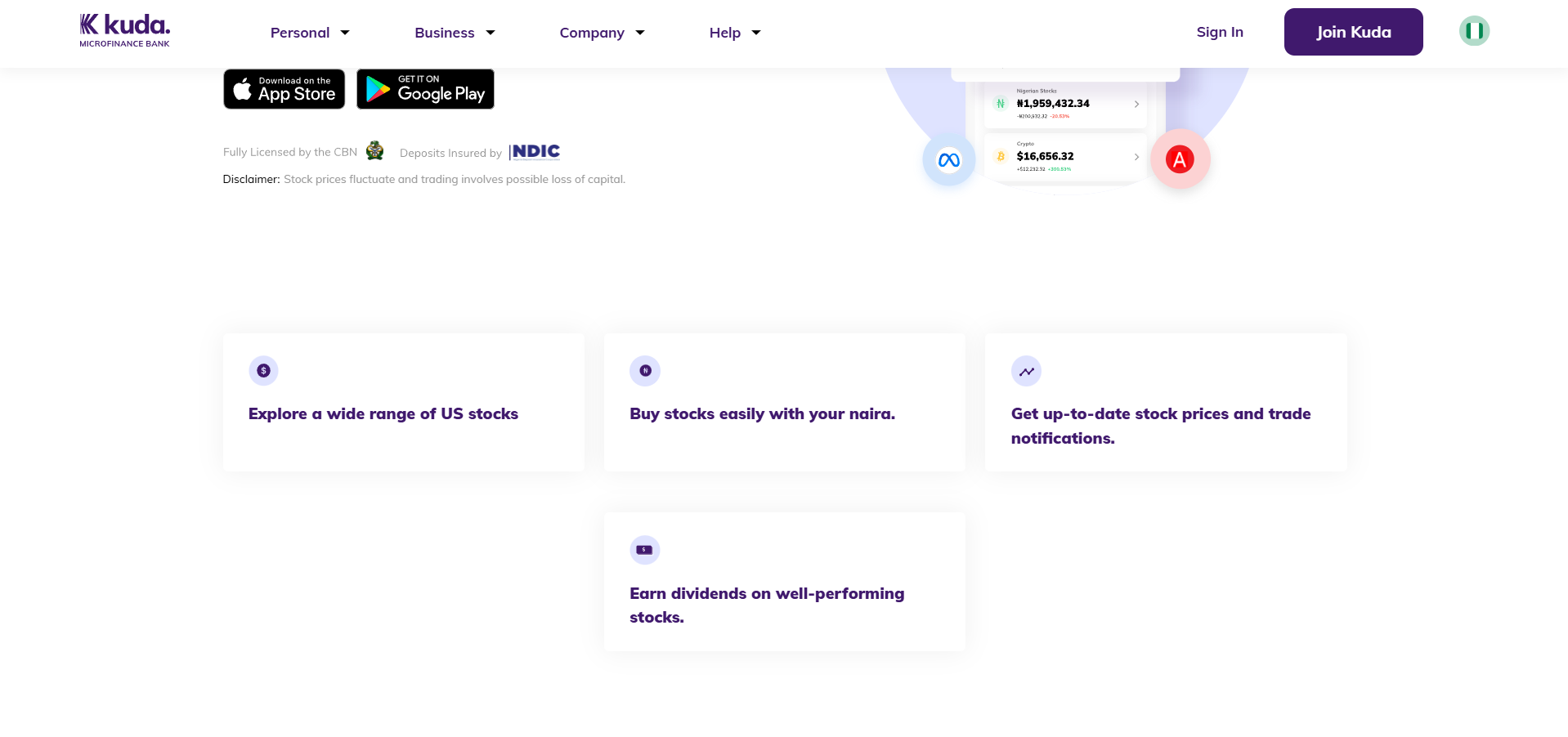
Kuda Bank Regulation and Safety
Kuda Microfinance Bank is licensed by the Central Bank of Nigeria. It also says deposits are insured by the Nigerian Deposit Insurance Corporation, which gives the banking side of the platform a stronger trust foundation than an unlicensed finance app. That said, stock investors should separate banking safety from investment risk. Deposit insurance supports eligible deposits in the bank, but it does not mean stock investments themselves are risk free, and Kuda’s own investment setup appears to rely on a partner pathway for stock access rather than a classic in-house brokerage model.
Kuda Bank Customer Reviews
Public customer feedback on Kuda Bank often highlights the same strengths: the app is easy to use, transfers are fast, and the overall banking experience feels simpler than what many people expect from traditional banks. Positive comments also tend to mention features like savings tools, repeat transfers, and the convenience of handling money transfers, bills, and account tasks in one place through the Kuda app.
At the same time, customer feedback is not fully positive. Some users describe issues around transaction problems, delayed resolutions, refund-related concerns, and difficulty getting problems fixed quickly, which suggests that customer satisfaction can depend heavily on how smoothly a case is handled once something goes wrong. Kuda itself clearly directs users to in-app chat, email, phone support, and self-help tools for reporting transaction issues, which shows the bank is aware that support speed matters when customers are unable to access funds or need help with a request.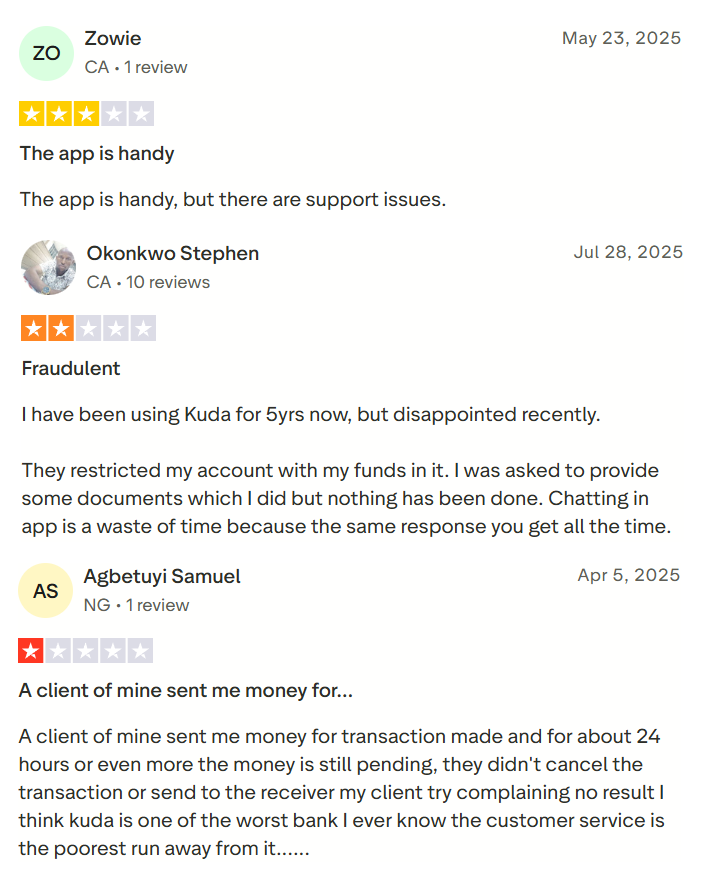
Kuda Bank Spreads, Fees, and Commissions
Kuda Bank does not present its investing costs like a traditional stock broker. Instead of a detailed broker-style pricing table covering spreads, market data, or tiered dealing charges, Kuda mainly discloses a 2% commission on all trades made on the app. That makes the pricing simple to understand, but it also means active investors may find the cost structure less competitive than platforms built mainly for stock trading. Kuda also charges a ₦100 processing fee for each trading deposit and each withdrawal, with the fee added to deposits and deducted from withdrawals. On top of that, Kuda says the trading account is separate from the main Spend account, so moving money into stocks involves an extra funding step rather than a fully seamless bank-to-broker flow. From an SEO and review perspective, that makes Kuda Bank look more like a digital bank with stock access than a dedicated low-cost broker. Another point to note is that Kuda’s public materials do not clearly highlight classic stock spreads the way CFD or forex platforms often do. That is partly because Kuda’s investment feature is centered on US stocks, not leveraged spread-based trading products. For long-term users, the main costs appear to come from the 2% trade commission and the deposit or withdrawal fee, while the bigger limitation is pricing transparency compared with specialist stock brokers that publish fuller dealing schedules and execution details.
Account Types
Kuda does not offer several stockbroker account types like a traditional investment platform.
- Supports stock investing directly inside the Kuda app
- Separate from the standard Spend account
- Minimum deposit of $20
- Minimum stock purchase of $10
- Minimum withdrawal of $5
- Minimum sell amount of $5
- Can be funded from a Kuda Naira account
- Uses an exchange rate from Kuda’s investment service provider, updated every 60 seconds
- Users can earn from price growth and eligible dividends
- Selling is available on working days from 3:30 pm to 10 pm
How to Open Your Account
- Download Kuda from Google Play or the App Store on your phone.
- Launch the app to begin the account opening process.
- Enter the required details and continue with the steps shown in the app. This is where your Kuda account setup begins.
- Finish the registration process so your account is ready to use. This step prepares the account for funding and access to Kuda’s services.
- Once the account is ready, add money so you can start using Kuda’s banking services. After funding the account, users can begin exploring transfers, payments, savings, and other features in the Kuda app.
Kuda Bank Trading Platforms
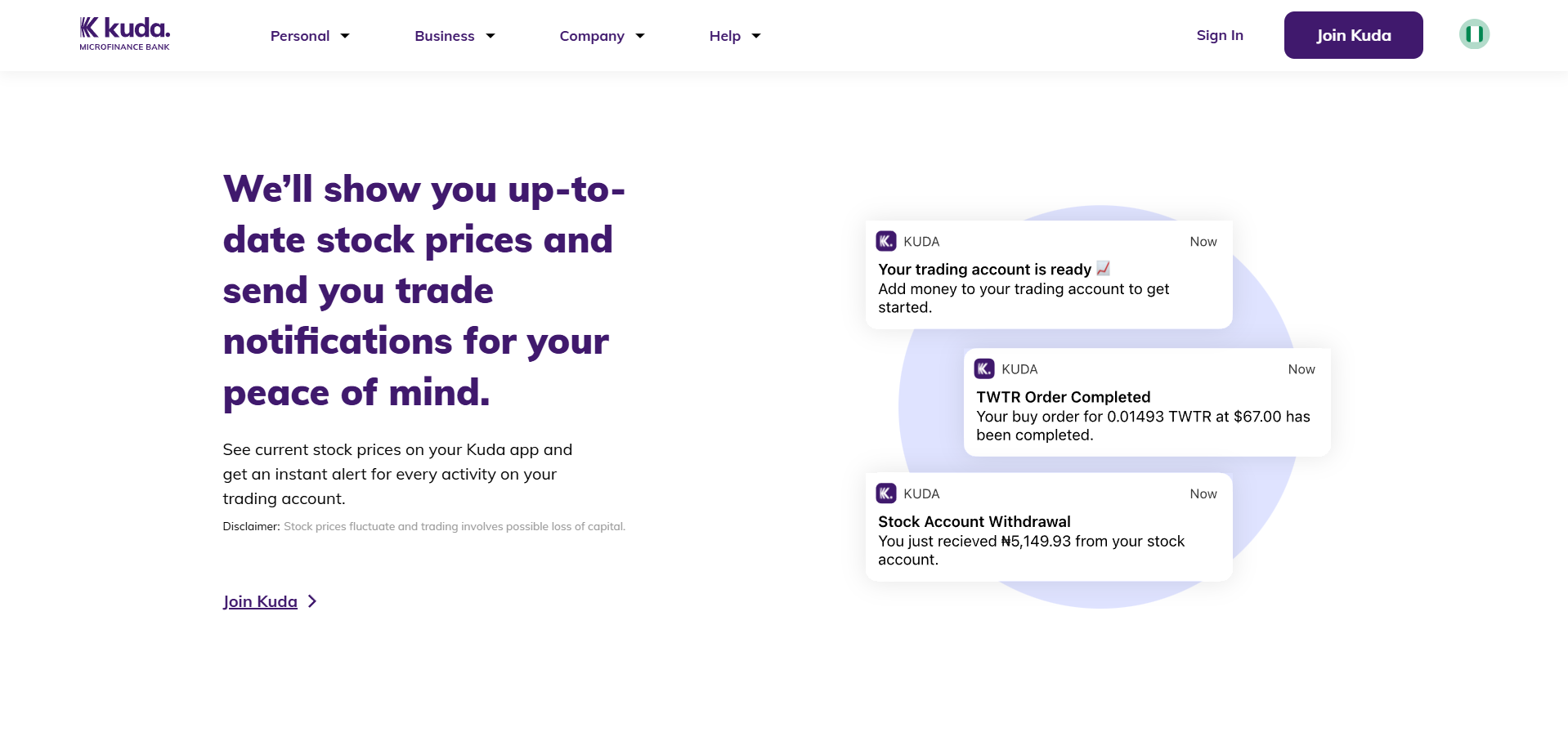
The main trading platform is simply the Kuda app itself. Kuda does not present separate desktop software, web-based trading terminals, or advanced charting platforms for stock investors on its investments page. Instead, the investing experience is built directly into the mobile app, which makes it easier for beginners but also more limited than a dedicated stock broker platform. Kuda’s support page explains that users trade stocks through a separate trading account inside the app, and that this account is different from the normal Spend account. That setup is convenient for users who already use Kuda Bank for payments, savings, and transfers, but it also shows that Kuda’s platform is designed more for simple app-based investing than for active traders who want deeper broker tools.
What Can You Trade on Kuda Bank
Kuda states that users can trade US stocks on the platform. Its help page also makes clear that this is the current focus, while noting that more investment options may be added later, so the product range is still narrow compared with many traditional stock brokers. Kuda also supports fractional investing, which means users do not always need enough money to buy a full share. According to Kuda’s investment support details, users can deposit a minimum of $20 into the trading account, buy US stocks from $10, withdraw from $5, and sell from $5, which makes the stock feature more accessible to beginners with smaller amounts of money. Kuda Bank can be useful for simple stock access, but it is still a limited product if the goal is a full stock trading experience. Publicly available information does not show access to local shares, ETFs, options, futures, forex, or broader professional market products through the Kuda stock feature, so investors should view it as a basic digital bank investing tool rather than a full multi-asset brokerage platform.
Kuda Bank Customer Support
Kuda Bank customer support is built around digital contact channels, which fits its identity as a digital bank rather than a branch-based institution. Kuda directs users to get help through the in-app chat, email at help@kuda.com, and a customer support phone line, with investment-related calls available on weekdays from 8:00 am to 5:00 pm.
This setup works well for customers who are comfortable solving issues online. It also matches Kuda’s broader model, since the company says it operates through the app rather than through physical branches, which helps explain why support is centered on chat, email, self-help tools, and phone contact instead of walk-in service. For stock-focused users, support matters even more because the investing feature sits inside the same app as the Kuda bank account. Kuda has a dedicated investment support article and says users who need help with stocks can chat in the app, send a message by mail, or call the support number, which is useful for customers moving funds between the banking side and the trading account.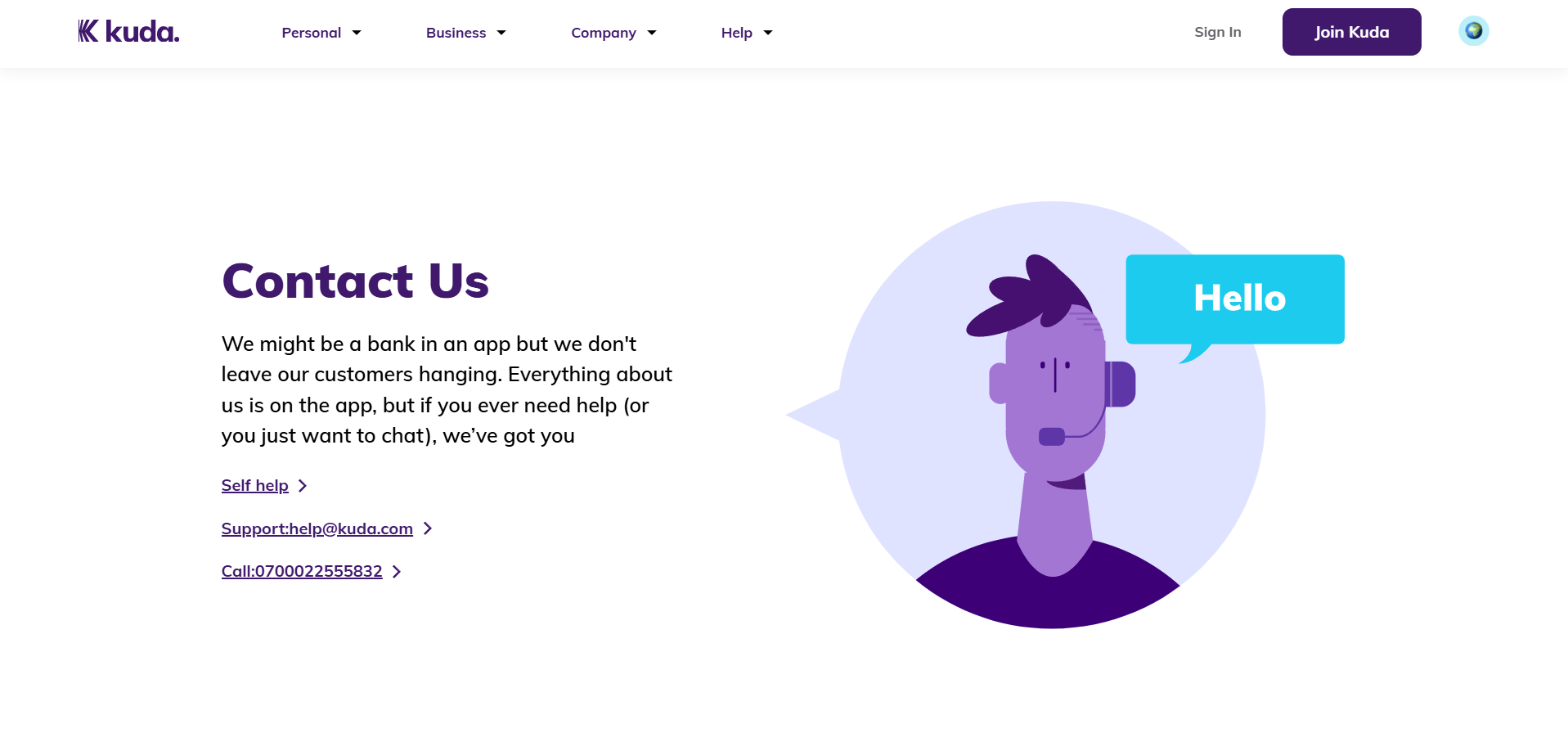
Withdrawal Options and Fees
Withdrawals from the trading side are fairly simple but not free. Kuda says users can withdraw money from the trading account through the app by going to Investments, tapping US Stocks, then choosing Withdraw and following the prompts.
Kuda also says the minimum withdrawal from the trading account is $5, which keeps the feature accessible for smaller investors. However, there is a ₦100 processing fee for each trading withdrawal, and 7.5% VAT applies to that ₦100 service fee, not to the investment amount itself. One important detail is timing. Kuda says that because a US trading partner is involved, when a user sells stocks the transaction takes two business days to settle before the money can be withdrawn to the Spend account, so access to funds is not instant after a sale. For general banking users, Kuda also supports standard account withdrawals and transfers through the app, including cardless withdrawals, transfer features, and card payments in its payments help section. That gives users more than one way to move money, but on the stock side, the key limits are the settlement delay, the minimum withdrawal threshold, and the service fee.
Conclusion: Kuda Bank Review
Kuda Bank is best seen as a digital bank with stock access, not a full-service brokerage. It gives users a way to buy US stocks through the Kuda app, use a separate trading account, invest from relatively low minimums, and earn from price moves or dividends, which makes it more approachable for beginners than many traditional investing platforms.
Kuda Bank still feels limited when compared with a dedicated stock broker. Publicly available details show access to US stocks only, while the investing side also comes with a 2% commission on all trades and a ₦100 processing fee for each trading deposit or withdrawal, so active investors may find the pricing and product range less attractive over time. The overall takeaway from this Kuda Bank review is neutral. Kuda can work for users who want a Kuda bank account that combines banking and simple stock investing in one app, but it is not the strongest option for people who want the wider market access, deeper tools, and more broker-style experience that specialist stock platforms usually provide.
Kuda Bank Review FAQs
What can users trade on Kuda Bank?
Right now, the main investing product is US stocks. Kuda also supports fractional investing, which means users can buy part of a share instead of needing enough money for a full stock.
Does Kuda Bank charge trading fees?
Yes. Kuda applies a 2% commission on trades, and there is also a ₦100 processing fee for trading deposits and withdrawals. That means the platform may be simple, but it is not free from investing costs.
What is the minimum amount needed to start investing on Kuda Bank?
Kuda says users need a minimum $20 deposit to fund the trading account, while the minimum stock purchase is $10. This makes the platform easier to access for people who want to start small. OPEN AN ACCOUNT NOW WITH KUDA BANK AND GET YOUR BONUS
The verdict on Kuda Bank
Kuda Bank is best seen as a digital bank with stock access, not a full-service brokerage. It gives users a way to buy US stocks through the Kuda app, use a separate trading account, invest from relatively low minimums, and earn from price moves or dividends, which makes it more approachable for beginners than many traditional investing platforms. Kuda Bank still feels limited when compared with a dedicated stock broker.
More stock brokers we’ve reviewed

