Learn To Trade Forex • Best Forex Trading Course • AsiaForexMentor

 English
 简体中文
简体中文 繁體中文
繁體中文 日本語
日本語 한국어
한국어 Bahasa Melayu
 Bahasa Indonesia
 Filipino
 ไทย
ไทย Tiếng Việt
 हिन्दी
 العربية
 Italiano
 Português
 Русский
 Español
 Français
- Best Forex BrokersRaw spreads, ECN execution and regulation — tested on live accounts.Best Stock BrokersCommissions, market access and platform depth, compared.Best Prop FirmsFunding rules, drawdown limits and real payout records.Best Crypto BrokersFees, custody and coin coverage across the major exchanges.AFM Top Pick
Every other site ranks ten brokers. We rank one — and show you exactly why.
See the #1 pick → - Articles
- Awards
- Events
- Newsletter
 Singapore
 Cambodia
 Myanmar
 Brunei
 Australia
  New Zealand
 Switzerland
 UAE
UAE United States
 Mexico
 Argentina
 South Africa
 IC Markets
 Pepperstone
 AvaTrade
 XM
XM Plus500
 RoboForex
 TMGM
TMGM Exness
 JustMarkets
 Orbex
Orbex Interactive Brokers
 Saxo
Saxo Tiger Brokers
 Binance
 Coinbase
 Gemini Exchange
 Kraken
 iFunds
 IC Funded
 The 5%ers
 TopStep
 IQ Option
 Pocket Option
 RaceOption
 IQCent
Stake Investing Review 2026
Stake Investing makes the strongest case for investors who want a simple, low-cost way to buy Australian and U.S. shares. On its official site, Stake highlights $3 brokerage on trades up to A$30,000, CHESS sponsorship for ASX investing, a mobile and desktop platform, and access to Wall St with features like fractional shares and extended hours trading.
Risk warning: your capital is at risk. Forex and CFDs carry the potential for gains, but statistically only 11–25% of traders profit while 74–89% lose their investment. AFM earns a commission if you open an account through our links — it never changes how we score a broker.
- Low brokerage
- Access to Australian and U.S
- CHESS-sponsored ASX investing
- Fractional U.S
- Simple platform design
- Optional premium features
- Extended Wall St trading access
- FX fees apply for U.S
- Extra U.S
- Premium tools are not included by default
- Fractional shares have limits
- Possible service interruptions
- More basic for advanced traders
- This review was written by the Asia Forex Mentor team and has been reformatted into our current layout. The analysis below is our earlier work on Stake Investing, presented more clearly.
- It has not been re-verified against Stake Investing’s current published terms. Spreads, fees, leverage caps and account rules change, and so does the legal entity that serves a given country.
- Treat every figure here as a starting point for your own checks rather than a live quote.
- Before depositing, confirm the details on Stake Investing’s own site — above all, which company your client agreement names. That determines your regulator, your protections and who you can complain to.
- The score shown is Asia Forex Mentor’s own published rating for Stake Investing, carried over from this article and expressed out of 10. It reflects our earlier assessment, not a fresh re-scoring.
Reformatted September 2026. The details in this review have not been independently re-verified since it was written, so check Stake Investing’s own site before acting on anything here. Spotted something out of date? Tell us.

Ezekiel has traded foreign exchange for over two decades and built the One Core Program, the trading curriculum Asia Forex Mentor teaches to retail and institutional traders across Asia. He sets the scoring criteria these broker reviews are graded against.
On this page
- Stake Investing Review
- What is Stake Investing?
- Benefits of Trading with Stake Investing
- Stake Investing Regulation and Safety
- Stake Investing Customer Reviews
- Account Types
- Stake Investing Trading Platforms
- What Can You Trade on Stake Investing
- Stake Investing Customer Support
- Withdrawal Options and Fees
- Conclusion: Stake Investing Review
- FAQs
- Verdict
Stake Investing Review
This Stake Investing review looks at how the broker works for Australians who want easier access to the stock market, especially across Australian and US markets. Stake has built its brand around a simple idea: make share trading easier through a clean trading platform, a low brokerage fee, and fast access to local stocks and US shares. On its official Australian site, Stake highlights $3 brokerage for trades up to A$30,000 on both the ASX and Wall St. That low brokerage fee is one of the first things many people notice when reading any Stake review, especially if they are comparing it with more traditional brokerage firms. For Australian investors, the bigger appeal is not just lower cost. The broker gives one stake account access to Australian securities, a wide list of US stock opportunities, and a mobile-first experience through the Stake app and browser-based stake platform. Still, a serious review should look past the headline fee. Investors need to consider Stake’s FX fee, extra U.S. regulatory charges, and the fact that the platform provides general financial advice disclaimers rather than personal advice, which is important because investing always involves substantial risk.
What is Stake Investing?
Stake Investing is an online broker that gives Australians one place to buy and manage Australian securities and US shares. In simple terms, it is a modern trading platform built for people who want to start investing in the stock market without dealing with a cluttered interface. The main idea behind the broker is simple access to Australian and US markets through one login. Instead of opening separate accounts with different brokerage firms, users can use one stake account for local investing and US trading, which makes a practical difference for people who want international exposure. One of the more important features is CHESS sponsorship for ASX holdings. This means many Australian holdings are kept in the investor’s own name under a Holder Identification Number, which matters to users who care about ownership structure when they buy and hold Australian securities. Stake also focuses heavily on simple pricing. Its official pricing page says trades up to A$30,000 are charged a fixed brokerage fee, while larger trades move to a percentage fee, and Stake’s FX fee applies when users convert AUD into US dollars for US markets. For many users, the platform is best understood as a simple share trading service rather than a complex multi-asset broker. That makes it easier to understand than some other brokers, but it may also feel more basic for people who want deeper trading tools or active day trading features. 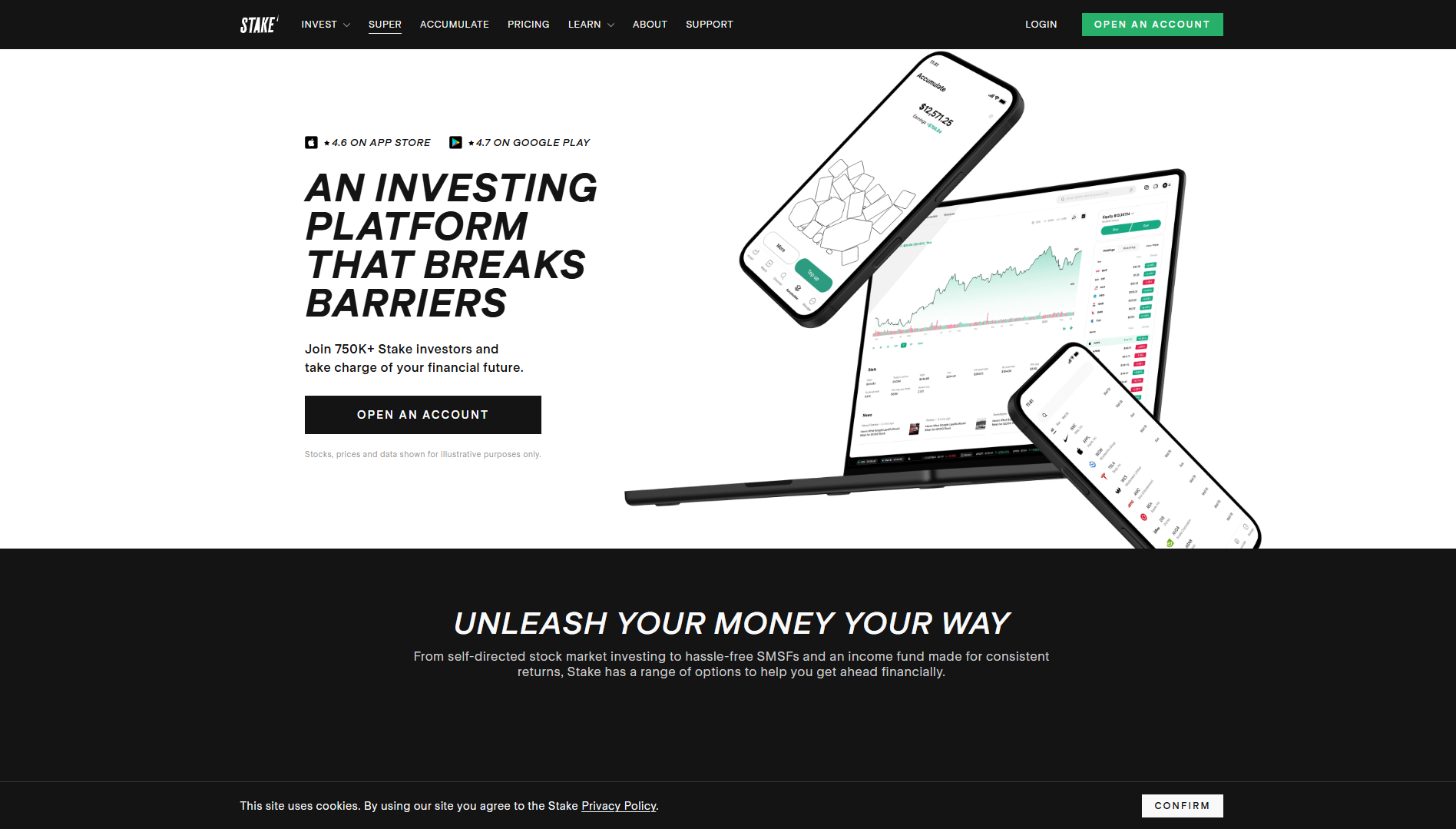
Benefits of Trading with Stake Investing
One of the main benefits of trading with Stake is its simple pricing. The low brokerage fee makes it easier for everyday investors to understand what they are paying when they buy or start selling shares, especially on the ASX and for many US share trades. Another benefit is access to Australian and US markets from one account. Users can switch between local stocks and US stock opportunities without opening a second broker login, which is useful for investors who want broader stock exchange exposure from one place. For Australian users, CHESS sponsorship is another strong feature. It gives more confidence around direct ownership of Australian securities, and that can make all the difference for investors who do not want their holdings pooled under the broker’s name. Stake also makes fractional investing available on Wall St. This allows users to buy fractional shares of a US stock based on a dollar amount, which is helpful for beginners who want to start investing without needing a lot of money. The broker also offers extended hours trading on Wall St. That includes pre market access and post market trading, which can matter for traders who follow earnings, company news, or fast moves in US markets outside normal session times. For users who want more features, there is Stake Black. This premium option adds extra trading tools, price targets, market depth, and more detailed market research, which may suit active users better than Stake’s standard setup. 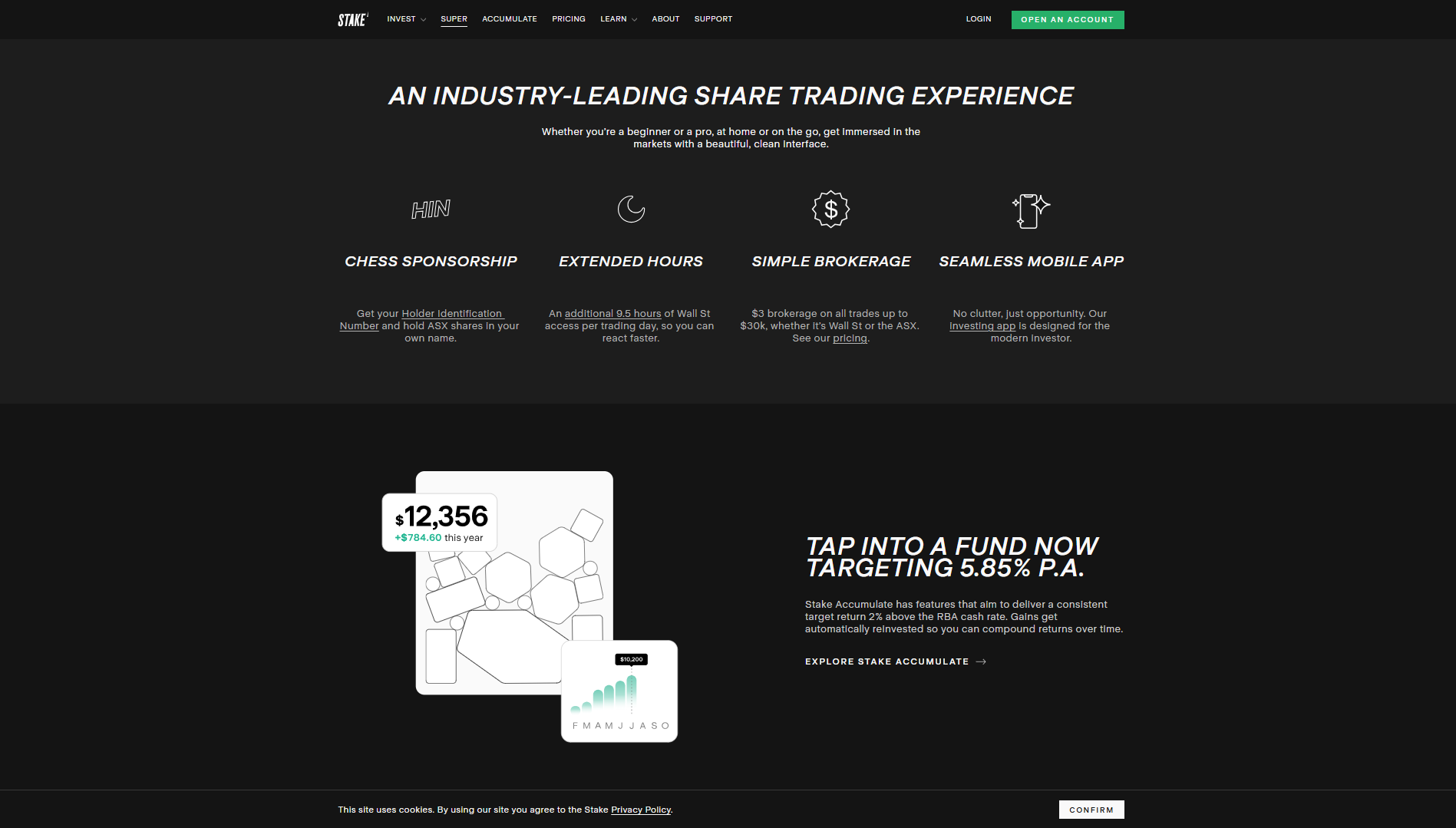
Stake Investing Regulation and Safety
When reviewing regulation and safety, the first important point is that Stake says it operates under ASIC oversight in Australia. That matters because regulation helps set standards around account operations, disclosure, and how brokers handle client funds. For Australian holdings, Stake’s CHESS sponsorship is one of its strongest safety points. It means many ASX holdings are recorded in the investor’s own name, which can make the broker feel more secure for people focused on direct ownership of Australian securities. On the cash side, the broker says user cash balances are held through dedicated banking arrangements. This is useful for transparency, although investors should remember that a bank-linked setup does not remove market risk or guarantee they will make more money from investing. Stake also uses identity checks and account security controls. During sign-up, users may need to upload ID and a bank statement, and that process is part of how the broker tries to keep the platform secure and verify who is using each stake account. For U.S. trading, investors should also understand that Wall St investing involves additional parties and regulations. Some fees may be linked to the Financial Industry Regulatory Authority, and the broker clearly notes that its content is not personal advice but general financial advice only. A truthful view is that Stake looks structurally solid for retail investors, but no broker is risk-free. A safe-looking platform can still expose users to substantial risk if they buy the wrong assets, trade too often, or misunderstand market conditions.
Stake Investing Customer Reviews
When looking at Stake Investing customer reviews, the picture is mixed. There are positive reviews that praise the clean layout, easier onboarding, and simple stake platform, but there are also negative reviews from users who expected faster support or smoother execution during busy periods. A common positive theme is ease of use. Many stake users seem to like how the Stake app and desktop trading platform make it simple to move between Australian investing and US trading without juggling multiple broker accounts. Cost is another reason some users speak well of the platform. Lower brokerage, easier bank transfer funding, and a cleaner user interface all support decent customer satisfaction, especially for people who want simple share trading more than advanced market analysis. The complaints are also worth paying attention to. Some negative reviews mention account issues, delays, or frustration with the support team, which shows that user experience can still vary even when a broker looks modern and easy to use. This is why reading both positive reviews and public complaints matters in any Stake review. A broker can be good for long-term investors and still disappoint some active traders who want faster responses, more responsive execution, or richer trading tools. 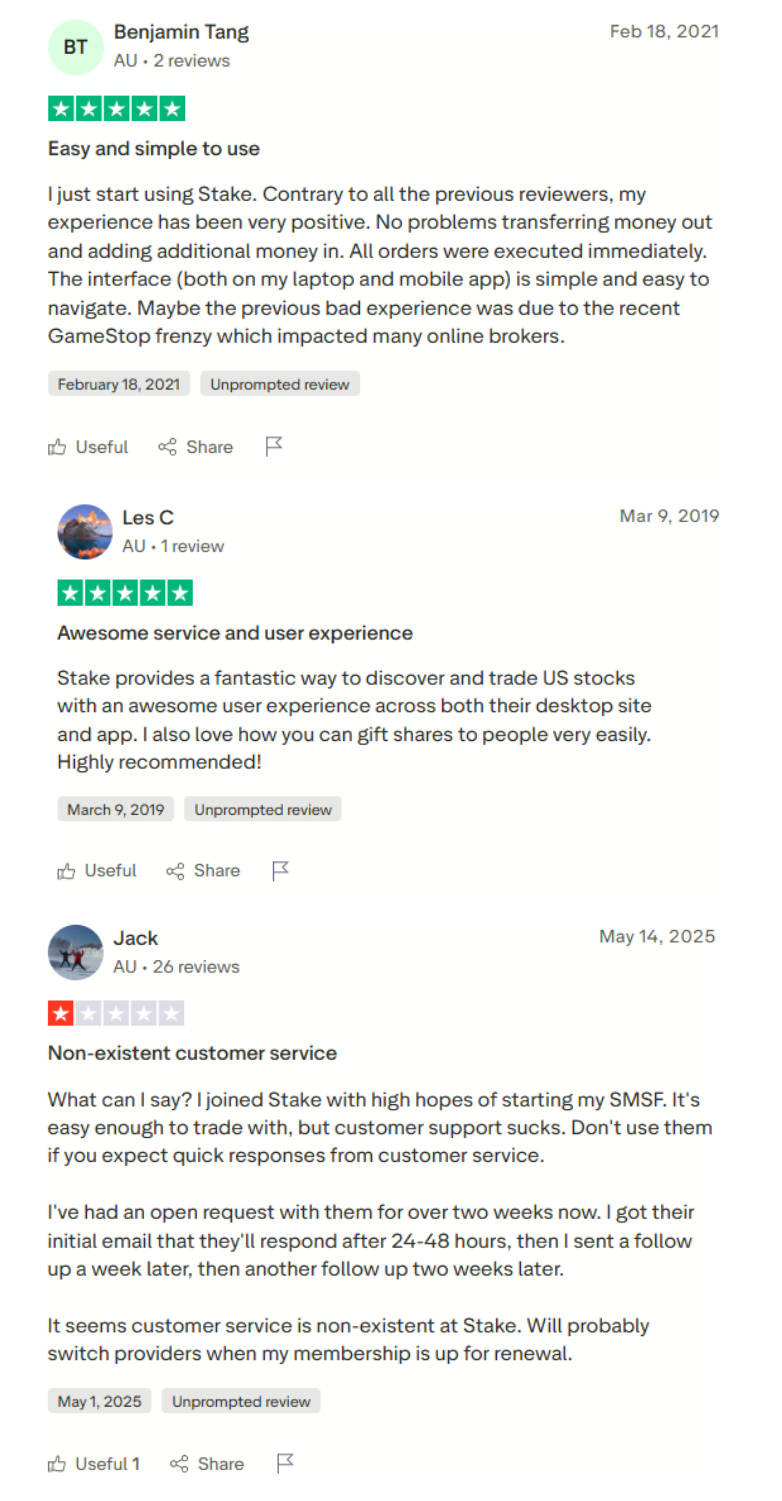
Account Types
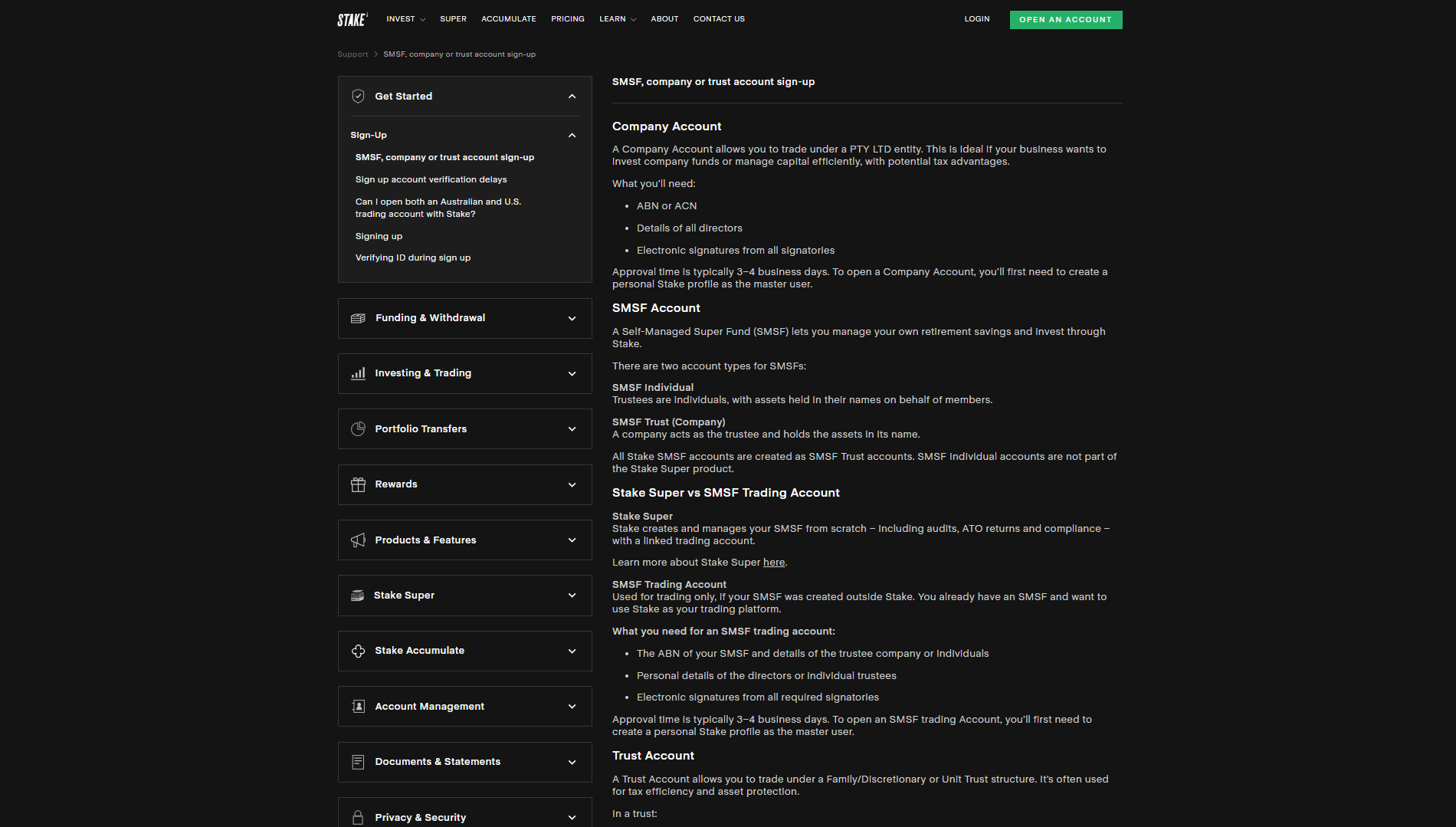
Individual Account
- Individual Account. This is the standard personal account for investors who want to trade ASX and U.S. shares under one login. Stake says users can access both Stake AUS and Stake Wall St after verification.
Joint and Entity Accounts
- Company Account. This account type is designed for a company structure that wants to invest through Stake. Stake’s terms list company accounts as a non-individual account type.
- Trust Account. This option is for investors using a trust structure rather than a personal name. Stake’s support pages confirm that trust accounts are available during sign-up.
- Joint-style Account Category. Stake’s terms define a joint account broadly as any account that is not an individual account, including company, trust, and SMSF setups. That means shared or entity-based investing sits outside the normal single-user account structure.
SMSF Accounts
- Stake Super. This is Stake’s full-service SMSF option for users who want SMSF setup, administration, compliance support, and a linked trading account. Stake says this service includes help with accounting, audits, and tax obligations.
- SMSF Trading Account. This option is for investors who already have an SMSF created outside Stake and only want to use Stake as the trading platform. It is focused on trading rather than full SMSF administration.
- SMSF Individual. This refers to an SMSF structure where the trustees are individuals and assets are held in their names for members. Stake explains this as one of the SMSF structure types, though it also says Stake Super accounts are created as SMSF Trust accounts.
- SMSF Trust (Company). This is the SMSF structure where a company acts as trustee and holds the assets in its name. Stake says all Stake Super SMSF accounts are created in this format.
Stake Investing Trading Platforms
The Stake Investing trading platforms are built around a browser-based trading platform and the Stake app. The broker clearly focuses on a modern user experience, which is one reason many people include platform quality in any Stake review. The web stake platform is aimed at users who prefer a desktop view. It gives access to investing across Australian and US markets, account management, market watchlists, and core order functions from one login. The Stake app is designed for mobile investing. It makes it easier for users to check market value, track portfolio changes, and manage positions without needing a full desktop setup. For more active investors, the premium side of the platform is Stake Black. This adds market depth, price targets, a stock comparison tool, company financials, and sometimes full company financials, which makes the platform more useful for research-heavy users. There are also features tied to extended hours trading. The broker supports pre market, pre market hours, and post market trading for eligible U.S. assets, which gives users more flexibility around US markets when news breaks outside the normal session. Stake also mentions features such as instant buying power in some product discussions, which can matter for users who want trades processed quickly after funding. For active users, small features like that can make all the difference when managing opportunities in the stock market. Still, the overall feel remains simple. Stake’s basic account works well for general investors, while Stake Black is the version better suited to users who want richer trading tools and more up to date information.
What Can You Trade on Stake Investing
If you are asking what you can trade on Stake Investing, the short answer is that the platform gives access to a fairly broad mix of Australian and U.S. securities. On its official Australia site, Stake says users can trade ASX shares, U.S. stocks, ETFs, and several other listed products from the same overall platform. On the Australian side, Stake says investors can buy and sell more than 2,500 ASX stocks across 77 industries. This makes the platform relevant for users who want exposure to local listed companies through a CHESS-sponsored investing setup. For U.S. investing, Stake says Wall St access includes more than 9,500 stocks and gives users a way to invest in major American-listed companies and funds. That is one of the stronger parts of the platform because it allows users to combine Australian and U.S. investing without opening a separate broker account. Stake also says the platform supports more than 12,000 ASX and Wall St securities in total. According to its FAQ, this includes stocks, ETFs, government bonds, hybrid securities, OTC stocks, and more, so the product list goes beyond ordinary shares alone. For many everyday investors, the most practical tradable products on Stake will be shares and ETFs. Those are the products most clearly emphasized across Stake’s website, especially for users who want to build a simple portfolio rather than use highly complex instruments. Stake also offers access to government bonds and hybrid securities, which adds a bit more variety for users looking beyond basic equities. Still, the platform’s branding and site structure make it clear that the main focus remains stock market investing rather than highly specialised trading products. This last point is an inference from how Stake presents its offering on its official site. Stake offers a strong range for retail investors who mainly want stocks, ETFs, and selected listed securities across Australia and the United States. Users looking for a simple platform with broad share market access may find that coverage enough, while traders wanting a much wider multi-asset setup may need to compare other brokers as well.
Stake Investing Customer Support
Stake Investing customer support is centered on a digital support hub that covers the most common account and trading questions. On Stake’s official Australian website, the support centre includes help topics for sign-up, funding, withdrawals, order types, trading hours, dividends, portfolio transfers, account management, and security. For users who want quick answers, the Stake Support section is one of the main parts of the service experience. The help centre is organised into clear categories such as Funding & Withdrawal, Investing & Trading, Portfolio Transfers, Products & Features, and Privacy & Security, which makes it easier for general users to find basic information without much friction. Stake also provides a contact form for users who need more direct help. On its official contact page, the broker says users who cannot find the answer to their question can reach out to the customer success team by submitting an enquiry form with their details, enquiry type, subject, and message. Another useful point is that Stake’s support content is not limited to simple account questions. The support hub also includes articles on fractional shares, trade confirmations, regulatory rules, performance charts, CHESS details, tax forms, and fraud or unauthorised activity, which adds depth for users who want to understand how the platform works. The setup suggests that Stake prefers a self-service support model first, with direct contact available when needed. That can be a plus for investors who want a clean and efficient way to solve routine issues, though users who prefer highly personalised service may find the support structure more limited than what some traditional brokers offer. This last point is an inference based on the official support channels and help-centre layout shown on Stake’s website. 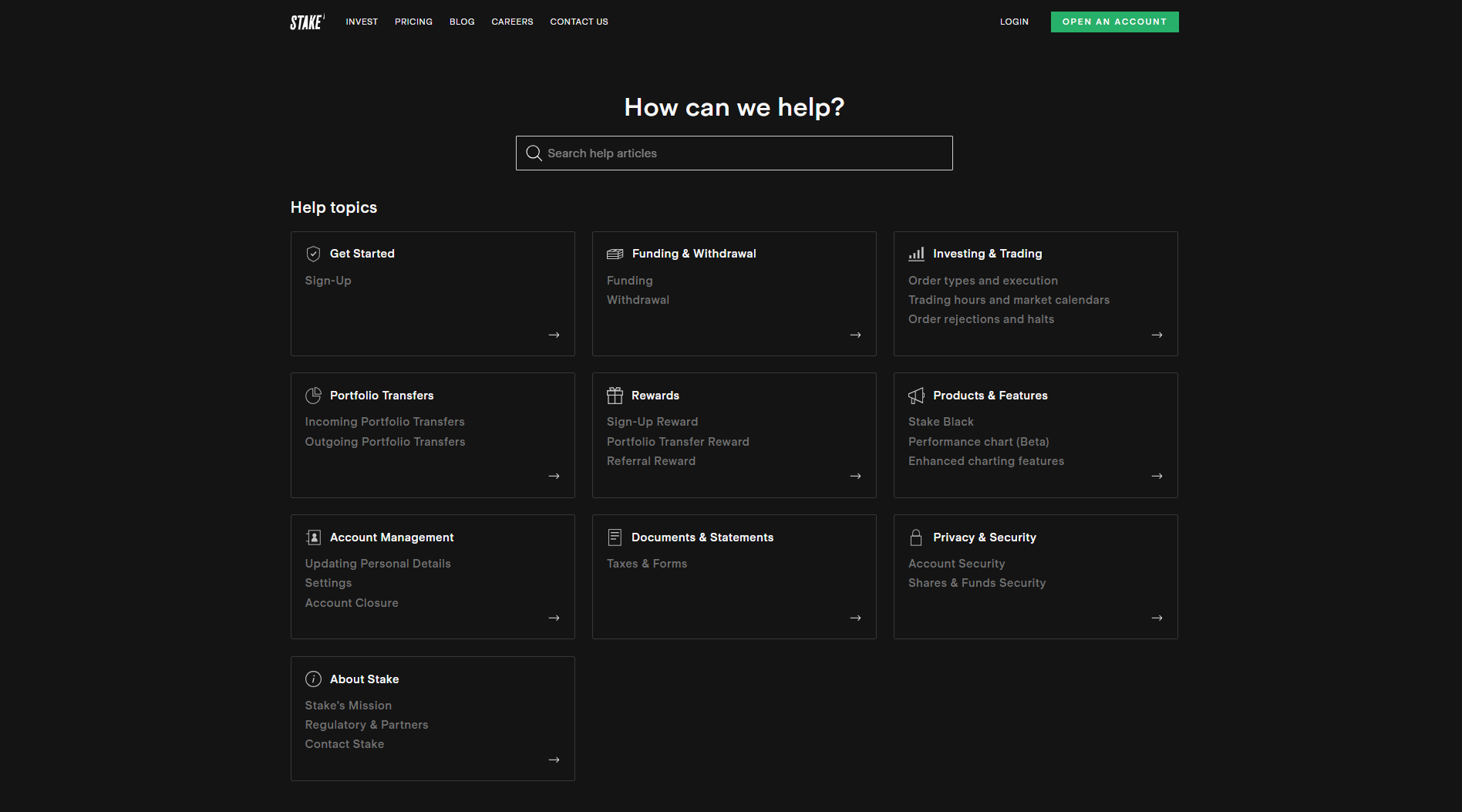
Withdrawal Options and Fees
Stake Investing withdrawal options and fees are fairly straightforward for Australian users, but there are still a few details that matter. On Stake’s official support pages, withdrawals are linked to your available cash balance and can be sent to a bank account in your name, which helps keep the process simple and more secure. For AUD withdrawals, Stake says the withdrawal fee is free and the minimum withdrawal amount is A$1. That is a strong point for users who want to move money out without paying an extra broker withdrawal charge. For USD balances, the process works differently. Stake says it does not support direct USD withdrawals, so any U.S. cash balance is converted back into AUD before the money is paid to your linked Australian bank account. That is where one of the main costs appears. Stake states that transfers between AUD and USD include an FX transfer fee of 55 bps, which applies when money moves in or out between the Australian and U.S. sides of the account. The actual withdrawal steps are also simple. On the web platform, Stake says users can go to the Wallet section, choose Withdraw, select their AUD or USD balance, enter the amount, choose their linked bank account, review the summary, and confirm the request using a security check. In terms of timing, Stake says AUD withdrawals generally arrive within 1 to 2 business days, while USD withdrawals usually settle within 2 to 3 U.S. business days. It also notes that public holidays, banking partners, and security checks can cause delays, so withdrawals are not always instant. There are also a few practical limits to keep in mind. Stake’s terms say deposited funds may need time to clear before they become available for withdrawal, and recent currency conversions may also take 1 to 2 business days to settle into the cash balance. For general investors, the biggest positives are the free AUD withdrawals and the clear process inside the app or web platform. The main drawback is that U.S. withdrawals are not truly direct, so users dealing with Wall St balances need to factor in the currency conversion cost before moving funds out.
Conclusion: Stake Investing Review
Stake Investing makes the strongest case for investors who want a simple, low-cost way to buy Australian and U.S. shares. On its official site, Stake highlights $3 brokerage on trades up to A$30,000, CHESS sponsorship for ASX investing, a mobile and desktop platform, and access to Wall St with features like fractional shares and extended hours trading. That combination gives Stake a clear edge for people who care more about ease of use and transparent pricing than about highly advanced trading tools. The platform looks especially practical for beginners and regular investors who want exposure to ASX stocks, ETFs, and U.S. shares without dealing with a more complicated broker interface. There are still a few limits worth keeping in mind. Stake’s official pricing shows that trades above A$30,000 move to a 0.01% fee, and its Wall St pricing and fee updates confirm that FX fees still matter for U.S. investing, even after the reduction to 55 bps in February 2025.
Stake Investing Review FAQs
Is Stake Investing cheap to use?
Stake Investing is positioned as a low-cost broker for Australian and U.S. shares. According to Stake’s official pricing page, brokerage is $3 per trade up to $30,000 on both the ASX and Wall St, while larger trades are charged at 0.01%. There is still one important cost to watch. Stake says its FX fee is 55 bps when converting money to or from USD, so U.S. investing can still carry an extra currency cost even though there is no FX fee on each individual buy or sell trade.
Do you actually own your shares on Stake?
For Australian shares, Stake says investors are the legal owner of their holdings under their CHESS HIN. That is a strong point for users who want direct ownership visibility and a setup that feels more secure for ASX investing. For U.S. shares, Stake says you still own the shares, but they are held through a custodian model on your behalf. That means the ownership structure is different from CHESS-sponsored Australian holdings, even though Stake says the investor remains the owner.
What can you trade on Stake Investing?
Stake gives users access to a broad range of Australian and U.S. listed securities. Its official site says users can trade ASX shares, U.S. stocks, ETFs, and other listed products, while its support pages also mention instruments such as OTC stocks, government bonds, and hybrid securities. Stake also supports fractional shares on Stake Wall St, which can be helpful for smaller investors who do not want to buy a full U.S. share. According to Stake’s help page, users can invest a set dollar amount into a stock instead of needing enough capital for one whole share. OPEN AN ACCOUNT NOW WITH STAKE INVESTING AND GET YOUR BONUS
The verdict on Stake Investing
Stake Investing makes the strongest case for investors who want a simple, low-cost way to buy Australian and U.S. shares. On its official site, Stake highlights $3 brokerage on trades up to A$30,000, CHESS sponsorship for ASX investing, a mobile and desktop platform, and access to Wall St with features like fractional shares and extended hours trading.
More stock brokers we’ve reviewed

