
Learn To Trade Forex • Best Forex Trading Course • AsiaForexMentor

Stocks to Soar 3 Key Drivers Behind Deutsche Bank’s Bold Forecast

Written by

Ezekiel Chew

Updated on

June 4, 2025

i
Its a default text

Stocks to Soar 3 Key Drivers Behind Deutsche Bank’s Bold Forecast

Written by:

Ezekiel Chew

Last updated on:

June 4, 2025

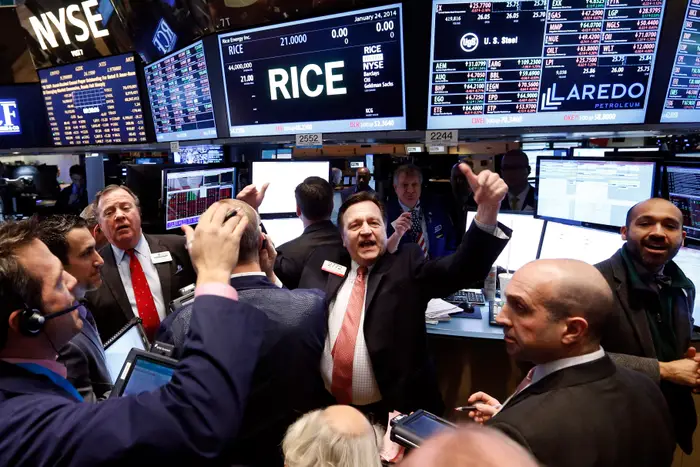
Despite what’s felt like a shaky start to 2025, some of Wall Street’s sharpest minds are now forecasting a powerful close to the year for stocks. In a move that’s catching attention, Deutsche Bank analysts, led by Chief US Equity & Global Strategist Binky Chadha, recently upped their year-end S&P 500 target to a robust 6,550. That’s a number suggesting a roughly 10% upside from recent levels, which would place the index nearly 7% above its own record close from earlier this year. But why this sudden surge of optimism amid lingering uncertainties? Let’s dive into the core reasons why these market forecasters expect stocks to end the year at record highs.

1. The Looming Buyback Bonanza

One of the most powerful forces Deutsche Bank is eyeing is the anticipated wave of corporate demand for stock buybacks. Companies, flush with resilient earnings, are expected to spend a whopping $1.1 trillion on stock buybacks this year alone. This isn’t just a sign of healthy corporate balance sheets; it’s a direct mechanism for reducing the supply of stock on public markets. When there are fewer shares available, the existing shares become more valuable, naturally pushing up prices. It’s a fundamental supply-and-demand dynamic that, combined with strong profits, sets the stage for a significant upward trend in the S&P 500.

2. Easing Tariff Tensions Fueling Optimism

Remember those intense trade fears that plagued the market? Deutsche Bank believes the worst might be over, or at least manageable. After a period of uncertainty, the U.S. and China recently agreed to slash their respective tariff rates, paving the way for more comprehensive trade negotiations. While tensions between the world’s two largest economies still linger – with both sides occasionally accusing the other of violating their tentative agreement – the White House’s approach to tariff negotiations has some market watchers feeling optimistic.

Deutsche Bank’s analysts point to President Trump’s decision to pause “Liberation Day” tariffs just hours after they took effect. This swift reversal, before any significant economic or political pain could emerge, is seen as a strong signal. Their interpretation? If the negative impacts of tariffs do materialize, we can expect further relents. This plays into a predictable “escalation and de-escalation” dynamic, suggesting that despite the fiery rhetoric, the market’s reaction could still sway tariff policies. For investors, this means a belief that tariffs will be a slight drag on earnings growth this year, but potentially a temporary one, offering a clear path for a market rally.

3. Resilient Earnings & Neutral Investor Positioning

Beyond the immediate catalysts, the broader economic outlook and investor positioning also paint a bullish picture. Deutsche Bank has notably raised its estimate of the S&P 500’s aggregate full-year earnings per share to $267 (up from an earlier $240 projection). This improved earnings growth forecast highlights a underlying strength in corporate performance.

Crucially, investor positioning, according to the analysts, is currently close to neutral. This is significant because it implies that discretionary investors—those with flexibility in how they allocate their funds—haven’t fully committed to the market’s upside yet. If confidence grows that tariff impacts will be modest and temporary, and that earnings remain strong, these large investors are expected to become “overweight.” This means they’ll pour more capital into stocks in anticipation of a rebound, providing ample fuel for the market rally towards record highs. It’s a classic scenario where ample liquidity and a shift in sentiment can drive significant gains.
About Ezekiel Chew​

Ezekiel Chew, founder and head of training at Asia Forex Mentor, is a renowned forex expert, frequently invited to speak at major industry events. Known for his deep market insights, Ezekiel is one of the top traders committed to supporting the trading community. Making six figures per trade, he also trains traders working in banks, fund management, and prop trading firms.

How to Read Candlesticks (Most Traders Get This Wrong)

Most traders who spend months learning how to read candlesticks still lose on setups that looked textbook. The pattern was never the problem. Reading it without context was. ABOUT THIS GUIDE This guide covers three specific candlestick signals used in professional price action trading, the Fibonacci golden zone context tool,

Read More

What Profit Factor Tells You Before Going Live

Profit factor is calculated by dividing a strategy’s total gross profit by its total gross loss, and most experienced traders reject any system that reads below 1.5 before risking real capital. Most traders see any positive number and call it a green light. That is where the costly mistake starts.

Read More

6 Forex Trading Scams Every Beginner Should Know

The most effective forex trading scams do not announce themselves as threats. They arrive as opportunities, come through referrals and social media, and are often indistinguishable from legitimate services until the first withdrawal request is made. ABOUT THIS GUIDE This guide covers the six most common forex trading scams, the

Read More

How to Use Fibonacci Retracement Step by Step in 2026

Most traders learn how to use Fibonacci retracement and immediately draw it wrong. This tool comes from a mathematical sequence first documented in 1202, and institutional traders use it daily to plan entries at precise price levels. The majority of retail traders miss the one placement rule that makes every

Read More

Free Margin in Forex What the MT4 Panel Shows

Free margin in forex is the one figure on the MT4 or MT5 account panel that determines whether another position can open right now, and it is consistently the last number most traders learn to read. ABOUT THIS GUIDE This guide explains what free margin is and how it connects

Read More

Scalping Trading Strategy The Pros Actually Use

The scalping trading strategy most retail traders use is not actually scalping. They are gambling on 1-minute candles with no defined edge, no position-sizing rules, and no plan for when the losses come. ABOUT THIS GUIDE This guide covers what scalping is, how professional scalpers build a repeatable edge, and

Read More

AFM Trading Summit Live

Date: Coming Soon

Join us at the AFM Trading Summit Live and learn from top industry experts through live trading sessions, market insights, and actionable strategies.

Stocks to Soar 3 Key Drivers Behind Deutsche Bank’s Bold Forecast

4.0
Overall Trust Index

Written by:

Updated:

June 4, 2025

Despite what's felt like a shaky start to 2025, some of Wall Street's sharpest minds are now forecasting a powerful close to the year for stocks. In a move that's catching attention, Deutsche Bank analysts, led by Chief US Equity & Global Strategist Binky Chadha, recently upped their year-end S&P 500 target to a robust 6,550. That’s a number suggesting a roughly 10% upside from recent levels, which would place the index nearly 7% above its own record close from earlier this year. But why this sudden surge of optimism amid lingering uncertainties? Let's dive into the core reasons why these market forecasters expect stocks to end the year at record highs.

1. The Looming Buyback Bonanza

One of the most powerful forces Deutsche Bank is eyeing is the anticipated wave of corporate demand for stock buybacks. Companies, flush with resilient earnings, are expected to spend a whopping $1.1 trillion on stock buybacks this year alone. This isn't just a sign of healthy corporate balance sheets; it's a direct mechanism for reducing the supply of stock on public markets. When there are fewer shares available, the existing shares become more valuable, naturally pushing up prices. It's a fundamental supply-and-demand dynamic that, combined with strong profits, sets the stage for a significant upward trend in the S&P 500.

2. Easing Tariff Tensions Fueling Optimism

Remember those intense trade fears that plagued the market? Deutsche Bank believes the worst might be over, or at least manageable. After a period of uncertainty, the U.S. and China recently agreed to slash their respective tariff rates, paving the way for more comprehensive trade negotiations. While tensions between the world’s two largest economies still linger – with both sides occasionally accusing the other of violating their tentative agreement – the White House's approach to tariff negotiations has some market watchers feeling optimistic.

Deutsche Bank's analysts point to President Trump’s decision to pause "Liberation Day" tariffs just hours after they took effect. This swift reversal, before any significant economic or political pain could emerge, is seen as a strong signal. Their interpretation? If the negative impacts of tariffs do materialize, we can expect further relents. This plays into a predictable "escalation and de-escalation" dynamic, suggesting that despite the fiery rhetoric, the market's reaction could still sway tariff policies. For investors, this means a belief that tariffs will be a slight drag on earnings growth this year, but potentially a temporary one, offering a clear path for a market rally.

3. Resilient Earnings & Neutral Investor Positioning

Beyond the immediate catalysts, the broader economic outlook and investor positioning also paint a bullish picture. Deutsche Bank has notably raised its estimate of the S&P 500’s aggregate full-year earnings per share to $267 (up from an earlier $240 projection). This improved earnings growth forecast highlights a underlying strength in corporate performance.

Crucially, investor positioning, according to the analysts, is currently close to neutral. This is significant because it implies that discretionary investors—those with flexibility in how they allocate their funds—haven't fully committed to the market's upside yet. If confidence grows that tariff impacts will be modest and temporary, and that earnings remain strong, these large investors are expected to become "overweight." This means they'll pour more capital into stocks in anticipation of a rebound, providing ample fuel for the market rally towards record highs. It's a classic scenario where ample liquidity and a shift in sentiment can drive significant gains.
ezekiel chew asiaforexmentor

About Ezekiel Chew

Ezekiel Chew, founder and head of training at Asia Forex Mentor, is a renowned forex expert, frequently invited to speak at major industry events. Known for his deep market insights, Ezekiel is one of the top traders committed to supporting the trading community. Making six figures per trade, he also trains traders working in banks, fund management, and prop trading firms.

RELATED ARTICLES

Stocks to Soar 3 Key Drivers Behind Deutsche Bank’s Bold Forecast

4.0
Overall Trust Index

Written by:

Updated:

June 4, 2025

Despite what's felt like a shaky start to 2025, some of Wall Street's sharpest minds are now forecasting a powerful close to the year for stocks. In a move that's catching attention, Deutsche Bank analysts, led by Chief US Equity & Global Strategist Binky Chadha, recently upped their year-end S&P 500 target to a robust 6,550. That’s a number suggesting a roughly 10% upside from recent levels, which would place the index nearly 7% above its own record close from earlier this year. But why this sudden surge of optimism amid lingering uncertainties? Let's dive into the core reasons why these market forecasters expect stocks to end the year at record highs.

1. The Looming Buyback Bonanza

One of the most powerful forces Deutsche Bank is eyeing is the anticipated wave of corporate demand for stock buybacks. Companies, flush with resilient earnings, are expected to spend a whopping $1.1 trillion on stock buybacks this year alone. This isn't just a sign of healthy corporate balance sheets; it's a direct mechanism for reducing the supply of stock on public markets. When there are fewer shares available, the existing shares become more valuable, naturally pushing up prices. It's a fundamental supply-and-demand dynamic that, combined with strong profits, sets the stage for a significant upward trend in the S&P 500.

2. Easing Tariff Tensions Fueling Optimism

Remember those intense trade fears that plagued the market? Deutsche Bank believes the worst might be over, or at least manageable. After a period of uncertainty, the U.S. and China recently agreed to slash their respective tariff rates, paving the way for more comprehensive trade negotiations. While tensions between the world’s two largest economies still linger – with both sides occasionally accusing the other of violating their tentative agreement – the White House's approach to tariff negotiations has some market watchers feeling optimistic.

Deutsche Bank's analysts point to President Trump’s decision to pause "Liberation Day" tariffs just hours after they took effect. This swift reversal, before any significant economic or political pain could emerge, is seen as a strong signal. Their interpretation? If the negative impacts of tariffs do materialize, we can expect further relents. This plays into a predictable "escalation and de-escalation" dynamic, suggesting that despite the fiery rhetoric, the market's reaction could still sway tariff policies. For investors, this means a belief that tariffs will be a slight drag on earnings growth this year, but potentially a temporary one, offering a clear path for a market rally.

3. Resilient Earnings & Neutral Investor Positioning

Beyond the immediate catalysts, the broader economic outlook and investor positioning also paint a bullish picture. Deutsche Bank has notably raised its estimate of the S&P 500’s aggregate full-year earnings per share to $267 (up from an earlier $240 projection). This improved earnings growth forecast highlights a underlying strength in corporate performance.

Crucially, investor positioning, according to the analysts, is currently close to neutral. This is significant because it implies that discretionary investors—those with flexibility in how they allocate their funds—haven't fully committed to the market's upside yet. If confidence grows that tariff impacts will be modest and temporary, and that earnings remain strong, these large investors are expected to become "overweight." This means they'll pour more capital into stocks in anticipation of a rebound, providing ample fuel for the market rally towards record highs. It's a classic scenario where ample liquidity and a shift in sentiment can drive significant gains.

ezekiel chew asiaforexmentor

About Ezekiel Chew

Ezekiel Chew, founder and head of training at Asia Forex Mentor, is a renowned forex expert, frequently invited to speak at major industry events. Known for his deep market insights, Ezekiel is one of the top traders committed to supporting the trading community. Making six figures per trade, he also trains traders working in banks, fund management, and prop trading firms.

RELATED ARTICLES

Join the Live Event
Get Your Free Ticket Now

I consent to receiving emails and/or text message reminders for this event.

REGISTER FOR THE MASTERCLASS!