Learn To Trade Forex • Best Forex Trading Course • AsiaForexMentor

- Best Forex BrokersRaw spreads, ECN execution and regulation — tested on live accounts.Best Stock BrokersCommissions, market access and platform depth, compared.Best Prop FirmsFunding rules, drawdown limits and real payout records.Best Crypto BrokersFees, custody and coin coverage across the major exchanges.AFM Top Pick
Every other site ranks ten brokers. We rank one — and show you exactly why.
See the #1 pick → - Articles
- Awards
- Newsletter
 Singapore
 Malaysia
 Indonesia
 Philippines
 Thailand
 Vietnam
 Cambodia
 Myanmar
 Brunei
 China
China Japan
Japan South Korea
 Taiwan
 India
India Australia
  New Zealand
 United Kingdom
 Switzerland
 Italy
Italy Spain
Spain UAE
UAE United States
 Mexico
 Argentina
 South Africa
 IC Markets
 Axon Markets
 Pepperstone
 AvaTrade
 XM
XM Plus500
 RoboForex
 TMGM
TMGM Exness
 JustMarkets
 Orbex
Orbex Interactive Brokers
 Saxo
Saxo Tiger Brokers
 Binance
 Coinbase
 Gemini Exchange
 Kraken
 iFunds
 IC Funded
 The 5%ers
 TopStep
 IQ Option
 Pocket Option
 RaceOption
 IQCent
Worldcoin Review 2026
To wrap up this Worldcoin review, it’s clear that Worldcoin stands apart from traditional crypto exchanges. While Binance, Coinbase, and Gemini focus on crypto trading and investment, Worldcoin is pioneering a universal identity system powered by blockchain. For anyone looking to explore new ways to engage with cryptocurrency and online verification, Worldcoin is a project to keep an eye on.
Risk warning: your capital is at risk. Forex and CFDs carry the potential for gains, but statistically only 11–25% of traders profit while 74–89% lose their investment. AFM earns a commission if you open an account through our links — it never changes how we score a broker.
- This review was written by the Asia Forex Mentor team and has been reformatted into our current layout. The analysis below is our earlier work on Worldcoin, presented more clearly.
- It has not been re-verified against Worldcoin’s current published terms. Spreads, fees, leverage caps and account rules change, and so does the legal entity that serves a given country.
- Treat every figure here as a starting point for your own checks rather than a live quote.
- Before depositing, confirm the details on Worldcoin’s own site — above all, which company your client agreement names. That determines your regulator, your protections and who you can complain to.
- This review is not scored. Our re-verified reviews carry an AFM Trust Score; this one has not been through that process.
Reformatted September 2026. The details in this review have not been independently re-verified since it was written, so check Worldcoin’s own site before acting on anything here. Spotted something out of date? Tell us.

Ezekiel has traded foreign exchange for over two decades and built the One Core Program, the trading curriculum Asia Forex Mentor teaches to retail and institutional traders across Asia. He sets the scoring criteria these broker reviews are graded against.
On this page
- Worldcoin Review
- What is Worldcoin?
- Worldcoin Regulation and Safety
- Benefits of Trading With Worldcoin
- Worldcoin Customer Reviews
- Worldcoin Spreads, Fees, and Commissions
- Worldcoin Account Types
- Worldcoin Trading Platforms
- What Can You Trade on Worldcoin
- Advantages and Disadvantages of Worldcoin Customer Support
- Withdrawal Options and Fees
- Conclusion: Worldcoin Review
- FAQs
- Verdict
Worldcoin Review
Worldcoin is a project designed to create a worldwide digital identity system by using biometric data like iris scans. The idea is to give people a secure World ID that proves they are real and not a duplicate, which could help prevent fraud and build safer online communities. However, many concerns have been raised regarding data collection, meaningful informed consent, and the protection of personal user data. Critics have questioned how iris data and iris codes are stored, how biometric information is managed, and whether users fully understand what they are agreeing to when sharing sensitive data. The scale of this biometric database raises ongoing privacy and security issues, especially in regions with few legal protections. In this review, we’ll cover what makes the project unique, how its system works, and the risks users should be aware of before getting involved. With digital identity becoming more important globally, understanding the full impact of sharing biometric data is essential. Whether you’re considering signing up for the World App or just want to learn more, it’s important to know how Worldcoin is shaping the future of identity and finance on a global scale.
What is Worldcoin?
The Worldcoin project gives people a World ID, which confirms someone is real by scanning their iris. This helps make sure no one can create multiple accounts and gives everyone a way to prove who they are online. The idea is that in the future, when AI systems are everywhere, this proof of personhood could be important to tell humans apart from bots. With the World App, verified users can get Worldcoin tokens and join a system that shares money through global wealth redistribution. The goal is to give free cash to new users, especially in developing countries and the global south, where people often don’t have access to banks. Worldcoin hopes this helps more people join the global financial system and take part in global democratic processes. Even though Worldcoin has big plans, there are real concerns about how it collects and stores biometric data like iris scans and iris codes. People are worried about what happens to their personal data, if they are truly giving informed consent, and how safe this information is over time. With so much sensitive information being gathered by orb operators all over the world, privacy and security are big questions for the future of the Worldcoin project. 
Worldcoin Regulation and Safety
One of the obvious concerns with Worldcoin is how it manages user’s biometric data. With iris images and user’s iris codes being collected by local Orb operators, questions around data custody, privacy concerns, and informed consent have increased, especially where few legal protections exist. While Worldcoin claims that iris data is transformed into a secure code and stored locally, critics, including MIT Technology Review, have questioned whether data subjects are truly giving meaningful informed consent. The project’s growing biometric database raises alarms about long-term safety, especially as more personal data is gathered.
Benefits of Trading With Worldcoin
Global financial access
Worldcoin offers people in the developing world an easy way to join the digital identity system and access digital currencies. This helps people without bank accounts participate in the economy.
Verified identity
Using iris scans, Worldcoin ensures that each user’s identity is unique. This helps prevent fraud and duplicate accounts, supporting fair distribution of funds.
Universal basic income
By giving free cash through Worldcoin tokens, the platform aims to create a form of global universal basic income and support communities worldwide.
Future-ready infrastructure
Worldcoin is building tools to support future AI systems and global economies, creating an identity network based on real people, not bots.
Worldcoin Customer Reviews
Customer feedback is mixed. Many are hopeful about global wealth redistribution and the chance to get free cash, but concerns about data collection operations and the safety of biometric information remain. Some Worldcoin employees and users worry about deceptive marketing practices used in the distribution process, especially in the global south. There are ongoing questions about whether company’s representatives and Orb operators are providing meaningful informed consent to new users. 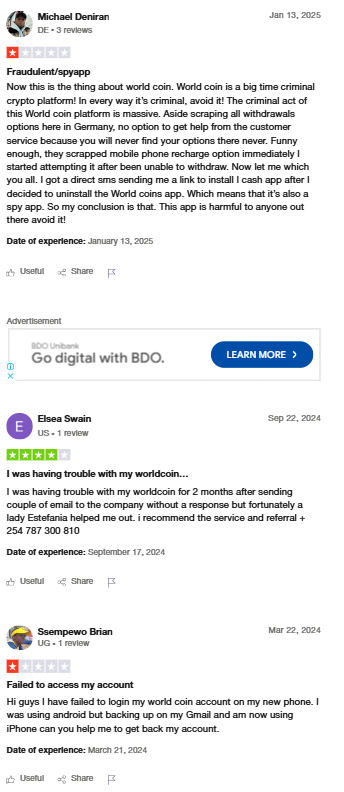
Worldcoin Spreads, Fees, and Commissions
Worldcoin doesn’t charge traditional trading fees like other platforms. However, when moving Worldcoin tokens, users may face network fees based on blockchain activity. Market makers involved in Worldcoin’s distribution may also influence costs. It’s important for verified World App users to check for fees when making financial transactions.
Worldcoin Account Types
Worldcoin keeps it simple with one main account type for all users. After completing iris scans and identity verification, users receive their World ID and can start using the World App. Whether you’re in a developing nation or elsewhere, the process stays the same. Everyone gets equal access to the same features and digital currencies. 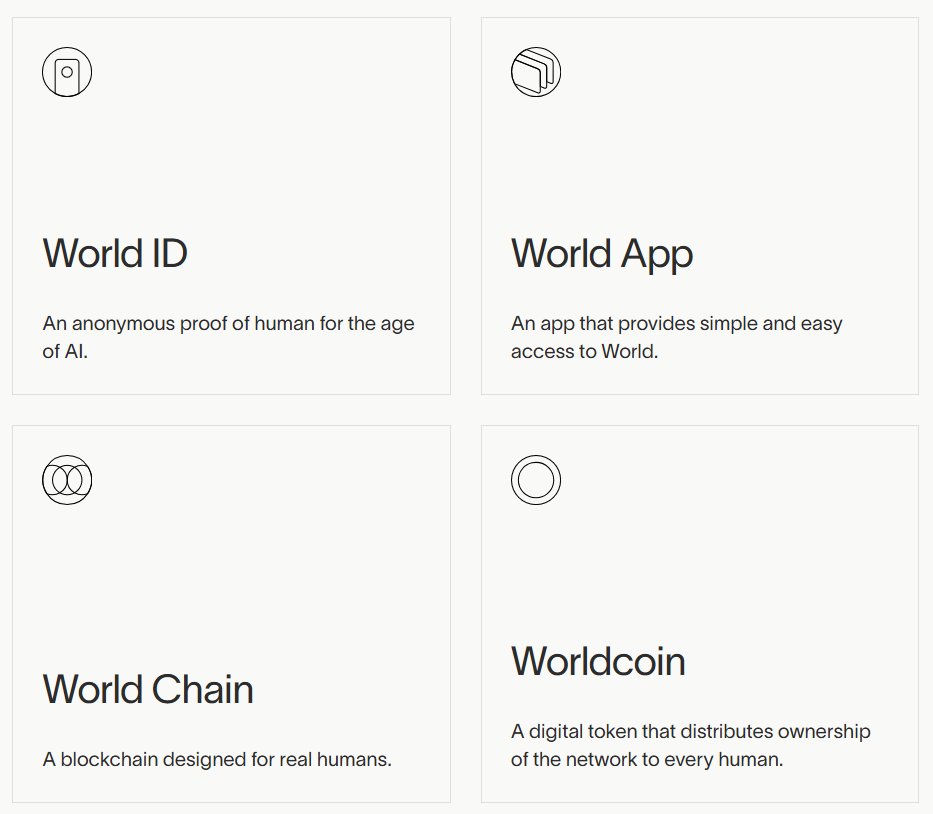
Worldcoin Trading Platforms
The main way to use Worldcoin is through the World App. This platform allows users to manage their World ID, collect tokens, and connect with third-party applications for financial services. The Worldcoin infrastructure is designed to be simple and accessible, especially for people new to digital currencies.
What Can You Trade on Worldcoin
Worldcoin tokens
The main asset on the platform is Worldcoin tokens, which are given to new users after identity verification. These tokens can be used within the app or transferred to other platforms for trading, making them part of the growing global financial ecosystem.
Worldcoin customer support
Worldcoin provides support through its website, blog post updates, and email. However, because the project is still growing, some users report delays and limited options. Questions around biometric data handling and privacy concerns may require clear responses from company’s representatives to build trust.
Advantages and Disadvantages of Worldcoin Customer Support
Advantages:
- Email support
- Helpful resources
- Active updates
- Growing team
Disadvantages:
- No live chat
- Slow replies
- Limited staff
- Privacy issues
Withdrawal Options and Fees
Users can withdraw Worldcoin tokens by moving them to external wallets or exchanges. Once transferred, tokens can be exchanged for other digital currencies or fiat money. Withdrawal fees depend on blockchain activity and may change based on demand. Before transferring, check the latest costs within the World App to avoid surprises.
Conclusion: Worldcoin Review
To wrap up this Worldcoin review, it’s clear that Worldcoin stands apart from traditional crypto exchanges. While Binance, Coinbase, and Gemini focus on crypto trading and investment, Worldcoin is pioneering a universal identity system powered by blockchain. For anyone looking to explore new ways to engage with cryptocurrency and online verification, Worldcoin is a project to keep an eye on.
Worldcoin Review FAQs
What is Worldcoin?
Worldcoin is a digital identity project that provides a unique World ID using biometric data, rewarding users with WLD tokens.
Is Worldcoin safe to use?
Worldcoin uses advanced encryption and privacy measures to secure user data, though concerns about biometric data privacy remain.
How can I get Worldcoin?
You can receive WLD tokens by verifying your identity through a Worldcoin Orb and participating in the ecosystem.
The verdict on Worldcoin
To wrap up this Worldcoin review, it’s clear that Worldcoin stands apart from traditional crypto exchanges. While Binance, Coinbase, and Gemini focus on crypto trading and investment, Worldcoin is pioneering a universal identity system powered by blockchain. For anyone looking to explore new ways to engage with cryptocurrency and online verification, Worldcoin is a project to keep an eye on.


Get Ezekiel Chew’s 5 Day Email Course on “How to be in the Top 10% league of Forex Traders”
100% Free – Delivered to your inbox
Subscribe to the most popular Forex Trading blog online, join thousands of readers
