Learn To Trade Forex • Best Forex Trading Course • AsiaForexMentor

 English
 简体中文
简体中文 繁體中文
繁體中文 日本語
日本語 한국어
한국어 Bahasa Melayu
 Bahasa Indonesia
 Filipino
 ไทย
ไทย Tiếng Việt
 हिन्दी
 العربية
 Italiano
 Português
 Русский
 Español
 Français
- Best Forex BrokersRaw spreads, ECN execution and regulation — tested on live accounts.Best Stock BrokersCommissions, market access and platform depth, compared.Best Prop FirmsFunding rules, drawdown limits and real payout records.Best Crypto BrokersFees, custody and coin coverage across the major exchanges.AFM Top Pick
Every other site ranks ten brokers. We rank one — and show you exactly why.
See the #1 pick → - Articles
- Awards
- Events
- Newsletter
 Singapore
 Cambodia
 Myanmar
 Brunei
 Australia
  New Zealand
 Switzerland
 UAE
UAE United States
 Mexico
 Argentina
 South Africa
 IC Markets
 Pepperstone
 AvaTrade
 XM
XM Plus500
 RoboForex
 TMGM
TMGM Exness
 JustMarkets
 Orbex
Orbex Interactive Brokers
 Saxo
Saxo Tiger Brokers
 Binance
 Coinbase
 Gemini Exchange
 Kraken
 iFunds
 IC Funded
 The 5%ers
 TopStep
 IQ Option
 Pocket Option
 RaceOption
 IQCent
BUX Review 2026
BUX is a regulated, mobile-first stock broker designed for investors who want straightforward access to European and US stocks and ETFs without complex trading tools. With features such as fractional shares, automated Investment Plans, and a low minimum deposit of €5, it lowers the barrier to entry for new investors. The platform operates under the supervision of the Dutch Authority for the Financial Markets (AFM), and eligible cash deposits are protected up to €100,000 under the Deposit Guarantee Scheme (DGS), adding an important layer of security.
Risk warning: your capital is at risk. Forex and CFDs carry the potential for gains, but statistically only 11–25% of traders profit while 74–89% lose their investment. AFM earns a commission if you open an account through our links — it never changes how we score a broker.
- Zero fees on commission-free trades
- User-friendly interface with a simple and intuitive design
- BUX clients benefit from the Deposit Guarantee Scheme (DGS), protecting deposits up to €100,000
- Low trading fees with commission-free options on selected stocks and ETFs
- Simple and user-friendly mobile platform
- Access to European and US stocks, ETFs, and fractional shares
- Automated Investment Plans for regular investing
- Regulated by the Dutch Authority for the Financial Markets (AFM)
- Does not provide investment advice
- Limited advanced trading tools and research features
- Foreign exchange fees apply to international trades
- BUX’s investment options are limited compared to traditional brokers, offering only a select number of stocks and ETFs
- BUX has a subscription model that charges a monthly fee, which can be a disadvantage compared to platforms that rely on transaction fees
- This review was written by the Asia Forex Mentor team and has been reformatted into our current layout. The analysis below is our earlier work on BUX, presented more clearly.
- It has not been re-verified against BUX’s current published terms. Spreads, fees, leverage caps and account rules change, and so does the legal entity that serves a given country.
- Treat every figure here as a starting point for your own checks rather than a live quote.
- Before depositing, confirm the details on BUX’s own site — above all, which company your client agreement names. That determines your regulator, your protections and who you can complain to.
- The score shown is Asia Forex Mentor’s own published rating for BUX, carried over from this article and expressed out of 10. It reflects our earlier assessment, not a fresh re-scoring.
Reformatted September 2026. The details in this review have not been independently re-verified since it was written, so check BUX’s own site before acting on anything here. Spotted something out of date? Tell us.

Ezekiel has traded foreign exchange for over two decades and built the One Core Program, the trading curriculum Asia Forex Mentor teaches to retail and institutional traders across Asia. He sets the scoring criteria these broker reviews are graded against.
On this page
BUX Review
A good stock broker provides secure access to global markets, competitive fees, and a reliable trading platform designed for both beginners and experienced investors. It should offer transparent pricing, strong regulatory oversight, fast trade execution, and a wide range of assets such as stocks, ETFs, and other exchange-traded products. Key features to look for include an easy-to-use mobile and web platform, educational resources, responsive customer support, and tools that help you manage risk effectively. The right broker makes investing straightforward, cost-efficient, and aligned with your long-term financial goals.
BUX is a European mobile-first stock broker and investing app that lets individuals trade shares, ETFs, ETCs and fractional assets using a simple, intuitive interface. BUX is a subsidiary of ABN AMRO Bank, which adds credibility and robust backend infrastructure to its operations. It is regulated by the Dutch Authority for the Financial Markets (AFM), with investor protection up to €100,000 under local schemes. The platform supports multiple order types, including commission-free Zero Orders for many EU and US stocks and ETFs, making it attractive for cost-conscious beginners and casual investors. BUX also offers Investment Plans, autopilot investing, and the ability to start with small amounts (from around €10). BUX is a mobile-only platform, with no desktop version available, which may limit some users who prefer trading on a desktop interface. This comprehensive review of BUX takes an in-depth look at the platform’s core features, fee structure, available investment products, regulatory framework, and overall user experience to help investors determine whether it fits their trading style and long-term financial strategy. We examine how BUX operates as a mobile-first stock broker, what types of assets it offers such as stocks, ETFs, and fractional shares, and how its pricing plans are structured for different levels of investors. BUX offers zero fees on many trades, and provides a transparent fee schedule to ensure users understand all costs upfront.
What is BUX?
BUX is a European mobile-first neobroker and investment app that allows users to invest in stocks, ETFs, ETCs, and fractional shares through a simple, intuitive interface. Headquartered in Amsterdam, Netherlands, BUX makes it easier and more affordable to access global markets and build long-term wealth with features like automated Investment Plans, low-barrier entry (starting from small amounts), and tiered account options with varying fees and benefits. The platform is regulated by the Dutch Authority for the Financial Markets (AFM), and is designed for both beginner and intermediate investors seeking a user-friendly trading experience. BUX is a fast-growing Dutch neo-broker that has been around since 2014 and now has over 700,000 customers across the EU. BUX Zero is available to residents of the following countries: Netherlands, Germany, Austria, France, Belgium, Ireland, Italy, and Spain. After setting up an account, BUX requires a €5 minimum deposit to start trading for new users.
BUX was founded in 2013 by Nick Bortot, originally launching its first trading app in September 2014 to make stock trading more accessible to a new generation of investors. Over the years, the company expanded across several European countries, introduced commission-free investing with its BUX Zero app, and added products like BUX Crypto for cryptocurrency trading. In 2024, BUX became a subsidiary of ABN AMRO Bank, one of the Netherlands’ largest banks, strengthening its financial backing and expanding its suite of investment and savings products. Throughout its growth, BUX has focused on lowering barriers to entry and simplifying investing for retail users across Europe. BUX operates on a subscription model with a monthly fee, which differs from other platforms that rely on transaction fees. While it has a monthly service fee on paid plans and a more limited range compared to some full-service brokers, its user-friendly app, fractional investing, and broad access to EU/US equities make it suitable for new and intermediate investors building long-term portfolios. BUX’s investment options are limited compared to traditional brokers, focusing mainly on stocks and ETFs.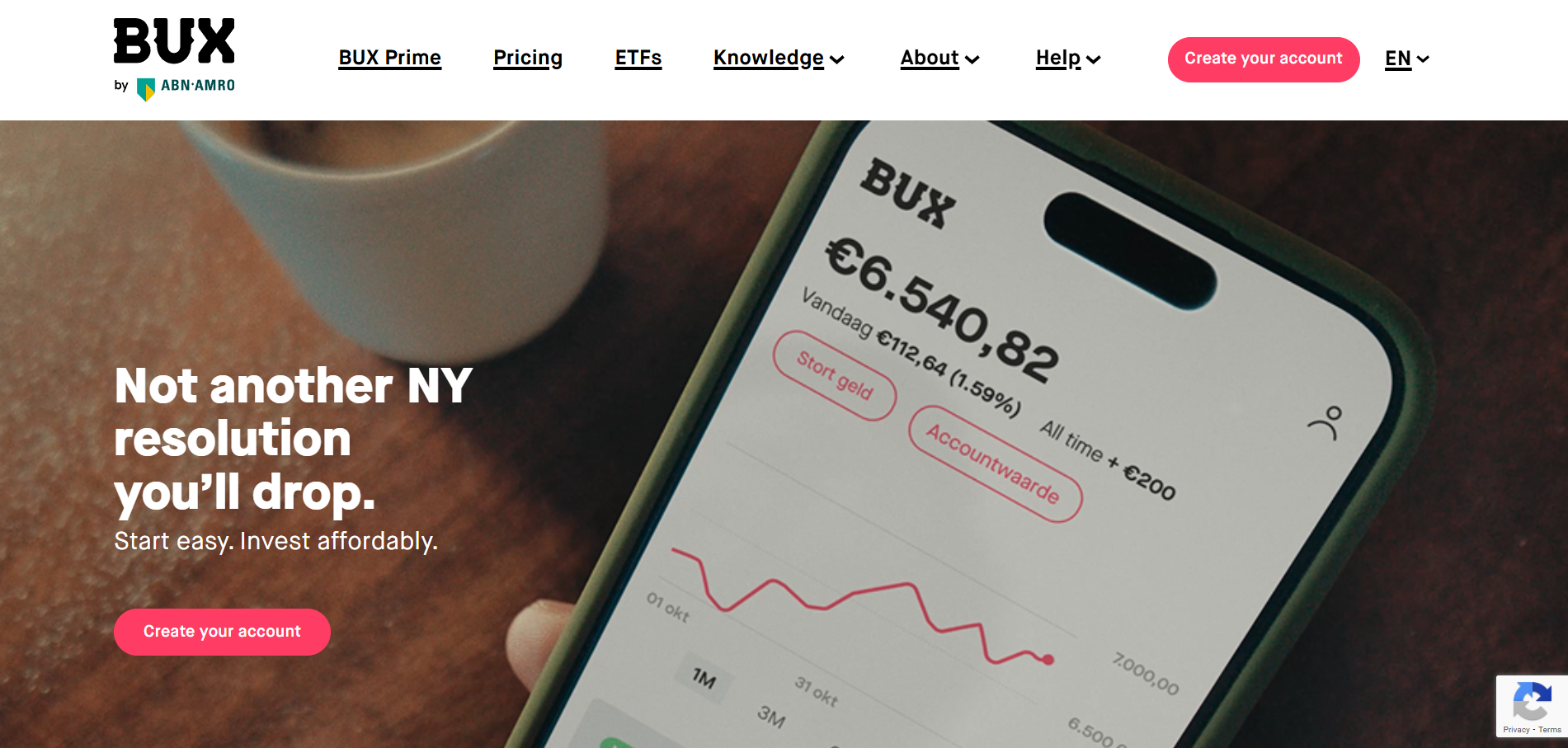
Benefits of Trading with BUX
Trading with BUX offers several benefits that make it appealing for both new and intermediate investors looking for a flexible, affordable broker. First, BUX provides access to thousands of European and US stocks, ETFs, ETCs, and fractional shares, giving users a broad range of markets and assets within one app. Its intuitive and beginner-friendly interface makes account setup, deposits, and withdrawals straightforward and free of charge. In addition, BUX offers educational resources through its help center and knowledge base, including guides on investing basics, platform features, risk management, and order types, helping users build confidence while learning how to invest responsibly.
Another key advantage is cost efficiency and transparent pricing. BUX offers zero fees on commission-free trades for eligible stocks and ETFs, with no hidden charges beyond clearly stated transaction and subscription fees. Depending on your plan (Basic, Plus, or Prime), you can benefit from lower trading fees, reduced FX markups, and additional perks. Plus and Prime plans also offer interest on uninvested cash ranging from 1.5% to 1.75% (as of early 2026), allowing idle funds to generate returns. BUX supports automatic Investment Plans for regular investing and provides expert-built diversified plans on higher tiers. Finally, BUX operates under regulation by the Dutch Authority for the Financial Markets (AFM), with client deposits protected up to €100,000 under the Deposit Guarantee Scheme (DGS), reinforcing platform security and investor protection.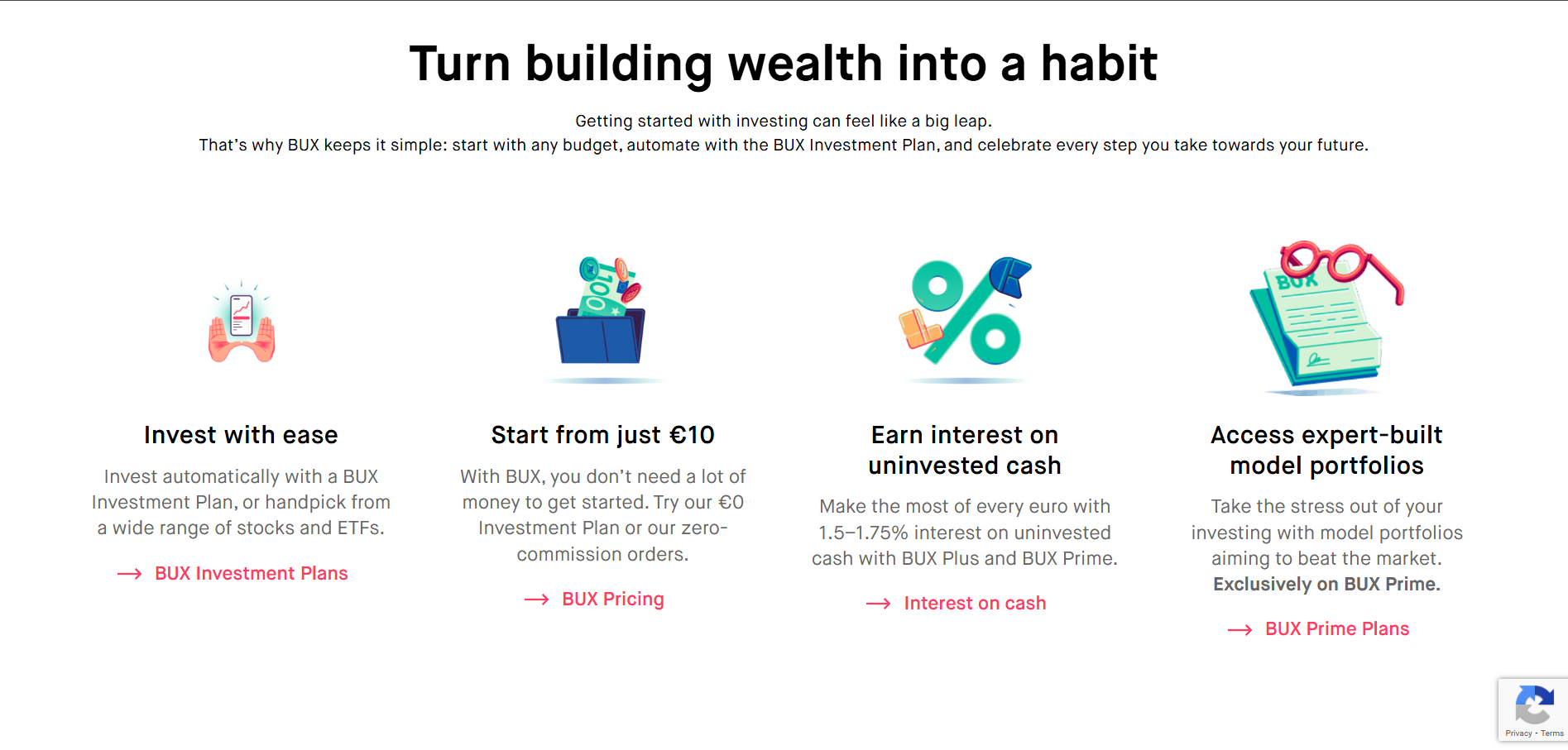
BUX Regulation and Safety
BUX provides its investment services for shares and ETFs through BUX B.V., a company registered with the Dutch Chamber of Commerce in Amsterdam (No. 58403949). BUX B.V. is authorised and regulated by the Dutch Authority for the Financial Markets (Autoriteit Financiële Markten – AFM), which means it operates under strict financial supervision and must comply with regulatory standards designed to protect investors and maintain transparency. This regulatory oversight, along with additional client protections, makes BUX considered ‘bux safe’ among investment platforms. BUX clients benefit from the Deposit Guarantee Scheme (DGS), which protects cash deposits up to €100,000. Additionally, client assets are held in a segregated account, completely separate from the funds used to operate the company. Based on available information, BUX has not had any reported issues with regulators. It is important to understand that BUX B.V. does not provide investment advice. Investors must make their own decisions or seek independent financial guidance. Investing involves risk, and the value of shares and ETFs can go up or down depending on market conditions. You may receive back less than your original investment, and in some cases, you could lose your entire investment.
BUX Customer Reviews
Customer feedback about BUX reflects a mix of positive and critical experiences. Many users highlight the simple and intuitive mobile app, saying it makes investing easy for beginners and casual investors. The platform is often praised for its clean interface, straightforward account setup, and competitive fee structure, particularly for those using investment plans or commission-free options. Some users also mention smooth deposits and a generally accessible approach to stock and ETF investing.
On the other hand, some reviews point to concerns about withdrawal processing times, occasional delays in transfers, and limited advanced trading tools compared to more established full-service brokers. A number of users also mention subscription fees and foreign exchange costs, which may impact smaller portfolios. While many investors report satisfactory experiences, others note that the platform may feel basic for active or highly experienced traders seeking more advanced research and trading features.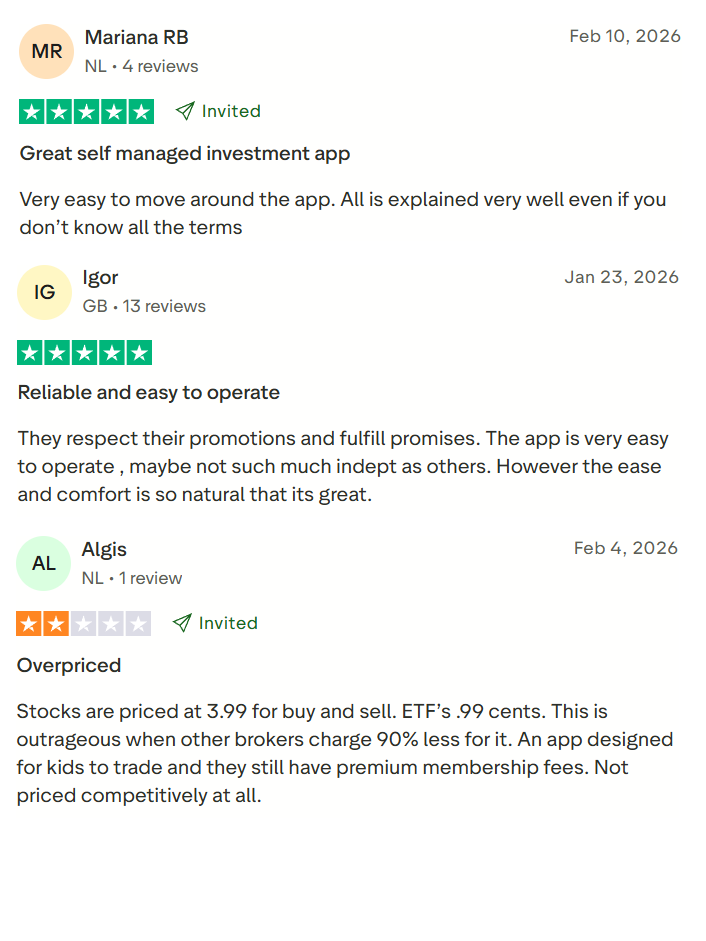
BUX Spreads, Fees, and Commissions
BUX uses a tiered pricing model with different fee structures depending on the account plan you choose (Basic, Plus, or Prime). Many European and US stocks and ETFs can be traded without traditional commissions, though the exact cost depends on your plan and the type of order you place. For example, BUX allows users to execute free orders using the ‘Zero Order’ function, which is limited to three per month. For other trades, BUX charges €1.99 for market and limit orders on EU stocks and ETFs, and €0.99 for US stocks. When purchasing American stocks, BUX charges a 0.25% FX markup fee, which increases the cost for popular US companies like Apple or Tesla. BUX charges a monthly subscription fee of €2.99, which is automatically deducted from your account balance. If your balance is insufficient, BUX will continue charging the subscription fee for up to one year, totaling €36. These subscription fees are separate from transaction fees, so it’s important to understand what you pay for both trading and maintaining your account. Each trade on BUX also includes a spread cost, which is an indirect fee charged by market makers and varies by stock. While BUX does not earn from the spread itself, it impacts the total cost for traders executing buy or sell orders. Market makers play a role in providing liquidity and executing trades, and brokers like BUX may route order flow to these market makers, which can affect trade execution and costs. BUX has a transparent fee schedule, with no hidden fees aside from the stated transaction and subscription fees. Users should review the full fee schedule to understand all costs associated with trading, including transaction fees, FX markup, and any service charges. This transparency helps investors make informed decisions about the total costs they will pay when using the platform.
Account Types
BUX typically offers standard individual investment accounts that allow you to buy and sell stocks, ETFs, and other exchange-traded products. These accounts are designed for everyday investors and include features like portfolio tracking, fractional share investing, and access to global markets.
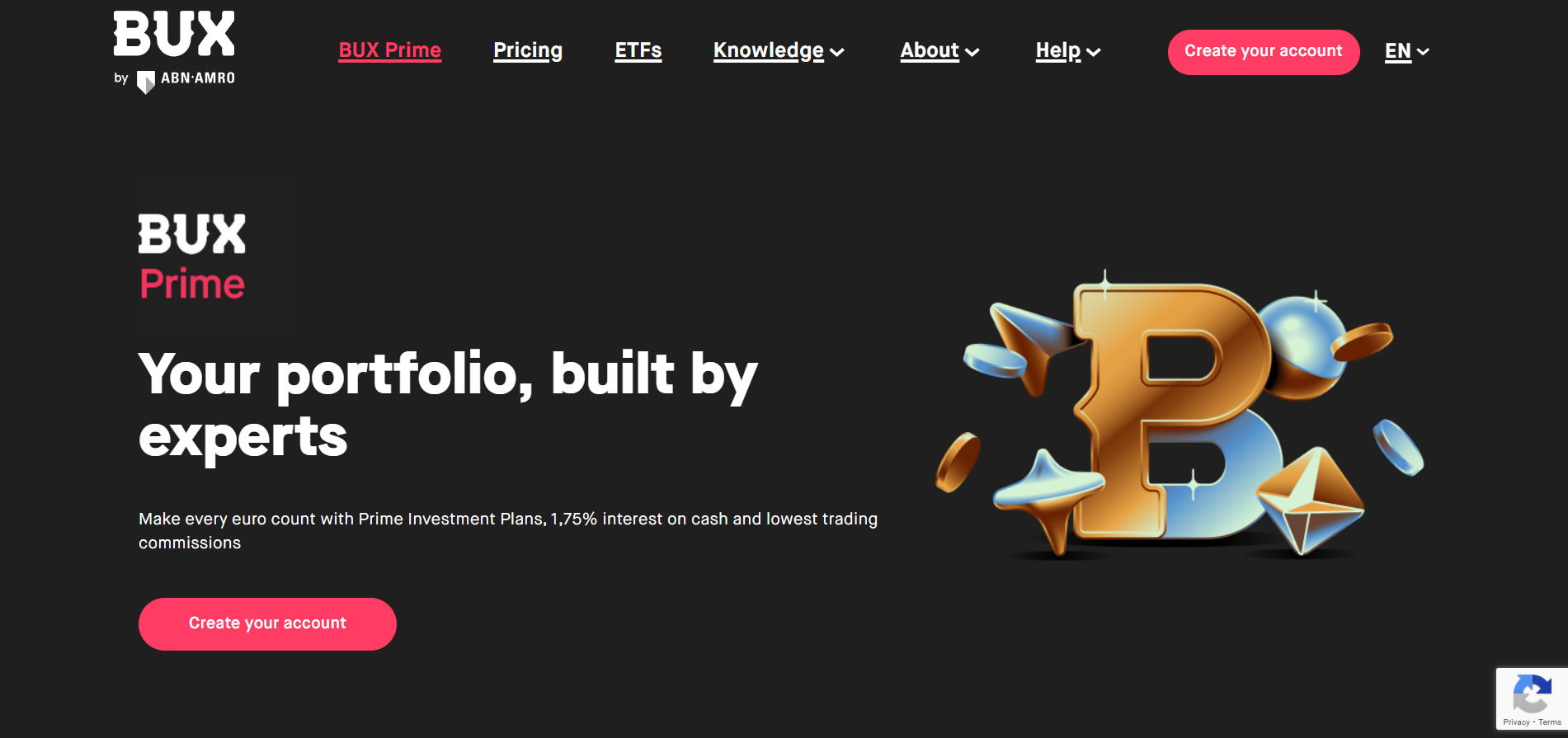
As of 2026, BUX operates on a tiered subscription model: BUX Basic (€0/month), BUX Plus (€2.99/month), and BUX Prime (€7.99/month). The monthly fee varies by plan, so it’s important to consider the long-term value and cost-effectiveness when choosing a subscription. BUX Prime is the premium option, offering lower commissions, higher interest rates on uninvested cash, and access to expert-built investment plans, making it a sophisticated and feature-rich choice for active investors. These account types differ mainly in cost structure and added perks rather than in regulatory status or trading permissions.
How to Open Your Account
- Go to the official BUX website and click “Create Account” to begin the registration process.
- Complete the initial onboarding questions as prompted.
- Review the terms and policies, then tick the box to confirm your agreement.
- Enter your personal details, including your full name, address, and contact information.
- Complete the ID verification process, which may require uploading a valid identification document.
- Fill out a short survey about your investing experience and financial knowledge.
- Review and confirm all submitted details, then submit your application for approval.
BUX Trading Platforms
BUX is a mobile-only platform, meaning all functionalities are accessible exclusively through its mobile app on iOS and Android devices. There is no dedicated desktop version of the BUX trading platform, which may limit users who prefer managing investments on a computer. BUX offers a mobile-focused trading experience built around simplicity and ease of use. The user interface is simple, intuitive, and beginner-friendly, featuring clear price charts, simple buy/sell buttons, and straightforward access to stocks, ETFs, and fractional shares. This clean layout makes it especially suitable for beginners or investors who prefer a no-nonsense interface. While BUX focuses on core investing features, it lacks advanced research and in-depth technical analysis tools. Essential market data, order history, portfolio tracking, and basic price charts are included, but advanced traders looking for sophisticated order types, real-time news feeds, or comprehensive analysis may find the platform limited compared with professional trading terminals. For most retail investors, however, BUX’s platform strikes a balance between usability and functionality.
What Can You Trade on BUX
On BUX, you can trade a range of exchange-traded assets focused on global equity markets. This includes EU stocks and American stocks from major European and US exchanges, giving you access to well-known companies across sectors. However, BUX’s investment options are limited compared to traditional brokers, offering only a select number of stocks and ETFs. BUX also offers ETFs (exchange-traded funds), which allow you to invest in diversified baskets of stocks or market segments in a single trade. For investors who want smaller, flexible positions, BUX supports fractional shares, so you can buy a portion of expensive stocks with lower capital. Note that BUX does not allow users to transfer their assets to other platforms, as fractional shares are managed through their system. In addition to stocks and ETFs, BUX may provide access to ETCs (exchange-traded commodities) and thematic investment options depending on your region and plan. While the platform focuses on equity-based products rather than derivatives or leveraged instruments, it covers the core investment vehicles most long-term and beginner investors are looking for. BUX engages in securities lending of financial instruments such as stocks and ETFs to help keep fees low, but this practice carries some risk for investors.
BUX Customer Support
BUX provides customer support to assist users with account setup, technical issues, trading questions, and general platform guidance. Support is accessible through the official help center, where you can find detailed articles, FAQs, step-by-step guides, and troubleshooting resources covering topics like deposits, withdrawals, security, verification, and trading features. The help center is searchable, making it easier to find answers without waiting for direct support.
In addition to self-help resources, BUX offers options to contact support directly through email or in-app messaging for issues that require personal assistance. Response times can vary depending on the volume of inquiries and the complexity of the question, but the support team aims to respond promptly and professionally. While more advanced brokers may offer phone support or live chat, BUX’s support channels still provide users with structured help and guidance to resolve most common issues.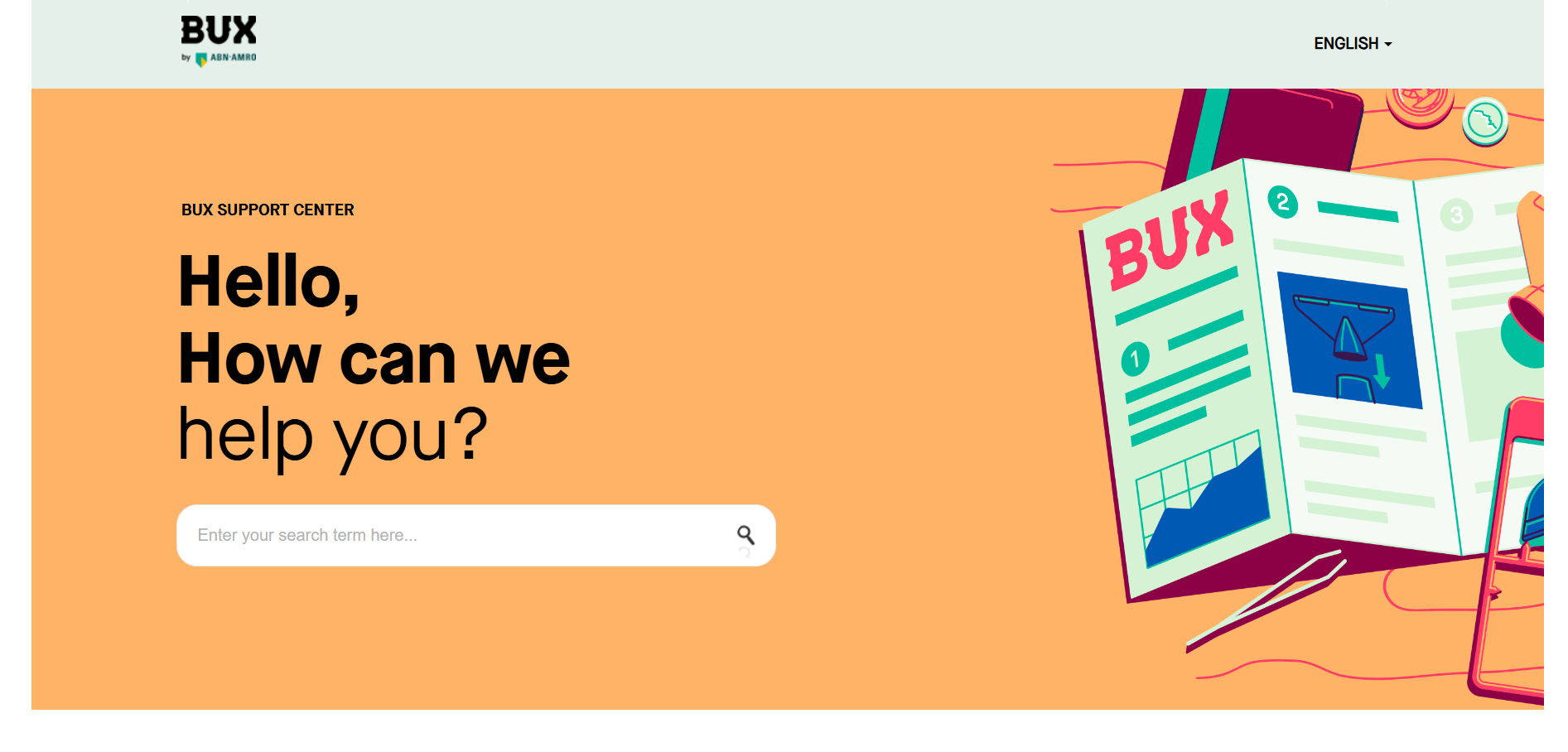
Withdrawal Options and Fees
BUX allows users to withdraw funds from their account back to a linked bank account or payment method. In most regions, withdrawals are free, meaning BUX does not charge a direct fee for transferring your money out of the platform. However, your bank or payment provider may apply its own fees depending on the currency or method used.
Available withdrawal options typically include bank transfers (SEPA) for European users, which are usually processed within a few business days. The exact processing time can vary based on the destination bank and local banking systems. It is important to check your currency and regional availability, as withdrawal methods and timing may differ by country.
Conclusion: BUX Review
BUX is a regulated, mobile-first stock broker designed for investors who want straightforward access to European and US stocks and ETFs without complex trading tools. With features such as fractional shares, automated Investment Plans, and a low minimum deposit of €5, it lowers the barrier to entry for new investors. The platform operates under the supervision of the Dutch Authority for the Financial Markets (AFM), and eligible cash deposits are protected up to €100,000 under the Deposit Guarantee Scheme (DGS), adding an important layer of security.
While BUX does not provide leveraged products or advanced trading tools, it focuses on transparent pricing, simplicity, and long-term investing. Its tiered subscription model (Basic, Plus, Prime) offers flexibility depending on trading needs, and commission-free options on eligible stocks and ETFs help keep costs predictable. For beginner and intermediate investors seeking a simple, regulated, and cost-efficient way to build a stock portfolio, BUX presents a practical and accessible choice.
BUX Review FAQs
Is BUX safe?
Yes. BUX operates under AFM regulation and client deposits are protected up to €100,000 under the Deposit Guarantee Scheme (DGS). Client assets are held segregated from company funds.
Are there educational resources?
Yes. BUX offers a help center and knowledge base with guides on investing basics, platform features, risk management, and order types to help users learn.
Does BUX offer leverage or margin trading?
No. BUX focuses on non-leveraged investing in stocks and ETFs and does not offer margin trading, forex, or CFDs. OPEN AN ACCOUNT NOW WITH BUX AND GET YOUR BONUS
The verdict on BUX
BUX is a regulated, mobile-first stock broker designed for investors who want straightforward access to European and US stocks and ETFs without complex trading tools. With features such as fractional shares, automated Investment Plans, and a low minimum deposit of €5, it lowers the barrier to entry for new investors. The platform operates under the supervision of the Dutch Authority for the Financial Markets (AFM), and eligible cash deposits are protected up to €100,000 under the Deposit Guarantee Scheme (DGS), adding an important layer of security.
More stock brokers we’ve reviewed

