Learn To Trade Forex • Best Forex Trading Course • AsiaForexMentor

 English
 简体中文
简体中文 繁體中文
繁體中文 日本語
日本語 한국어
한국어 Bahasa Melayu
 Bahasa Indonesia
 Filipino
 ไทย
ไทย Tiếng Việt
 हिन्दी
 العربية
 Italiano
 Português
 Русский
 Español
 Français
- Best Forex BrokersRaw spreads, ECN execution and regulation — tested on live accounts.Best Stock BrokersCommissions, market access and platform depth, compared.Best Prop FirmsFunding rules, drawdown limits and real payout records.Best Crypto BrokersFees, custody and coin coverage across the major exchanges.AFM Top Pick
Every other site ranks ten brokers. We rank one — and show you exactly why.
See the #1 pick → - Articles
- Awards
- Events
- Newsletter
 Singapore
 Cambodia
 Myanmar
 Brunei
 Australia
  New Zealand
 Switzerland
 UAE
UAE United States
 Mexico
 Argentina
 South Africa
 IC Markets
 Pepperstone
 AvaTrade
 XM
XM Plus500
 RoboForex
 TMGM
TMGM Exness
 JustMarkets
 Orbex
Orbex Interactive Brokers
 Saxo
Saxo Tiger Brokers
 Binance
 Coinbase
 Gemini Exchange
 Kraken
 iFunds
 IC Funded
 The 5%ers
 TopStep
 IQ Option
 Pocket Option
 RaceOption
 IQCent
Hatch Invest Review 2026
Hatch Invest works best as a simple US investing platform for people who want to buy shares and ETFs without dealing with a steep learning curve. Its strongest points are the easy sign-up process, flat $3 USD brokerage fee on most trades, beginner education tools, and direct access to US-listed investments through a clean platform experience. The platform is especially appealing to newer investors who value clarity over complexity.
Risk warning: your capital is at risk. Forex and CFDs carry the potential for gains, but statistically only 11–25% of traders profit while 74–89% lose their investment. AFM earns a commission if you open an account through our links — it never changes how we score a broker.
- Easy access to US shares and ETFs Hatch is built around straightforward access to the US market through a simple online platform.
- Simple flat brokerage fee Most buy and sell orders cost $3 USD, which makes fees easier to predict.
- Beginner-friendly platform Hatch offers learning tools, guides, and a simple setup process that feels approachable for new investors.
- Direct share ownership Users get shareholder rights on whole shares and can transfer shares in or out without selling them first.
- Local customer support The platform provides access to a Wellington-based team through contact channels on its site.
- Fractional investing support Hatch says users can invest dollar amounts, which helps those starting with smaller amounts of money.
- Limited mainly to US markets Hatch is focused on US shares and ETFs, so it is not ideal for those wanting broader global market access in one place.
- Currency conversion fee applies Deposits and withdrawals include a 0.5% exchange fee, which can add up over time.
- Extra account-related charges Hatch also lists a one-off US tax fee and a small annual charge, so the $3 trade fee is not the only cost.
- Not built for advanced traders The platform is designed more for simple investing than for deep charting or complex trading features.
- Account closure is less flexible than some rivals To close an account, users need to sell investments and withdraw funds first.
- Pricing is less attractive for very frequent small moves A flat fee is easy to understand, but it can feel less efficient for users making many small transactions. This is an inference based on the stated fee structure.
- This review was written by the Asia Forex Mentor team and has been reformatted into our current layout. The analysis below is our earlier work on Hatch Invest, presented more clearly.
- It has not been re-verified against Hatch Invest’s current published terms. Spreads, fees, leverage caps and account rules change, and so does the legal entity that serves a given country.
- Treat every figure here as a starting point for your own checks rather than a live quote.
- Before depositing, confirm the details on Hatch Invest’s own site — above all, which company your client agreement names. That determines your regulator, your protections and who you can complain to.
- The score shown is Asia Forex Mentor’s own published rating for Hatch Invest, carried over from this article and expressed out of 10. It reflects our earlier assessment, not a fresh re-scoring.
Reformatted September 2026. The details in this review have not been independently re-verified since it was written, so check Hatch Invest’s own site before acting on anything here. Spotted something out of date? Tell us.

Ezekiel has traded foreign exchange for over two decades and built the One Core Program, the trading curriculum Asia Forex Mentor teaches to retail and institutional traders across Asia. He sets the scoring criteria these broker reviews are graded against.
On this page
- Hatch Invest Review
- What is Hatch Invest?
- Benefits of Trading with Hatch Invest
- Hatch Invest Regulation and Safety
- Hatch Invest Customer Reviews
- Account Types
- Hatch Invest Trading Platforms
- What Can You Trade on Hatch Invest
- Hatch Invest Customer Support
- Withdrawal Options and Fees
- Conclusion: Hatch Invest Review
- FAQs
- Verdict
Hatch Invest Review
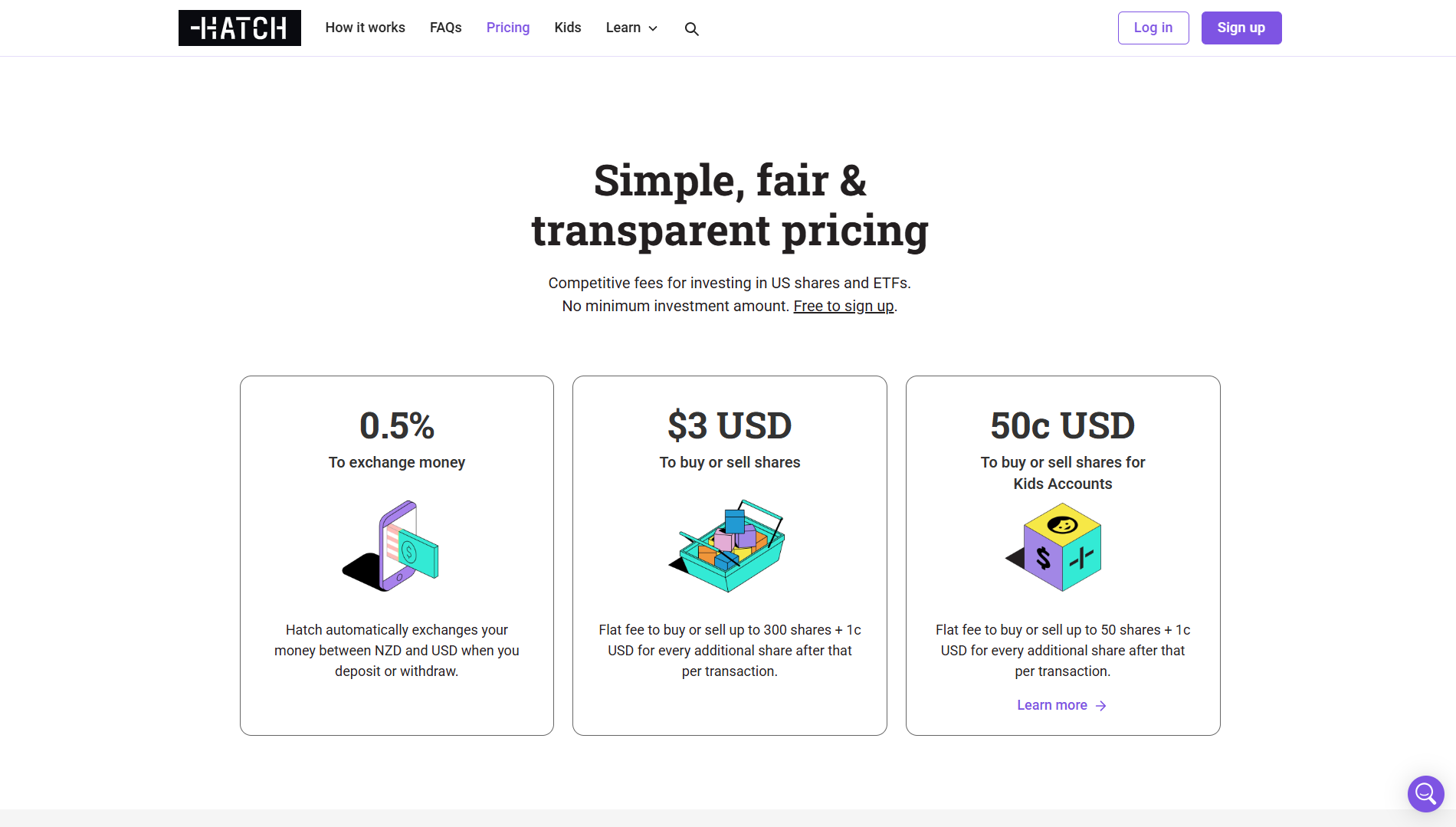
Hatch Invest is a New Zealand platform built for people who want easy access to the US market and the wider US share markets without using a complicated trading terminal. When users open their own Hatch account, they get access to US shares, exchange traded funds, and a cleaner path into the stock market through a digital platform backed by DriveWealth. A big part of the appeal is the simple fee model. Hatch says most buy and sell orders use a flat fee of $3 USD, while deposits and withdrawals include an exchange fee of 0.5%, so the main trade fees and transaction fees are easy to spot before users deposit money or withdraw money. Hatch is also built to help newer users start investing without too much friction. Users can immediately browse shares, funds, and other investment options, then get verified online with either a passport or a New Zealand driver’s licence before they buy shares in the US share markets.
What is Hatch Invest?
Hatch Invest is an online broker that gives users their own US brokerage account through DriveWealth, a US broker-dealer that carries the brokerage account accessed through Hatch. That setup gives Hatch investors a more direct route into the US market, rather than just offering price exposure through synthetic products. The platform is mainly focused on US listed shares, exchange traded funds, and fractional access to the stock market. It is meant for people who want simple investment decisions, easy account funding, and a platform that does not feel overloaded with tools meant only for experienced investors. 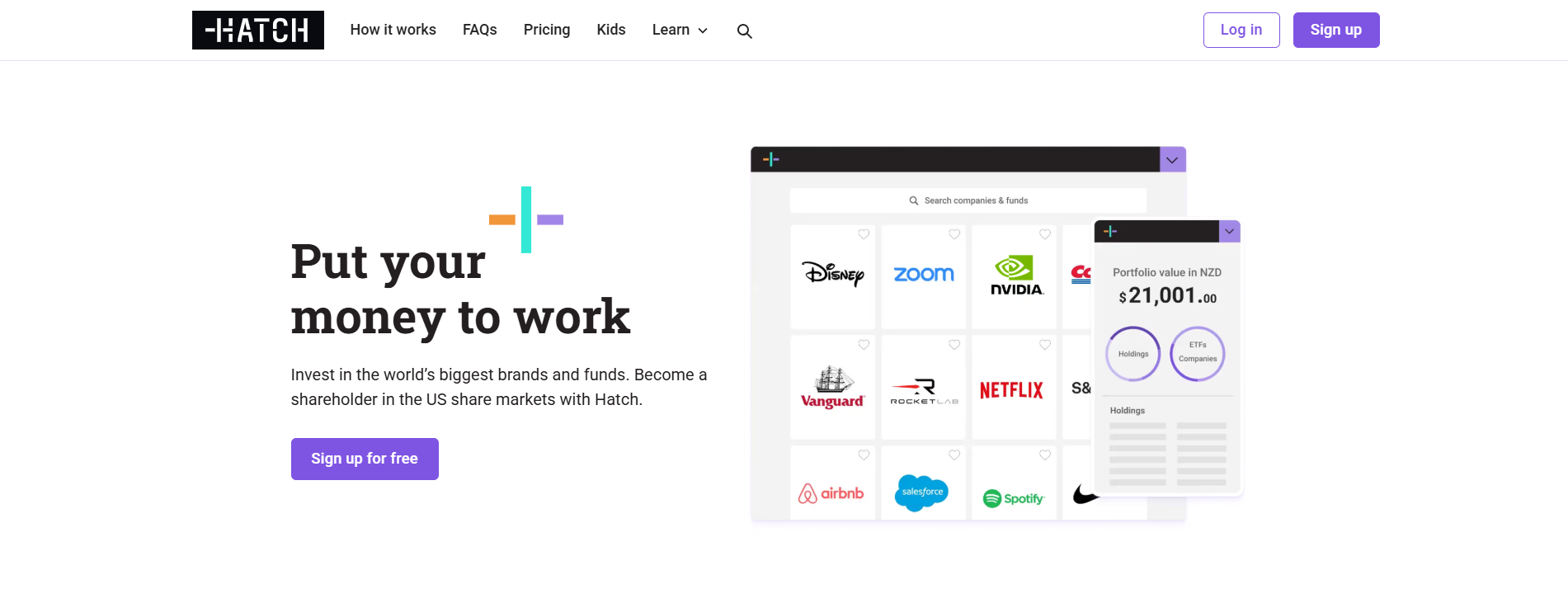
Benefits of Trading with Hatch Invest
One of the biggest benefits of trading with Hatch Invest is its simple pricing structure. According to the official website, most buy and sell orders come with a $3 USD flat fee, which makes the cost easier to understand than brokers that use more layered pricing. Another clear advantage is access to US shares and ETFs through one account. Hatch is built for people who want exposure to major global companies and funds without dealing with a platform that feels too technical or overloaded with advanced tools. Hatch also does a good job of making investing feel more beginner-friendly. Users can sign up for free, build a watchlist, and explore educational resources like LearnHub, investment news, and a free getting started course before committing money to the market. A practical benefit is that users own their shares. Hatch states that investors can vote on company matters, ask questions to company leaders, and transfer shares in or out of the platform, which gives more control than platforms that keep everything locked into a closed system. The support setup is another strong point. Hatch says its Wellington-based team is available through phone, email, and live chat, which gives users a more direct way to get help when account, funding, or platform questions come up. Funding and account setup are also designed to be straightforward. Hatch says sign-up is free, identity verification can be completed online in about three minutes, and verified users can fund their account through online banking with automatic conversion from NZD to USD. That said, the benefits are strongest for people who value convenience and easy access over advanced market coverage. Hatch is attractive for simple US investing, but traders who want broader instruments, deeper charting, or lower currency conversion costs may find the platform more limited. 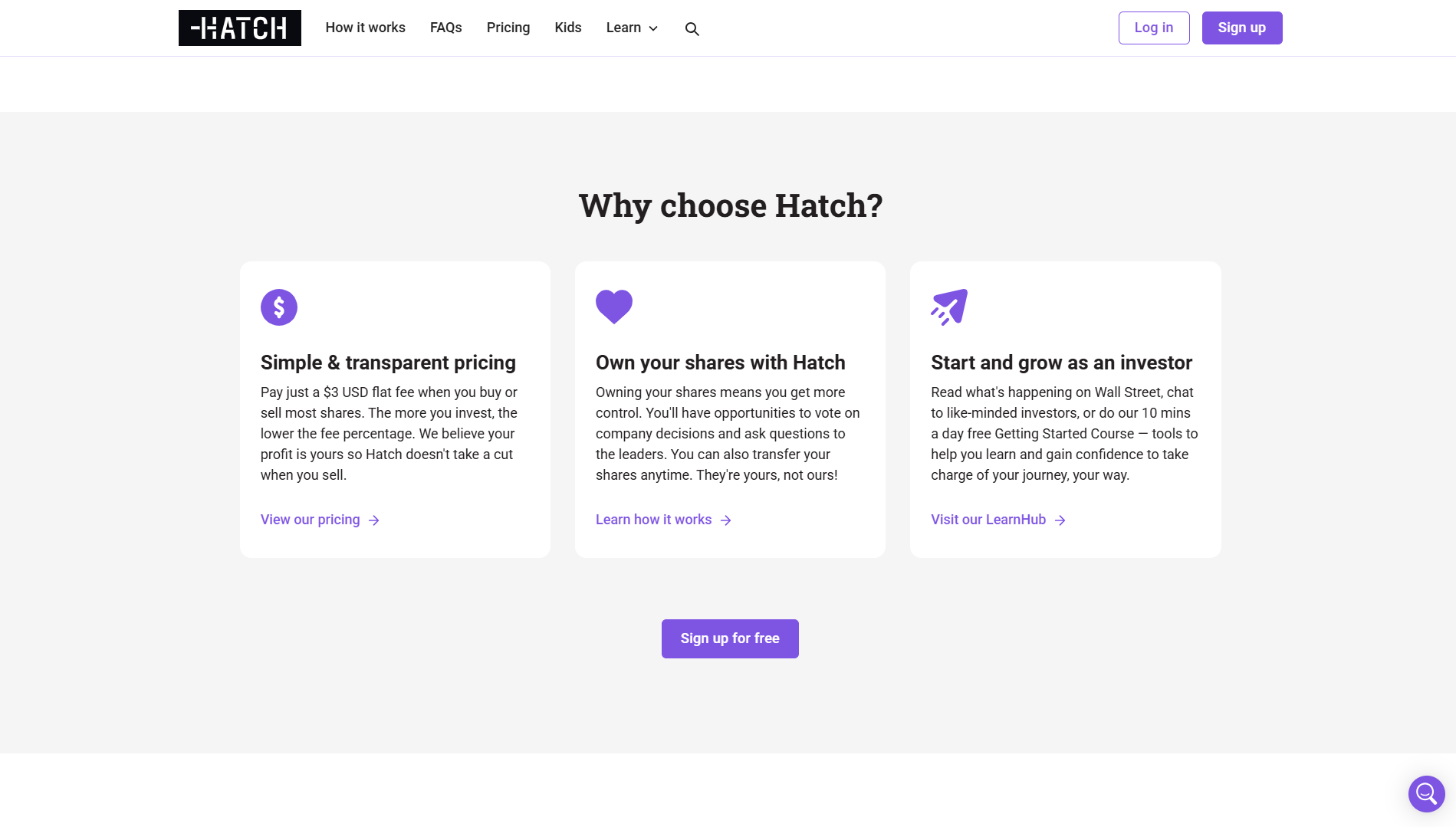
Hatch Invest Regulation and Safety
Hatch Invest presents itself as part of the FNZ Group, and its official terms page identifies the company as Hatch Invest NZ Limited. That matters because users are dealing with a named operating company rather than an anonymous trading brand. On the public record side, New Zealand’s Financial Markets Authority has referenced Hatch Invest NZ Limited as a registered company with FSP1002151 when warning consumers about an unrelated scam using a similar name. That does help confirm Hatch Invest is a real New Zealand entity, but registration alone should not be confused with a blanket promise of investment safety. When it comes to asset protection, Hatch states that it does not hold client shares directly. Instead, it provides access through DriveWealth, which it describes as a US regulated broker-dealer, while Citi acts as custodian for the shares. This setup is important because Hatch says investors still own their shares even though the holdings are kept in street name, which is standard practice in the US market. The platform also says users keep shareholder rights such as voting and can transfer shares between brokerages. For uninvested cash, Hatch says funds are swept into US bank deposit accounts administered by DriveWealth. According to Hatch’s help material, those balances have FDIC protection up to $1 million USD per account, which adds a clearer layer of protection for idle cash than vague safety claims on many platforms. For brokerage insolvency, Hatch says there is also SIPC protection in the US. Its support page states that cash and shares held through the brokerage structure may be protected up to $500,000 USD, including a $250,000 USD limit for cash, if a SIPC-member brokerage fails financially. That said, investors should keep expectations realistic. SIPC and FDIC protections are not the same as a guarantee against market losses, bad stock picks, or falling ETF prices, so they protect the custody structure rather than the performance of the investments themselves. Overall, Hatch Invest shows a credible custody framework with named partners, stated protections for cash and securities, and a clear explanation of how shares are held. The stronger part of its safety profile is the transparency around custody and insolvency protections, while the weaker part is that some users may assume registration means broader direct regulation than it actually does.
Hatch Invest Customer Reviews
Hatch Invest customer reviews show a mixed but generally favorable picture in public feedback. On Trustpilot, Hatch has a 3.8 out of 5 rating based on 6 reviews, which points to some positive user experiences but also shows that the sample size is still quite small. That small review count matters. A rating can look decent on the surface, but with only a handful of reviews, it is harder to treat it as a strong measure of long-term customer satisfaction across the full user base. From Hatch’s own website, the company highlights a 90% customer satisfaction rating and promotes its Wellington-based support team as a key part of the service. Hatch also emphasizes access through phone, email, and live chat, which suggests customer support is one of the areas it wants to lead with. This creates a useful contrast. Public review platforms currently show a limited number of outside opinions, while the company’s own site puts more weight on support quality and customer experience as part of its brand. In practical terms, Hatch Invest customer reviews do not point to a major public reputation crisis, but they also do not provide a large enough pool of feedback to fully settle the question. For now, the public review profile looks fairly solid but still light, so customer support claims on the official site carry more weight than broad third-party review volume. 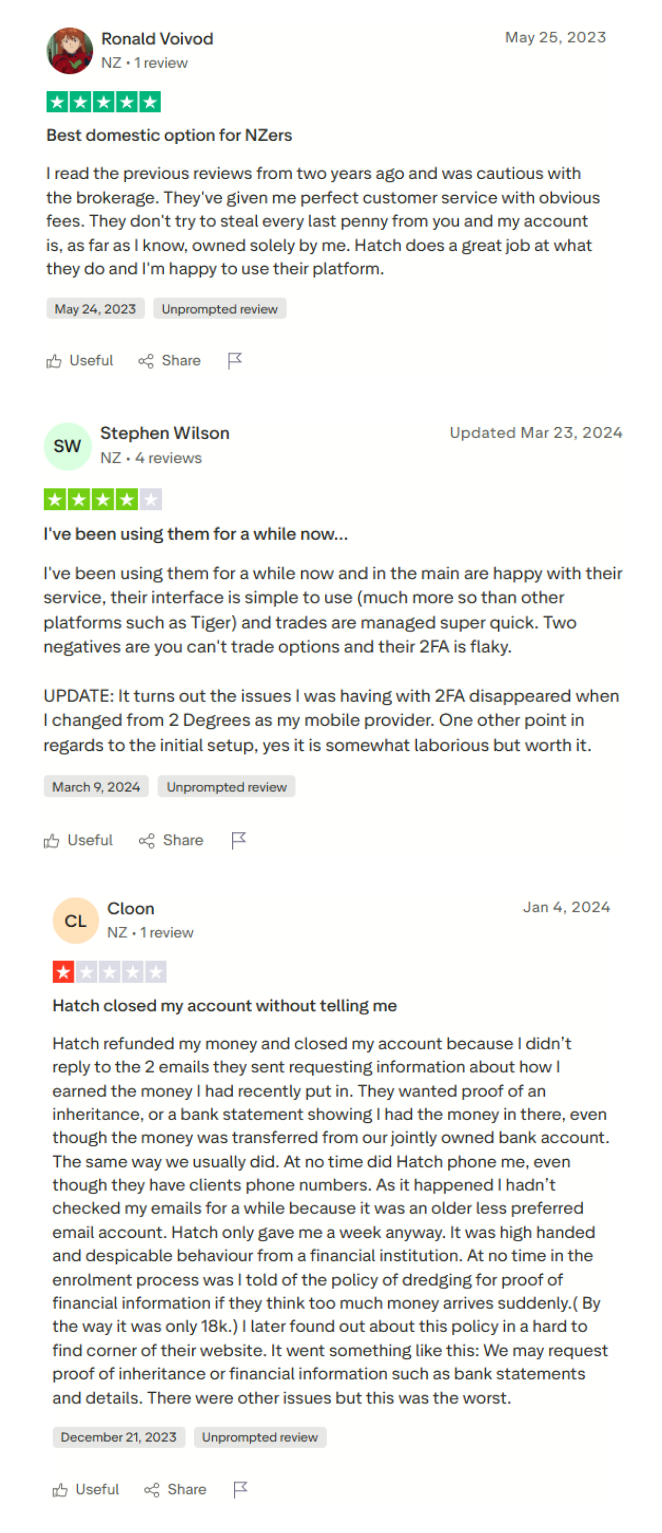
Account Types
Individual Account
- Personal investing account for buying US shares and ETFs through the Hatch platform. It is the standard account for users who want direct access to investing tools, portfolio tracking, and Hatch’s educational resources.
Hatch Kids Account
- Account designed for under-18 investors, opened by a parent or guardian through their own Hatch account. It allows families to start investing for children while the adult manages the account setup and oversight.
Trust Account
- Account for eligible family trusts that want to invest through Hatch. This account is not opened fully online, so users need to contact Hatch and provide trust documents before the account can be created.
Hatch Invest Trading Platforms
Hatch Invest keeps its platform offering simple and focused rather than trying to be an all-in-one trading terminal. The service is built around a digital investing platform that gives users access to US shares and ETFs, with tools aimed more at everyday investors than at high-frequency or advanced technical traders. The main Hatch experience is its web-based platform. On the official site, Hatch says users can sign up for free, browse investments, add them to watchlists, and set price alerts, which makes the platform practical for tracking ideas before making a trade. Hatch also presents itself as a platform designed for ease of use. Its interface is built around searching for shares and ETFs, funding an account in NZD, and then investing in USD, so the workflow is straightforward for people who want access to the US market without dealing with a more complex trading dashboard. Another platform strength is that Hatch supports watchlists and price alerts. These are useful features for users who are still learning or who prefer to monitor stocks and ETFs over time instead of placing constant short-term trades. Hatch also puts a lot of weight on its educational tools as part of the platform experience. The company promotes resources such as LearnHub and its free beginner investing course, which gives the platform a more supportive feel than brokers that focus only on execution. That said, Hatch is not positioned as a platform for advanced trading tools. Its public materials focus on beginner investing, simple access, and long-term wealth building, while its own content also highlights the risks of day trading, which gives a good sense of the type of user the platform is actually built for. In terms of usability, the stronger point is convenience. The weaker point is depth, because traders looking for highly detailed charting, wide instrument coverage, or a professional-grade trading terminal may find the Hatch platform too light for that style of trading. This last point is an inference from Hatch’s stated features and positioning.
What Can You Trade on Hatch Invest
Hatch Invest gives access to US shares, exchange traded funds, and ADRs listed across major US exchanges. That means users can buy into individual companies, sector funds, index funds, and some foreign shares that trade in the US through ADR structures. The platform also supports fractional shares, which helps people buy companies with high share prices using smaller amounts of US dollars. Users can buy shares, sell shares, and add companies to a watchlist without needing a large starting balance.
Hatch Invest Customer Support
Hatch Invest puts a lot of attention on human support, and that is one of the clearer strengths on its website. The company says users can reach its Wellington-based team through phone, email, or live chat, which gives the platform a more approachable feel than brokers that rely heavily on automated help only. The official site also highlights a 90% customer satisfaction rating. That does not answer every question about service quality, but it does show that customer experience is a visible part of Hatch’s brand rather than an afterthought. Another useful part of Hatch customer support is its Help Centre. The company provides articles covering account opening, deposits, withdrawals, pricing, taxes, transfers, and other common issues, which can save users time before they need to contact support directly. Hatch also supports users through its broader education tools. LearnHub, the Getting Started Course, and investment news content give beginners extra guidance, so support is not limited only to solving account problems after they happen. This matters because Hatch is clearly built for people who may be newer to US share investing. A platform like that benefits from having both direct contact channels and self-service resources, and Hatch appears to offer both in a fairly accessible way. The stronger side of Hatch Invest customer support is the mix of real-person contact and educational backup. The weaker side is that the official site does not clearly publish fixed support hours on the homepage, so users may still need to reach out first to understand response timing in practice. 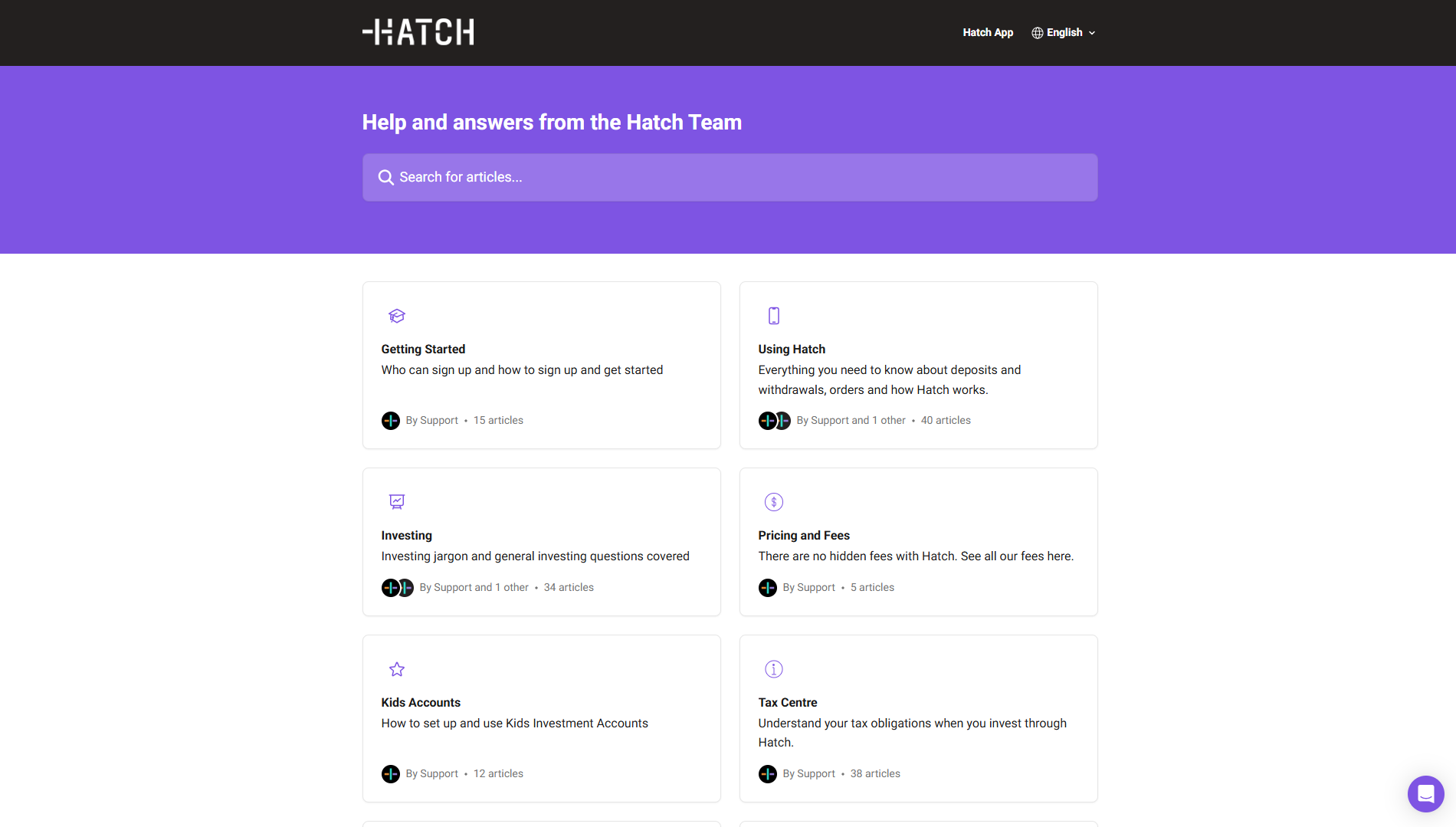
Withdrawal Options and Fees
Hatch Invest keeps withdrawals fairly simple, but the process is closely tied to its foreign exchange system. When users withdraw money, Hatch automatically converts USD back into NZD, and the main cost is the platform’s 0.5% exchange fee rather than a separate flat withdrawal charge. One useful point is that Hatch says there are no hidden extra withdrawal fees on top of that exchange cost. The fee is built into the exchange rate shown inside the platform, so users are not charged an extra minimum withdrawal fee just for taking money out. In terms of withdrawal options, Hatch currently says withdrawals can only be sent to NZ-registered bank accounts. That makes the process more straightforward for local users, but it also means the platform is less flexible for anyone expecting multiple payout methods such as cards, e-wallets, or international bank destinations. Hatch also makes clear that users can request a withdrawal at any time through their account. Before confirming the request, the platform shows an estimated exchange rate, although Hatch notes that the final rate may differ slightly because foreign exchange prices move between the request time and the actual booking of the exchange. The cost structure is easy enough to understand, but it still matters in practice. A 0.5% FX fee on every deposit and every withdrawal can feel manageable for occasional investors, yet it becomes more noticeable for users moving money in and out of the platform more often. This last point is an inference from Hatch’s published fee structure. For larger deposits, Hatch says special exchange rates may apply once funding passes certain thresholds, but the public information shown in the help centre refers to deposits, not standard retail withdrawals. That means most users should expect the normal withdrawal process to follow the regular published FX fee unless Hatch states otherwise inside the account. Overall, Hatch Invest’s withdrawal system is strongest in clarity, not flexibility. It is easy to understand, there is no extra hidden withdrawal charge, and the process is built directly into the account, but the NZ bank-only option and ongoing FX conversion cost are still real limits to keep in mind.
Conclusion: Hatch Invest Review
Hatch Invest works best as a simple US investing platform for people who want to buy shares and ETFs without dealing with a steep learning curve. Its strongest points are the easy sign-up process, flat $3 USD brokerage fee on most trades, beginner education tools, and direct access to US-listed investments through a clean platform experience. The platform is especially appealing to newer investors who value clarity over complexity. Hatch offers free account opening, educational support through LearnHub and its Getting Started Course, and a straightforward funding flow that converts NZD into USD automatically for investing. At the same time, Hatch is not built to be everything for everyone. The product range is centered on US shares, ETFs, and ADRs, so traders looking for forex, crypto, commodities, options, or highly advanced trading tools will likely find the platform too narrow for that style of use. Costs also need to be looked at properly, not just through the headline trade fee. While the brokerage pricing is easy to understand, Hatch also applies a 0.5% exchange fee on deposits and withdrawals, along with a one-off US tax setup fee and a small annual tax-related charge, so the full cost is higher than the trade ticket alone suggests. One of the better parts of the service is that users own their shares and can transfer them, which gives the platform more substance than an app that only offers exposure without ownership. The support side is also a positive, with Hatch highlighting real human support through phone, email, and live chat from its Wellington-based team. Hatch also feels more suitable for steady investors than for frequent movers of capital. Withdrawals are available, but they route back through NZ bank accounts and still carry the exchange cost, which makes the platform more practical for longer-term investing than for constant in-and-out activity. For users who want a low-friction path into US stock market investing, Hatch Invest is a strong and accessible option. For users who want broader markets, sharper trading tools, or lower ongoing currency friction, the limitations are easier to notice.
Hatch Invest Review FAQs
Is Hatch Invest good for beginners?
Yes, Hatch Invest is clearly built to be beginner-friendly. The platform offers free sign-up, a simple online verification process, watchlists, and learning tools like LearnHub and a free Getting Started Course, which makes it easier for new investors to get comfortable before buying shares.
What can you invest in with Hatch Invest?
Hatch Invest gives users access to US shares and ETFs, which is the core of the platform. The official site says users can invest in individual companies, exchange-traded funds, and also transfer their US shares in or out of the platform if needed.
How much does Hatch Invest cost?
Hatch keeps its pricing fairly simple. According to the official site, sign-up is free, most buy and sell orders cost $3 USD, and users pay a 0.5% exchange fee when depositing or withdrawing money because funds are converted between NZD and USD. OPEN AN ACCOUNT NOW WITH HATCH INVEST AND GET YOUR BONUS
The verdict on Hatch Invest
Hatch Invest works best as a simple US investing platform for people who want to buy shares and ETFs without dealing with a steep learning curve. Its strongest points are the easy sign-up process, flat $3 USD brokerage fee on most trades, beginner education tools, and direct access to US-listed investments through a clean platform experience. The platform is especially appealing to newer investors who value clarity over complexity.
More stock brokers we’ve reviewed

