Learn To Trade Forex • Best Forex Trading Course • AsiaForexMentor

 English
 简体中文
简体中文 繁體中文
繁體中文 日本語
日本語 한국어
한국어 Bahasa Melayu
 Bahasa Indonesia
 Filipino
 ไทย
ไทย Tiếng Việt
 हिन्दी
 العربية
 Italiano
 Português
 Русский
 Español
 Français
- Best Forex BrokersRaw spreads, ECN execution and regulation — tested on live accounts.Best Stock BrokersCommissions, market access and platform depth, compared.Best Prop FirmsFunding rules, drawdown limits and real payout records.Best Crypto BrokersFees, custody and coin coverage across the major exchanges.AFM Top Pick
Every other site ranks ten brokers. We rank one — and show you exactly why.
See the #1 pick → - Articles
- Awards
- Events
- Newsletter
 Singapore
 Cambodia
 Myanmar
 Brunei
 Australia
  New Zealand
 Switzerland
 UAE
UAE United States
 Mexico
 Argentina
 South Africa
 IC Markets
 Pepperstone
 AvaTrade
 XM
XM Plus500
 RoboForex
 TMGM
TMGM Exness
 JustMarkets
 Orbex
Orbex Interactive Brokers
 Saxo
Saxo Tiger Brokers
 Binance
 Coinbase
 Gemini Exchange
 Kraken
 iFunds
 IC Funded
 The 5%ers
 TopStep
 IQ Option
 Pocket Option
 RaceOption
 IQCent
Wealthfront Review 2026
Wealthfront works best as a stock broker for long-term investors who want a clean way to buy and hold stocks and ETFs without getting pushed into constant trading. It supports building an own portfolio, and the platform stays focused on simple execution instead of advanced trading tools. For fees, the Stock Investing Account is positioned as low-cost, while the managed side offers automated investment accounts that can add portfolio structure and potential tax savings for investors who want a more hands-off approach.
Risk warning: your capital is at risk. Forex and CFDs carry the potential for gains, but statistically only 11–25% of traders profit while 74–89% lose their investment. AFM earns a commission if you open an account through our links — it never changes how we score a broker.
- Zero commissions for stock and ETF trades, which helps keep costs low.
- $1 minimum to start investing, so it is beginner-friendly.
- Fractional shares supported, making it easier to buy higher-priced stocks in smaller amounts.
- Built for long-term investing, with “zero distractions” aimed at reducing frequent trading.
- Brokerage services offered by Wealthfront Brokerage LLC, a FINRA and SIPC member, which supports trust and legitimacy as a stock broker.
- Strong cash management options like the Wealthfront Cash Account with a stated 3.30% APY and FDIC insurance through program banks (useful for uninvested funds).
- Automated investing has a simple 0.25% advisory fee, which may appeal to hands-off investors who still want stock market exposure.
- Wealthfront’s stock investing is positioned for investing, not active trading, so advanced day-trading tools may feel limited.
- Some key features are tied to managed products, and automated investing carries a 0.25% annual fee, which can be a downside for fee-sensitive investors.
- The Cash Account is not a bank account, and cash is swept to partner banks, which can confuse people expecting a traditional bank setup.
- Cash APY is variable, so the rate can change over time based on market conditions.
- SIPC protection is not the same as protection from market losses, so investing risk still applies even with a regulated broker.
- This review was written by the Asia Forex Mentor team and has been reformatted into our current layout. The analysis below is our earlier work on Wealthfront, presented more clearly.
- It has not been re-verified against Wealthfront’s current published terms. Spreads, fees, leverage caps and account rules change, and so does the legal entity that serves a given country.
- Treat every figure here as a starting point for your own checks rather than a live quote.
- Before depositing, confirm the details on Wealthfront’s own site — above all, which company your client agreement names. That determines your regulator, your protections and who you can complain to.
- The score shown is Asia Forex Mentor’s own published rating for Wealthfront, carried over from this article and expressed out of 10. It reflects our earlier assessment, not a fresh re-scoring.
Reformatted September 2026. The details in this review have not been independently re-verified since it was written, so check Wealthfront’s own site before acting on anything here. Spotted something out of date? Tell us.

Ezekiel has traded foreign exchange for over two decades and built the One Core Program, the trading curriculum Asia Forex Mentor teaches to retail and institutional traders across Asia. He sets the scoring criteria these broker reviews are graded against.
On this page
- Wealthfront Review
- What is Wealthfront?
- Benefits of Trading with Wealthfront
- Wealthfront Regulation and Safety
- Wealthfront Customer Reviews
- Wealthfront Spreads, Fees, and Commissions
- Account Types
- Wealthfront Trading Platforms
- What Can You Trade on Wealthfront?
- Wealthfront Customer Support
- Withdrawal Options and Fees
- Conclusion: Wealthfront Review
- FAQs
- Verdict
Wealthfront Review
A good stock broker makes investing feel simple and safe by offering regulated access to the market, clear pricing, and an easy way to buy stocks and ETFs without hidden surprises. The best platforms keep fees transparent, provide reliable trade execution, and include basic tools that help investors stay focused on long-term goals instead of chasing hype. Most importantly, a good broker protects clients with strong security, straightforward account support, and a clean experience that builds confidence from the first deposit to the first trade.
Wealthfront is best known for automated investing, but it also operates as a brokerage through Wealthfront Brokerage LLC, a FINRA and SIPC member. That matters because it signals the platform is structured around investor protections and standard oversight, which is a key checkpoint when choosing a stock broker. This regulation angle supports trust for people who want a broker that feels stable and built for long-term plans. Wealthfront offers a Stock Investing experience designed for long-term investing, not rapid-fire trading. It promotes zero commissions and the ability to start with as little as $1, which lowers the barrier for new investors who want real market exposure. Wealthfront also supports ETFs alongside individual stocks, which can help build a more diversified portfolio without needing to pick dozens of companies. Where Wealthfront stands out is the way it blends stock investing with investment management and personal finance tools. Instead of leaving investors on their own after buying stocks, the platform is built around a broader “wealth management” approach, including automated portfolios, tax-aware features, and a structured way to stay consistent. This matters because many people do not fail from picking the wrong stock, they fail from having no plan. This in-depth review of Wealthfront takes a close look at what the platform offers as a modern investment broker, including its core account features, how its fees and costs work, and the types of investments available for building a portfolio. It also covers the platform’s regulatory standing and what that means for investor protection, so it is easier to judge how Wealthfront fits into a serious, long-term investing approach. Beyond the basics, this review breaks down Wealthfront’s broader services and tools that can affect real investing outcomes, such as portfolio options, automation features, and how the overall experience supports different investor goals.
What is Wealthfront?
Wealthfront is a digital investing platform that offers stock brokerage services built for people who want a simple way to invest for the long term. Its brokerage products and services are provided through Wealthfront Brokerage LLC, a FINRA and SIPC member, which matters for investors who care about working with a regulated broker. Wealthfront lets investors buy individual stocks and ETFs with zero commissions, and it supports getting started with as little as $1.
Wealthfront also works as a robo-advisor, offering automated investing portfolios that are built and managed with set rules instead of constant manual decisions. These automated portfolios are commonly built around diversified holdings like index funds, which are designed to track broad markets instead of relying on one stock to carry performance. This setup is often used by investors who want consistency without spending hours managing every move. Wealthfront supports features that many modern brokers include, such as fractional shares, which can help investors buy into higher-priced companies without needing a big budget. It also promotes ready-made “collections” to make stock and ETF picking faster for everyday investors. For many investors, this helps turn “I want to start investing” into real action without getting overwhelmed. In terms of broader investment services, Wealthfront positions itself as more than a place to trade. It offers tools and portfolios meant to support long-term planning, including options that can provide exposure to different market areas like emerging markets through ETFs and diversified fund holdings. That can be useful for investors who want global diversification instead of being concentrated in one market. Wealthfront started in 2008 and originally launched under the name kaChing before shifting toward digital wealth management and later building out stock investing. Over time, it expanded from automated portfolios into a broader platform that includes stock and ETF investing tools aimed at long-term users.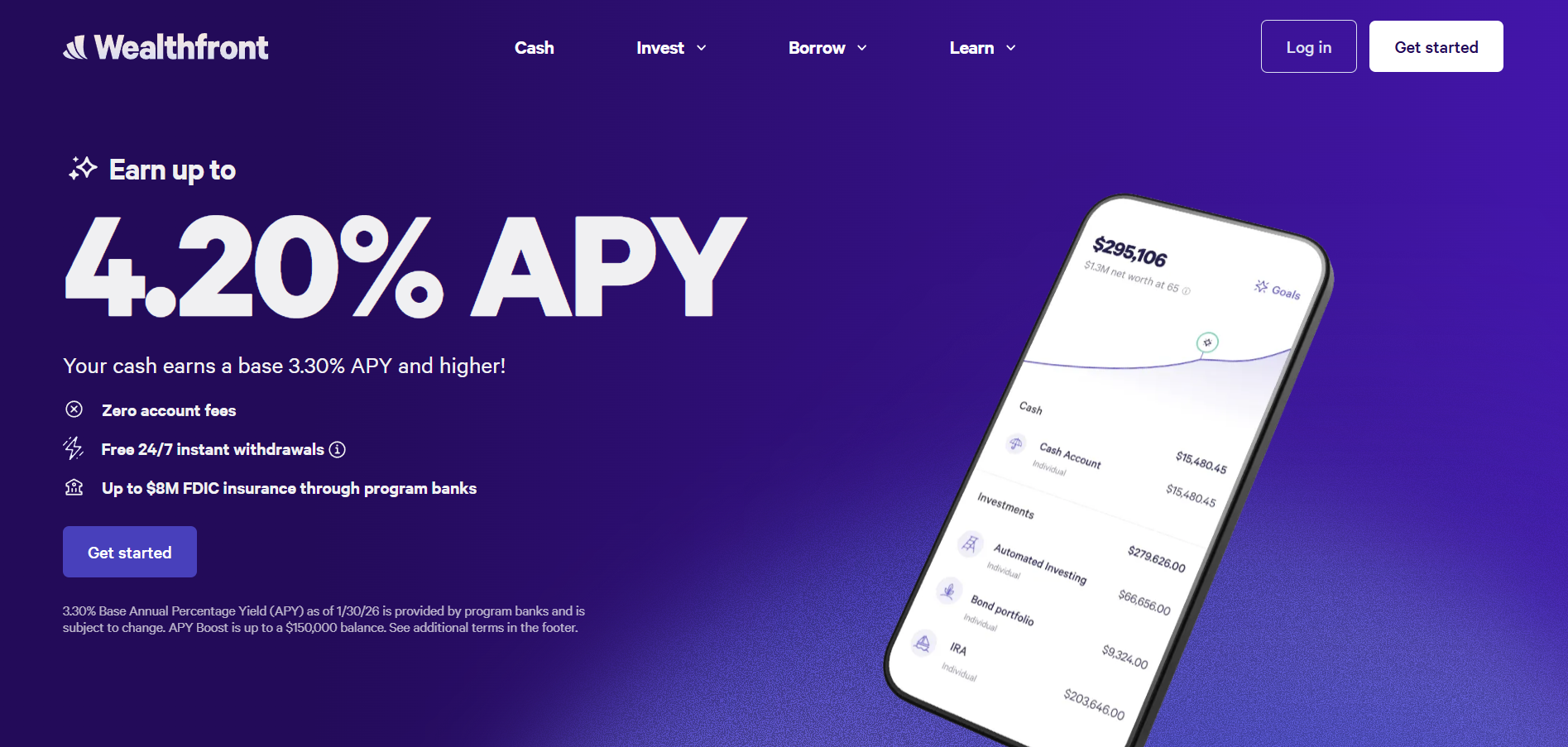
Benefits of Trading with Wealthfront
A key benefit of using Wealthfront as a stock broker is that the Stock Investing experience is built for long-term investing, not fast, impulsive trading. The platform pushes a simple layout with zero distractions, which can help investors avoid overtrading and stay consistent with a plan.
Cost is another major advantage for everyday investors. Wealthfront promotes zero commissions and a $1 minimum to start, which lowers the barrier for building a stock and ETF portfolio. It also supports fractional shares, so higher-priced stocks can be bought in smaller amounts, making it easier to diversify without a large deposit. Wealthfront states the Stock Investing Account is free, and it says it does not accept Payment for Order Flow (PFOF), which some investors prefer for transparency. Its brokerage services are provided through Wealthfront Brokerage LLC, a FINRA and SIPC member, which supports the idea that this is a regulated broker-dealer setup. That matters for investors who want a broker that feels more established and rules-based. Wealthfront is more than a basic broker because it also offers automated investing and structured planning tools. It supports building an own portfolio through stock and ETF investing, while also offering managed options for investors who prefer a more hands-off approach. This makes it easier to match investing decisions to real financial goals, like growing long-term wealth instead of chasing short-term moves. Wealthfront is known for automation, but it also offers ways to get help from human financial advisors through its planning and guidance resources, depending on the service and eligibility. This can matter to investors who want a real person to clarify decisions, especially around long-term strategy and goal planning. It is also important to keep expectations realistic around future performance. Wealthfront can offer a structure, automation, and diversification tools, but no broker or robo-advisor can guarantee returns because markets move based on risk and uncertainty. What Wealthfront can do is help investors follow a disciplined approach, using diversified portfolios and index-based exposure that aims to reduce common mistakes that harm long-term results. Wealthfront also offers a large library of learning content through its blog, plus deeper research-style resources like whitepapers that explain strategies and methodology. This includes explainers on topics like direct indexing and tax-focused investing concepts, which can help investors understand why a strategy exists instead of blindly following it.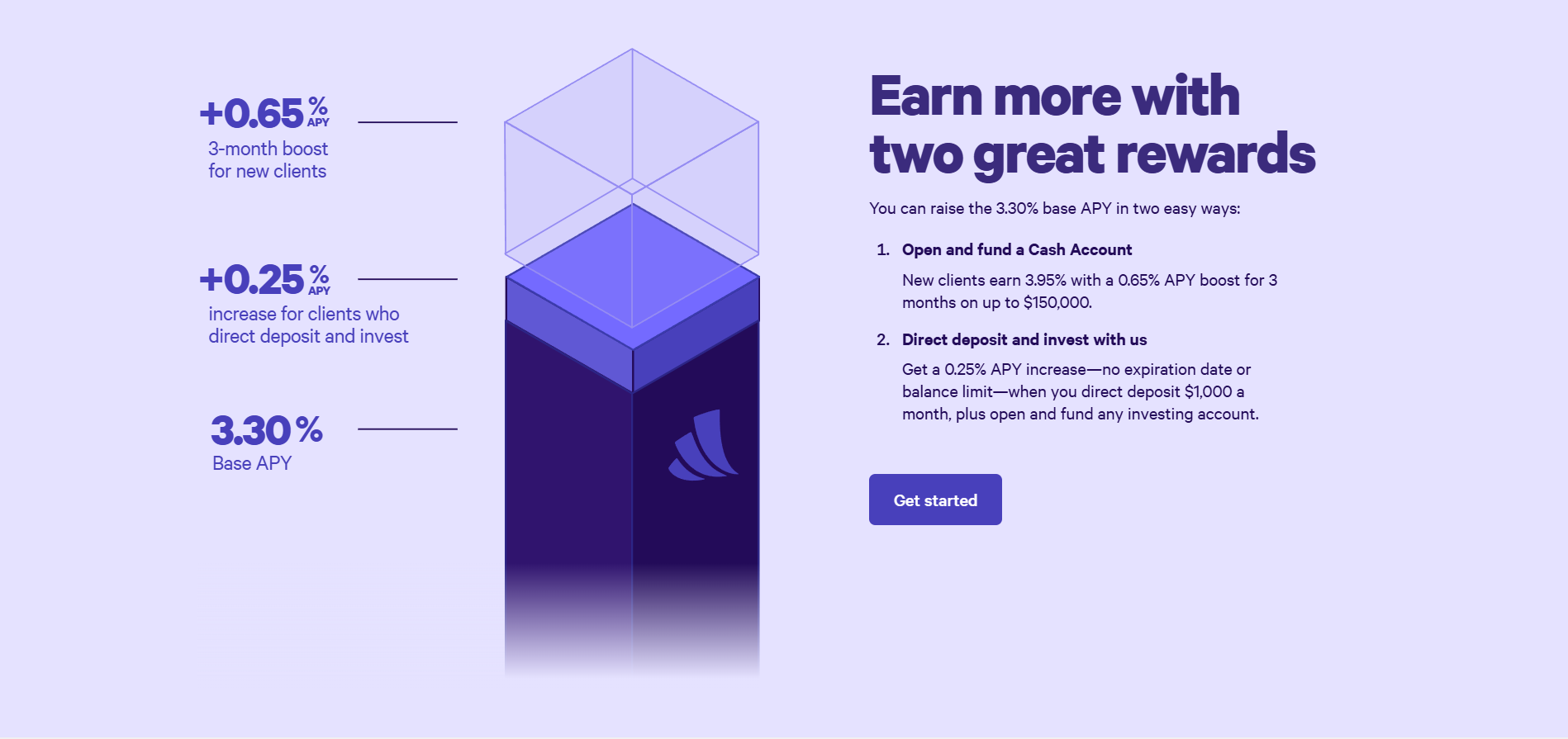
Wealthfront Regulation and Safety
Wealthfront operates as a regulated stock brokerage through Wealthfront Brokerage LLC, which it states is a FINRA and SIPC member. This matters because it places the brokerage under standard broker-dealer oversight, and the firm can be verified through FINRA BrokerCheck, which is a practical way to review background information and registration details. Wealthfront highlights SIPC membership, which is meant to help protect customer securities and cash held at a broker-dealer if that broker fails, but it does not protect against investment losses from market moves. That is why an investor’s risk tolerance still matters, since stock and ETF prices can drop even when the broker is regulated and security controls are strong. For cash held through Wealthfront’s cash setup, the platform describes FDIC insurance coverage through partner banks for eligible cash balances, which is different from SIPC and applies to cash banking protection rather than market performance. From a safety perspective, Wealthfront also supports two-factor authentication and describes encryption and internal safeguards, which help protect accounts and total assets from unauthorized access, even though they cannot remove market risk.
Wealthfront Customer Reviews
When looking at Wealthfront customer reviews, the biggest theme is not about stock picks or performance, but about the day-to-day broker experience.
A repeated complaint is account access issues, where reviewers say they were locked out, had trouble logging in, or felt stuck waiting for support while money was in the account. Some reviews also mention frustration with customer service, describing slow replies or unhelpful interactions when problems happened. Another concern raised in reviews is card fraud and disputes, with users describing unauthorized charges and a process that felt stressful while waiting for funds to be returned. While these comments often focus on the cash and card side, they still affect trust for anyone treating Wealthfront like a primary place to hold investing money.
Wealthfront Spreads, Fees, and Commissions
Wealthfront is a modern stock broker built for long-term investing, so the cost structure focuses on keeping trading simple and transparent. For its Stock Investing Account, Wealthfront says it charges no commissions and no account fees, which can make it attractive for investors who want to buy and hold stocks and ETFs without paying a per-trade charge.
Wealthfront does not publish a fixed “spread” like a CFD or forex broker because stock investing uses market pricing. The main trade-related cost that can still exist is the bid-ask spread, which is the gap between the price buyers offer and the price sellers accept, and it can be wider on less liquid stocks. Even if commissions are zero, spreads can still affect the final fill price, especially when markets are moving fast or when an order size is large relative to available liquidity. Wealthfront itself notes that heavier trading can increase bid-ask spread costs and cause executions beyond the spread in certain conditions. Wealthfront states the Stock Investing Account is free, meaning no trading commissions and no Wealthfront account fees charged to the client for that account. It also says it does not accept Payment for Order Flow (PFOF), which some investors prefer because it can reduce concerns about trade routing incentives. If using Wealthfront’s automated and managed investing products, fees work differently because those accounts include ongoing portfolio management. Wealthfront lists an annual advisory fee of 0.25% for its Automated Investing Account, and it also lists lower advisory fees for certain direct-indexing portfolios like S&P 500 Direct. Wealthfront’s tax-loss harvesting strategy involves selling ETFs at a loss and replacing them with highly correlated ETFs to maintain portfolio risk and return profiles.
Account Types
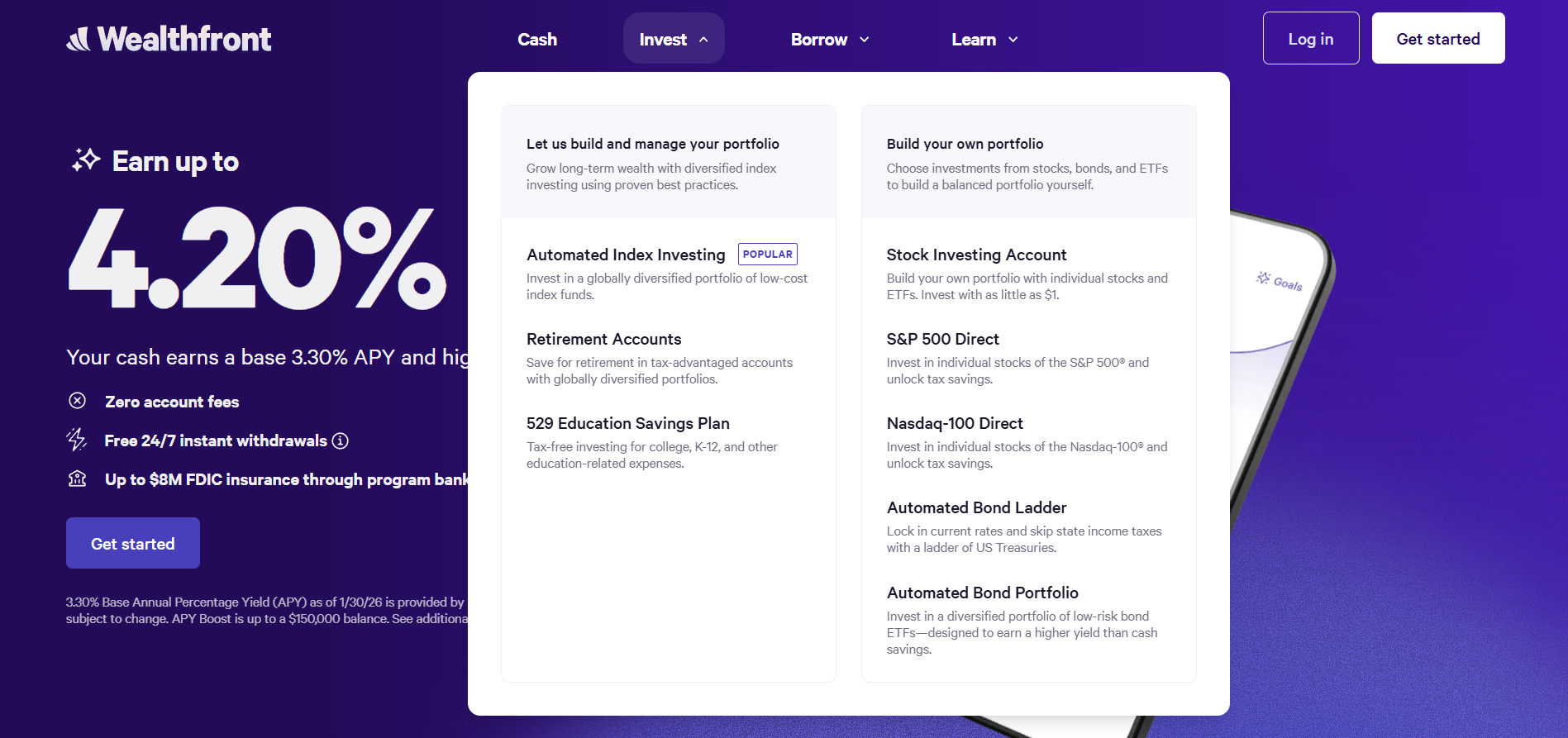
Wealthfront offers several investing account types that can be used to build a stock and ETF portfolio, either by picking holdings directly or by using automated portfolios. Below are the main Wealthfront account types that matter most when the goal is stock investing through a broker
Stock Investing Account (Taxable Brokerage)
- Buy individual stocks and ETFs
- Zero commissions on trades
- Start with $1 minimum
- Built for long-term investing with fewer trading distractions
- Supports fractional shares
Automated Investing Account (Managed Taxable Brokerage)
- Wealthfront builds and manages a diversified portfolio (includes stock and ETF exposure)
- Automatic rebalancing and ongoing portfolio management
- Designed for hands-off investors who still want market exposure
S&P 500 Direct Portfolio (Managed Taxable Brokerage)
- Direct indexing style approach tied to the S&P 500, giving broader stock-level exposure
- Managed portfolio with automation designed for long-term investing
Nasdaq-100 Direct Portfolio (Managed Taxable Brokerage)
- Direct indexing style approach tied to the Nasdaq-100, focused on stock exposure in that index
- Managed portfolio with automation designed for long-term investing
How to Open Your Account
- Go to Wealthfront and click Get started. This takes you to the account setup flow where Wealthfront begins collecting basic details to create and secure the profile.
- Choose the right account type, then select Invest in stocks. This step is where the Stock Investing path begins, and Wealthfront notes that the Stock Investing Account is currently an individual, taxable account.
- Complete the short questionnaire. Wealthfront uses this to build a basic profile, and answers can be updated later if something changes. You can also input a referral code.
- Open a Cash Account if prompted, since it is required for stock investing. Wealthfront states that a Wealthfront Cash Account is needed to invest in a Stock Investing Account, which is an important setup step before placing trades.
- Fund the account and start investing in stocks and ETFs. Wealthfront notes that investing can start with as little as $1, which keeps the entry point simple for new investors.
Wealthfront Trading Platforms
The Wealthfront trading platform is a mobile-first investing experience built for people who want a simple stock broker app for long-term investing. Instead of aiming at active traders, it focuses on helping investors buy and hold stocks and ETFs with fewer distractions.
It also connects closely with Wealthfront’s Cash Account, which functions like a high-yield savings account alternative for parking uninvested money while staying ready to invest. On top of trading, the app includes financial planning tools that help track goals and manage money alongside investing, so the platform feels more like an all-in-one personal finance hub than a trading-only app.
What Can You Trade on Wealthfront?
On Wealthfront, the main things to trade are individual stocks and ETFs, which is why many investors view it as a simple stock broker for long-term investing. Wealthfront promotes its Stock Investing Account as built for stock and ETF investing with zero commissions and a low starting point. Wealthfront allows clients to buy and sell individual stocks through its Stock Investing Account. Wealthfront also confirms that individual stocks can be held in stock-focused products like the Stock Investing Account and direct indexing portfolios. ETFs are a core part of Wealthfront’s stock-broker offering, both for self-directed stock investing and for diversified investing setups. Wealthfront’s own support resources list ETFs available for investing accounts, which is useful for investors who prefer ETF-based portfolios. Wealthfront supports fractional shares for stocks and ETFs, meaning an investor can buy a portion of a share based on a chosen dollar amount. This is helpful for higher-priced stocks and for smoother diversification with smaller deposits. Wealthfront does not position itself as a direct crypto exchange, but it does offer crypto exposure through specific cryptocurrency ETFs, including BlackRock’s iShares IBIT and ETHA according to its support page. For stock-broker users, this means crypto exposure is accessed in an ETF format instead of holding coins directly. Wealthfront clearly states its Stock Investing Accounts do not support pattern day trading. This makes the platform more aligned with steady investing than rapid in-and-out trading.
Wealthfront Customer Support
Wealthfront customer support is designed to help clients using the platform as a stock broker, especially for questions about accounts, funding, and stock investing features. The main starting point is the Wealthfront Help Center, which has dedicated pages for Stock Investing and common account issues. Wealthfront says its client service team can be reached through email and phone support. Wealthfront states support is available on weekdays from 7:00 AM to 5:00 PM Pacific Time, and general requests are typically answered within 24 business hours.
The Help Center’s Stock Investing section covers practical topics like opening the account, requirements, and how investing works on the platform. Wealthfront also provides a “Submit a request” path to contact support directly through its support site when a more specific issue needs attention. Wealthfront also maintains a main “Contact Us” page that routes clients to the right support path based on the topic, including investing and stock investing. This structure is useful for investors who want a clear way to get help without searching through unrelated pages. 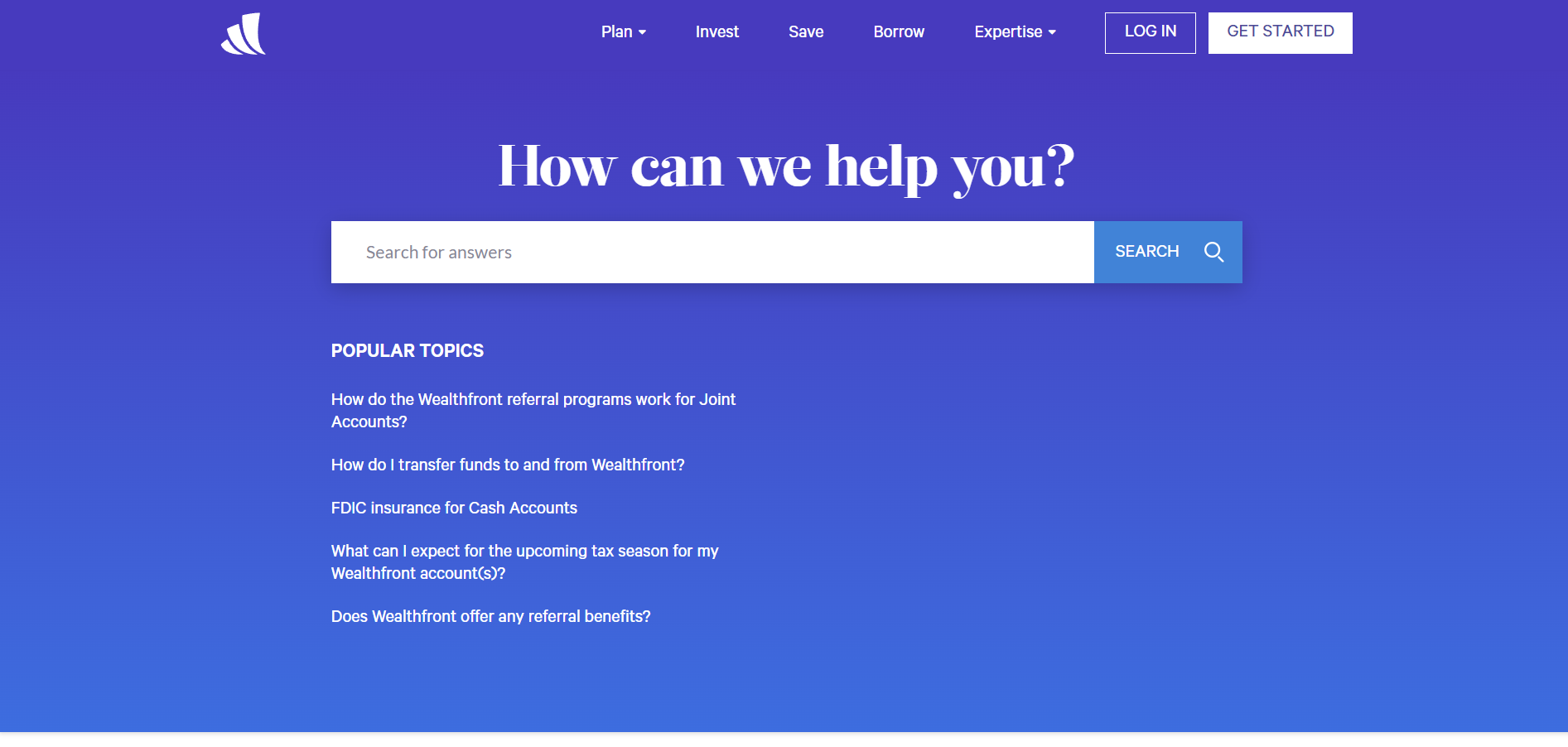
Withdrawal Options and Fees
Wealthfront keeps withdrawals simple for long-term investors who use it as a stock broker, and it states it does not charge withdrawal fees for its accounts. That means Wealthfront is not adding a platform fee just to move money out, although third parties can still charge fees depending on the method. Wealthfront’s support page on fees says it does not charge withdrawal or account-closing fees, and it also states there are no account transfer fees. This is a positive for investors who want flexibility to move funds without being penalized by the broker.
For getting money out, Wealthfront commonly routes withdrawals through the Cash Account using options like ACH transfers, and it also supports faster rails like RTP and FedNow for eligible linked banks. Wealthfront states it does not charge fees for ACH, RTP, or FedNow withdrawals, and it also says outgoing wires from eligible Cash Accounts are free on their side. If money is invested in a Wealthfront investing account, withdrawals usually require selling investments first, then waiting for settlement before cash can be transferred out. Wealthfront says most trades settle the next business day, and funds typically arrive in the Cash Account or an external bank in 1 to 2 business days after that, depending on the situation.Wealthfront explains that wire transfers from the Cash Account can be sent for free, but other banks may still charge fees on their side. Separately, Wealthfront’s client agreement language notes that outgoing wire transfers are not supported for Investment Accounts, which is why the Cash Account is usually the hub for withdrawals and transfers. If using the Cash Account debit card to withdraw cash, Wealthfront notes that out-of-network ATMs or teller withdrawals can come with fees, and it may reimburse a limited number of out-of-network domestic ATM withdrawals each month up to a stated cap. This matters more for cash access than stock investing, but it still affects overall withdrawal costs.
Conclusion: Wealthfront Review
Wealthfront works best as a stock broker for long-term investors who want a clean way to buy and hold stocks and ETFs without getting pushed into constant trading. It supports building an own portfolio, and the platform stays focused on simple execution instead of advanced trading tools.
For fees, the Stock Investing Account is positioned as low-cost, while the managed side offers automated investment accounts that can add portfolio structure and potential tax savings for investors who want a more hands-off approach. For cash sitting on the sidelines, Wealthfront’s cash setup can act like a savings-style hub with changing interest rates and eligible FDIC coverage through partner banks, which supports the overall brokerage experience. The tradeoff is that Wealthfront is not built like a broker that pairs clients with traditional financial advisors, so investors who want ongoing human guidance may prefer a different setup. Still, the platform’s support team and help resources matter for solving account and trading questions, which is a key part of trust when using any stock broker.
Wealthfront Review FAQs
Does Wealthfront charge trading commissions or account fees for stock investing?
Wealthfront says the Stock Investing Account is free, with no commissions and no account fees. It also says it does not accept Payment for Order Flow (PFOF).
Do you need a Cash Account to use the Stock Investing Account?
Yes. Wealthfront says a Cash Account is required to invest in a Stock Investing Account, and proceeds from sales are swept back to the Cash Account.
Can you day trade on Wealthfront?
Wealthfront says its Stock Investing Accounts don’t support pattern day trading, and trades that would trigger PDT restrictions won’t be allowed until enough time passes to avoid account issues. OPEN AN ACCOUNT NOW WITH WEALTHFRONT AND GET YOUR BONUS
The verdict on Wealthfront
Wealthfront works best as a stock broker for long-term investors who want a clean way to buy and hold stocks and ETFs without getting pushed into constant trading. It supports building an own portfolio, and the platform stays focused on simple execution instead of advanced trading tools. For fees, the Stock Investing Account is positioned as low-cost, while the managed side offers automated investment accounts that can add portfolio structure and potential tax savings for investors who want a more hands-off approach.
More stock brokers we’ve reviewed

