Learn To Trade Forex • Best Forex Trading Course • AsiaForexMentor

6 Game-Changing Trend Line Tips for Consistent Wins

Written by

Ezekiel Chew

Updated on

January 2, 2026

i
Its a default text

6 Game-Changing Trend Line Tips for Consistent Wins

Written by:

Last updated on:

January 2, 2026

Have you ever followed your strategy to the T, only to watch the market completely flip on you?

You entered expecting a price bounce, and instead, the market went south.
Or you took a position on a breakdown, but then price shot up instead.

Sound familiar?

Here’s the hidden truth: It's not that your strategy is broken—it's that you're trading against the real market structure.

You're not alone in this. Many traders fall into the trap of being influenced by emotions, acting on FOMO (fear of missing out), or taking impulsive actions based on weak setups.

In this guide, we’ll walk you through 6 powerful trend line strategies that will help you stop getting faked out and start entering high-probability trades with precision.

Understanding Why Trend Lines Fail and How to Fix It

Let’s be clear about one thing: trend lines don’t fail, the trader’s approach does. Most traders misunderstand trend lines because they don’t grasp the deeper market mechanics behind them.

A trend line is more than just a simple line drawn on a chart. It’s a representation of market pressure. When placed correctly, it marks key levels where the market is likely to make significant decisions. Think of it as a pressure point where buying or selling momentum shifts.

But here’s the catch: Drawing trend lines without paying attention to these core principles will get you into trouble. You need clarity in your approach including precision, structure, and confirmation.

So what are these 6 proven trend line strategies that will change your trading forever?

1. Precision Trend Line for Accurate Entries
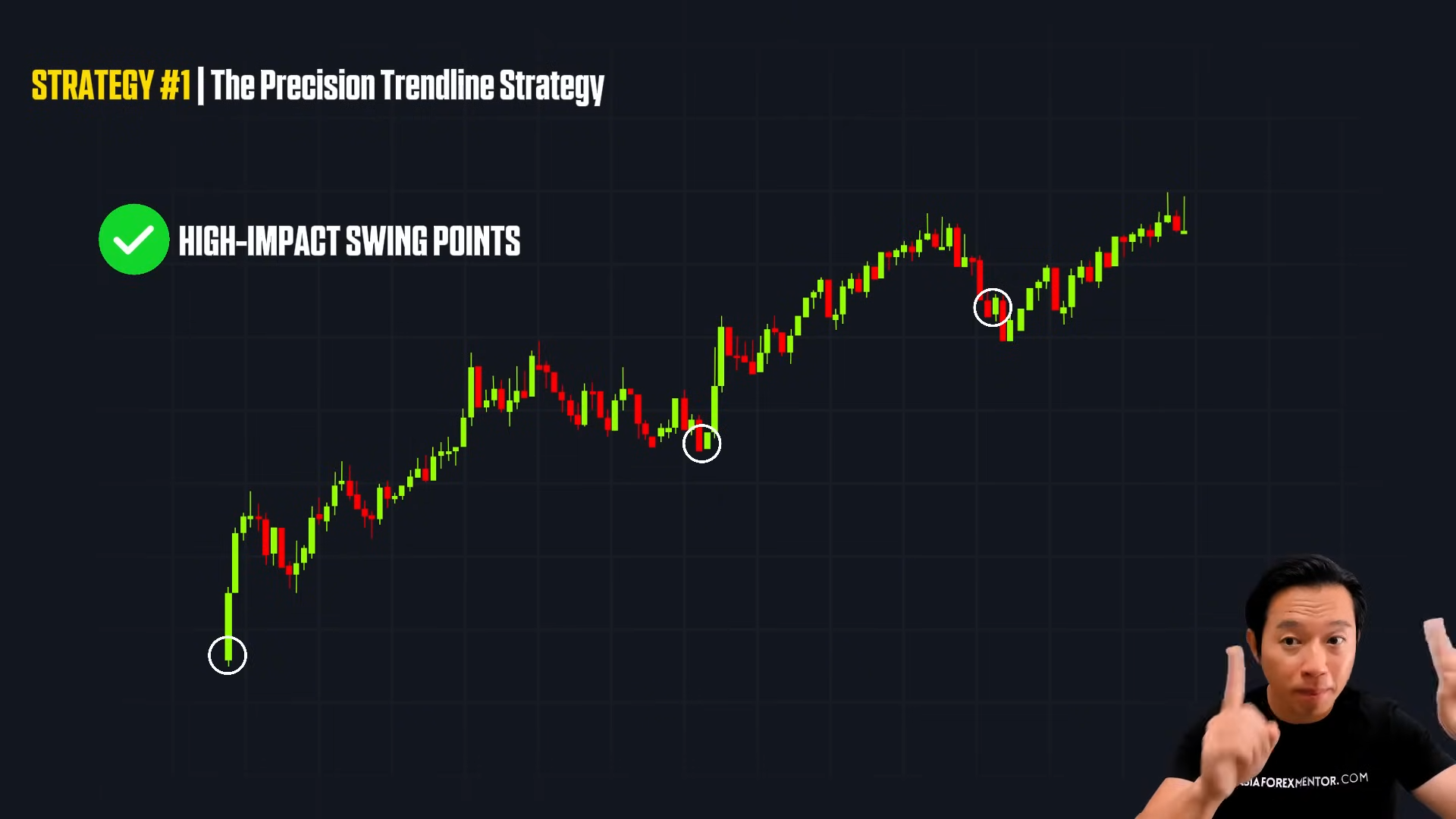
Most traders struggle because their trend lines are too vague. A line drawn a few pips off can throw off your entire trade.

Here’s how to get it right:

  • Focus on high-impact pivot points, not random highs or lows.

  • Draw trend lines based on clear market shifts which are places where price moves decisively in one direction and then pulls back before continuing.

  • Avoid fitting lines to your bias. Stick to a consistent method, whether it’s using wicks or candle bodies. Don’t switch back and forth just to make the line fit.

This method helps you isolate market pressure and focus on real setups rather than vague, uncertain ones.

2. Stop Chasing Breakouts and Wait for Confirmation
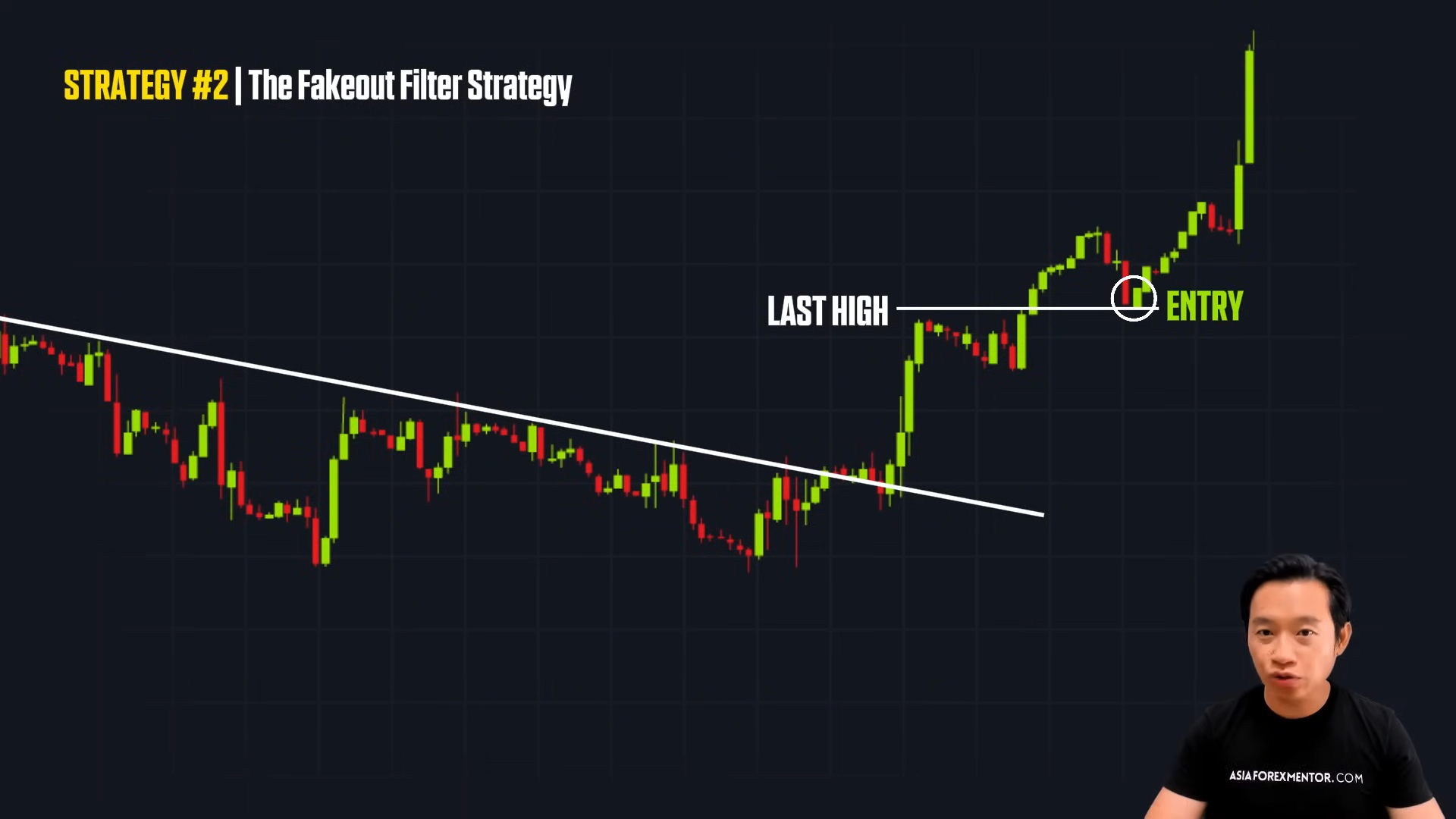
Ever entered a trade thinking it was a breakout, only for the price to reverse immediately?

That’s because most breakouts are fake-outs. Price moves just enough to trigger your stop-loss, only to reverse moments later.

So how do you avoid these traps?

Don’t jump in too early.

  • When you spot a breakout, wait for confirmation. Look for strong momentum candles rather than small, weak breakouts.

  • Retests are critical. A real breakout doesn’t just move in one direction; it will show a retest that confirms the breakout is valid.

  • Don’t chase the first move. Smart traders wait for confirmation and structure to confirm the breakout is real.

This approach minimizes your risk and ensures you're trading with confidence, not emotion.

3. Retest and Reload for the Perfect Entry Point
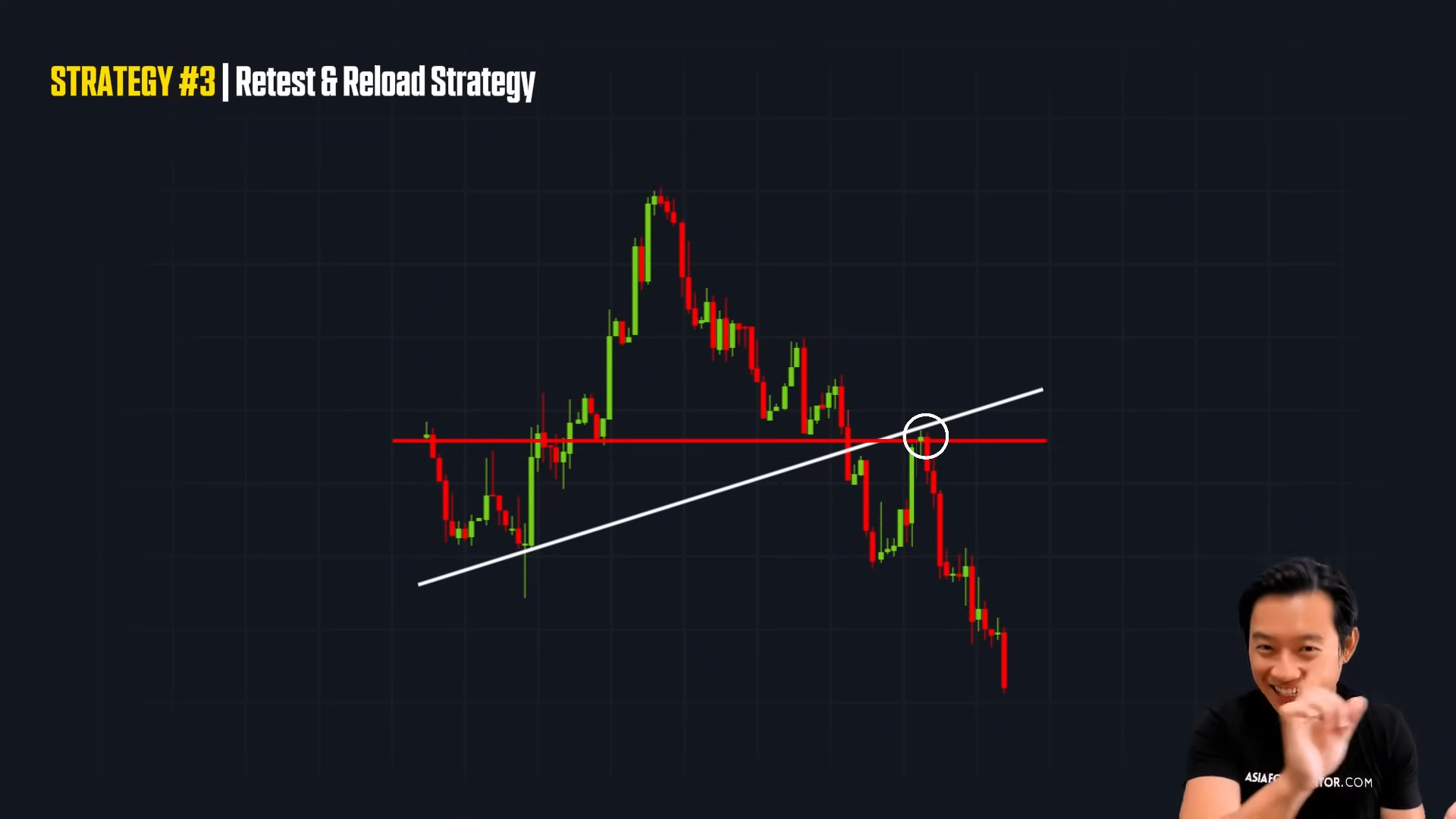
You’ve filtered out the fake-out. Now, don’t chase the breakout. Let price come to you.

Here’s the formula:

  • After a breakout, price often retraces to test the level that was just broken. This is your reload zone.

  • Wait for price action that confirms the retest is solid. A rejection at the retest level signals it’s safe to enter.

  • The retest is where the best entries happen, and it allows you to trade with the trend, not against it.

Chasing price is dangerous. Let price show you where it’s headed, and then reload with precision.

4. Confluence Bounce Strategy for Higher Probability Trades
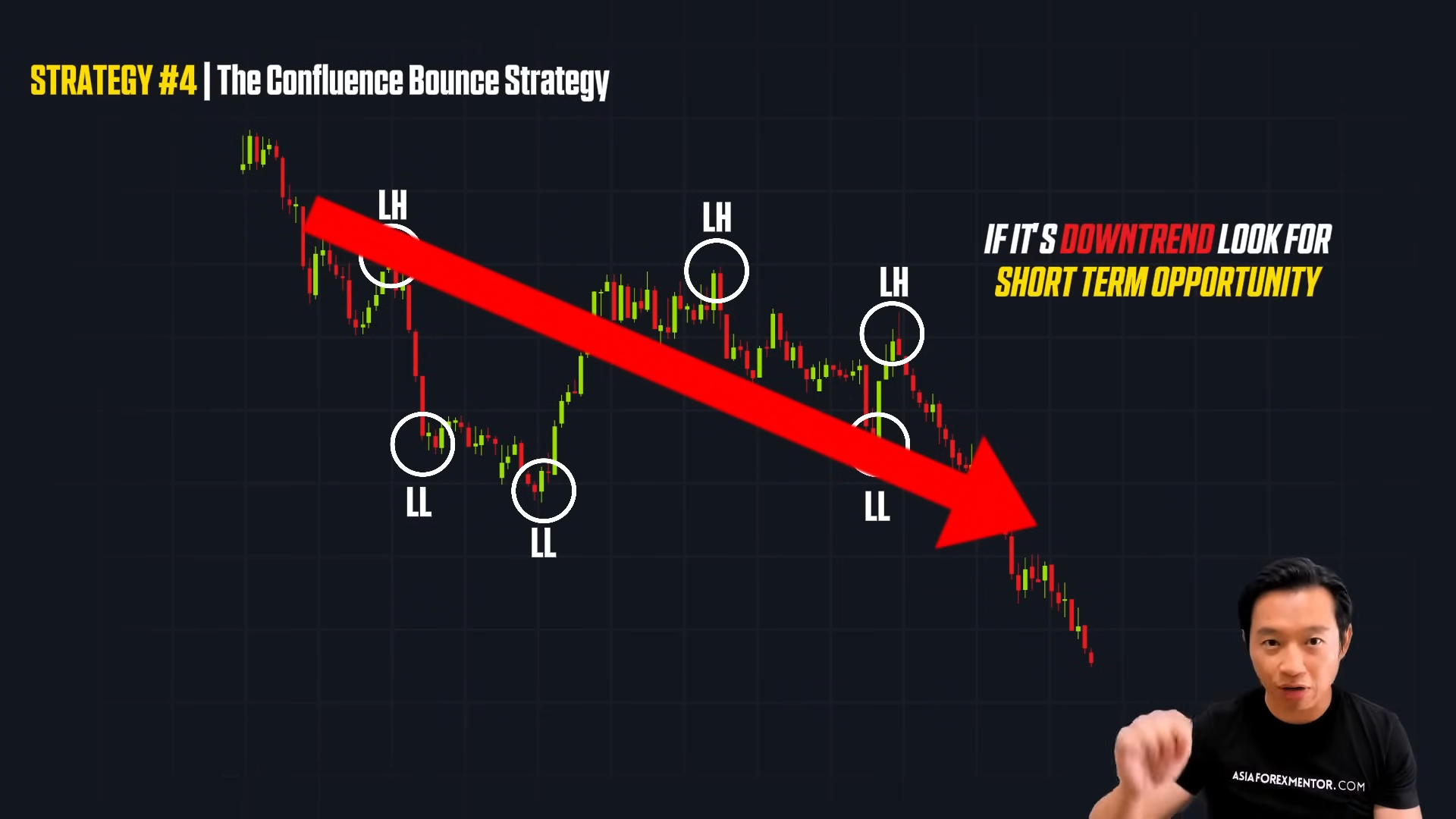
What happens when the market bounces instead of breaking out? This is where the power of confluence comes into play.

Here’s the key:

  • Look for alignment of multiple factors: trend line touches, support and resistance zones, and price action confirmations.

  • A confluence bounce occurs when all these factors converge at the same price level.

  • A bounce at these areas is a stronger signal because it indicates that multiple forces are acting on the same point, leading to higher probability trades.

When all the pieces align, don’t hesitate. Enter with confidence, knowing that the odds are stacked in your favor.

5. Trend Reversal After Bounce Failure Signals the Real Move
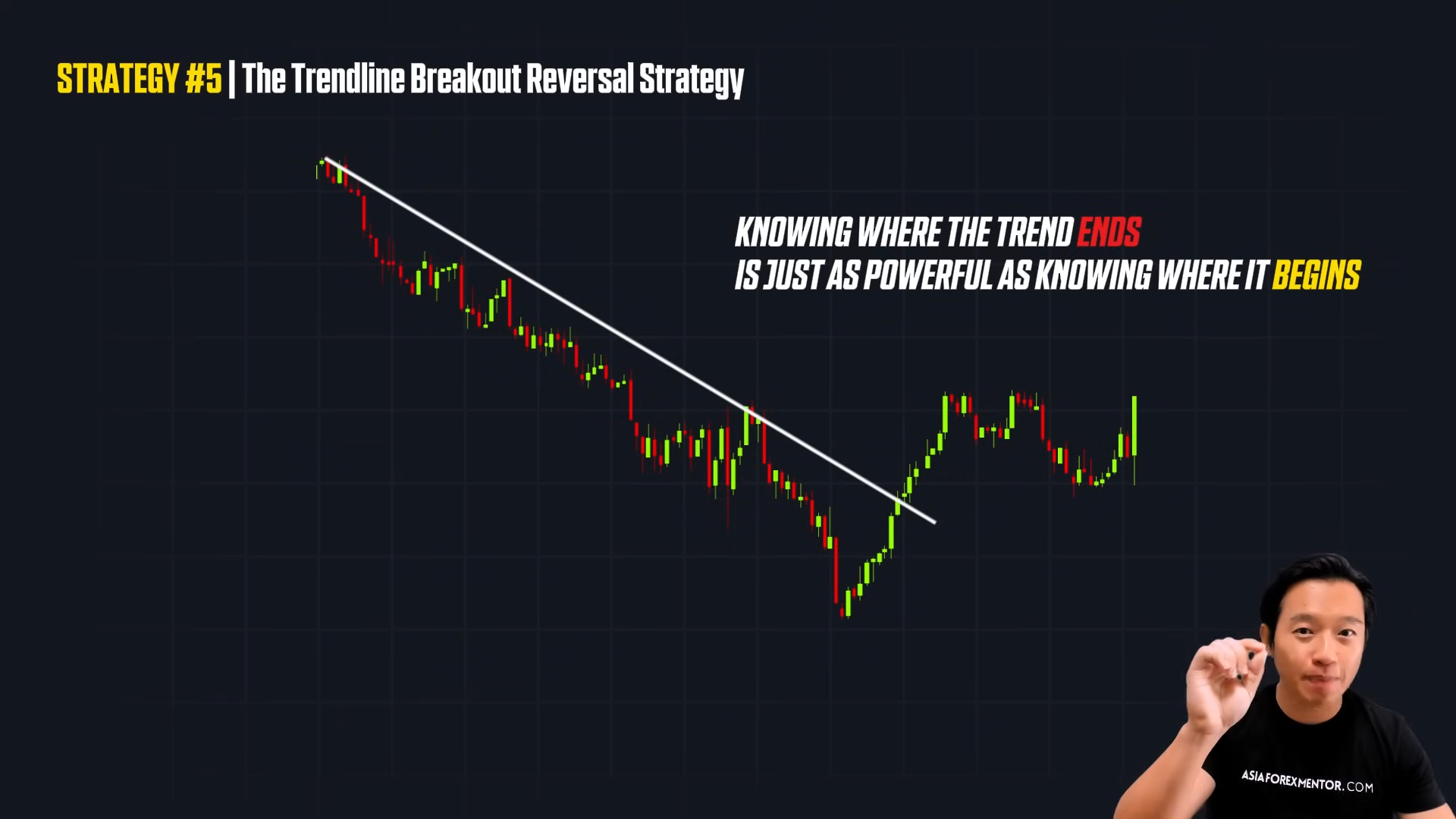
Not every bounce setup works. Sometimes, when price fails to respect the trend line, it could be signaling a trend reversal.

This is where you flip the playbook:

  • When a bounce setup fails, it’s often an indication that the trend is changing direction.

  • A breakout reversal happens when price decisively breaks through a trend line and continues in the opposite direction.

  • Watch for confirmation—the failure of a bounce setup often signals the beginning of a new trend.

Once you spot this shift, you can ride the reversal with a higher risk-to-reward ratio.

6. Top-Down Analysis: Aligning Multiple Timeframes for Success
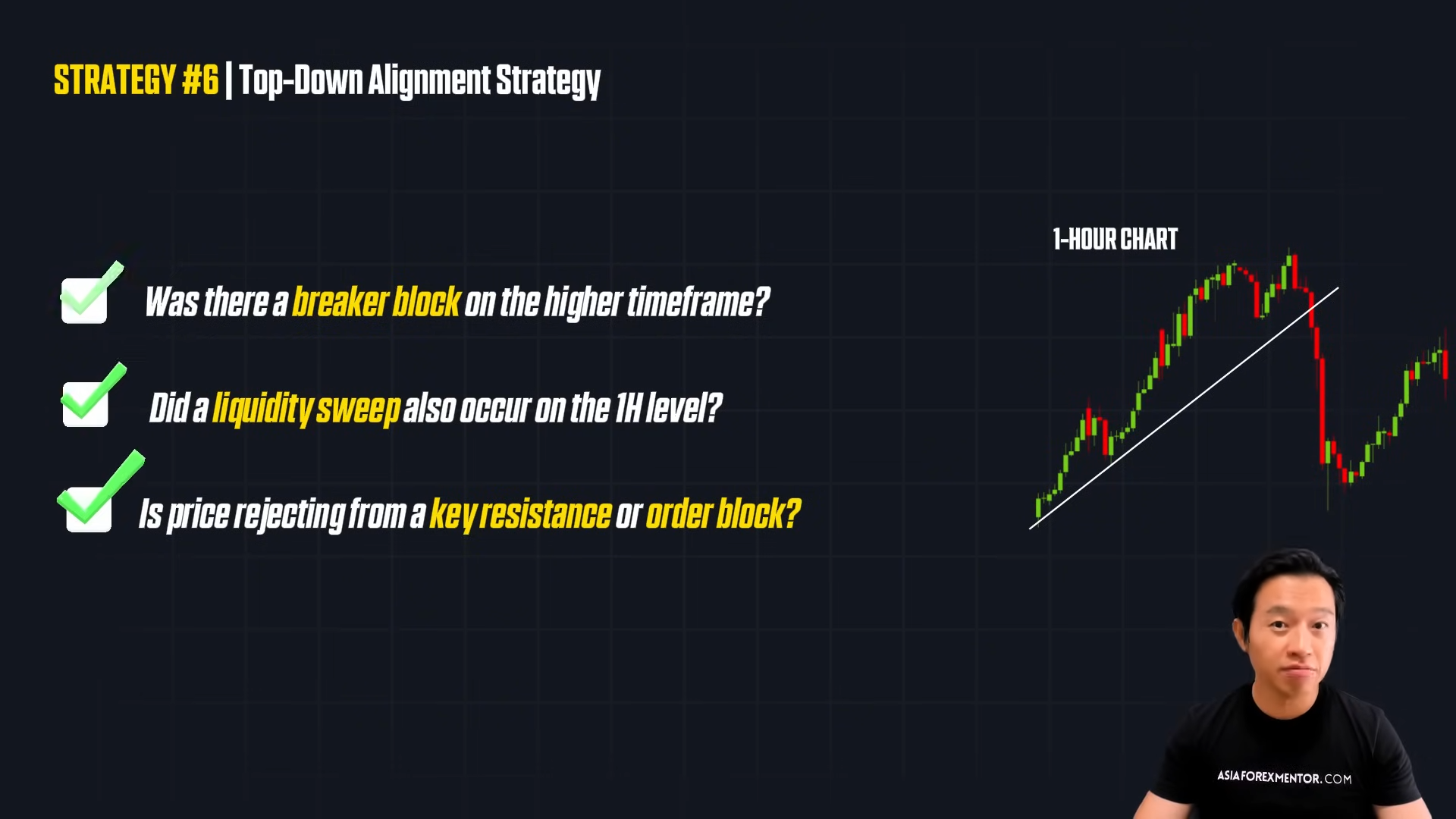
The key to mastering trend lines isn’t just about reading them in isolation. You need to consider the bigger picture.

Top-down analysis involves checking the higher time frames to see if your trade aligns with the broader market context.

Here’s how it works:

  • Check the higher time frames (e.g., daily or weekly) to understand the overall market trend.

  • Align your entries with the higher time frame structure to make sure you’re trading in the right direction.

  • Avoid getting trapped by noise at lower time frames. Always ask: “Does this trade align with the larger trend?”

This zoom-out effect will give you a clearer perspective and help you make better decisions.

The Complete Trend Line Trading System You Need

Now, let’s summarize everything into a repeatable process:

  1. Start with Structure: Focus on major swing points and clear price shifts.

  2. Wait for Confirmation: Don’t jump in too early. Let the breakout or retest confirm the trend.

  3. Check for Confluence: Look for multiple signals aligning at key levels.

  4. Align with Higher Time Frames: Ensure your trade aligns with the bigger picture.

By stacking these strategies, you’re no longer guessing. You’re trading with structure, precision, and confidence.

Final Thoughts: Stop Trading Based on Hope

When it comes to trend lines, it’s not about drawing random lines and hoping the market respects them. It’s about understanding what those lines represent—market pressure, shifts in momentum, and decision zones.

With the six strategies outlined above, you can stop getting faked out and start trading with confidence. Focus on structure, confirm your entries, and always consider the bigger picture.

Your challenge: Next time you’re about to enter a trade, ask yourself, “Is this trend line setup backed by real structure and confluence?” If it’s not, hold off and wait for the right moment.

Master trend lines, and watch your trading improve drastically.

And if you're someone who learns best with real examples, I highly recommend checking out the full video below.


About Ezekiel Chew​

Ezekiel Chew, founder and head of training at Asia Forex Mentor, is a renowned forex expert, frequently invited to speak at major industry events. Known for his deep market insights, Ezekiel is one of the top traders committed to supporting the trading community. Making six figures per trade, he also trains traders working in banks, fund management, and prop trading firms.

Market Structure Trading the Way Pros Use It

Everything that you have been taught about the market structure is making you enter too late. I’ve watched thousands of traders, they get this wrong itself. They got a clean analysis. They got a perfect read, but they still get stopped out before the move even starts. So the analysis

Read More

How to Stop FOMO Trading Before It Wrecks Your Account

Learning how to stop FOMO trading matters more than any strategy, because FOMO wrecks more trading accounts than bad entries, weak setups, or poor timing ever will. Most traders try to beat FOMO with willpower. They promise to stay calm. They tell themselves they will wait for the next clean

Read More

Elliott Wave Trading Explained the Right Way

Hey, what’s up guys? It’s Ezekiel Chew here. So if you ever wanted to actually understand where the market is in a cycle right now, not just about following candles, not just about reacting to breakouts, but to know whether or not are you in an impulse or are you

Read More

How to Recover From a Trading Losing Streak

Most traders get how to recover from a trading losing streak completely backward. They try to win it all back at once, and that one move turns a rough patch into a blown account. Real recovery works the other way around. The trader who comes back trades smaller, not bigger,

Read More

Turtle Soup Trading Strategy: The 3 Step Framework

Hey, what’s up guys? It’s Ezekiel Chew here. Let me hit you with this. If you are trading breakouts, you are probably the liquidity. Most traders think that they are catching momentum in the market when they see a breakout. When they see price push above the high, they buy.

Read More

5 Stop Loss Mistakes That Are Costing You Money

Stop loss in trading is the one tool every trader has access to, and almost every trader uses incorrectly. The concept sounds simple. Place a stop loss to limit potential losses if the trade goes wrong. But the execution is where most traders destroy their accounts. They place stops at

Read More

AFM Trading Summit Live

Date: Coming Soon

Join us at the AFM Trading Summit Live and learn from top industry experts through live trading sessions, market insights, and actionable strategies.

6 Game-Changing Trend Line Tips for Consistent Wins

4.0
Overall Trust Index

Written by:

Updated:

January 2, 2026

Have you ever followed your strategy to the T, only to watch the market completely flip on you?

You entered expecting a price bounce, and instead, the market went south.
Or you took a position on a breakdown, but then price shot up instead.

Sound familiar?

Here’s the hidden truth: It's not that your strategy is broken—it's that you're trading against the real market structure.

You're not alone in this. Many traders fall into the trap of being influenced by emotions, acting on FOMO (fear of missing out), or taking impulsive actions based on weak setups.

In this guide, we’ll walk you through 6 powerful trend line strategies that will help you stop getting faked out and start entering high-probability trades with precision.

Understanding Why Trend Lines Fail and How to Fix It

Let’s be clear about one thing: trend lines don’t fail, the trader’s approach does. Most traders misunderstand trend lines because they don’t grasp the deeper market mechanics behind them.

A trend line is more than just a simple line drawn on a chart. It’s a representation of market pressure. When placed correctly, it marks key levels where the market is likely to make significant decisions. Think of it as a pressure point where buying or selling momentum shifts.

But here’s the catch: Drawing trend lines without paying attention to these core principles will get you into trouble. You need clarity in your approach including precision, structure, and confirmation.

So what are these 6 proven trend line strategies that will change your trading forever?

1. Precision Trend Line for Accurate Entries

Most traders struggle because their trend lines are too vague. A line drawn a few pips off can throw off your entire trade.

Here’s how to get it right:

  • Focus on high-impact pivot points, not random highs or lows.

  • Draw trend lines based on clear market shifts which are places where price moves decisively in one direction and then pulls back before continuing.

  • Avoid fitting lines to your bias. Stick to a consistent method, whether it’s using wicks or candle bodies. Don’t switch back and forth just to make the line fit.

This method helps you isolate market pressure and focus on real setups rather than vague, uncertain ones.

2. Stop Chasing Breakouts and Wait for Confirmation

Ever entered a trade thinking it was a breakout, only for the price to reverse immediately?

That’s because most breakouts are fake-outs. Price moves just enough to trigger your stop-loss, only to reverse moments later.

So how do you avoid these traps?

Don’t jump in too early.

  • When you spot a breakout, wait for confirmation. Look for strong momentum candles rather than small, weak breakouts.

  • Retests are critical. A real breakout doesn’t just move in one direction; it will show a retest that confirms the breakout is valid.

  • Don’t chase the first move. Smart traders wait for confirmation and structure to confirm the breakout is real.

This approach minimizes your risk and ensures you're trading with confidence, not emotion.

3. Retest and Reload for the Perfect Entry Point

You’ve filtered out the fake-out. Now, don’t chase the breakout. Let price come to you.

Here’s the formula:

  • After a breakout, price often retraces to test the level that was just broken. This is your reload zone.

  • Wait for price action that confirms the retest is solid. A rejection at the retest level signals it’s safe to enter.

  • The retest is where the best entries happen, and it allows you to trade with the trend, not against it.

Chasing price is dangerous. Let price show you where it’s headed, and then reload with precision.

4. Confluence Bounce Strategy for Higher Probability Trades

What happens when the market bounces instead of breaking out? This is where the power of confluence comes into play.

Here’s the key:

  • Look for alignment of multiple factors: trend line touches, support and resistance zones, and price action confirmations.

  • A confluence bounce occurs when all these factors converge at the same price level.

  • A bounce at these areas is a stronger signal because it indicates that multiple forces are acting on the same point, leading to higher probability trades.

When all the pieces align, don’t hesitate. Enter with confidence, knowing that the odds are stacked in your favor.

5. Trend Reversal After Bounce Failure Signals the Real Move

Not every bounce setup works. Sometimes, when price fails to respect the trend line, it could be signaling a trend reversal.

This is where you flip the playbook:

  • When a bounce setup fails, it’s often an indication that the trend is changing direction.

  • A breakout reversal happens when price decisively breaks through a trend line and continues in the opposite direction.

  • Watch for confirmation—the failure of a bounce setup often signals the beginning of a new trend.

Once you spot this shift, you can ride the reversal with a higher risk-to-reward ratio.

6. Top-Down Analysis: Aligning Multiple Timeframes for Success

The key to mastering trend lines isn’t just about reading them in isolation. You need to consider the bigger picture.

Top-down analysis involves checking the higher time frames to see if your trade aligns with the broader market context.

Here’s how it works:

  • Check the higher time frames (e.g., daily or weekly) to understand the overall market trend.

  • Align your entries with the higher time frame structure to make sure you’re trading in the right direction.

  • Avoid getting trapped by noise at lower time frames. Always ask: “Does this trade align with the larger trend?”

This zoom-out effect will give you a clearer perspective and help you make better decisions.

The Complete Trend Line Trading System You Need

Now, let’s summarize everything into a repeatable process:

  1. Start with Structure: Focus on major swing points and clear price shifts.

  2. Wait for Confirmation: Don’t jump in too early. Let the breakout or retest confirm the trend.

  3. Check for Confluence: Look for multiple signals aligning at key levels.

  4. Align with Higher Time Frames: Ensure your trade aligns with the bigger picture.

By stacking these strategies, you’re no longer guessing. You’re trading with structure, precision, and confidence.

Final Thoughts: Stop Trading Based on Hope

When it comes to trend lines, it’s not about drawing random lines and hoping the market respects them. It’s about understanding what those lines represent—market pressure, shifts in momentum, and decision zones.

With the six strategies outlined above, you can stop getting faked out and start trading with confidence. Focus on structure, confirm your entries, and always consider the bigger picture.

Your challenge: Next time you’re about to enter a trade, ask yourself, “Is this trend line setup backed by real structure and confluence?” If it’s not, hold off and wait for the right moment.

Master trend lines, and watch your trading improve drastically.

And if you're someone who learns best with real examples, I highly recommend checking out the full video below.

https://www.youtube.com/watch?v=onPs5MlDwSY
ezekiel chew asiaforexmentor

About Ezekiel Chew

Ezekiel Chew, founder and head of training at Asia Forex Mentor, is a renowned forex expert, frequently invited to speak at major industry events. Known for his deep market insights, Ezekiel is one of the top traders committed to supporting the trading community. Making six figures per trade, he also trains traders working in banks, fund management, and prop trading firms.

RELATED ARTICLES

6 Game-Changing Trend Line Tips for Consistent Wins

4.0
Overall Trust Index

Written by:

Updated:

January 2, 2026

Have you ever followed your strategy to the T, only to watch the market completely flip on you?

You entered expecting a price bounce, and instead, the market went south.
Or you took a position on a breakdown, but then price shot up instead.

Sound familiar?

Here’s the hidden truth: It's not that your strategy is broken—it's that you're trading against the real market structure.

You're not alone in this. Many traders fall into the trap of being influenced by emotions, acting on FOMO (fear of missing out), or taking impulsive actions based on weak setups.

In this guide, we’ll walk you through 6 powerful trend line strategies that will help you stop getting faked out and start entering high-probability trades with precision.

Understanding Why Trend Lines Fail and How to Fix It

Let’s be clear about one thing: trend lines don’t fail, the trader’s approach does. Most traders misunderstand trend lines because they don’t grasp the deeper market mechanics behind them.

A trend line is more than just a simple line drawn on a chart. It’s a representation of market pressure. When placed correctly, it marks key levels where the market is likely to make significant decisions. Think of it as a pressure point where buying or selling momentum shifts.

But here’s the catch: Drawing trend lines without paying attention to these core principles will get you into trouble. You need clarity in your approach including precision, structure, and confirmation.

So what are these 6 proven trend line strategies that will change your trading forever?

1. Precision Trend Line for Accurate Entries

Most traders struggle because their trend lines are too vague. A line drawn a few pips off can throw off your entire trade.

Here’s how to get it right:

  • Focus on high-impact pivot points, not random highs or lows.

  • Draw trend lines based on clear market shifts which are places where price moves decisively in one direction and then pulls back before continuing.

  • Avoid fitting lines to your bias. Stick to a consistent method, whether it’s using wicks or candle bodies. Don’t switch back and forth just to make the line fit.

This method helps you isolate market pressure and focus on real setups rather than vague, uncertain ones.

2. Stop Chasing Breakouts and Wait for Confirmation

Ever entered a trade thinking it was a breakout, only for the price to reverse immediately?

That’s because most breakouts are fake-outs. Price moves just enough to trigger your stop-loss, only to reverse moments later.

So how do you avoid these traps?

Don’t jump in too early.

  • When you spot a breakout, wait for confirmation. Look for strong momentum candles rather than small, weak breakouts.

  • Retests are critical. A real breakout doesn’t just move in one direction; it will show a retest that confirms the breakout is valid.

  • Don’t chase the first move. Smart traders wait for confirmation and structure to confirm the breakout is real.

This approach minimizes your risk and ensures you're trading with confidence, not emotion.

3. Retest and Reload for the Perfect Entry Point

You’ve filtered out the fake-out. Now, don’t chase the breakout. Let price come to you.

Here’s the formula:

  • After a breakout, price often retraces to test the level that was just broken. This is your reload zone.

  • Wait for price action that confirms the retest is solid. A rejection at the retest level signals it’s safe to enter.

  • The retest is where the best entries happen, and it allows you to trade with the trend, not against it.

Chasing price is dangerous. Let price show you where it’s headed, and then reload with precision.

4. Confluence Bounce Strategy for Higher Probability Trades

What happens when the market bounces instead of breaking out? This is where the power of confluence comes into play.

Here’s the key:

  • Look for alignment of multiple factors: trend line touches, support and resistance zones, and price action confirmations.

  • A confluence bounce occurs when all these factors converge at the same price level.

  • A bounce at these areas is a stronger signal because it indicates that multiple forces are acting on the same point, leading to higher probability trades.

When all the pieces align, don’t hesitate. Enter with confidence, knowing that the odds are stacked in your favor.

5. Trend Reversal After Bounce Failure Signals the Real Move

Not every bounce setup works. Sometimes, when price fails to respect the trend line, it could be signaling a trend reversal.

This is where you flip the playbook:

  • When a bounce setup fails, it’s often an indication that the trend is changing direction.

  • A breakout reversal happens when price decisively breaks through a trend line and continues in the opposite direction.

  • Watch for confirmation—the failure of a bounce setup often signals the beginning of a new trend.

Once you spot this shift, you can ride the reversal with a higher risk-to-reward ratio.

6. Top-Down Analysis: Aligning Multiple Timeframes for Success

The key to mastering trend lines isn’t just about reading them in isolation. You need to consider the bigger picture.

Top-down analysis involves checking the higher time frames to see if your trade aligns with the broader market context.

Here’s how it works:

  • Check the higher time frames (e.g., daily or weekly) to understand the overall market trend.

  • Align your entries with the higher time frame structure to make sure you’re trading in the right direction.

  • Avoid getting trapped by noise at lower time frames. Always ask: “Does this trade align with the larger trend?”

This zoom-out effect will give you a clearer perspective and help you make better decisions.

The Complete Trend Line Trading System You Need

Now, let’s summarize everything into a repeatable process:

  1. Start with Structure: Focus on major swing points and clear price shifts.

  2. Wait for Confirmation: Don’t jump in too early. Let the breakout or retest confirm the trend.

  3. Check for Confluence: Look for multiple signals aligning at key levels.

  4. Align with Higher Time Frames: Ensure your trade aligns with the bigger picture.

By stacking these strategies, you’re no longer guessing. You’re trading with structure, precision, and confidence.

Final Thoughts: Stop Trading Based on Hope

When it comes to trend lines, it’s not about drawing random lines and hoping the market respects them. It’s about understanding what those lines represent—market pressure, shifts in momentum, and decision zones.

With the six strategies outlined above, you can stop getting faked out and start trading with confidence. Focus on structure, confirm your entries, and always consider the bigger picture.

Your challenge: Next time you’re about to enter a trade, ask yourself, “Is this trend line setup backed by real structure and confluence?” If it’s not, hold off and wait for the right moment.

Master trend lines, and watch your trading improve drastically.

And if you're someone who learns best with real examples, I highly recommend checking out the full video below.

https://www.youtube.com/watch?v=onPs5MlDwSY
ezekiel chew asiaforexmentor

About Ezekiel Chew

Ezekiel Chew, founder and head of training at Asia Forex Mentor, is a renowned forex expert, frequently invited to speak at major industry events. Known for his deep market insights, Ezekiel is one of the top traders committed to supporting the trading community. Making six figures per trade, he also trains traders working in banks, fund management, and prop trading firms.

RELATED ARTICLES

Join the Live Event
Get Your Free Ticket Now

I consent to receiving emails and/or text message reminders for this event.

REGISTER FOR THE MASTERCLASS!