
Hey, what’s up guys?
It’s Ezekiel Chew here.
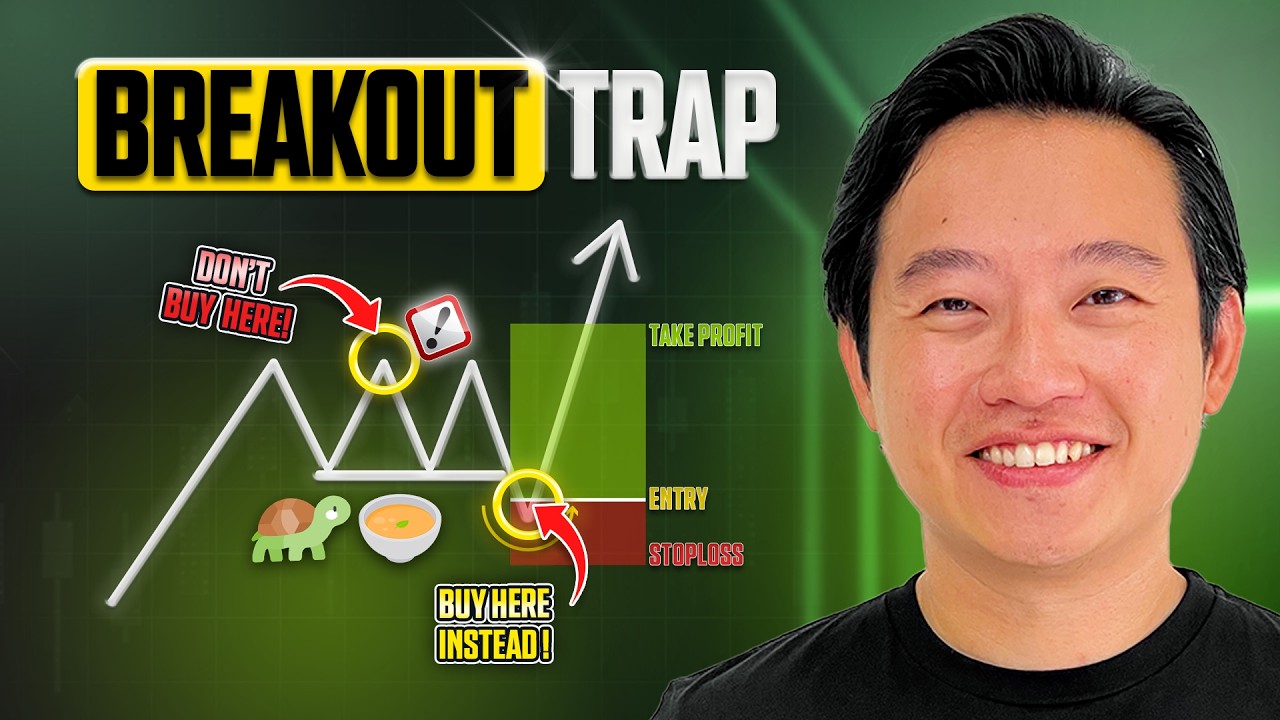
Let me hit you with this. If you are trading breakouts, you are probably the liquidity. Most traders think that they are catching momentum in the market when they see a breakout. When they see price push above the high, they buy. And then it drops back in, they get stopped out. Then they blame the strategy.
But here’s the brutal truth.
The market doesn’t really reward all this obvious move. It actually hunts them. So the turtle soup is not about fading randomly. It’s about understanding where all these stops are clustered, why price needs that liquidity, and when the reversal is actually confirmed.
So today I’m breaking down the real turtle soup framework that covers liquidity grabs, confirmation shifts, and precision entries.
After this, you’re going to stop chasing breakouts and start trapping them.
You’re going to learn:
- How liquidity actually works the difference between internal and external range liquidity, and why the real moves begin at the edges
- How to time high quality entries using key levels like fair value gaps
- How to use SMT divergence to confirm when a sweep is a real reversal and not a continuation
By the end, you’ll stop chasing breakouts and start trapping them.
📺 Watch the full breakdown in the video:
How the Turtle Soup Strategy Works
First thing first, the turtle soup is a strategy that plays on liquidity specifically the difference between internal and external liquidity levels.
Imagine the market price is bouncing back and forth between the two extremes, where the dumb money actually gets trapped in the middle. The smart money, though, knows exactly where to buy and sell above the old highs and below the old lows.
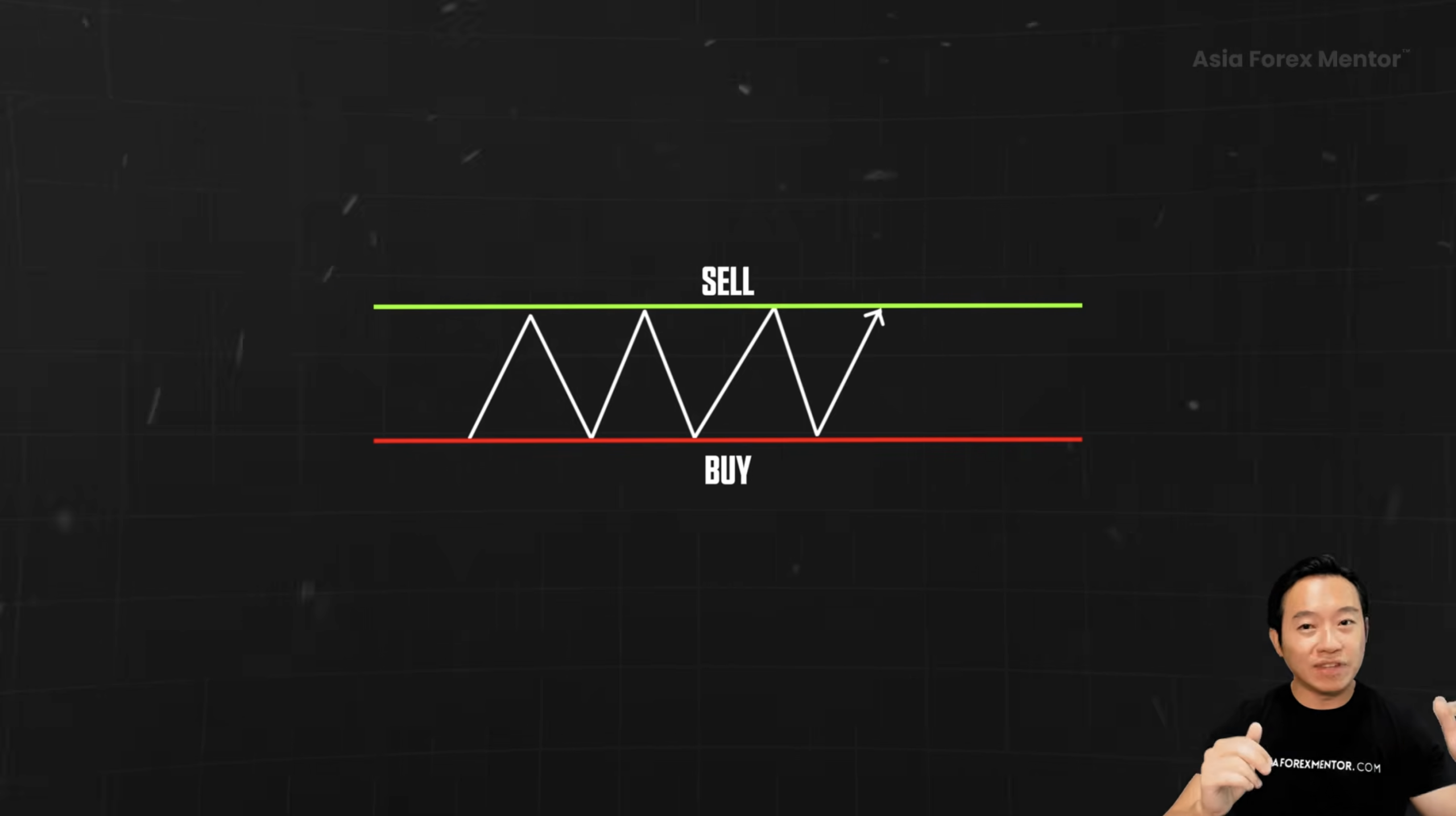
So it’s all about aligning with the market bias and catching those liquidity traps.
But here’s the thing what makes it effective?
Most traders lose because they trade the middle while the smart money waits at the edges. So we’re going to start by understanding where the real moves begin, through the liquidity and the market bias.
Step 1 Understanding Liquidity and Market Bias
We’re going to start deep into the very foundation of the turtle soup. There are two types of liquidity that you need to understand the internal range liquidity and the external range liquidity.
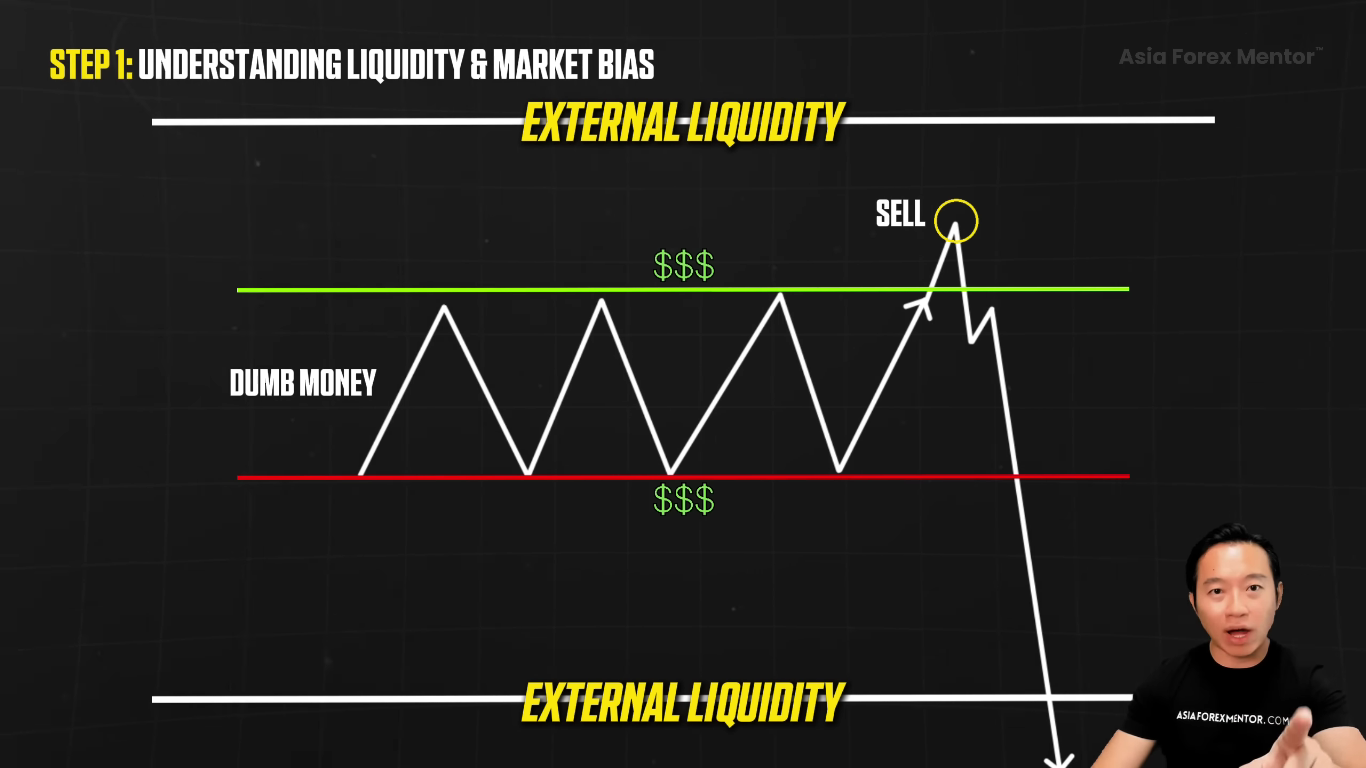
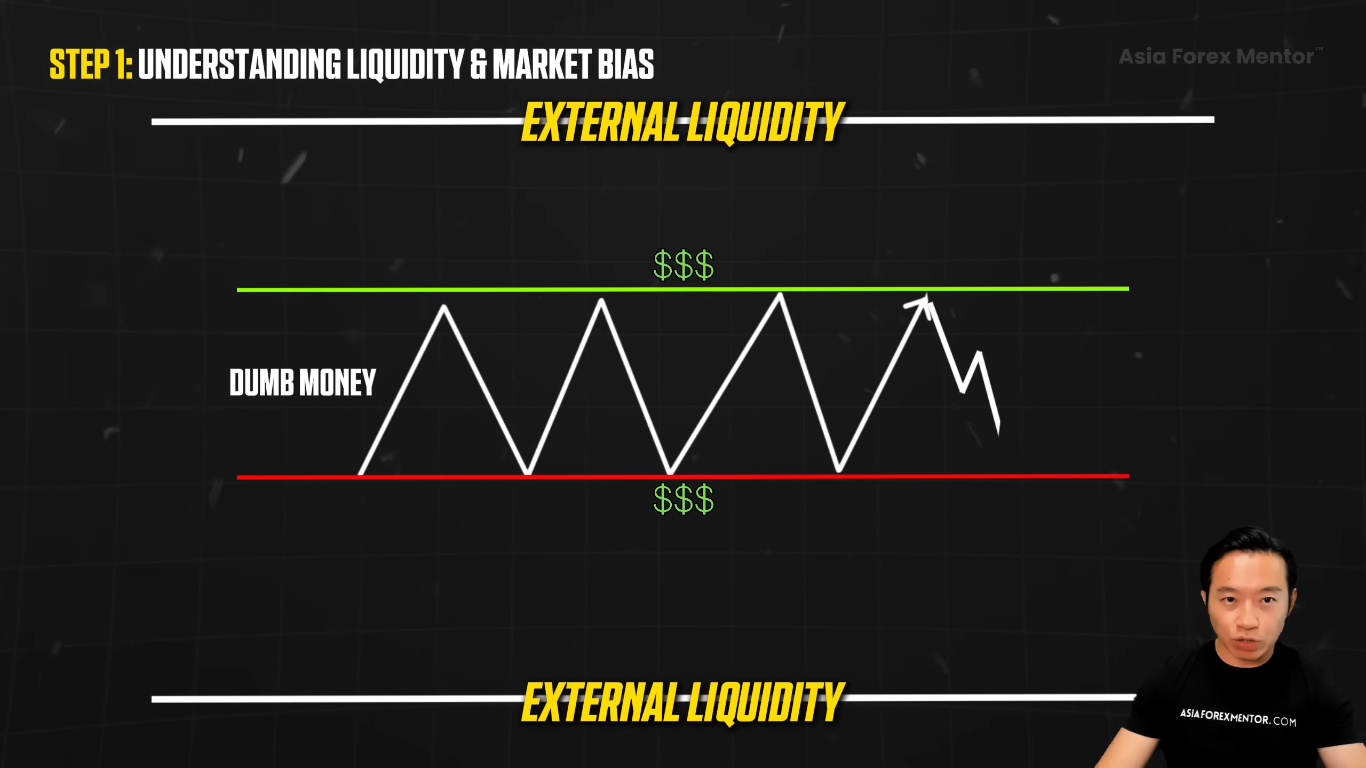
On this chart, focus on this. We have an accumulation area in the middle. Above it, there is the resting buy side liquidity. And below it, there’s the resting sell side liquidity. Now in the middle of the range, we have what we call dumb money. This is where people are getting chopped up. They are constantly fighting back and forth because they don’t really know what they are looking for. These traders get stuck in the middle.
But below all these lows, we have resting sell side liquidity where the smart money is looking to buy. Above it, we have resting buy stops where the smart money is actually looking to sell instead.
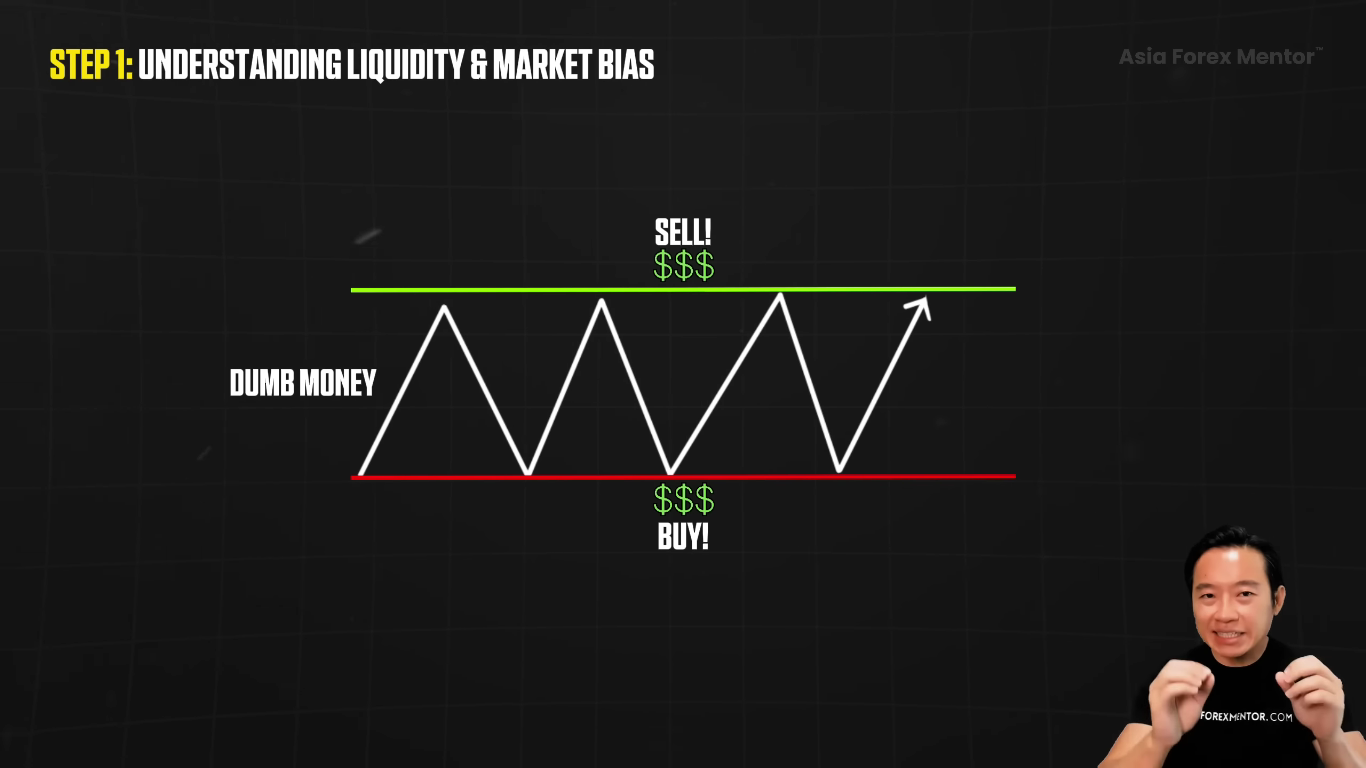
So the basic definition of the turtle soup is simple selling above the old highs and buying below the old lows. But it’s not just that simple. We need to align this model with the overall market bias.
As we can see on the chart, there is the buy side and there’s the sell side. This means we are dealing with the internal range liquidity and the external range liquidity. So when we are using the turtle soup, we are not just trading based on price action in the immediate range. We also take into account the bigger timeframe drawn liquidity.
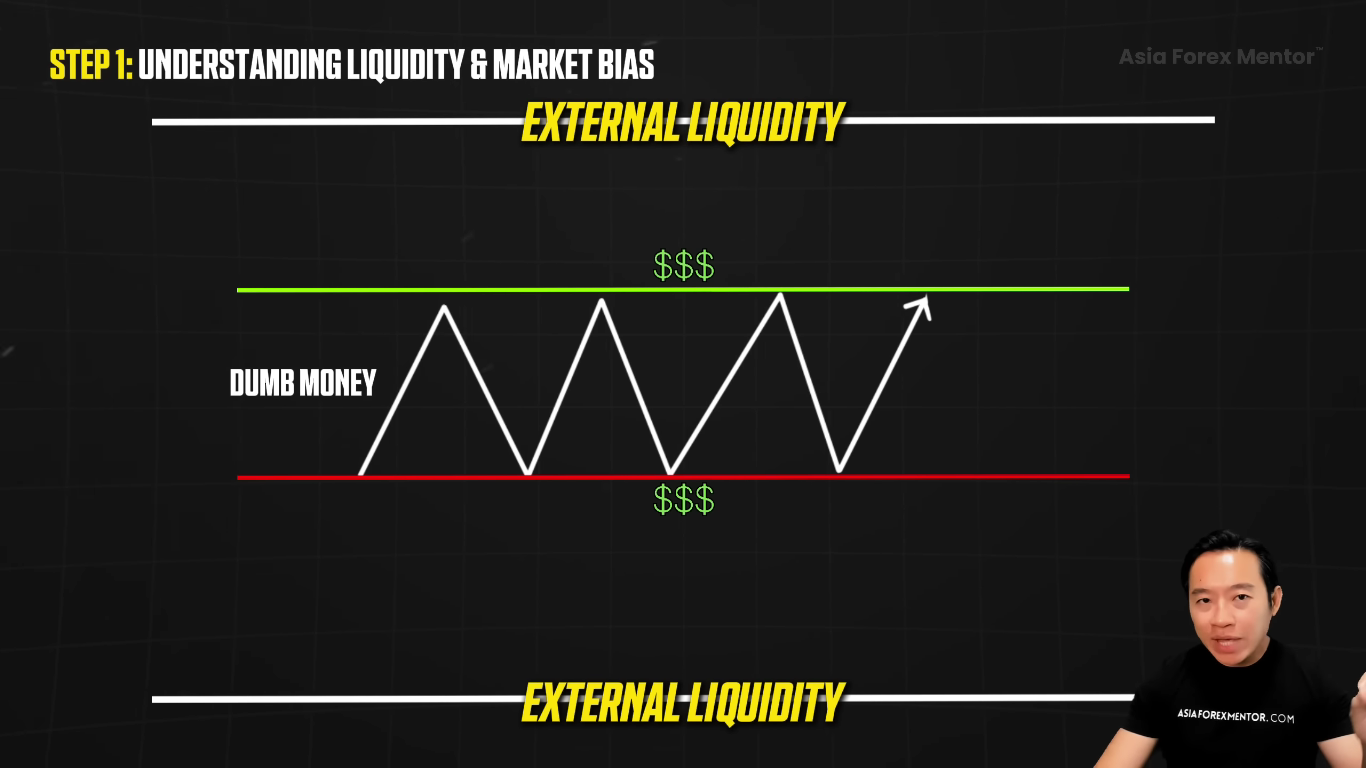
Let’s say the drawn liquidity is on the sell side. In this example, our goal is to sell above the old highs,
Continuing to target the new lows, and then keep aiming for the external sell side liquidity. This is what we are looking for. This is turtle soup.
The same concept goes for the buy side. If the draw on the liquidity is buy side, we have an internal range where liquidity is being generated towards the lows.
So we are looking to buy all those sell stops at that area, left by all the retail traders over there. So when the market comes down, it takes out all these sell stops and then continues towards the external draw.
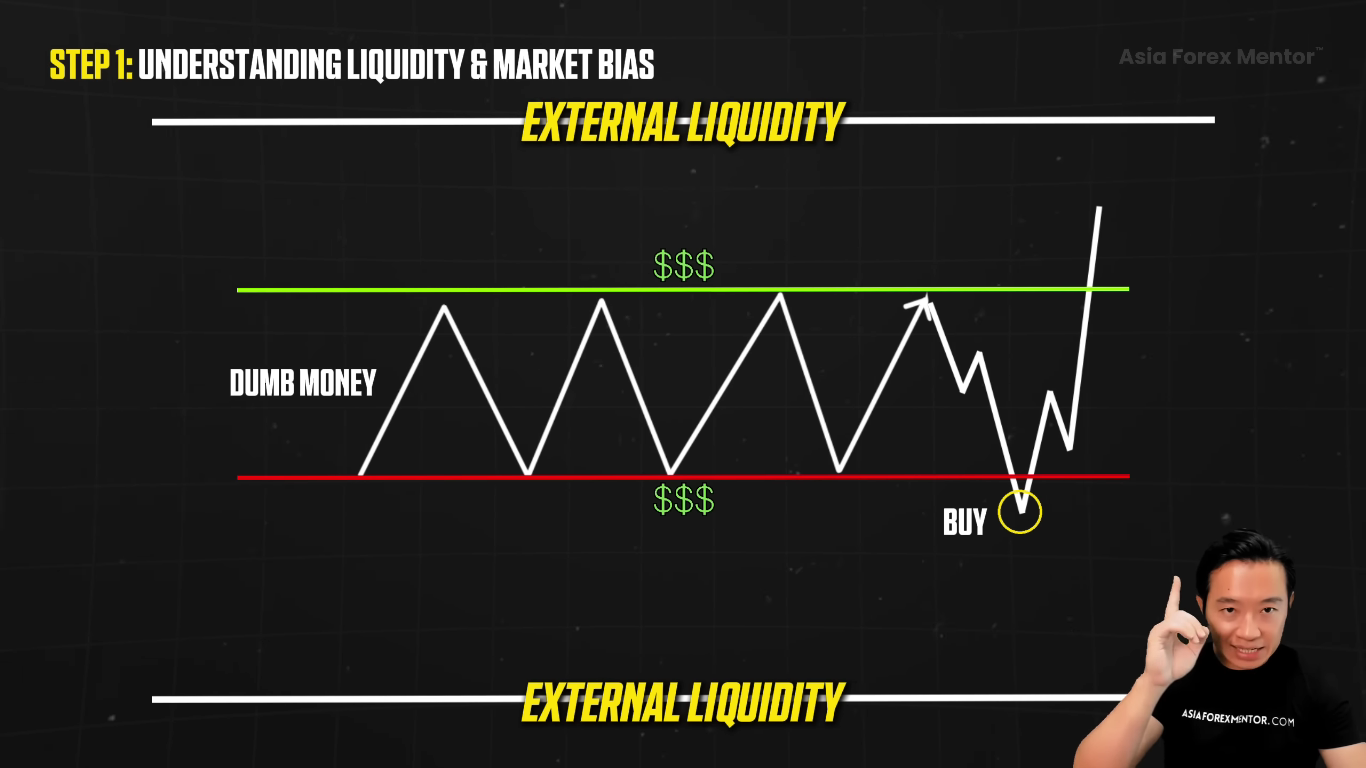
That’s the setup that we are after. This is turtle soup in action.
One thing to pay close attention to is the key levels that is, above and below these areas of the buy and sell side liquidity within the range. These are the important levels where price could actually bounce. For example, I’m going to look for fair value gaps either below the sell stops or above the buy stops.
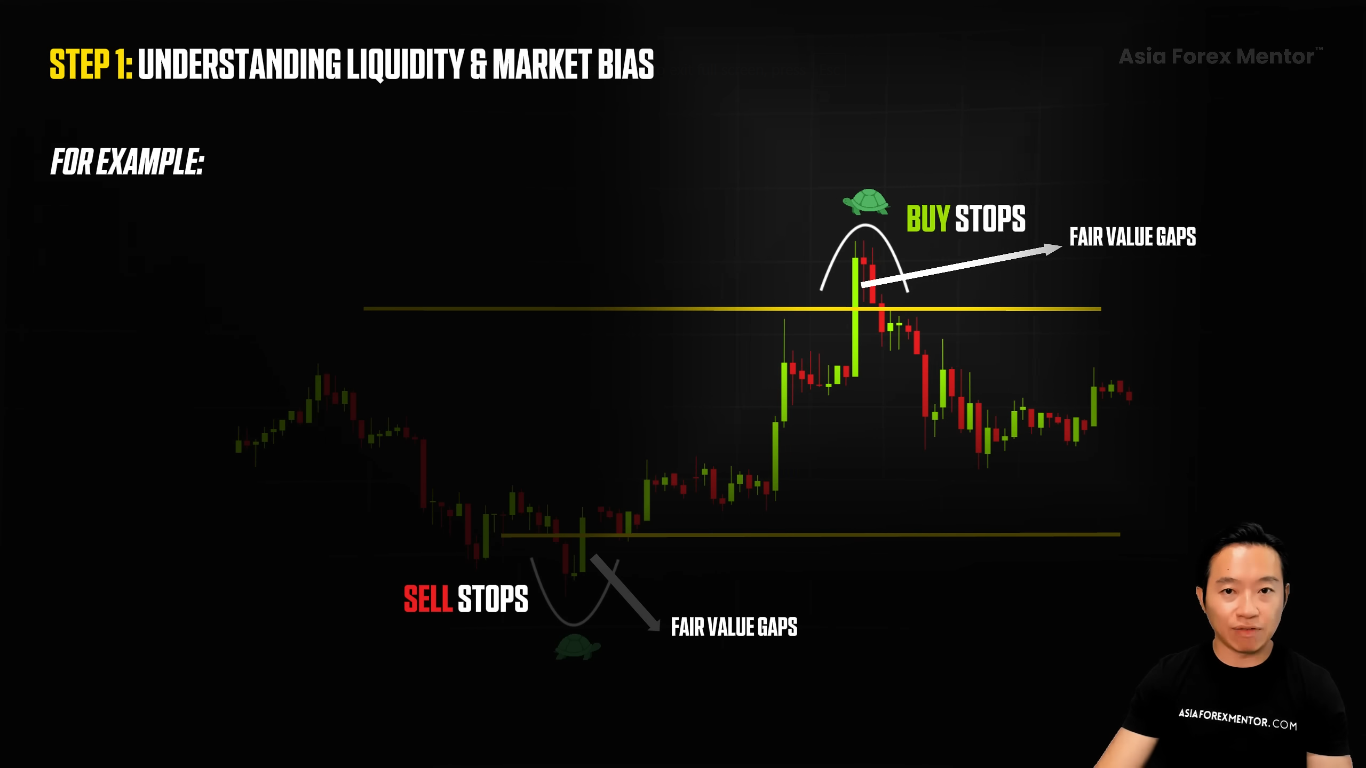
These fair value gaps give us the conviction. This gives us confluence another reason to believe that price could actually bounce at those areas.
If we are looking, for example, to take a long position, a buy position, in a bullish scenario where there is external buy side liquidity,
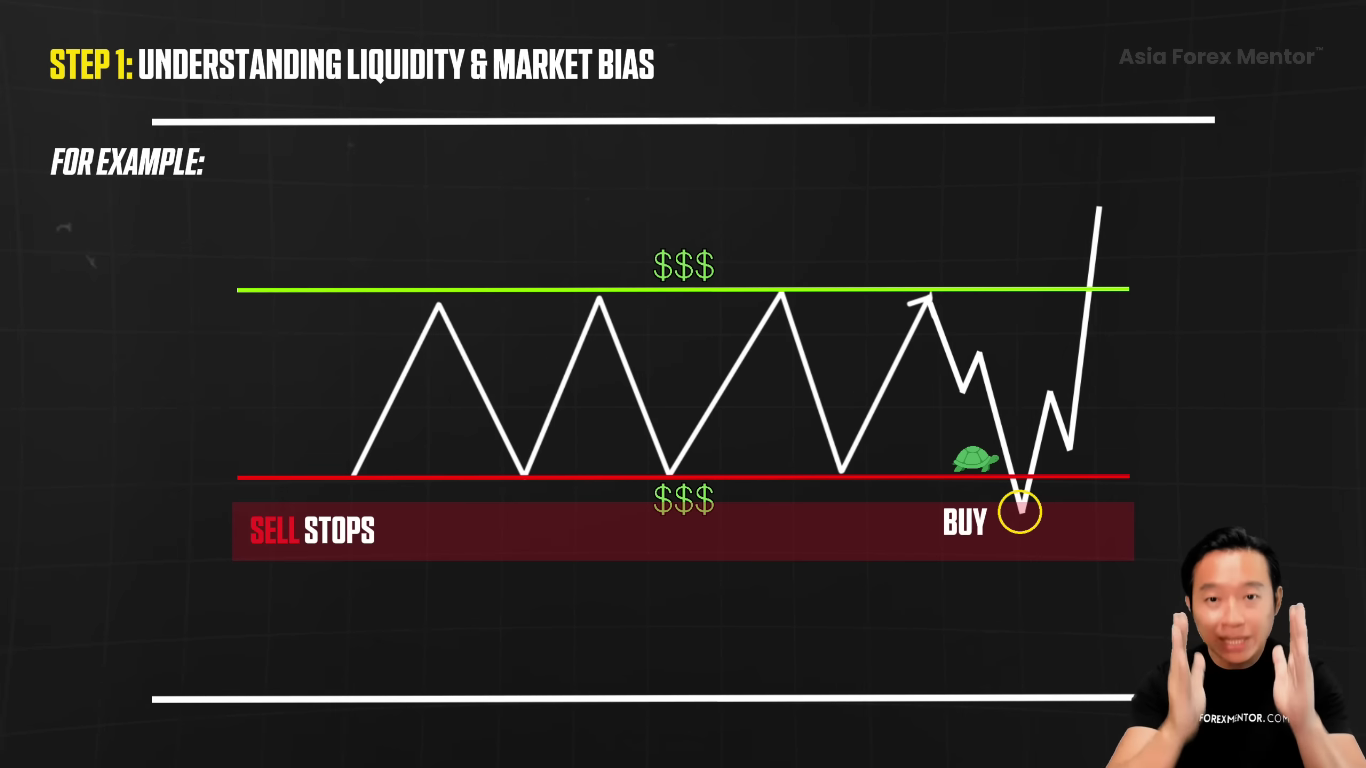
We want to look for an entry below the sell stops. Here’s the thing we also need to see if there is a reason for price to bounce at that level. We don’t just randomly buy over there. So a fair value gap can be that reason.
The first strategy is all about understanding where the liquidity forms, and why smart money operates at these edges instead of the middle. So now that we understand where the liquidity sits, and how the bias guides us in the direction, we’re going to move into how to actually time high quality entries using key levels. Your entry is either a sniper shot or a panic click that funds somebody else’s trade. That’s how the market works. So here’s the next step we’re going to use the fair value gap and key levels to time clean turtle soup entries.
Step 2 Finding High Quality Entries With Key Levels
With this strategy, we’re going to expect the smart money to enter the market at the key liquidity levels. Here’s the next question. How do we know that price will reverse below and beneath that low, and not just keep going lower? This is exactly what we’re going to cover. I’m going to go through framing a high probability turtle soup.
Take a look at this. Let’s say we are watching price and it’s trading above a certain level then we are expecting price to trade lower. You wait to see if price does indeed go lower.
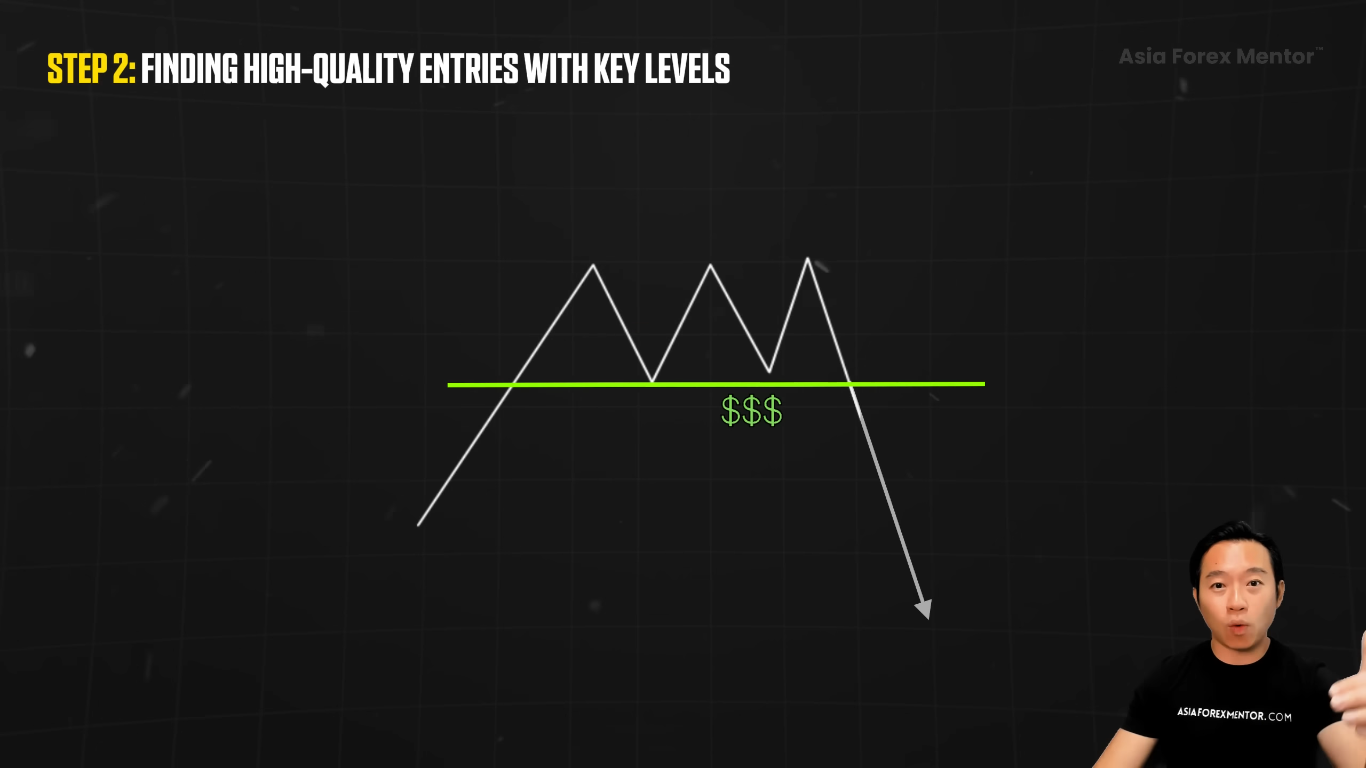
So once it does, and it takes out all the sell side liquidity over there and if we already have a bullish bias overall then what? We could then enter by buying those sell stops at that area.
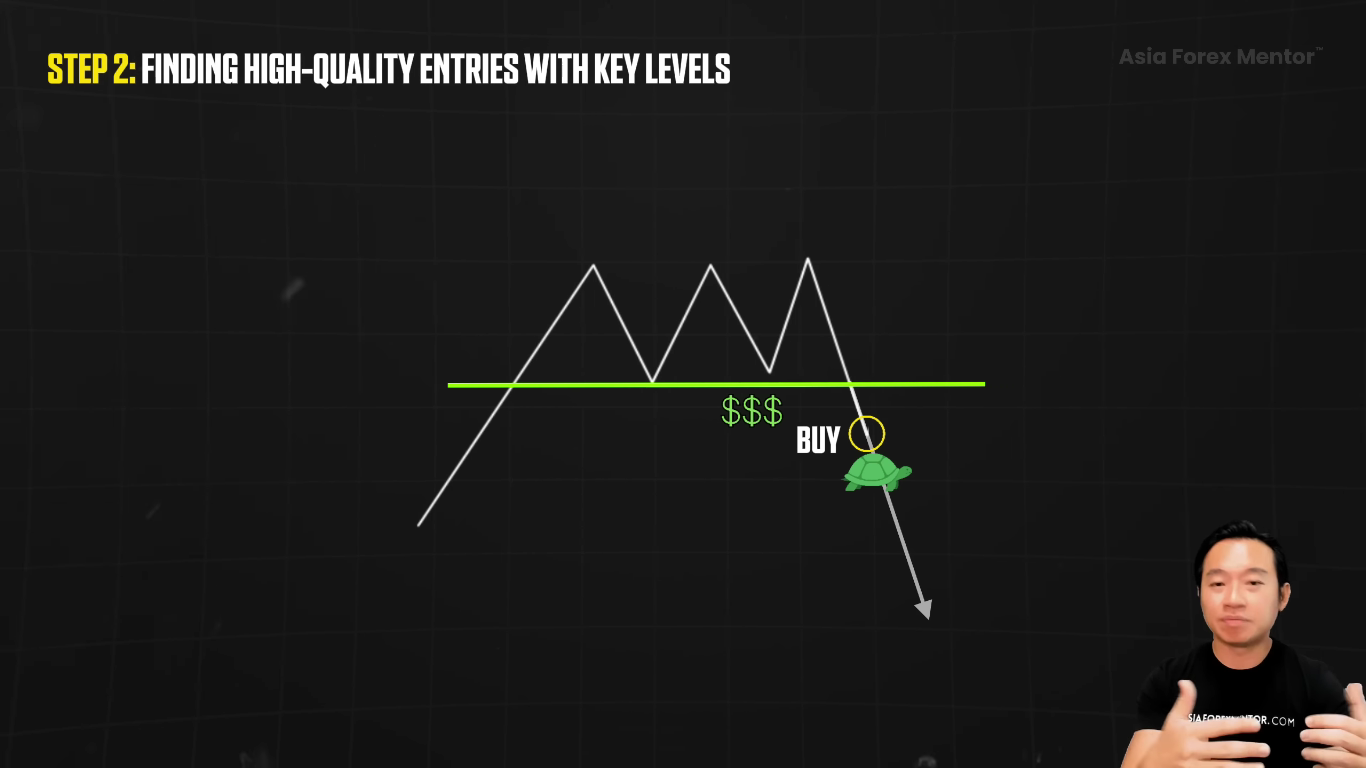
This means as soon as price breaks the low, you can open a new position that is targeting the opposing range liquidity, to go to the other side.
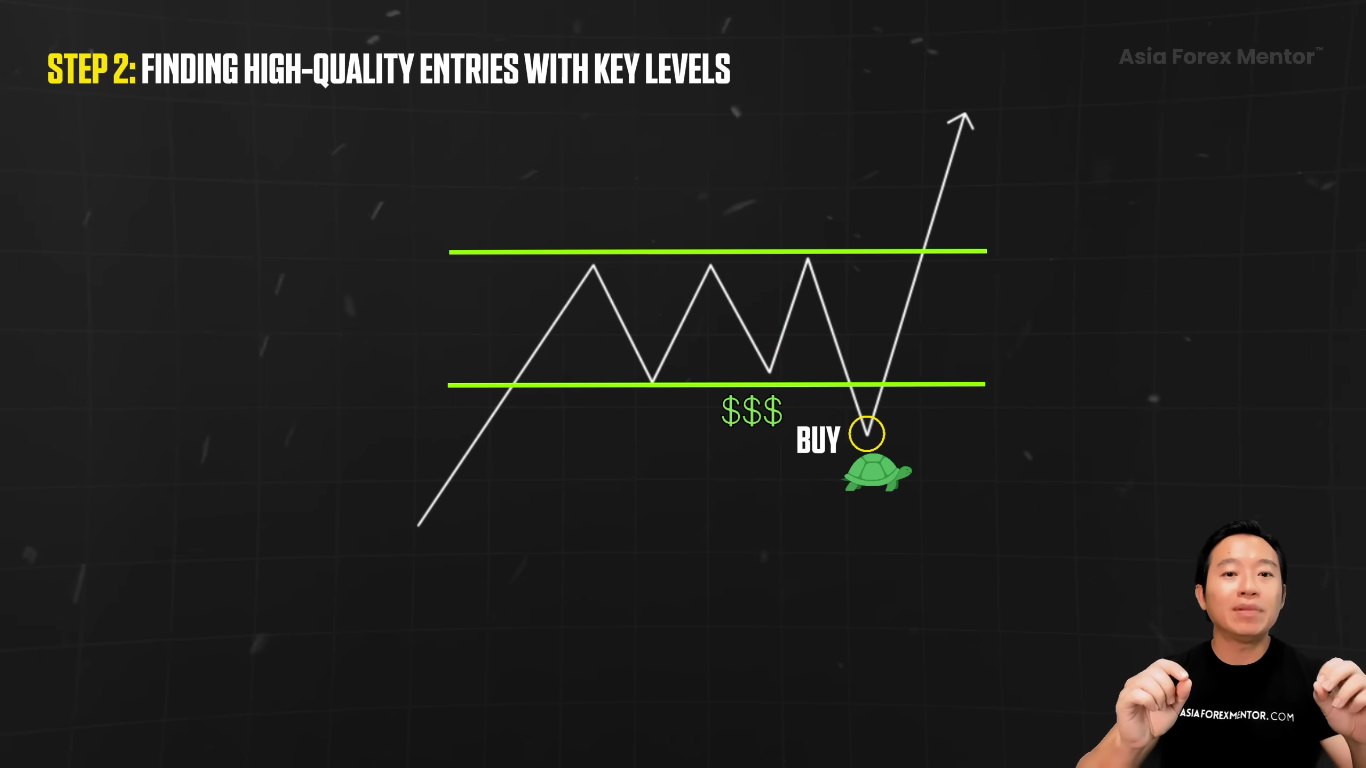
But here’s the thing where do we place our stop loss? How can we be sure that price is going to reverse there? Why can’t price just keep going lower?
We need to frame a higher timeframe liquidity draw. This gives us the bigger picture, so that we are not just trading randomly, guessing that this is probably going to reverse over here. So we’re going to understand where the bias lies first. Is price more likely to move higher or lower on the higher timeframe chart? Once we have identified this, then we can look for the turtle soup setup to match the direction of the higher timeframe.
So take a look at this. We start by identifying the drawn liquidity on the chart, and then we frame the turtle soup model after that. Below this level of sell side liquidity, there is an old low.
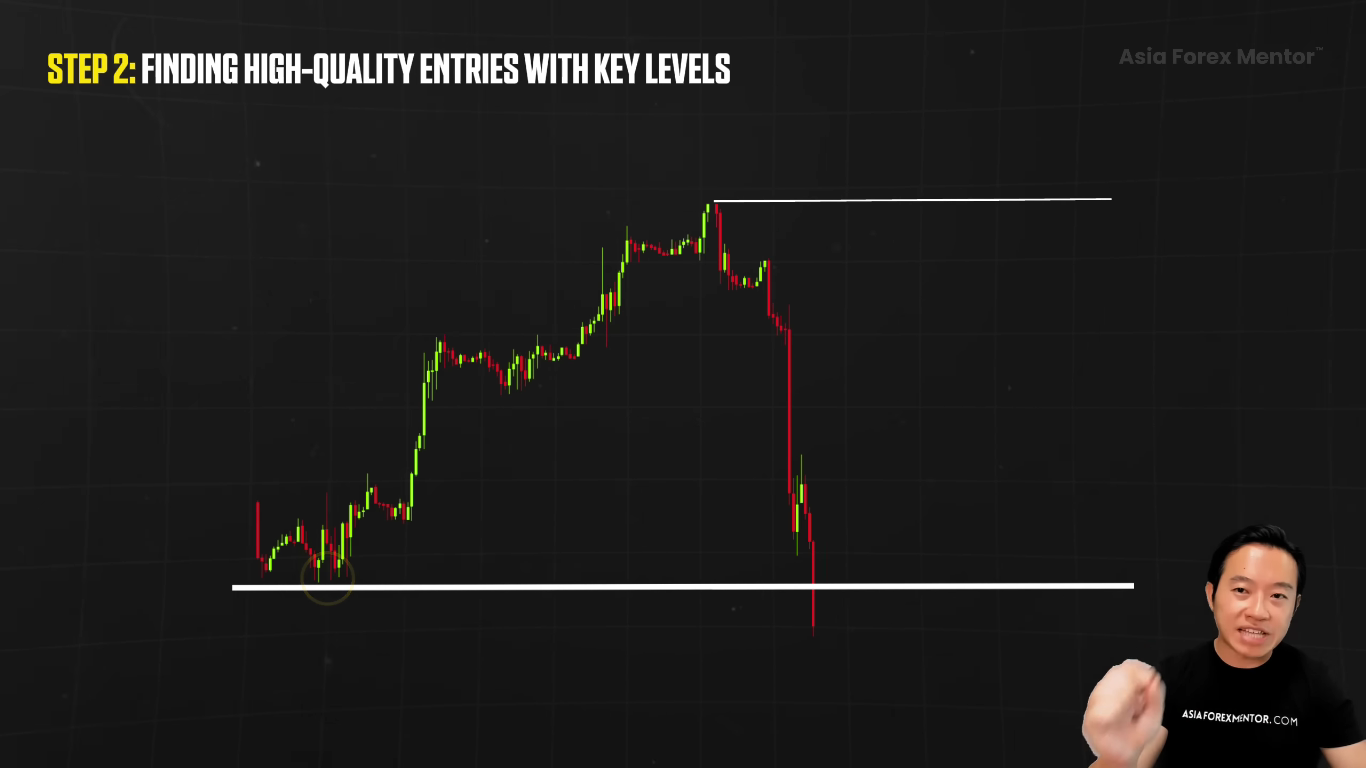
You’re going to notice price pops up and then it manipulates beneath it. This creates three consecutive downward closing candles,
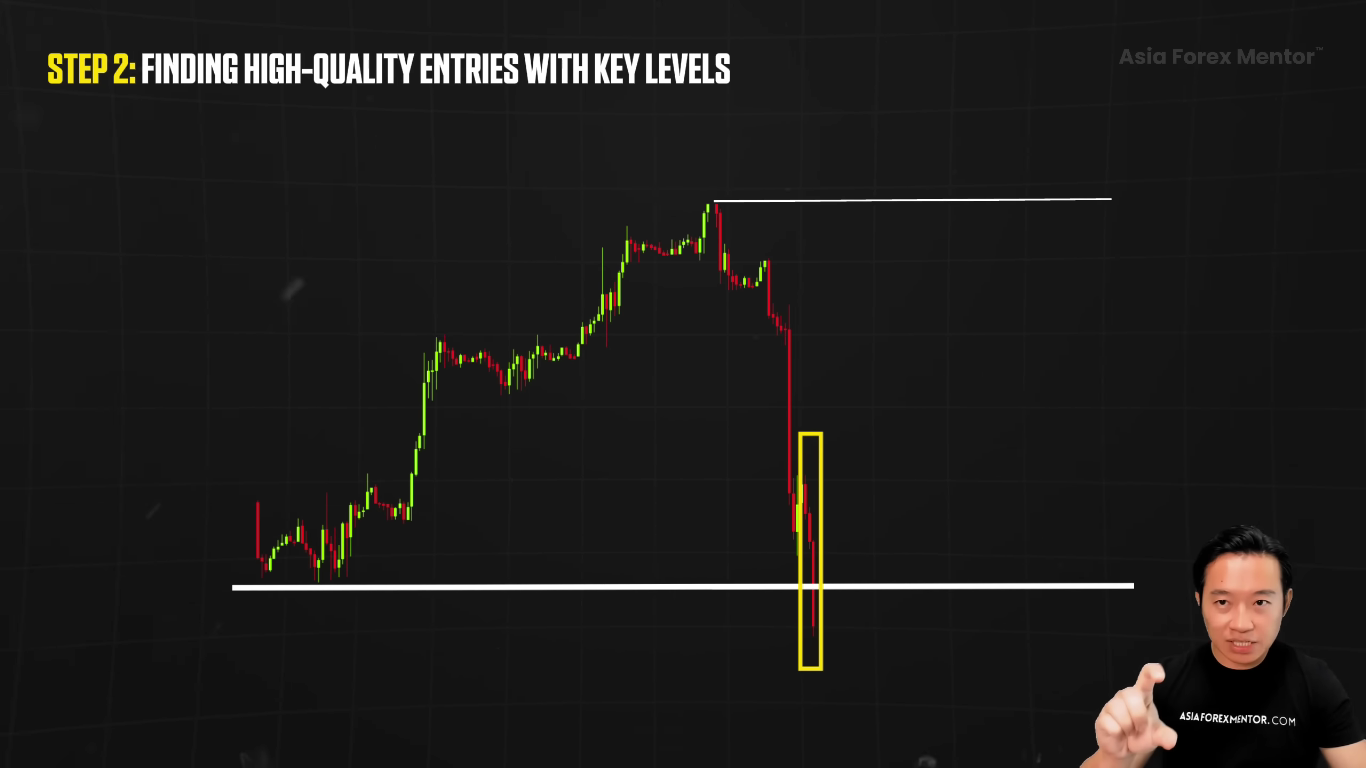
Which forms a bullish order block. I’m going to mark the open of these three consecutive downward closing candles.
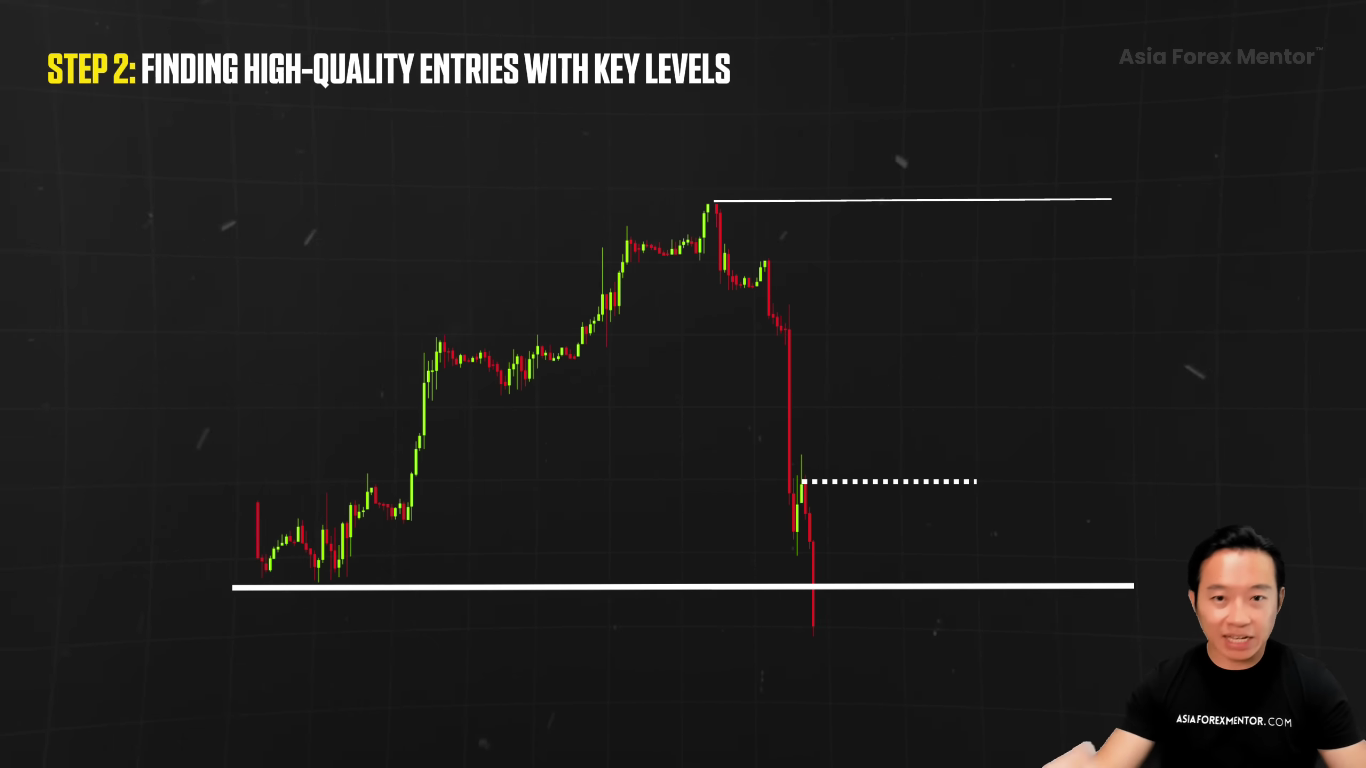
When I see price take out the sell side liquidity, after already pushing down to the sell side,
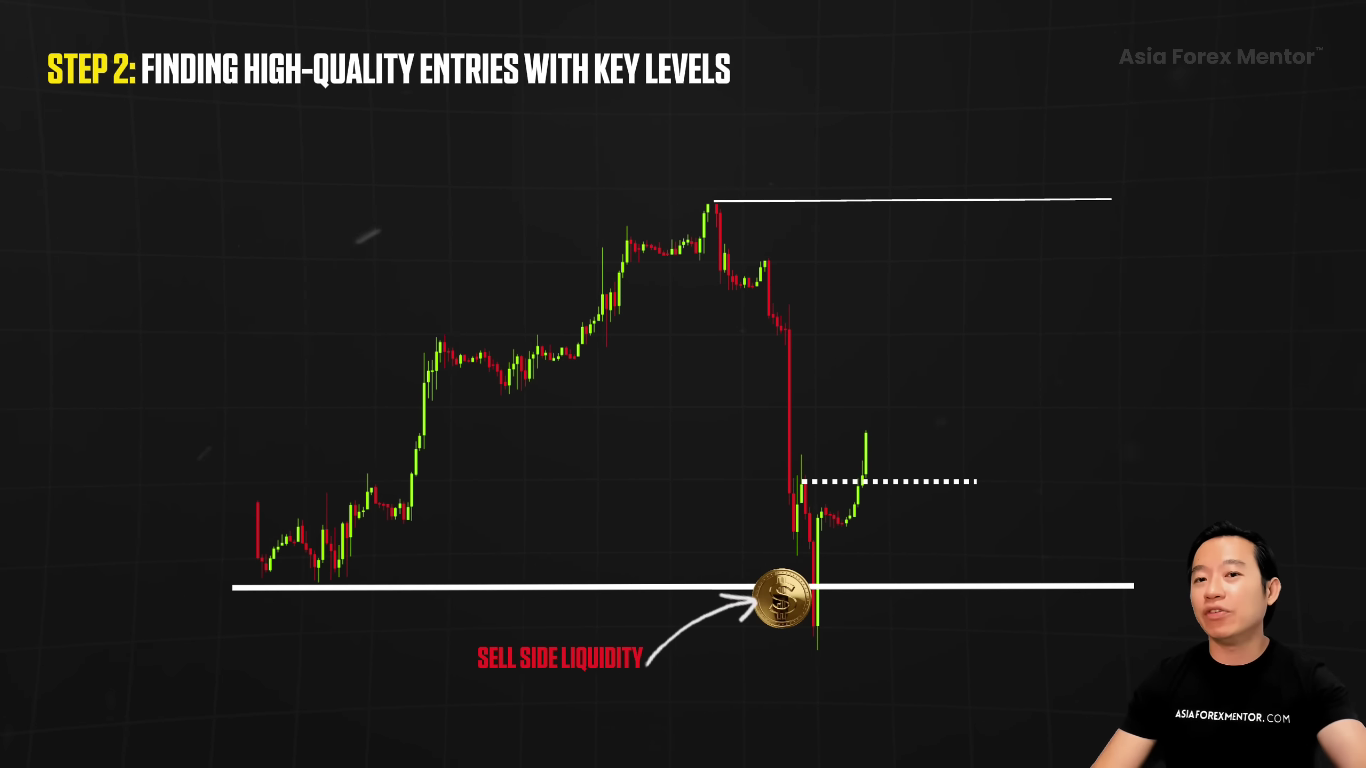
And then the market breaks above all these downward closing candles and a fair value gap forms in the move up this will tell us that price is likely going to continue expanding towards the buy side liquidity now.
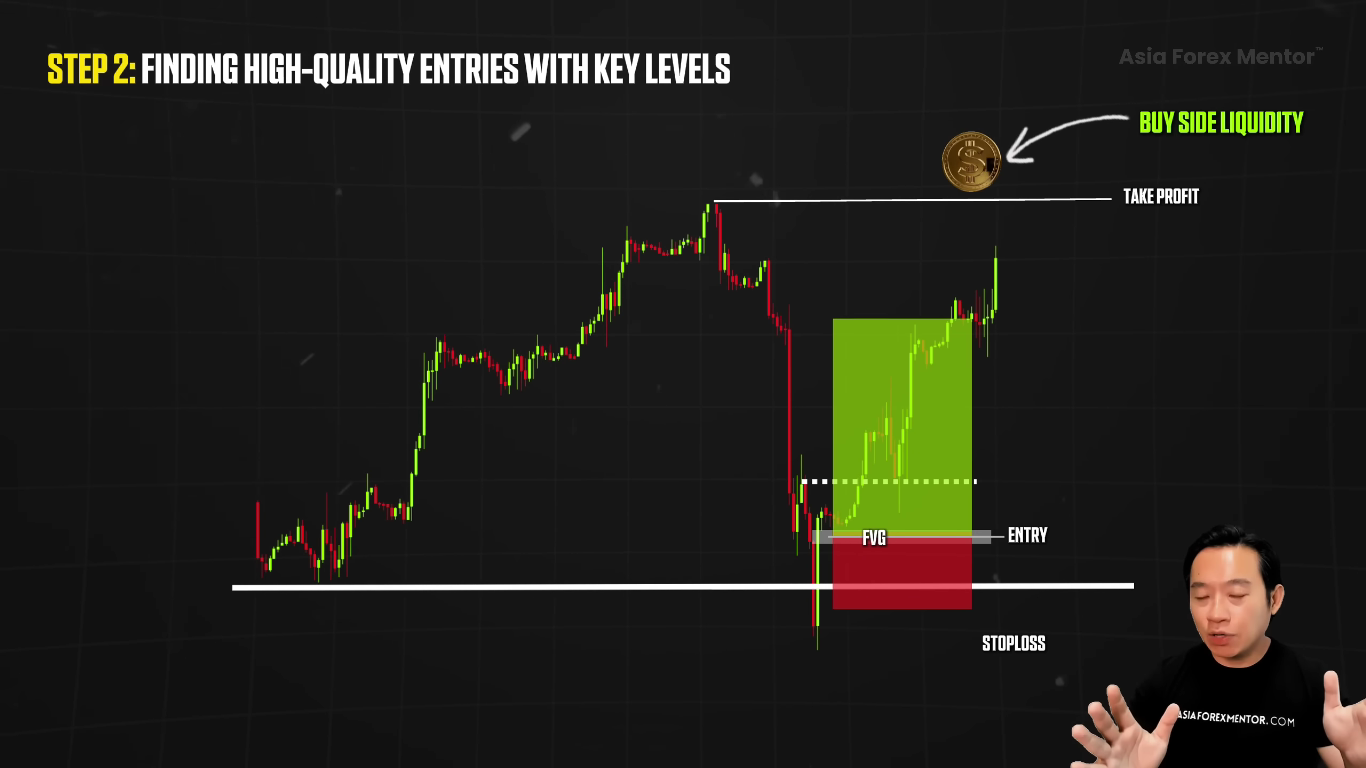
So the buy side liquidity will be resting above the highs, and even higher above it the whole area there.
Now I’m not going to aim for the high immediately. Once price takes out the high, there could be a chance that price could consolidate or retrace. So I’m going to frame this as my drawn liquidity target.
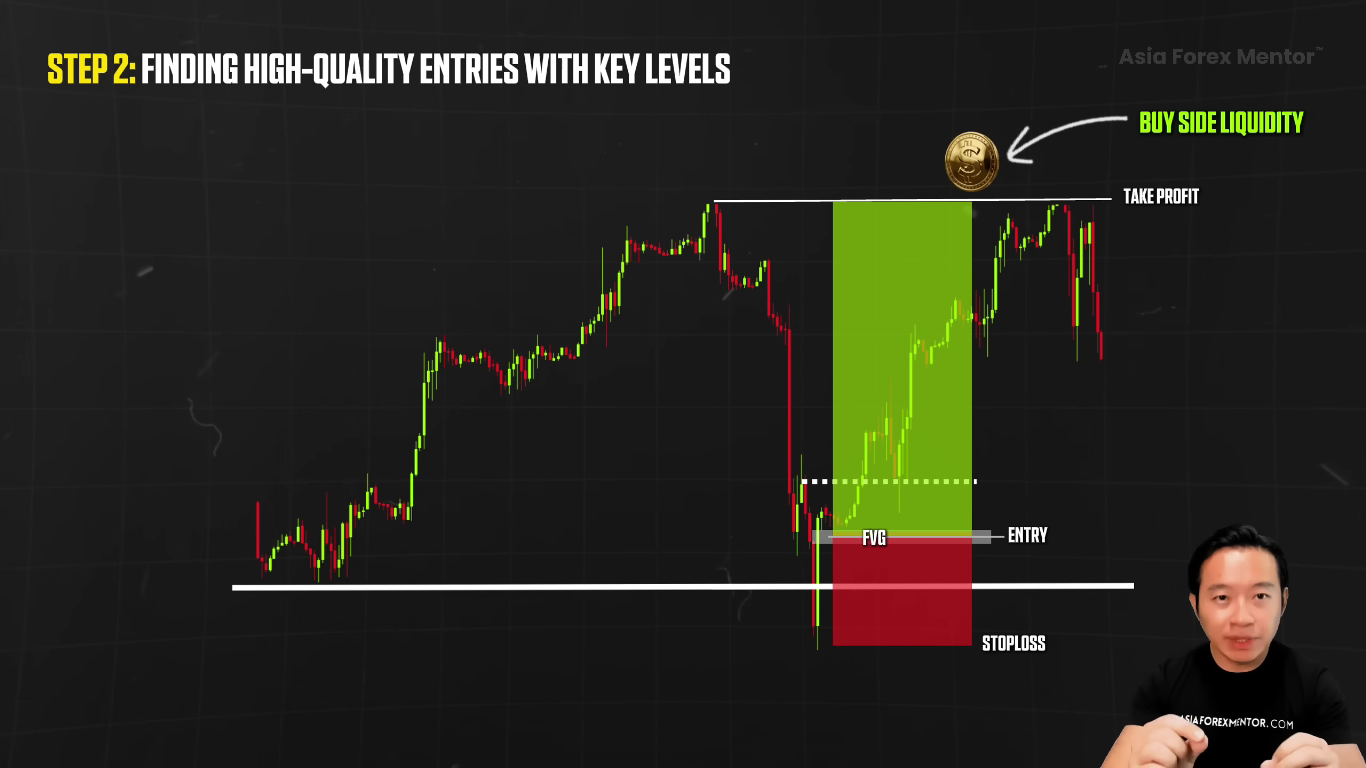
This step is about timing our turtle soup entry using key levels like fair value gaps. We are not guessing whether or not it’s going to keep going downwards. We are not guessing the sweep.
Now that we know where to enter, we’re going to add more conviction using an advanced tool to make this even sharper. If one market sweeps the low and the other refuses, this is smart money tipping its hand.
Step 3 Adding Conviction With the SMT Divergence
This is where we’re going to add real precision to the turtle soup. Now we’re adding confluence towards it already.
The SMT is a really good thing to spice things up in the turtle soup, because sweeping the liquidity alone is not enough. If price simply takes out the sell side liquidity and then you buy immediately like we said, price can go lower.
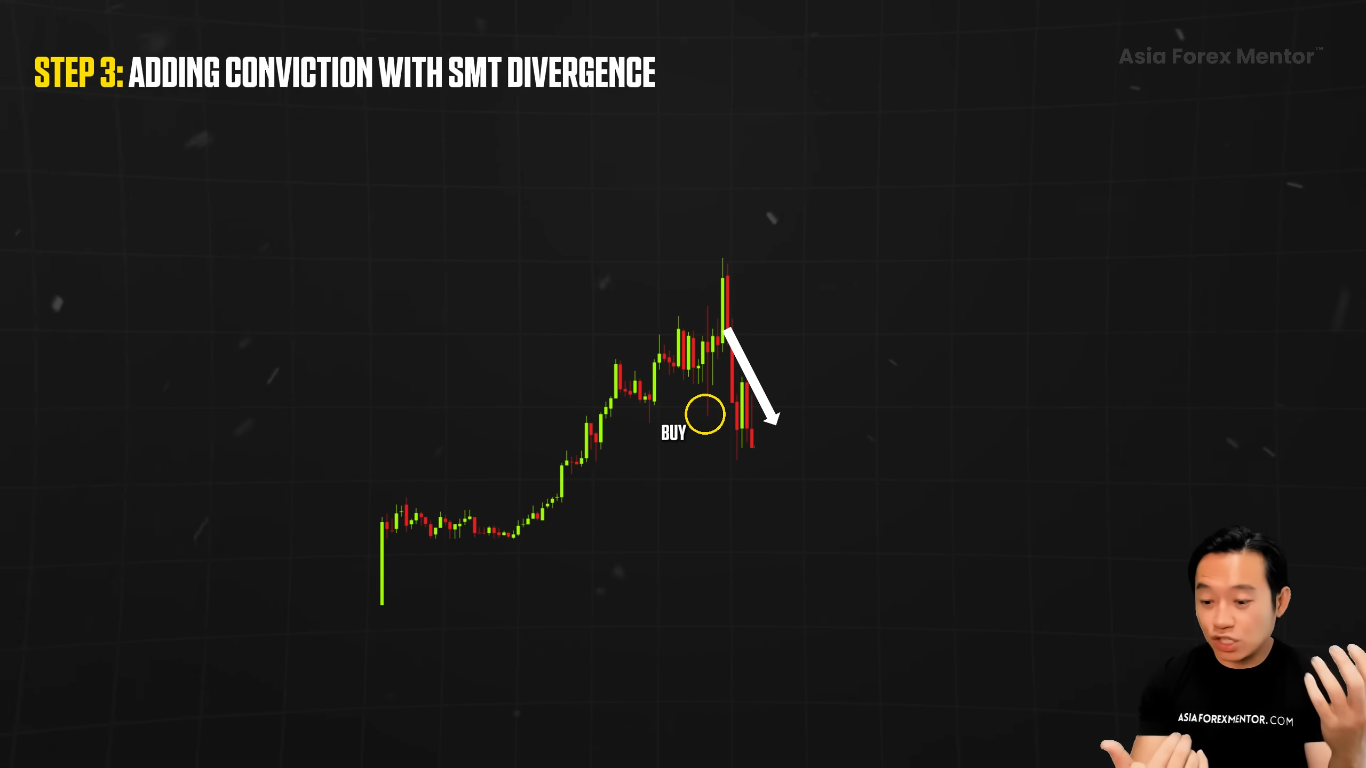
So then what? Where is your stop loss? It’s going to be really dangerous. So how do you know that this is actually a reversal and not a continuation downwards? Which is why we want to look for turtle soup at specific levels with confirmation.
We already talked about the fair value gap earlier. Here’s next. If the higher timeframe is bullish, then we’ve got a bullish bias, so we know that price is likely going to keep going higher. So when price trades beneath the sell side liquidity, we cannot just assume that price is going to reverse back up.
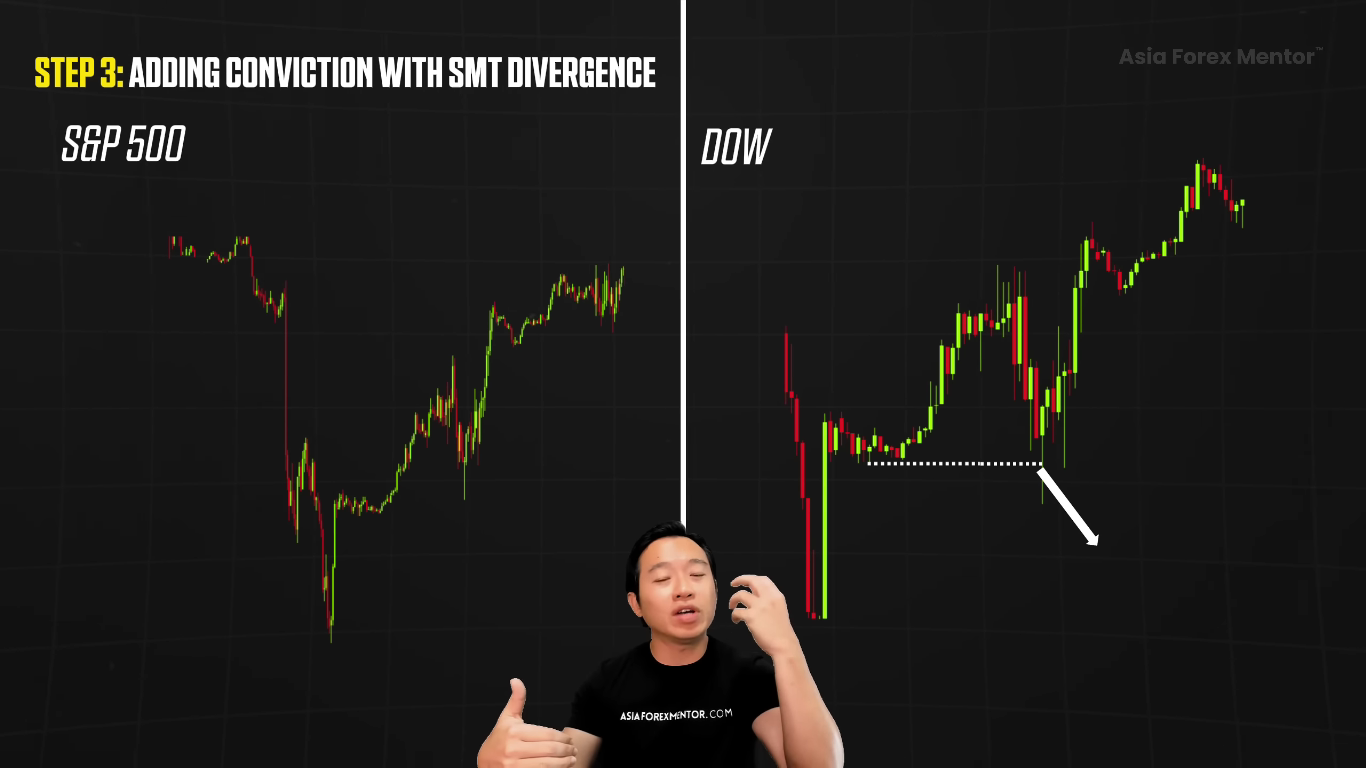
We’re going to look for the SMT to confirm that the smart money is also stepping in.
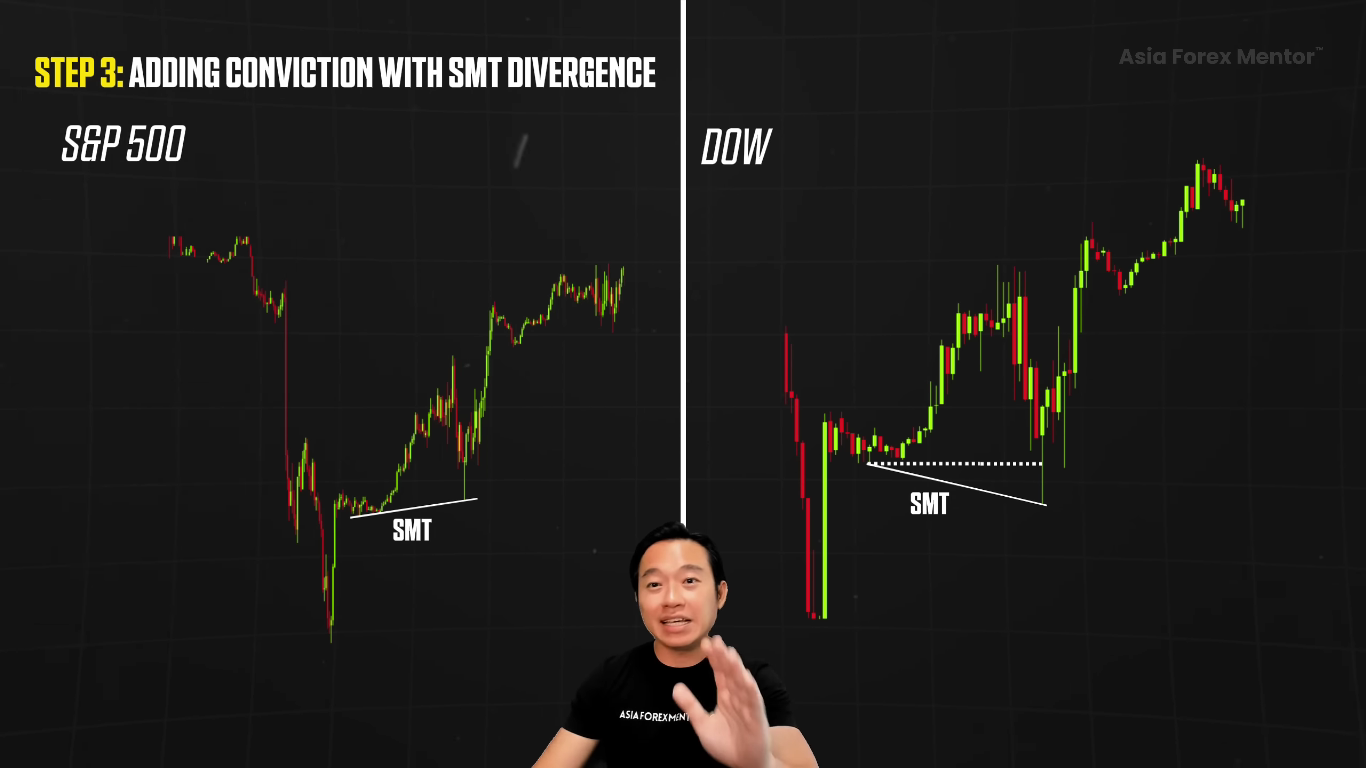
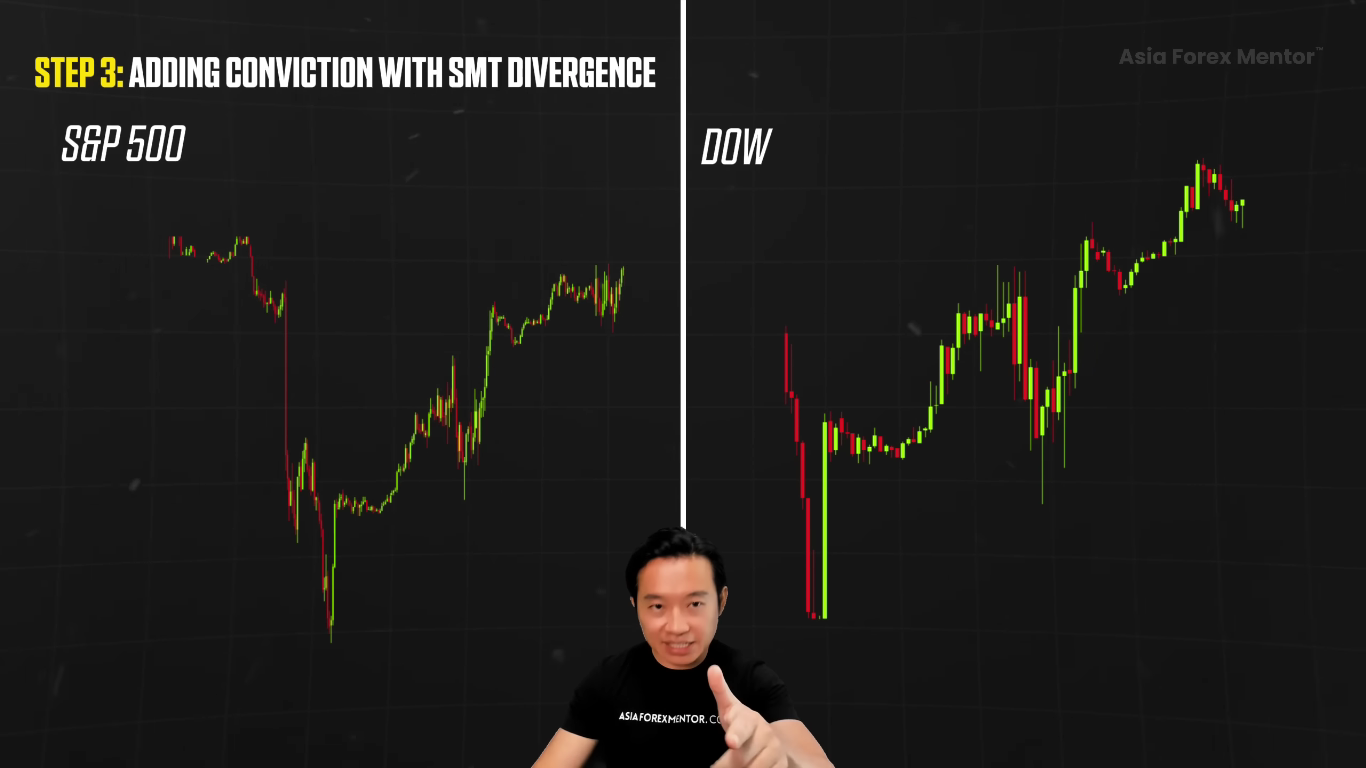
When one pair makes a new low and the other correlated one does not this difference tells you something. This would work in any vehicle out there. For example, you find correlated forex pairs, correlated crypto pairs, indexes, stocks, et cetera. This is where the smart money would reveal the strength and weakness between the assets.
So here’s how it looks. For example, on the Dow Jones, price trades beneath the sell side liquidity.
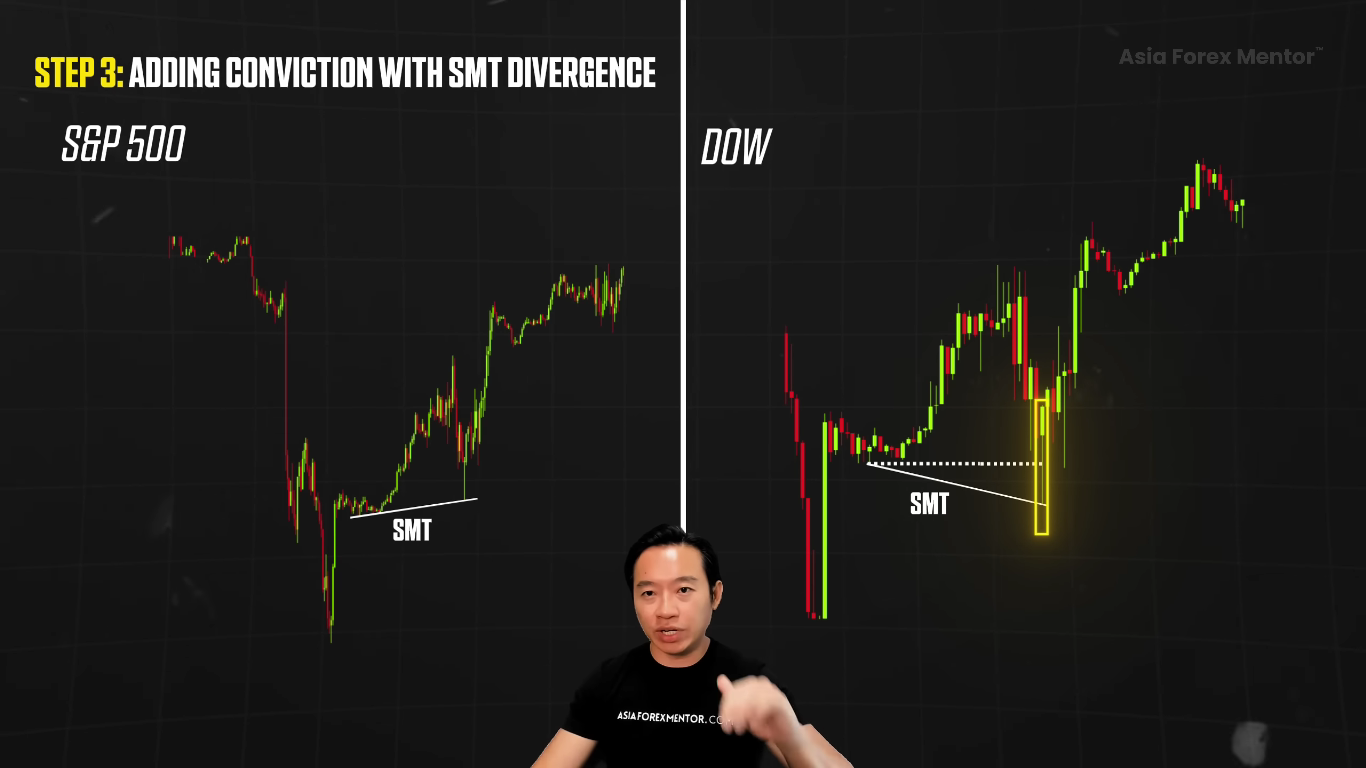
We’re going to see how this behaves. It opens, and then it pushes lower,
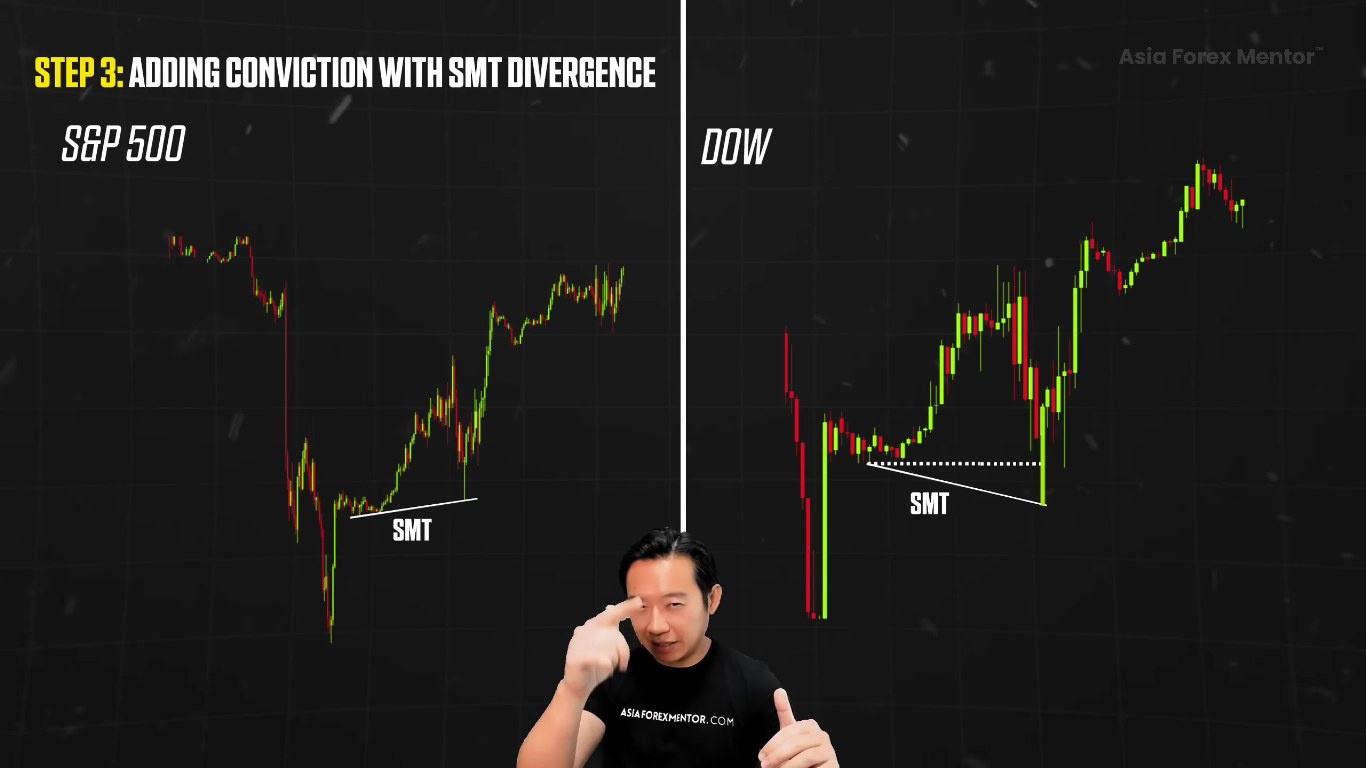
Creating the dip wick, and then it closes back upwards. This pattern is what we call the power of three. It opens, it manipulates lower to run all the stops, and then it expands higher. This is not random behavior this is actually an algorithmic signature. This is a pattern.
Now you compare that low with the same structure on this chart. For example, the SMT, which is the correlated pair, made a lower low,
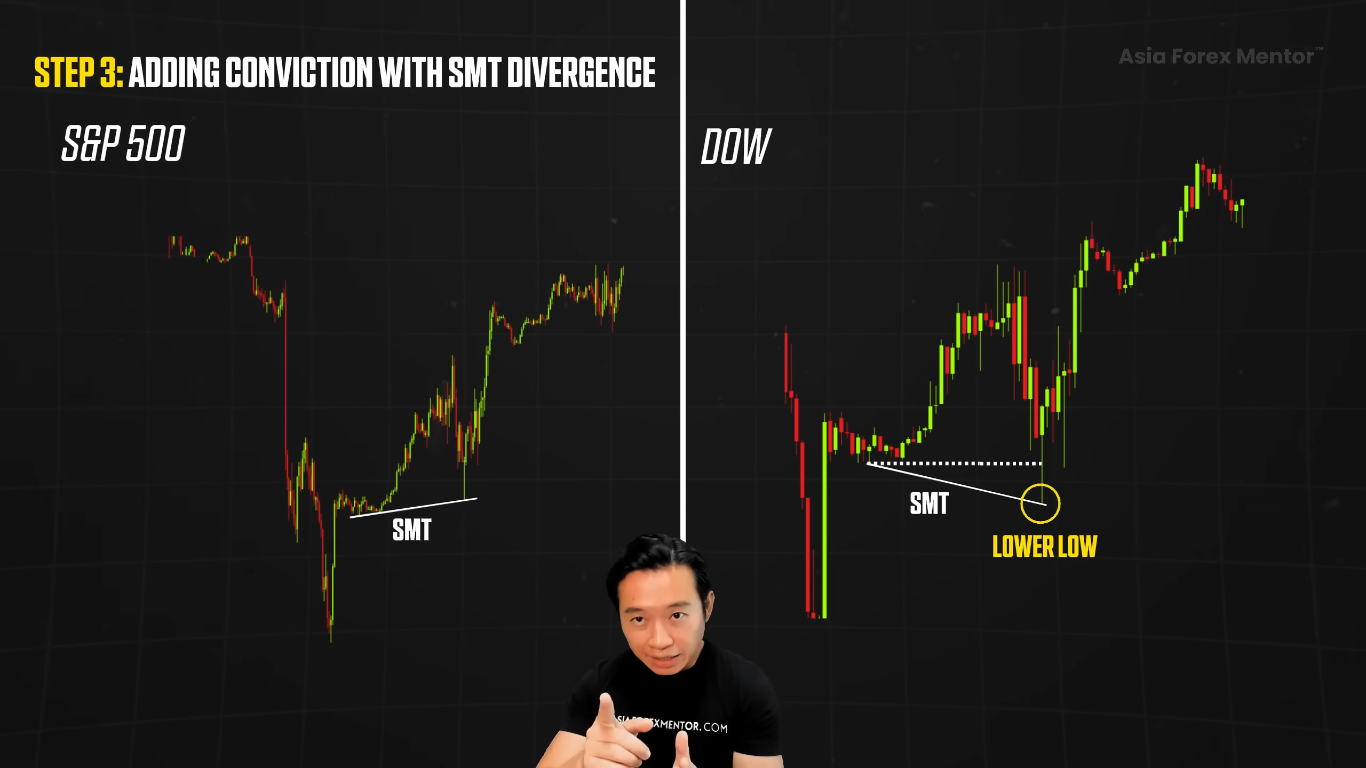
But the other forms a higher low. This is what we call the SMT divergence.
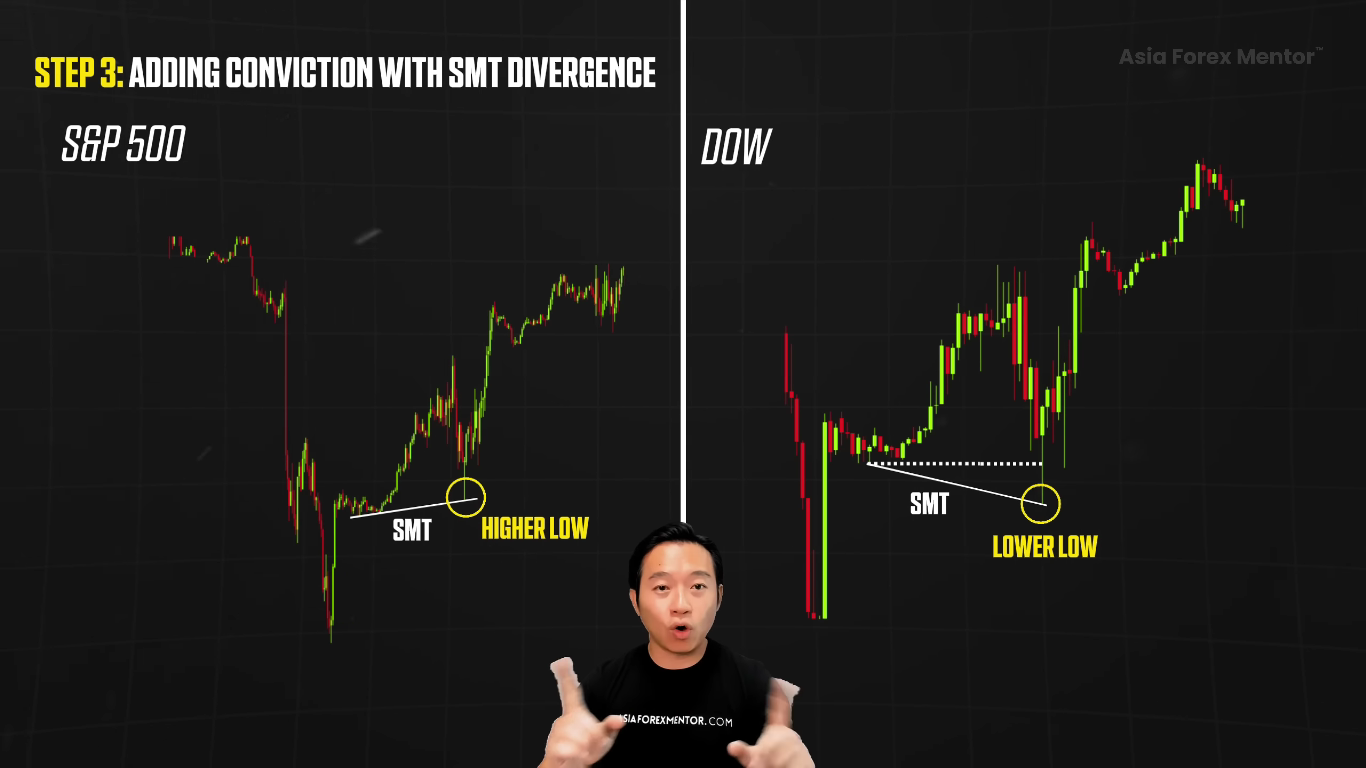
One market is weaker, one is stronger. So when your higher timeframe bias is already bullish, the divergence tells us that smart money likely bought all those sell stops and is preparing to expand towards the opposite liquidity, the opposite side.
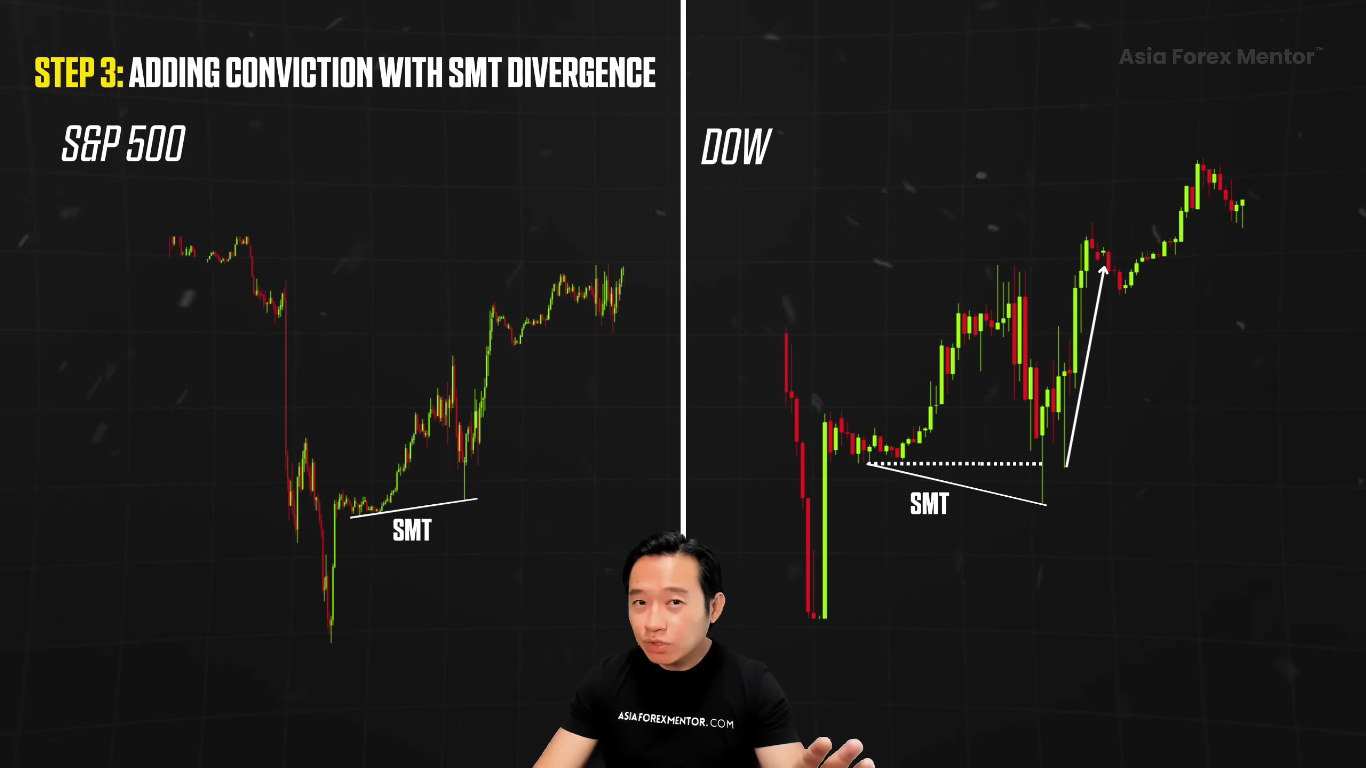
So when you see that, you’re no longer guessing. The weaker asset shows the market sweeping it. The stronger asset refuses to confirm it yet. So this tells me that the sweep is likely manipulation.
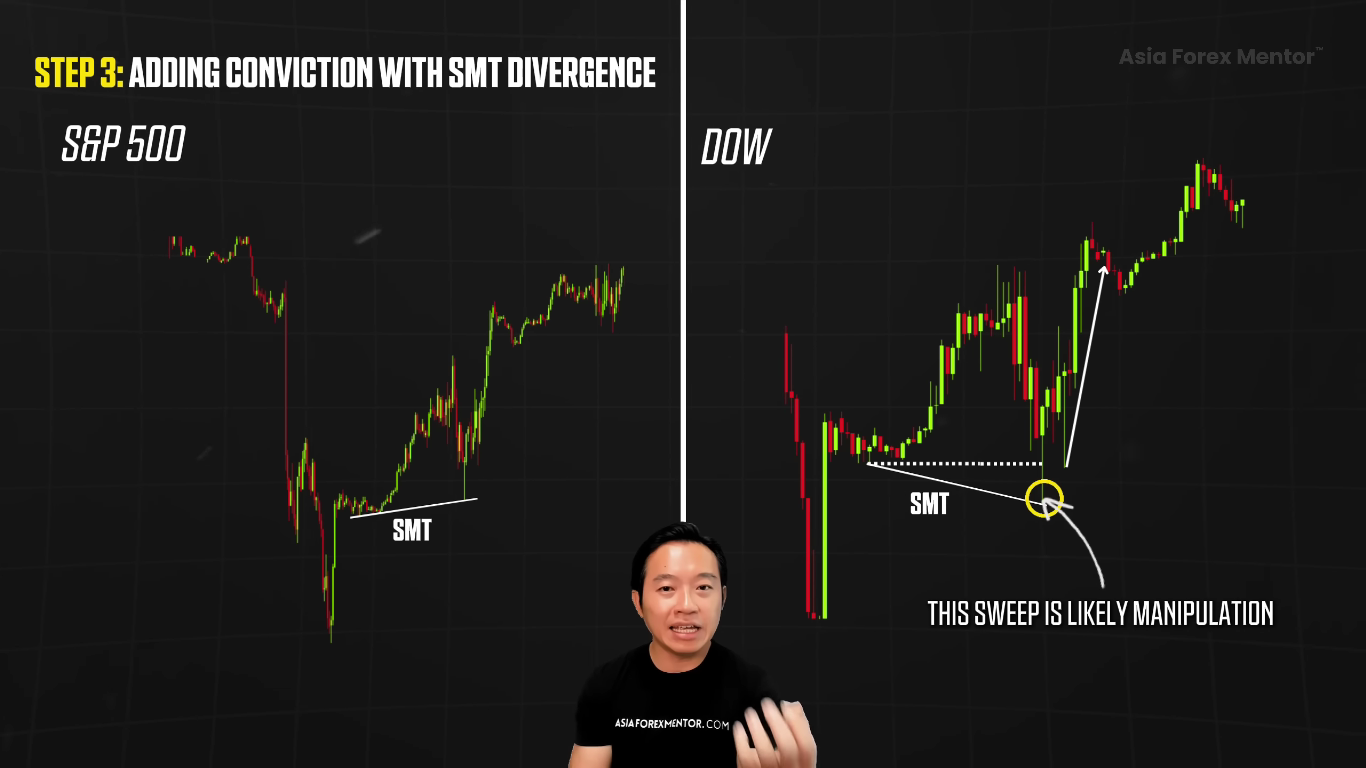
It’s not a continuation downwards. It’s a manipulation to go back into the reversal.
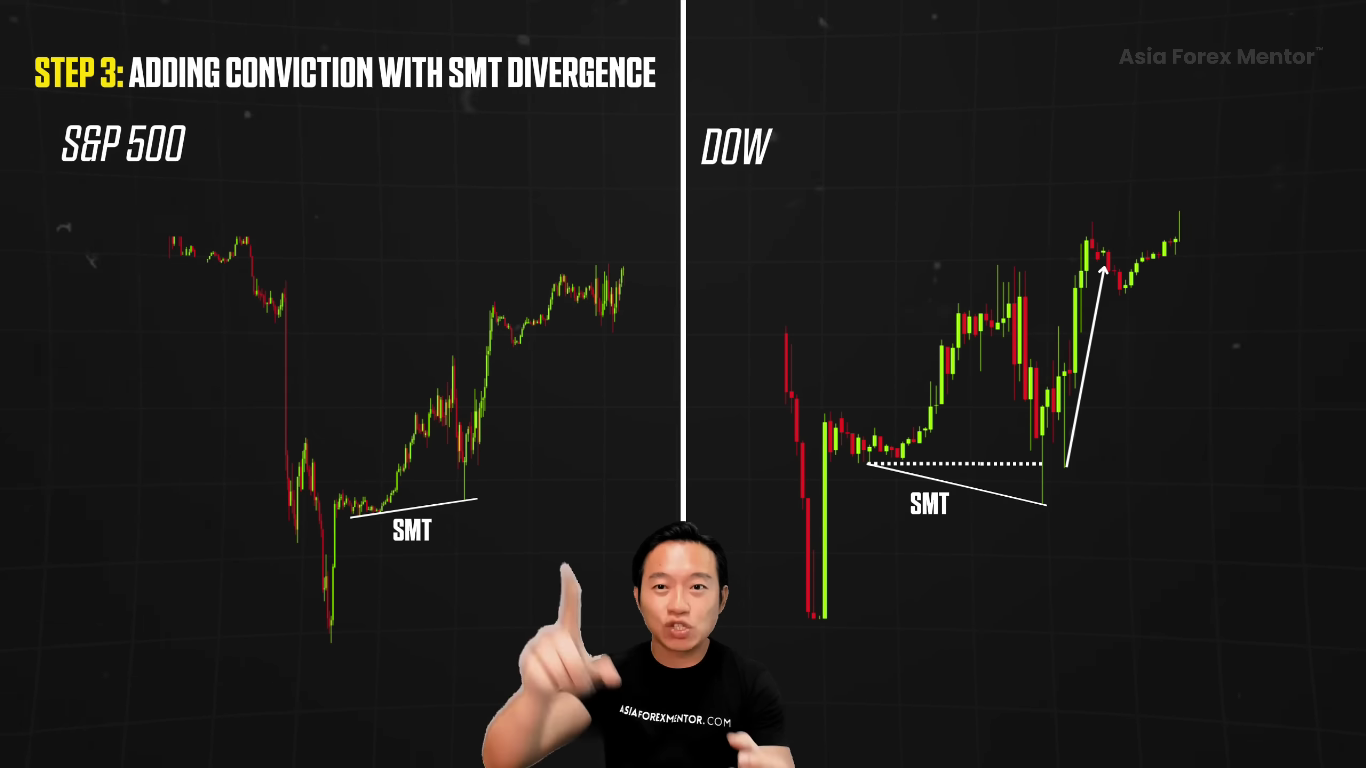
So if the SMT forms at the sell side liquidity, and the buyers the higher timeframe are already pointing upward, we’re going to anticipate a reversal over there.
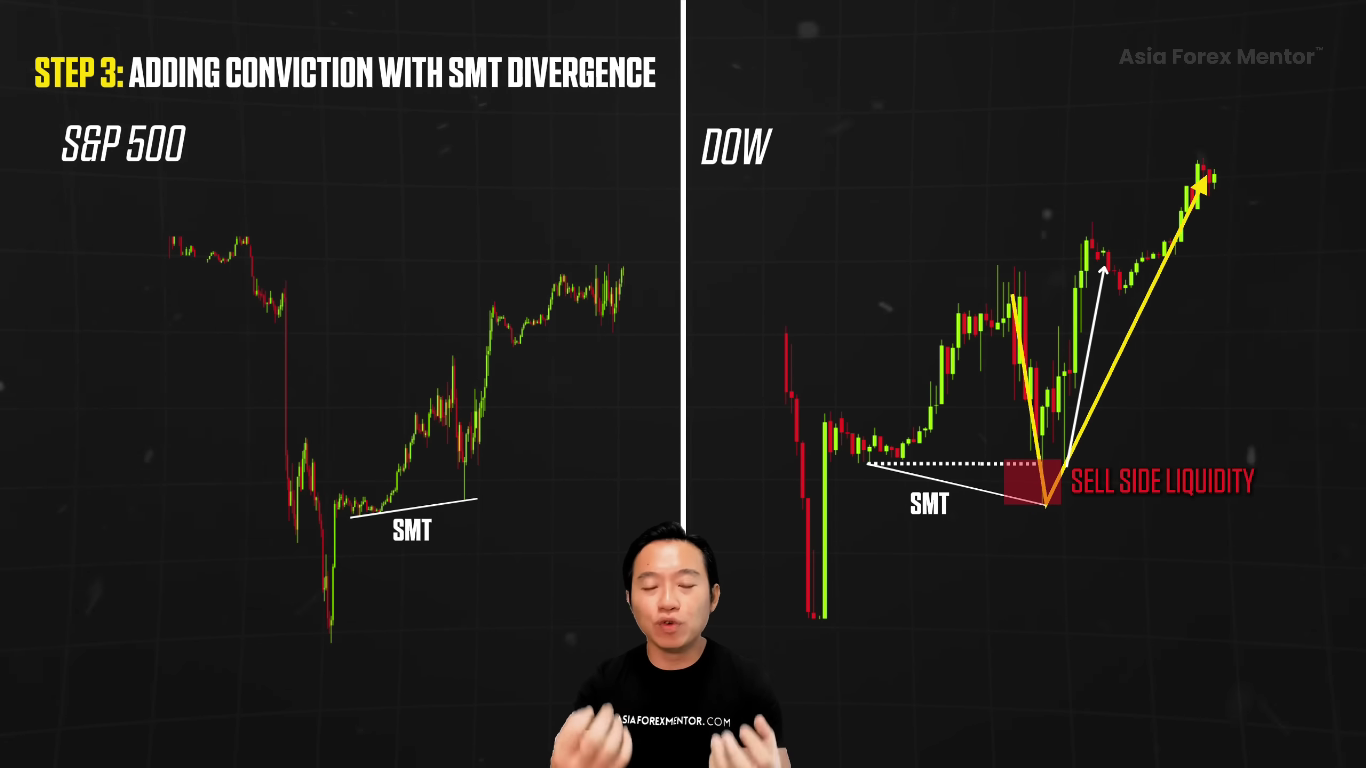
This is how you filter all the poor entries. Without SMT, we may enter too early without extra confirmation. With the SMT, we wait for confirmation in the correlated pair first that the liquidity grab was actually intentional positioning and then we enter with higher conviction.
So what does a bullish turtle soup with SMT look like? Price sweeps the sell side liquidity and it forms the power of three.
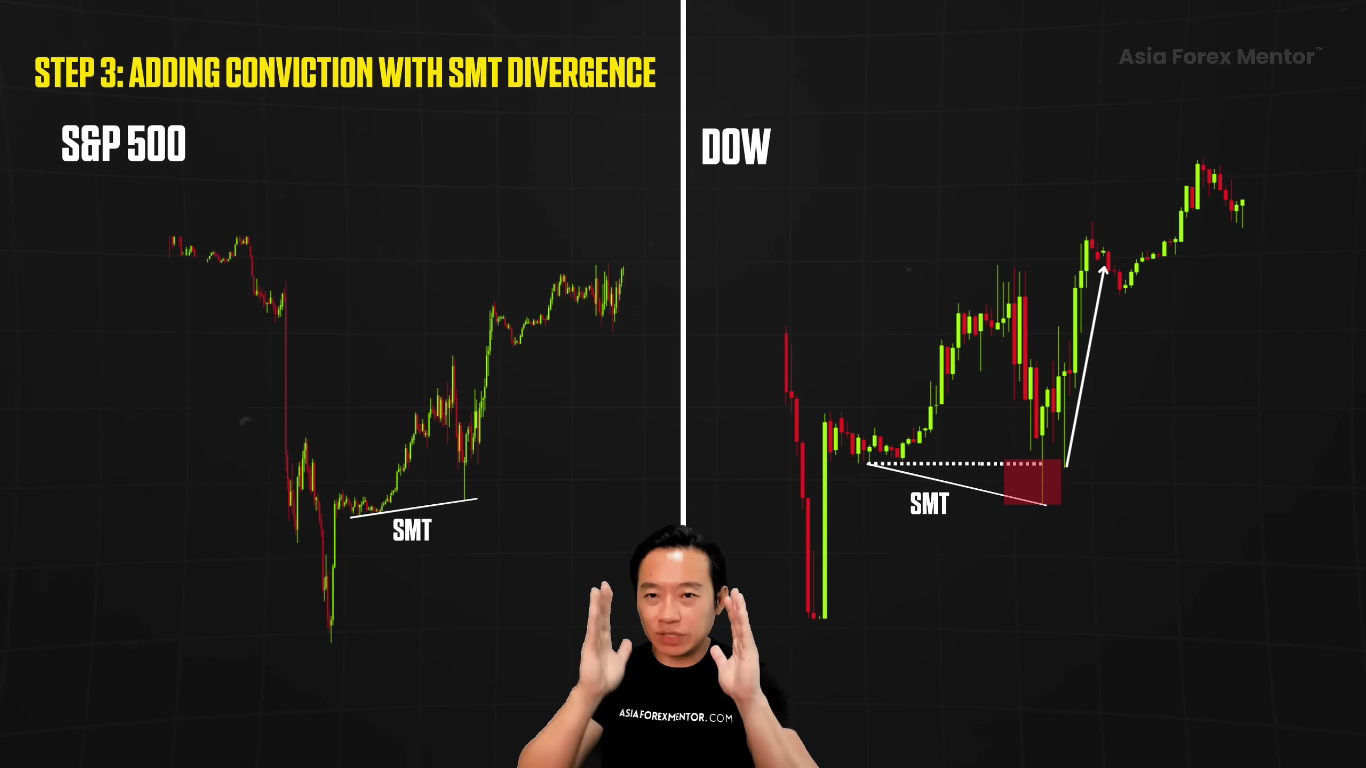
The pattern can be a power of three or whatever it forms the power of three signature with that rejection wick. It could be a CRT as well. I’ve got a video over there, check it out. Then the SMT divergence appears between these correlated markets like I said, it can be in any market. The higher timeframe buyers are pointing upwards.
At this point, we anticipate that the smart money bought all those stops and it’s targeting the liquidity on the other side of the range. For our take profit, we can target all the previous highs,
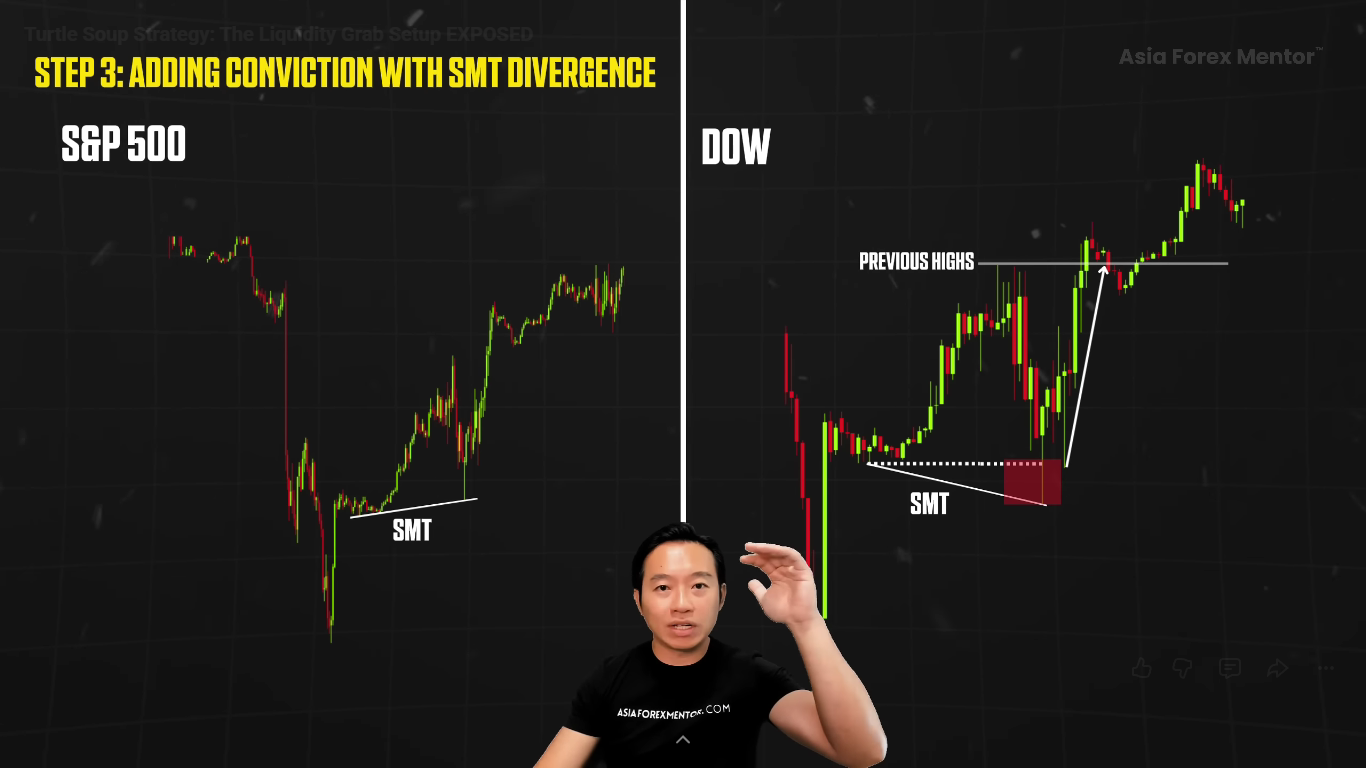
All the equal highs, the relative equal highs, because that’s where all the liquidity is for example, the higher timeframe draw on liquidity. So essentially, we are trading from the range low
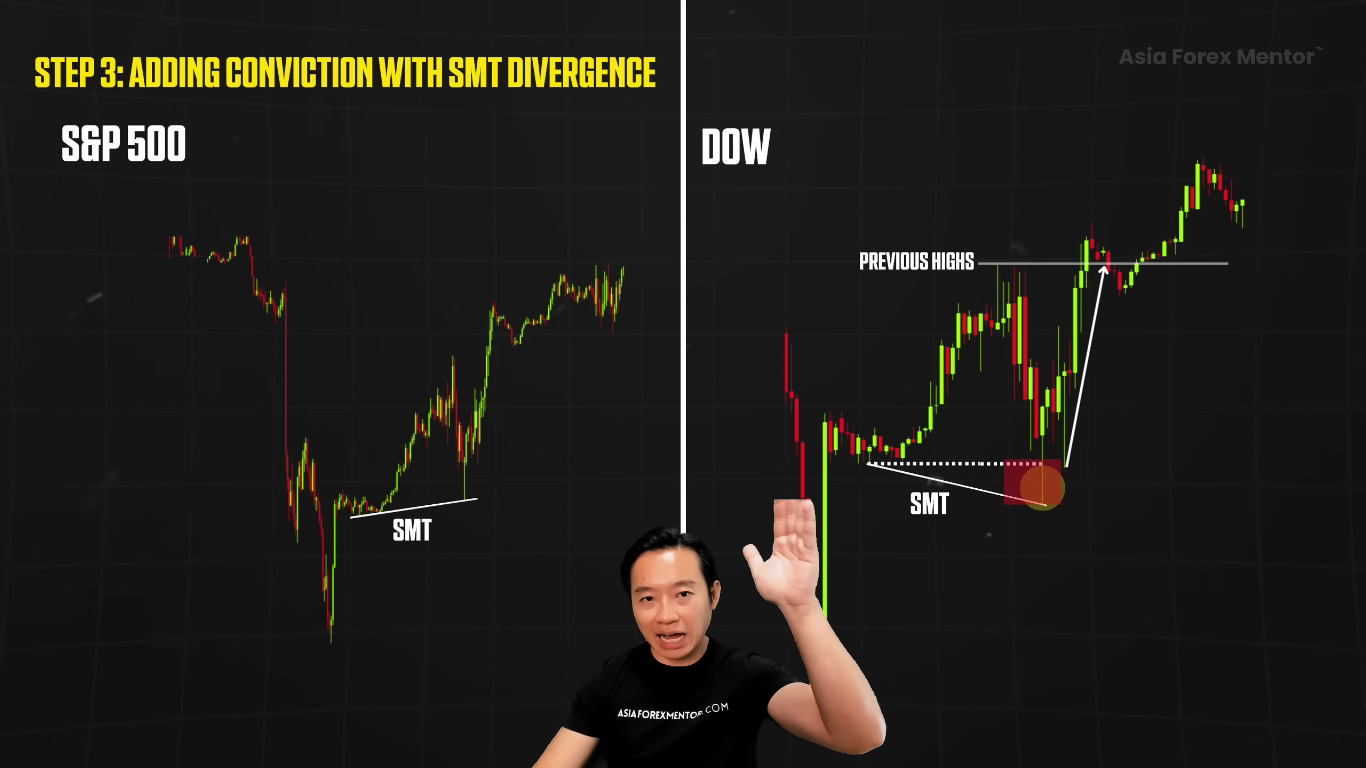
To the range high. That wick at the low is critical. It shows rejection and absorption.
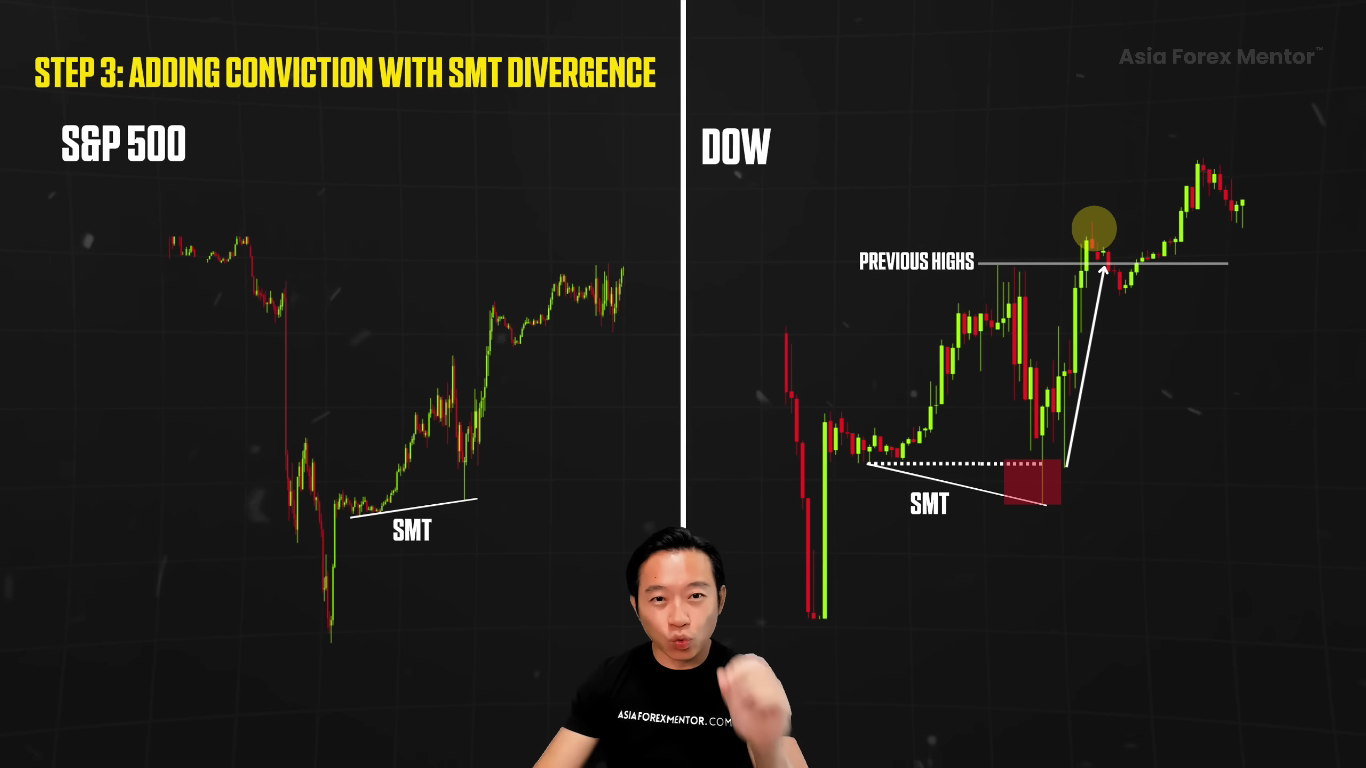
So the rule is simple, but it’s powerful. When you are bullish and the higher timeframe draw is higher, look for SMT divergence at the sell side liquidity. When you are bearish overall, going down, and the draw is lower, we look for SMT at the buy side liquidity to head its way downwards.
So the smart money sweeps all the liquidity it’s like a fake move to enter at those positions. The SMT now helps us determine whether or not the sweep is actually a true reversal setup or a continuation. So this refines our entry and gives us more conviction.
Putting the Turtle Soup Together
The turtle soup becomes simple once you understand what price is truly targeting. The middle of the range is where most traders get trapped. This is the internal liquidity. But the real opportunities sit at the edges above the old highs and below the old lows, where all the stops are resting and all the smart money is waiting.
Then we refine the entry. A liquidity sweep alone is not enough. We learn how to look for key levels, for example the fair value gaps. This gives all these levels a reason for price to react over there. This removes a random entry just to catch a reversal, and turns it into an actual real one.
And then we sharpen it further with the SMT divergence. So when one market sweeps liquidity and another one refuses to confirm it, this tells us the strength versus the weakness. And this tells us whether the move is actually a manipulation to go into our intended direction, or a real expansion that’s really changing the direction.
When you combine liquidity, key levels, and the SMT, this is where you stop guessing altogether and start trading with structure and confidence.
What To Do Next
Here’s what to do next. I want to give you something that’s going to change the way that you trade forever. I’ve put together a free training that walks you through the exact three-step system that I use to find high probability trades with sniper level entries, real risk control, and zero guesswork.
This is the same system that I use myself, and the same one that has helped thousands of traders go from frustration to consistent wins. And I’m giving it to you for free. There’s no fluff, no filler, just pure strategy. So if you’ve ever wanted to trade with clarity and real conviction, this is the place to start.
👉 FREE 3-Step Training: https://bit.ly/Free-3-StepTraining
FAQs
What is the turtle soup strategy in trading?
Turtle soup is a liquidity strategy. Instead of chasing breakouts, you sell above the old highs and buy below the old lows exactly where the stops are resting and the smart money is waiting. It’s about trading the edges of the range, not the middle where most traders get trapped.
Is turtle soup a reversal or a breakout strategy?
It’s a reversal strategy that traps breakout traders. When price pushes past a high or low and sweeps the liquidity sitting there, that move is often manipulation, not real momentum. Turtle soup positions for the reversal back into the range, targeting the opposite side liquidity.
What is SMT divergence in the turtle soup setup?
SMT divergence is when two correlated markets disagree at a key level. One pair makes a new low while the other forms a higher low. That difference reveals strength versus weakness, and confirms the sweep was intentional positioning by smart money rather than a continuation.
Where do you put your stop loss in a turtle soup trade?
You frame the entry off the higher timeframe draw and a key level like a fair value gap, then place the stop beyond the swept liquidity. The SMT confirmation is what keeps you from entering too early and guessing whether price will keep running.
Does the turtle soup strategy work on forex, crypto, and indices?
Yes. The concept works in any vehicle correlated forex pairs, crypto pairs, indexes, and stocks. Liquidity, key levels, and SMT divergence behave the same way across markets, which is why you can run the same framework wherever you trade.