English
 简体中文
简体中文 繁體中文
繁體中文 日本語
日本語 한국어
한국어 Bahasa Melayu
 Bahasa Indonesia
 Filipino
 ไทย
ไทย Tiếng Việt
 हिन्दी
 العربية
 Italiano
 Português
 Русский
 Español
 Français
 Singapore
 Cambodia
 Myanmar
 Brunei
 Australia
  New Zealand
 Switzerland
 UAE
UAE United States
 Mexico
 Argentina
 South Africa
 IC Markets
 Pepperstone
 AvaTrade
 XM
XM Plus500
 RoboForex
 TMGM
TMGM Exness
 JustMarkets
 Orbex
Orbex Interactive Brokers
 Saxo
Saxo Tiger Brokers
 Binance
 Coinbase
 Gemini Exchange
 Kraken
 iFunds
 IC Funded
 The 5%ers
 TopStep
 IQ Option
 Pocket Option
 RaceOption
 IQCent
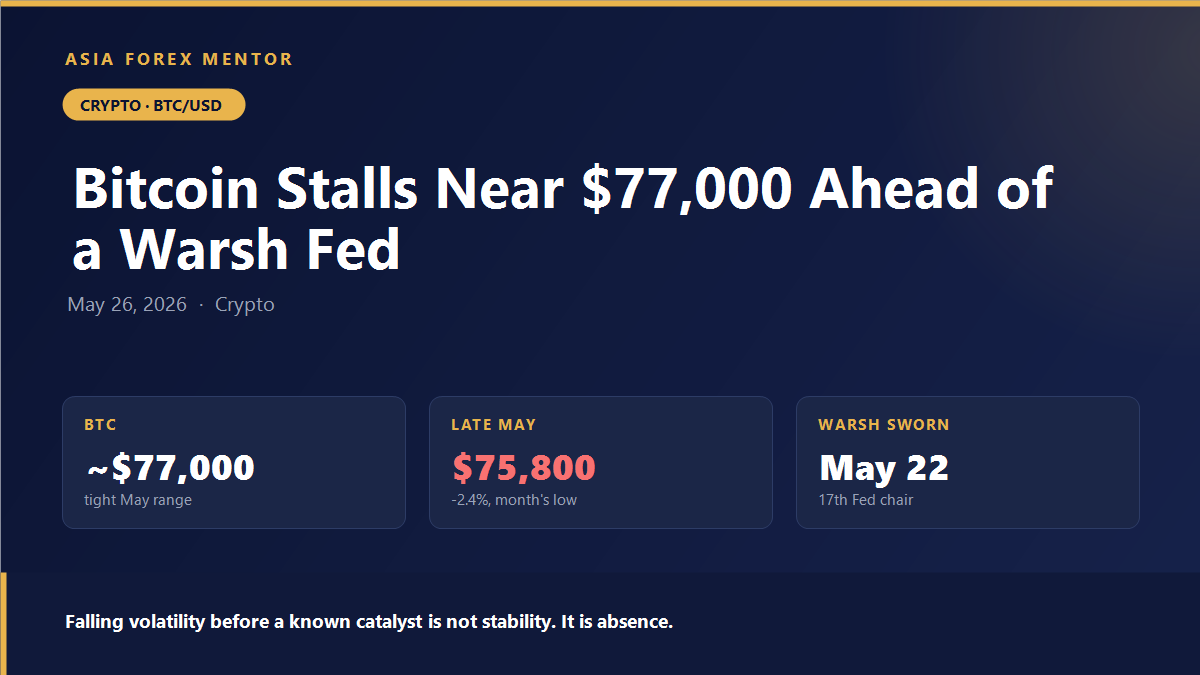
Bitcoin has spent most of May doing something it rarely does: very little.
Price has held a tight pattern near $77,000 through the second half of the month, drifting to around $75,800 late in May — a decline of roughly 2.4% in a session and its lowest level of the month — as traders positioned ahead of Kevin Warsh formally taking over at the Federal Reserve. Warsh was sworn in as the 17th chair of the Federal Reserve on 22 May.
After a 12% April, a month of consolidation is not a failure. But the character of this particular consolidation is worth reading carefully, because it is being driven almost entirely by something outside crypto.
The Market Is Waiting, Not Deciding
Consolidation happens for two reasons. Either buyers and sellers genuinely disagree about value and are trading a range, or the market is waiting for information it knows is coming and nobody wants to commit capital before it arrives.
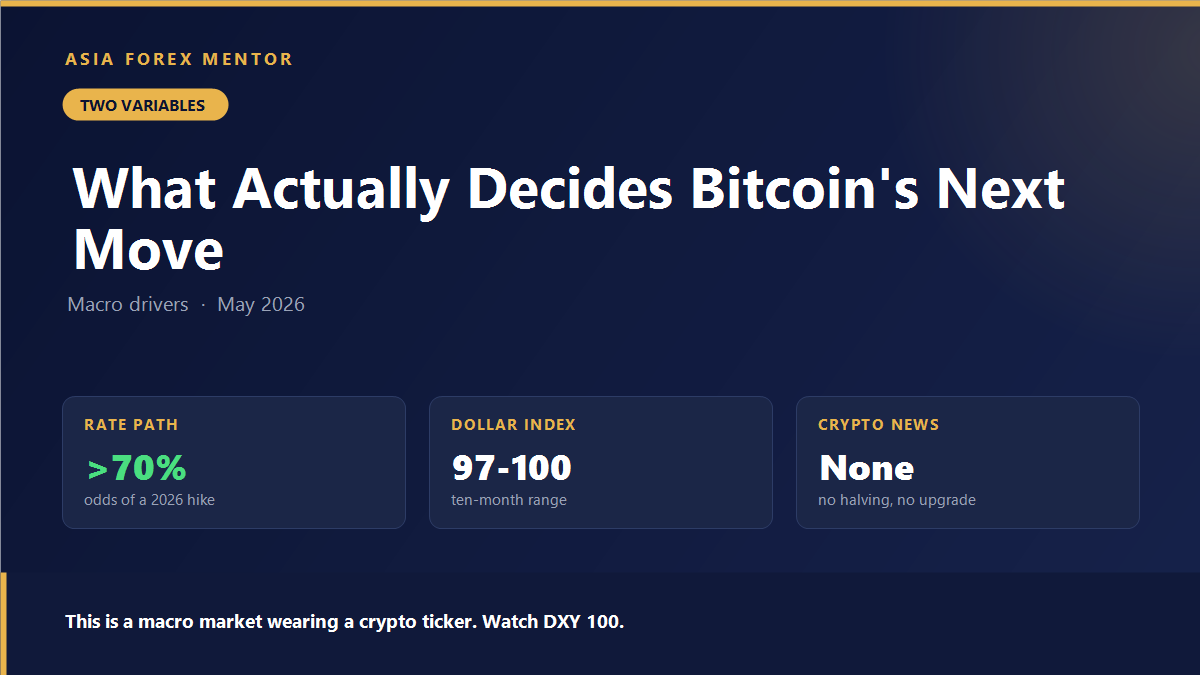
May was the second kind. With rate-cut odds for 2026 and 2027 having collapsed after Warsh’s confirmation, and traders pricing a greater than 70% chance of at least one hike by year-end, the single biggest input into risk-asset pricing was about to change hands. Committing size ahead of an unknown reaction function is a poor risk-reward proposition, so participants stepped back.
Falling volatility in that context is not stability. It is absence.
Why a New Fed Chair Matters This Much to Crypto
April demonstrated conclusively that Bitcoin is currently trading as a high-beta risk asset rather than a haven. It fell with equities during the March war shock while gold spiked to $5,400, then rallied 12% in April as risk appetite returned and the dollar fell 1.9%.
An asset behaving that way is directly exposed to the discount rate. Rate expectations are the dominant variable, and the person who sets them just changed.
Warsh arrives with a documented record of scepticism toward prolonged accommodation and large balance sheets — a stance formed largely in the context of asset price inflation. The implication for an asset class that has benefited enormously from abundant liquidity is not subtle, and the market has drawn the obvious conclusion.
The Two Variables That Decide the Next Move
The rate path. Warsh’s first FOMC meeting is the event where his reaction function starts becoming observable. Until then, traders are pricing a reputation rather than a record in office. The gap between those two is where the next repricing happens, in either direction.
The dollar. The DXY has consolidated between 97 and 100 for roughly ten months. A hawkish Fed is dollar-supportive, and a break above 100 removes a tailwind that has quietly supported dollar-priced crypto. Watch that level as directly as you watch Bitcoin itself.
Neither of these is crypto-native. There is no halving, no major upgrade, no regulatory catalyst currently driving price. This is a macro market wearing a crypto ticker.
The Case Against Over-Reading a Quiet Month
Some balance is warranted. A few points argue against treating May’s drift as bearish.
Bitcoin has held roughly $75,000–$77,000 through a period in which rate-cut expectations were entirely repriced away. That it did not break down harder under that repricing is itself information — the same news in a previous cycle would likely have produced a considerably larger drawdown.
The ETF complex has also changed the composition of the marginal buyer. Allocation flows respond to mandates and rebalancing rather than to overnight funding costs, which dampens the mechanical selling that used to accompany a hawkish turn.
Neither point makes Bitcoin immune to a hiking cycle. Both suggest the floor is firmer than it would have been two years ago.
How to Trade a Waiting Market
Low volatility before a known catalyst is not low risk. It is deferred risk. Options pricing typically reflects this even when spot looks calm — check implied volatility before assuming the market is quiet.
Range trading works until it doesn’t, and the failure is expensive. Fading the edges of a consolidation ahead of a binary event is selling volatility right before it arrives.
Watch the dollar for the lead. DXY frequently signals the direction before dollar-priced crypto confirms it.
Size for the gap. Crypto trades continuously, but liquidity thins considerably around major macro releases. Your realistic exit is worse than your stop level suggests.
For traders reviewing where they hold positions through volatile macro periods, our crypto broker reviews cover custody, fees and regional access.
The Bottom Line
Bitcoin near $77,000 is not a market that has made up its mind. It is one waiting to see what a Warsh Fed actually does, having already priced out the easing it assumed at the start of the year. The next meaningful move comes from the rate path, not from anything inside crypto.
Figures cited are as of 26 May 2026. Cryptocurrency markets are highly volatile; verify current levels before trading. This article is general information, not personal financial advice.