English
 简体中文
简体中文 繁體中文
繁體中文 日本語
日本語 한국어
한국어 Bahasa Melayu
 Bahasa Indonesia
 Filipino
 ไทย
ไทย Tiếng Việt
 हिन्दी
 العربية
 Italiano
 Português
 Русский
 Español
 Français
 Singapore
 Cambodia
 Myanmar
 Brunei
 Australia
  New Zealand
 Switzerland
 UAE
UAE United States
 Mexico
 Argentina
 South Africa
 IC Markets
 Pepperstone
 AvaTrade
 XM
XM Plus500
 RoboForex
 TMGM
TMGM Exness
 JustMarkets
 Orbex
Orbex Interactive Brokers
 Saxo
Saxo Tiger Brokers
 Binance
 Coinbase
 Gemini Exchange
 Kraken
 iFunds
 IC Funded
 The 5%ers
 TopStep
 IQ Option
 Pocket Option
 RaceOption
 IQCent
Anyone who sold their energy hedges three weeks ago on ceasefire headlines has just been taught what a negotiated settlement is worth before it is signed.
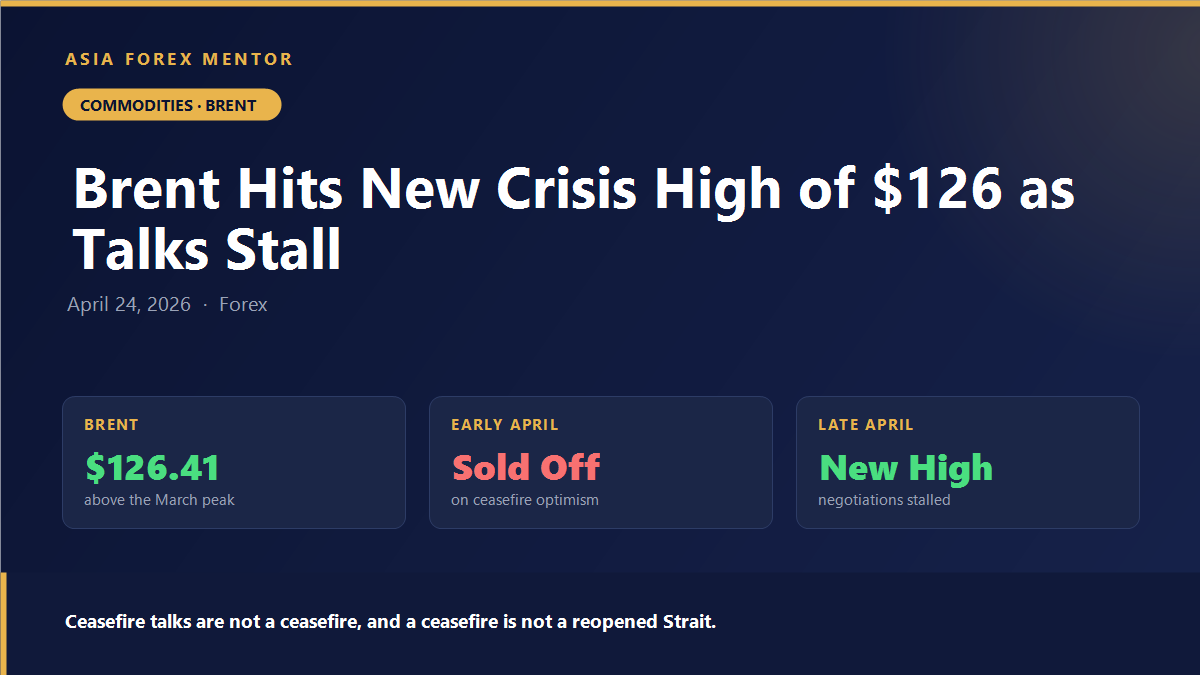
Brent crude has pushed to a new crisis high of $126.41 a barrel in late April, surpassing the peak set during the initial panic in March, after talks aimed at ending the Iran conflict stalled. The move completes a full round trip: oil fell sharply in early April on ceasefire optimism, then rebounded through the second half of the month as negotiations failed to produce anything binding.
For traders, April in the oil market has been a masterclass in the difference between a headline and a resolution.
The Anatomy of a False Dawn
Early April brought genuine optimism. Diplomatic channels opened, both sides signalled willingness to talk, and crude sold off hard as the market began unwinding the war premium built in March.
That selloff was rational given the information available. It was also premature. Ceasefire talks are not a ceasefire, and a ceasefire is not a reopened Strait of Hormuz. Each of those is a separate event, and the market priced the third outcome on news of the first.
When negotiations stalled, the premium did not merely return — it overshot, taking Brent above its March high. This is characteristic. A market that has already unwound a risk premium once must rebuild it from a lower base and against worse news, and the rebuild is typically faster and more violent than the original build.
Why Oil Overshot Its Previous High
Three factors compounded.
Inventories have drawn down. Two months of constrained flows through Hormuz means the buffer that cushioned the initial shock is thinner. The same disruption applied to lower inventories produces a higher price.
Positioning had flipped. Traders who cut long exposure during the April selloff had to re-enter on the rebound, adding mechanical buying pressure on top of the fundamental move.
Credibility was spent. The first ceasefire headline moved the market substantially. The second and third moved it less. Once a market stops believing de-escalation headlines, it stops discounting the risk premium on them — and the premium becomes stickier.

The Inflation Problem Just Got Harder
Central banks spent March arguing that an energy shock is a supply-side event that monetary policy should look through. That argument rests on the disruption being temporary.
Two months in, with Brent making new highs rather than fading, “temporary” is becoming difficult to defend. Higher energy costs have now had time to work through into transport, chemicals, food and core goods — the point at which a supply shock stops being contained in headline inflation and starts showing up in core.
The market has responded by pricing out the easing that was assumed at the start of the year. That repricing, rather than the oil price itself, is the dominant force across currency and rate markets right now.
Where the Pressure Lands
Energy importers. Japan and much of developing Asia import nearly all their oil and gas. A sustained $120-plus Brent is a direct hit to trade balances and a persistent drag on those currencies.
Energy exporters. Canada and Norway among the majors see the opposite effect through terms of trade, though currency gains are frequently muted by the risk-off environment that accompanies the oil move.
Equities. Input costs rise across most of the index while the discount rate rises with inflation expectations. Energy producers are the obvious exception and have meaningfully outperformed.
Emerging markets. The worst-positioned group — importing expensive energy in a strengthening dollar, often while servicing dollar-denominated debt.
Trading Lessons From April
Price the actual event, not the headline about the event. “Talks scheduled” and “conflict resolved” are separated by many steps, each of which can fail. Markets routinely collapse that distance and then have to rebuild it.
Failed de-escalation is more bullish than no de-escalation. A rally that begins from a lower base, against a market that has stopped believing good news, runs further than one that never sold off.
Respect the round trip. Traders who shorted the April dip and covered on the rebound were correct twice and may still have lost money to the whipsaw. In a headline-driven market, being directionally right is not sufficient — the sequencing has to work too.
Check your inventory data. Oil is a physical market. Storage levels determine how much a given disruption actually hurts, and they move slowly enough to be genuinely informative.
For traders working across commodities and currencies, our market analysis section covers how these markets transmit into each other.
The Bottom Line
Brent at $126.41 says the market has stopped pricing a near-term resolution. Until the Strait of Hormuz reopens and cargoes move normally, energy remains the dominant input into global inflation — and therefore into every rate and currency decision that follows from it.
Figures cited are as of late April 2026. Market data moves quickly; verify current levels before trading. This article is general information, not personal financial advice.