
Learn To Trade Forex • Best Forex Trading Course • AsiaForexMentor

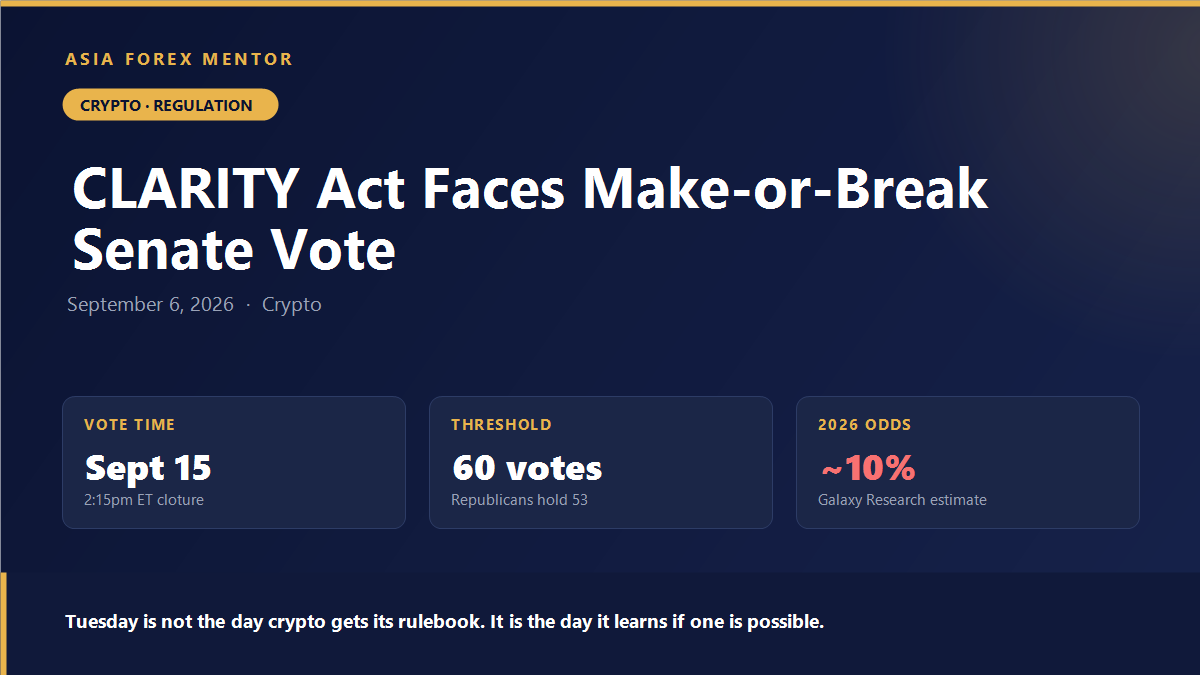
CLARITY Act Faces Make-or-Break Senate Vote on 15 September

Written by:

Ezekiel Chew

Last updated on:

September 6, 2026

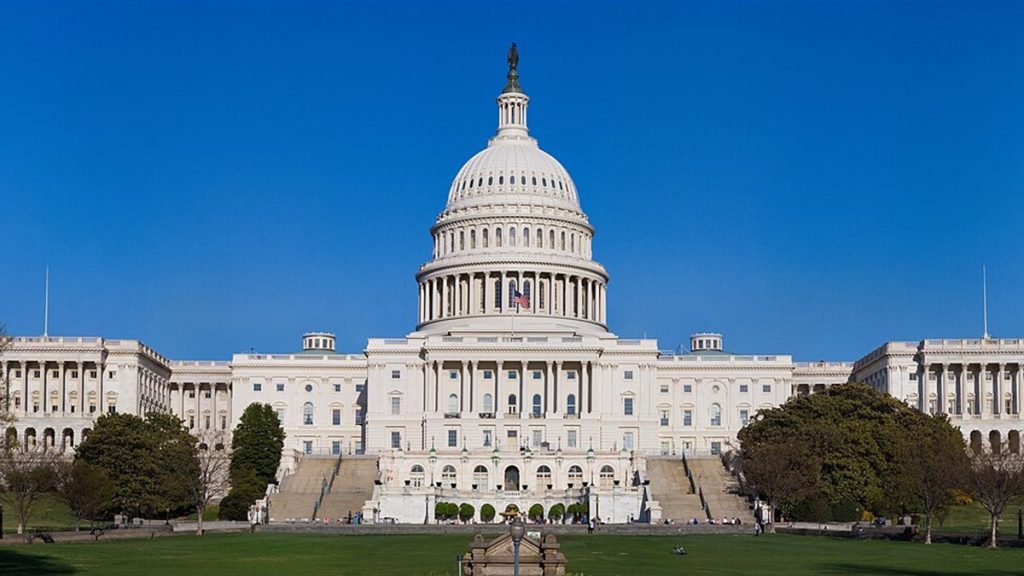
CLARITY Act Senate cloture vote on September 15 needing 60 votes against 53 Republican seats

The most consequential crypto vote in years happens at 2:15 p.m. ET on Tuesday 15 September, and the market is not confident about the outcome.

Senate Majority Leader John Thune has filed a cloture motion on the motion to proceed to the Digital Asset Market Clarity Act — the CLARITY Act — setting up a vote on whether to limit debate and advance the bill to the full Senate floor. It lands shortly after lawmakers return from the August recess, and one day before the Federal Reserve’s rate decision.

For an industry that has spent a decade asking for rules, this is the closest the United States has come to writing them. It is also, on current vote maths, far from a sure thing.

What the CLARITY Act Actually Does

The bill is a market structure framework. Its central job is to resolve the question that has driven US crypto enforcement for years: when is a digital asset a security regulated by the SEC, and when is it a commodity regulated by the CFTC?

That sounds technical. In practice it determines which exchanges can legally list which assets, what disclosures issuers owe, which regulator supervises custody, and whether US firms can operate without the risk of retroactive enforcement. The absence of that clarity is the reason a meaningful share of crypto trading volume has migrated offshore.

The Vote Maths Is the Problem

Cloture requires 60 votes. Republicans hold 53 seats. The arithmetic is not subtle: the bill cannot advance without Democratic or independent support, and that support has not been secured.

The sticking points are specific rather than philosophical. Democrats want stronger ethics and conflict-of-interest provisions — a fight sharpened by President Trump and his family’s crypto business interests — along with more robust illicit-finance safeguards. There is also an unresolved dispute over stablecoin rewards, the question of whether stablecoin issuers may pay yield to holders, which banks have lobbied hard against.

Republicans, for their part, want the bill to pass with a bipartisan coalition rather than on a party-line basis, on the reasonable theory that a framework passed by one party can be dismantled by the other.

The result is a bill that most senators say they support in principle and cannot agree on in detail.
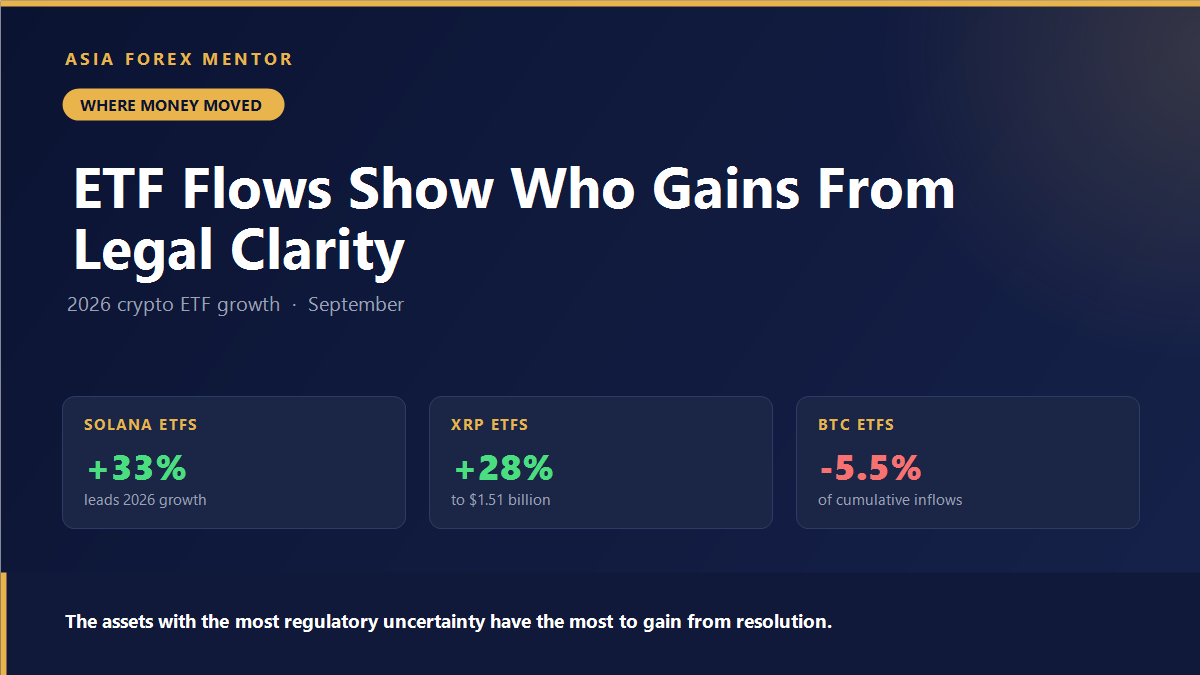
Solana ETFs up 33% and XRP ETFs up 28% to 1.51 billion dollars in 2026

What the Odds Actually Look Like

Galaxy Research has cut its estimated probability that the CLARITY Act becomes law in 2026 to roughly 10%, citing unfinished negotiations and a shrinking congressional calendar. With midterm elections approaching, floor time gets scarce and appetite for complex bipartisan legislation drops sharply.

It is worth being precise about what happens on 15 September, because the distinction matters for how markets react:

  • Cloture passes: the bill advances to floor debate. This is a procedural win, not passage — but it would signal that the 60-vote coalition exists, which is the single biggest unknown.
  • Cloture fails: the bill stalls. It could return later in the session, but the calendar and Galaxy’s 10% estimate suggest the practical odds for 2026 would drop close to zero.

Either way, Tuesday is not the day crypto gets its rulebook. It is the day the market finds out whether a rulebook is still plausible this Congress.

The Regulators Are Moving Anyway

While Congress negotiates, the SEC has continued to build the framework administratively. On 5 September, the agency formally recognised Solana alongside Bitcoin and Ether for commodity-based trusts, and approved changes to Nasdaq Texas Rule 5711(d) explicitly naming Bitcoin, Ether, Solana and XRP as digital assets meeting the exchange’s commodity-based trust standards.

The SEC has also proposed its first overhaul of transfer agent rules in roughly forty years — plumbing work, but the kind that determines whether tokenised securities can settle within existing US market infrastructure.

The effect is real: much of what the CLARITY Act would codify is being established piece by piece through rulemaking and exchange approvals. The difference is durability. A statute is hard to reverse; an SEC interpretation changes with the chair.

Where the Money Has Already Moved

ETF flows show capital positioning around this. Solana ETFs lead 2026 crypto ETF growth at 33%, and XRP ETFs have grown 28% to $1.51 billion — both assets whose regulatory status the CLARITY Act would directly clarify. Some analysts argue a successful vote could push XRP ETF cumulative inflows above $2 billion by year-end.

Meanwhile Bitcoin ETFs, whose regulatory status is already settled, have shed about 5.5% of cumulative inflows this year with outflows topping $7 billion — even as assets grew past $103 billion on price appreciation and a strong August.

The pattern is legible: the assets with the most regulatory uncertainty have the most to gain from resolution, and flows have moved accordingly.

What Traders Should Do With This

Two catalysts, one day apart. The CLARITY vote is 15 September; the FOMC decision, with roughly 58% odds of a rate hike, is 16 September. Attributing Tuesday’s move to the vote and Wednesday’s to the Fed will be tempting and frequently wrong.

The asymmetry is not symmetric. Failure is close to the base case at 10% odds of passage this year, so a failed cloture vote is substantially priced in. A successful one is less so — which argues the upside surprise is larger than the downside.

Watch SOL and XRP, not BTC. Bitcoin’s regulatory status is not in question. The assets that reprice on this vote are the ones whose classification is genuinely unresolved.

Procedural votes are not passage. Headlines on Tuesday will compress “advanced to floor debate” into “Senate passes crypto bill.” They are not the same thing, and the gap between them is where overreactions happen.

For traders building a view on how regulation reshapes market access, our crypto trading guides cover the practical side of jurisdiction and exchange availability.

The Bottom Line

The CLARITY Act is the most serious attempt yet to give US crypto markets a statutory foundation, and it faces a vote it may well lose. The industry’s consolation is that regulators are building much of the same structure administratively — less durable, but moving faster than the Senate.

Figures and vote timings cited are as of 5 September 2026. Legislative schedules change; verify before trading around the event. This article is general information, not personal financial advice.


About Ezekiel Chew​

Ezekiel Chew, founder and head of training at Asia Forex Mentor, is a renowned forex expert, frequently invited to speak at major industry events. Known for his deep market insights, Ezekiel is one of the top traders committed to supporting the trading community. Making six figures per trade, he also trains traders working in banks, fund management, and prop trading firms.

CLARITY Act Faces Make-or-Break Senate Vote on 15 September

Written by:

Updated:

September 6, 2026
CLARITY Act Senate cloture vote on September 15 needing 60 votes against 53 Republican seats The most consequential crypto vote in years happens at 2:15 p.m. ET on Tuesday 15 September, and the market is not confident about the outcome. Senate Majority Leader John Thune has filed a cloture motion on the motion to proceed to the Digital Asset Market Clarity Act — the CLARITY Act — setting up a vote on whether to limit debate and advance the bill to the full Senate floor. It lands shortly after lawmakers return from the August recess, and one day before the Federal Reserve's rate decision. For an industry that has spent a decade asking for rules, this is the closest the United States has come to writing them. It is also, on current vote maths, far from a sure thing.

What the CLARITY Act Actually Does

The bill is a market structure framework. Its central job is to resolve the question that has driven US crypto enforcement for years: when is a digital asset a security regulated by the SEC, and when is it a commodity regulated by the CFTC? That sounds technical. In practice it determines which exchanges can legally list which assets, what disclosures issuers owe, which regulator supervises custody, and whether US firms can operate without the risk of retroactive enforcement. The absence of that clarity is the reason a meaningful share of crypto trading volume has migrated offshore.

The Vote Maths Is the Problem

Cloture requires 60 votes. Republicans hold 53 seats. The arithmetic is not subtle: the bill cannot advance without Democratic or independent support, and that support has not been secured. The sticking points are specific rather than philosophical. Democrats want stronger ethics and conflict-of-interest provisions — a fight sharpened by President Trump and his family's crypto business interests — along with more robust illicit-finance safeguards. There is also an unresolved dispute over stablecoin rewards, the question of whether stablecoin issuers may pay yield to holders, which banks have lobbied hard against. Republicans, for their part, want the bill to pass with a bipartisan coalition rather than on a party-line basis, on the reasonable theory that a framework passed by one party can be dismantled by the other. The result is a bill that most senators say they support in principle and cannot agree on in detail. Solana ETFs up 33% and XRP ETFs up 28% to 1.51 billion dollars in 2026

What the Odds Actually Look Like

Galaxy Research has cut its estimated probability that the CLARITY Act becomes law in 2026 to roughly 10%, citing unfinished negotiations and a shrinking congressional calendar. With midterm elections approaching, floor time gets scarce and appetite for complex bipartisan legislation drops sharply. It is worth being precise about what happens on 15 September, because the distinction matters for how markets react:
  • Cloture passes: the bill advances to floor debate. This is a procedural win, not passage — but it would signal that the 60-vote coalition exists, which is the single biggest unknown.
  • Cloture fails: the bill stalls. It could return later in the session, but the calendar and Galaxy's 10% estimate suggest the practical odds for 2026 would drop close to zero.
Either way, Tuesday is not the day crypto gets its rulebook. It is the day the market finds out whether a rulebook is still plausible this Congress.

The Regulators Are Moving Anyway

While Congress negotiates, the SEC has continued to build the framework administratively. On 5 September, the agency formally recognised Solana alongside Bitcoin and Ether for commodity-based trusts, and approved changes to Nasdaq Texas Rule 5711(d) explicitly naming Bitcoin, Ether, Solana and XRP as digital assets meeting the exchange's commodity-based trust standards. The SEC has also proposed its first overhaul of transfer agent rules in roughly forty years — plumbing work, but the kind that determines whether tokenised securities can settle within existing US market infrastructure. The effect is real: much of what the CLARITY Act would codify is being established piece by piece through rulemaking and exchange approvals. The difference is durability. A statute is hard to reverse; an SEC interpretation changes with the chair.

Where the Money Has Already Moved

ETF flows show capital positioning around this. Solana ETFs lead 2026 crypto ETF growth at 33%, and XRP ETFs have grown 28% to $1.51 billion — both assets whose regulatory status the CLARITY Act would directly clarify. Some analysts argue a successful vote could push XRP ETF cumulative inflows above $2 billion by year-end. Meanwhile Bitcoin ETFs, whose regulatory status is already settled, have shed about 5.5% of cumulative inflows this year with outflows topping $7 billion — even as assets grew past $103 billion on price appreciation and a strong August. The pattern is legible: the assets with the most regulatory uncertainty have the most to gain from resolution, and flows have moved accordingly.

What Traders Should Do With This

Two catalysts, one day apart. The CLARITY vote is 15 September; the FOMC decision, with roughly 58% odds of a rate hike, is 16 September. Attributing Tuesday's move to the vote and Wednesday's to the Fed will be tempting and frequently wrong. The asymmetry is not symmetric. Failure is close to the base case at 10% odds of passage this year, so a failed cloture vote is substantially priced in. A successful one is less so — which argues the upside surprise is larger than the downside. Watch SOL and XRP, not BTC. Bitcoin's regulatory status is not in question. The assets that reprice on this vote are the ones whose classification is genuinely unresolved. Procedural votes are not passage. Headlines on Tuesday will compress "advanced to floor debate" into "Senate passes crypto bill." They are not the same thing, and the gap between them is where overreactions happen. For traders building a view on how regulation reshapes market access, our crypto trading guides cover the practical side of jurisdiction and exchange availability.

The Bottom Line

The CLARITY Act is the most serious attempt yet to give US crypto markets a statutory foundation, and it faces a vote it may well lose. The industry's consolation is that regulators are building much of the same structure administratively — less durable, but moving faster than the Senate. Figures and vote timings cited are as of 5 September 2026. Legislative schedules change; verify before trading around the event. This article is general information, not personal financial advice.

ezekiel chew asiaforexmentor

About Ezekiel Chew

Ezekiel Chew, founder and head of training at Asia Forex Mentor, is a renowned forex expert, frequently invited to speak at major industry events. Known for his deep market insights, Ezekiel is one of the top traders committed to supporting the trading community. Making six figures per trade, he also trains traders working in banks, fund management, and prop trading firms.

RELATED ARTICLES

Join the Live Event
Get Your Free Ticket Now

I consent to receiving emails and/or text message reminders for this event.

REGISTER FOR THE MASTERCLASS!