English
 简体中文
简体中文 繁體中文
繁體中文 日本語
日本語 한국어
한국어 Bahasa Melayu
 Bahasa Indonesia
 Filipino
 ไทย
ไทย Tiếng Việt
 हिन्दी
 العربية
 Italiano
 Português
 Русский
 Español
 Français
 Singapore
 Cambodia
 Myanmar
 Brunei
 Australia
  New Zealand
 Switzerland
 UAE
UAE United States
 Mexico
 Argentina
 South Africa
 IC Markets
 Pepperstone
 AvaTrade
 XM
XM Plus500
 RoboForex
 TMGM
TMGM Exness
 JustMarkets
 Orbex
Orbex Interactive Brokers
 Saxo
Saxo Tiger Brokers
 Binance
 Coinbase
 Gemini Exchange
 Kraken
 iFunds
 IC Funded
 The 5%ers
 TopStep
 IQ Option
 Pocket Option
 RaceOption
 IQCent
The silver bullet strategy looks foolproof on paper. One hour, one sweep, one reversal. Traders show up at the window, take the signal, and get run over. The strategy is not broken. The version that gets taught everywhere is.
| About This Guide |
|---|
| This guide covers the silver bullet strategy tested by AFM Research Lab across 1,200 trades. It explains why the textbook version produces a 91.2 percent drawdown, and the three-condition version that came back with a real edge in testing. Every rule is mechanical. Every filter is specific. |
| Quick Answer |
|---|
| The silver bullet strategy works when three conditions align inside the one-hour window. Price has to sweep real liquidity at a level the market actually watches. The reversal has to leave a fair value gap behind, proving it moved with force. And the entry is on the pullback into that gap, not on the sweep itself. Miss one and the setup does not qualify. |
🎥 Watch the full method explained on video:
Key Takeaways
The following points frame the strategy before each section covers it in detail:
- The textbook silver bullet strategy produced a 91.2 percent drawdown across 1,200 trades in AFM Research Lab testing.
- The one-hour window tells you when to look at the market. It does not tell you whether the trade is real.
- Price has to sweep a level the market actually watches. A prior session high or clear swing point, not a random intraday wiggle.
- The reversal off the sweep has to leave a fair value gap behind. That gap is proof the market moved with force, not a slow drift.
- Entry is on the pullback into the gap, in the direction of the reversal. Not on the sweep itself.
- If any one of the three conditions fails, there is no trade. Two out of three is not a setup.
Take a look at this chart. Price sweeps the high, snaps back, and drops 50 pips. It looks like a textbook silver bullet reversal.
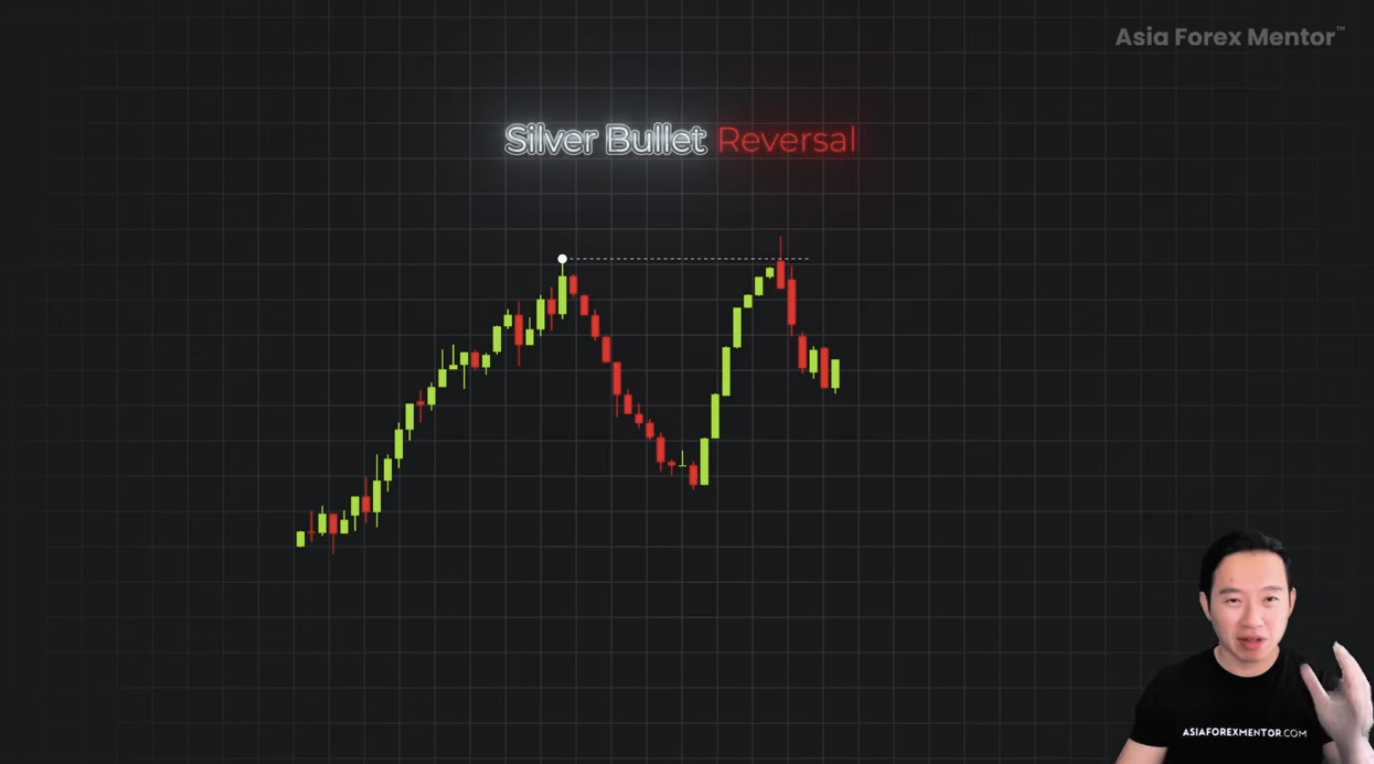
The question is whether you would click sell on that candle. First instinct, no overthinking. If the answer is yes, you just lost money.
AFM Research Lab tested 1,200 silver bullet trades. The textbook version took a $10,000 account down to $410. But one version came back with a real edge.
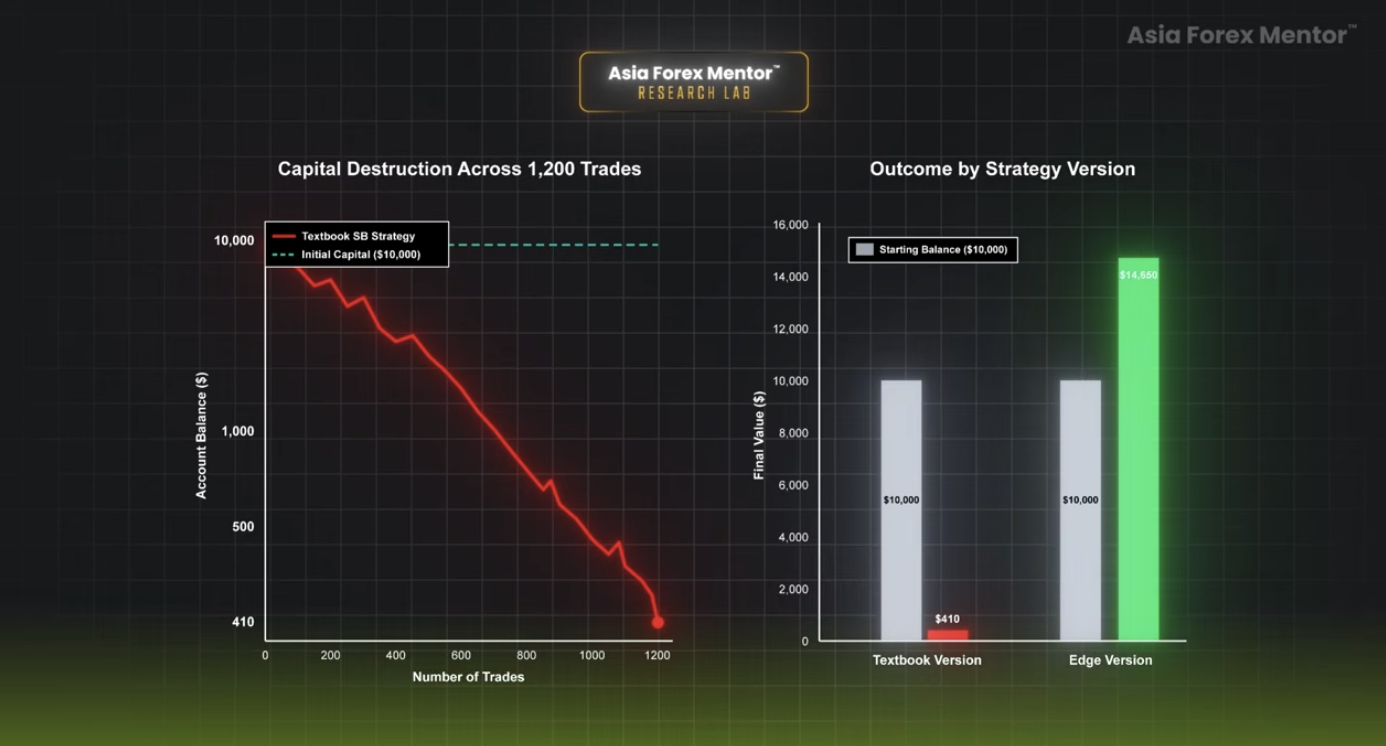
Past performance in backtest results does not guarantee future returns.
What Most Traders Get Wrong
Traders think the silver bullet is about the time window. It is not.
Think of it like showing up to a poker game at the right time. Being there does not mean you play every hand that gets dealt. The hour just gets you a seat. It says nothing about which trade is worth taking.
This guide covers three things. Why the textbook version fails even when the timing is nailed. The three conditions that have to line up before a silver bullet trade is worth taking. And the exact rules that turn a losing setup into the one version with a real edge.
What Is The Silver Bullet
The silver bullet is a one-hour window. The same hour every session where the idea is that price hands you a clean reversal.
Here is the logic behind it. That specific hour is when a lot of volume comes in. The thinking goes that price runs past a prior high or prior low, sweeps the liquidity sitting there, and snaps the other way. Sweep of a high, short it. Sweep of a low, go long.
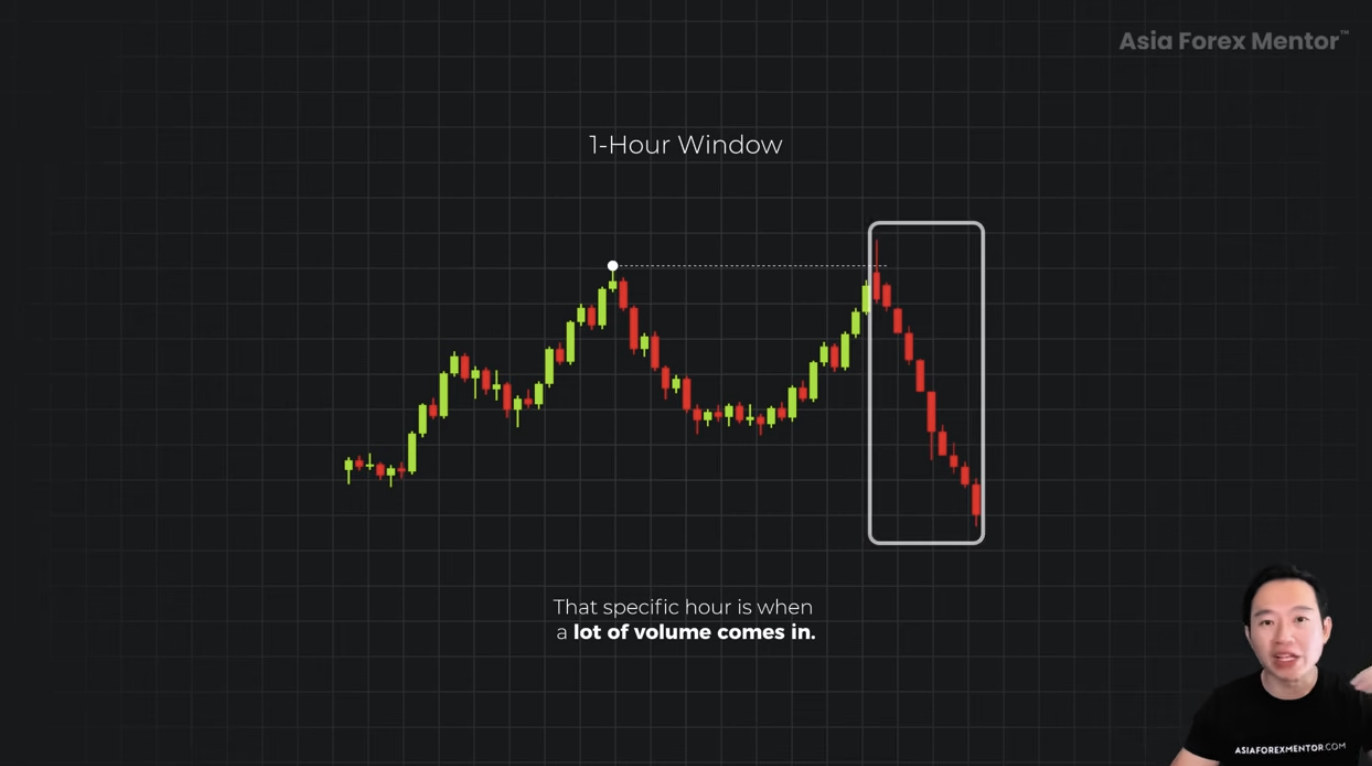
The setup is simple. It is mechanical. It is time-based. You do not have to wait nor have to read the market. Show up at the right hour, wait for the sweep, and take the reversal.
That is why traders trust it.
Three Sessions, Three Losses
In the first session, price sweeps the high. The signal fires on schedule. You go short.
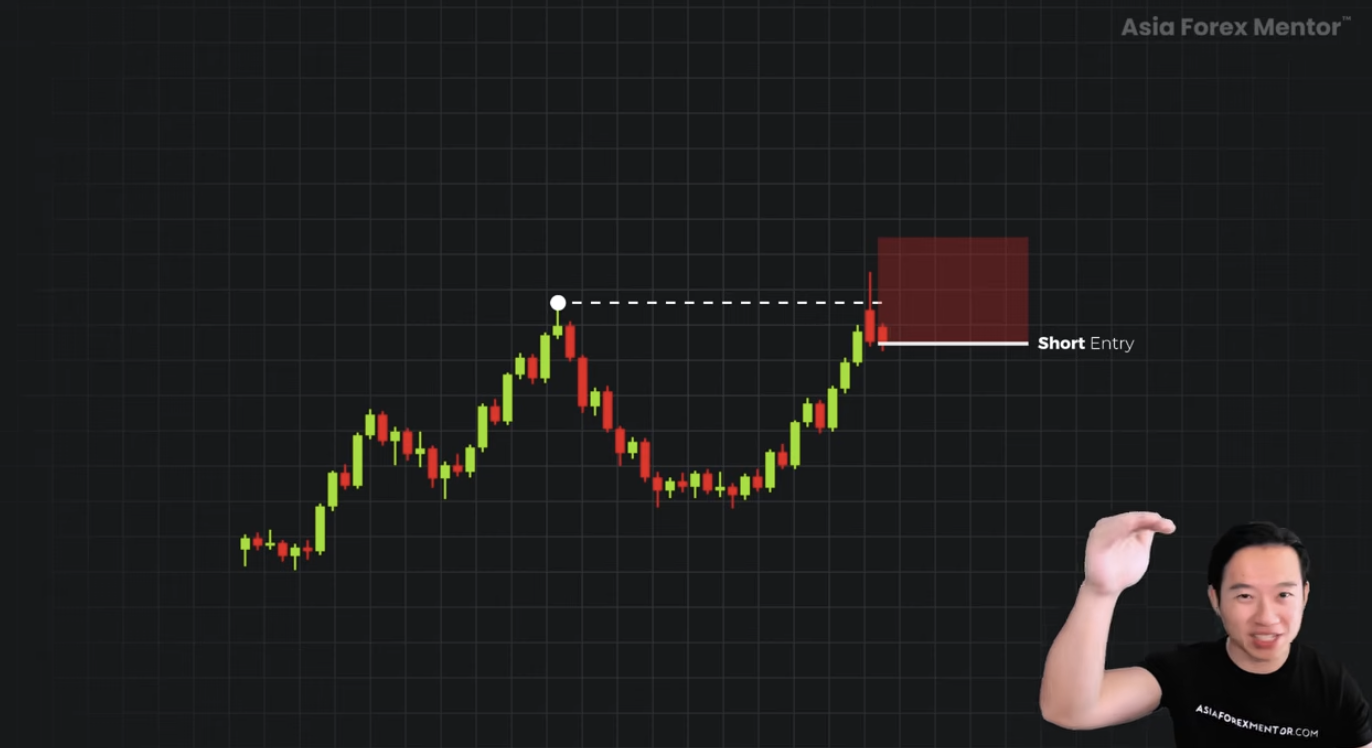
But here is what the setup did not show. The sweep was not a reversal. It was the market grabbing liquidity on the way up. Those stops above the high were the fuel. It was not a top. Price takes them and keeps climbing. Your stop is gone.
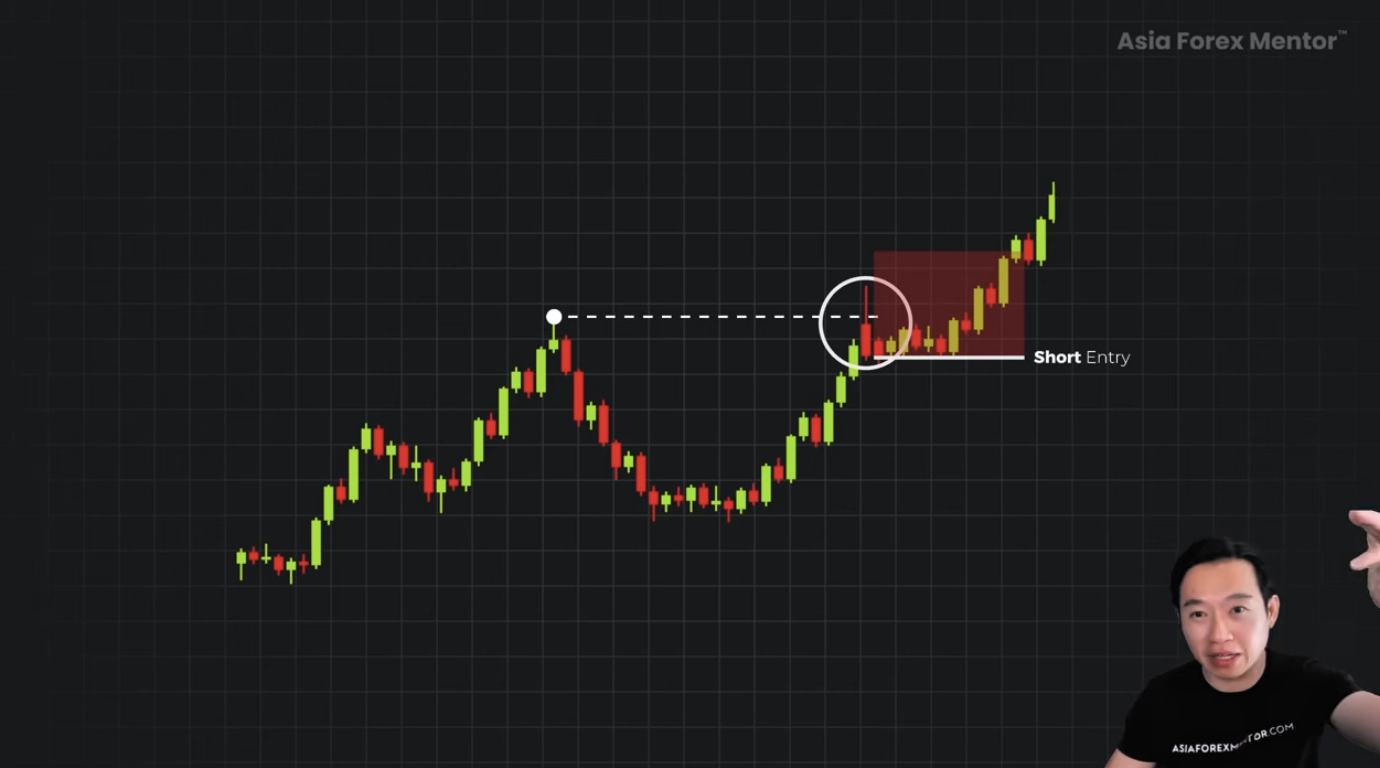
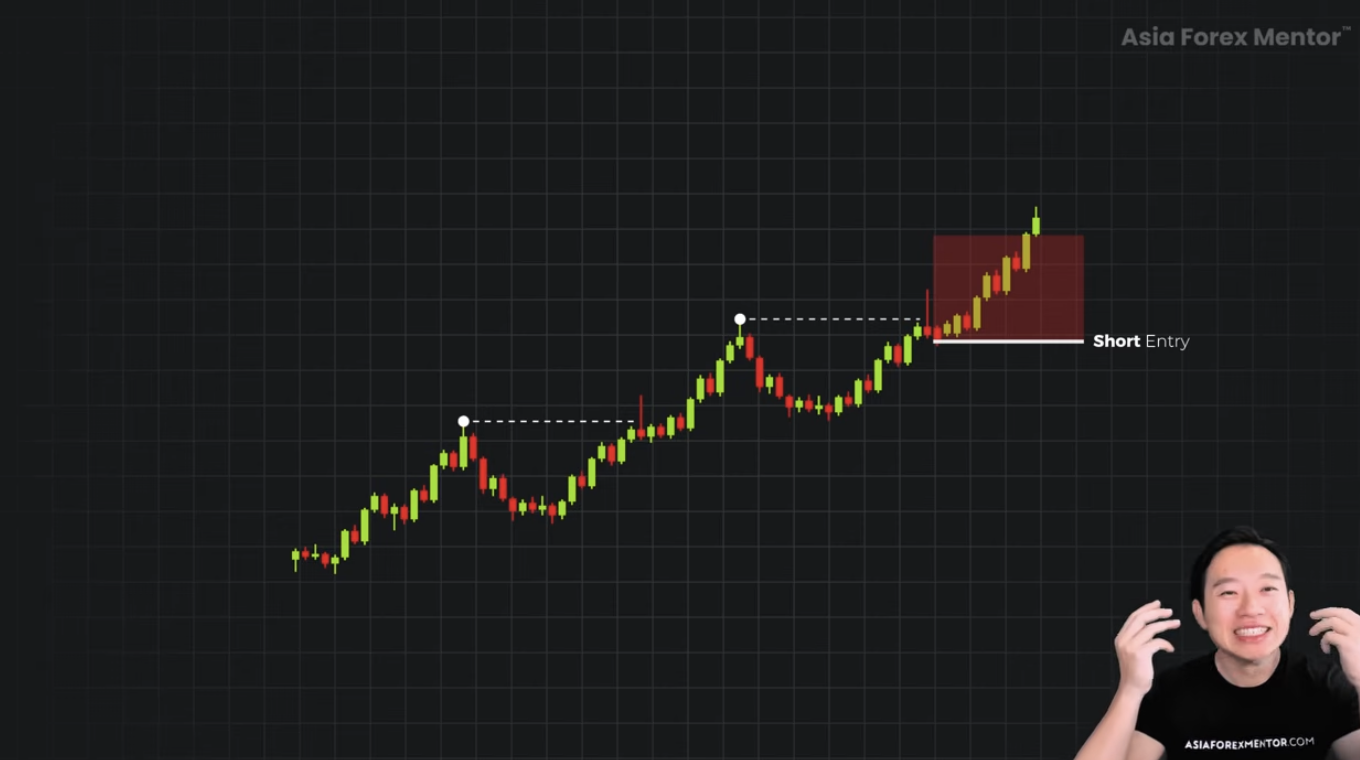
The next session is where it stings. Same window, same clean-looking sweep. The thinking is that the last one was a fluke and this one is the real reversal. You short it again. Same result. Price runs through you.
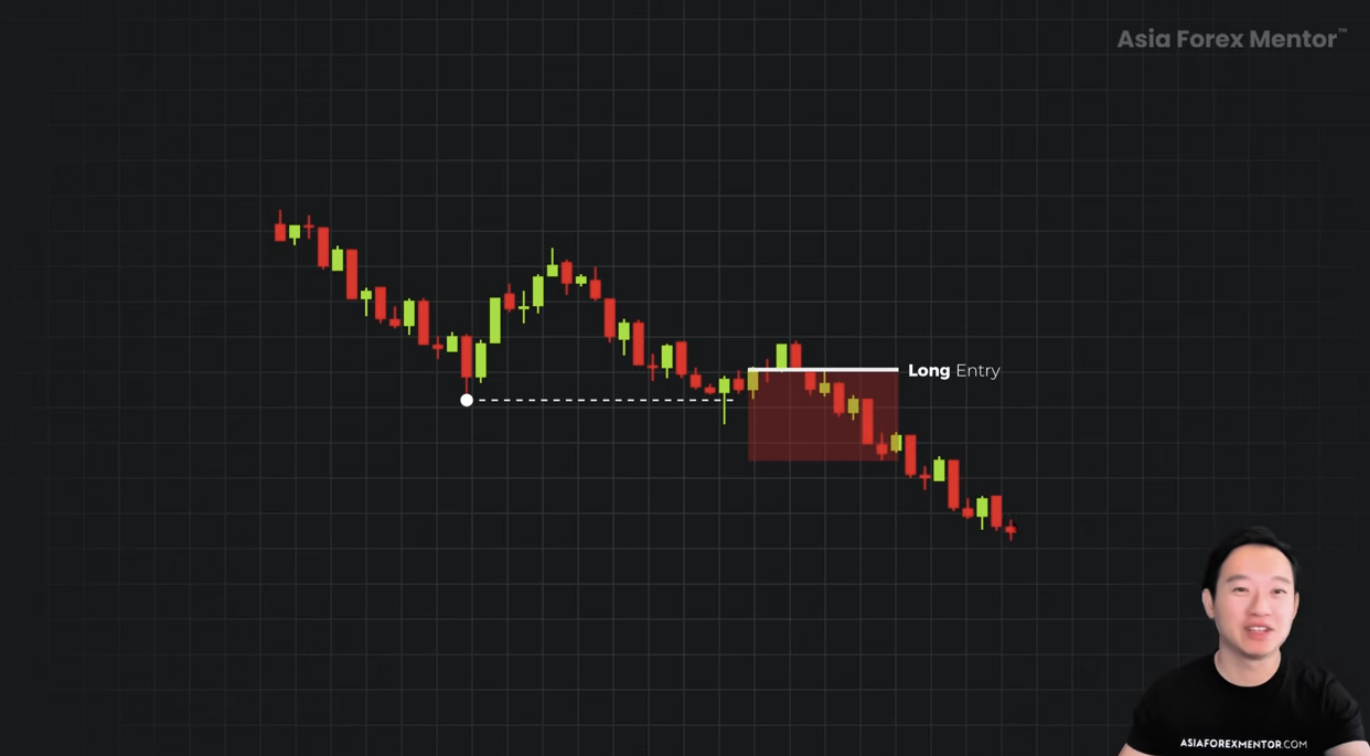
Session three, you decide to flip it. This time a low is getting swept. You go long expecting the bounce. Price does exactly what it did to your shorts. It blows straight through and keeps dropping.
Three sessions. Three losses.
The window did its job perfectly every time. The sweep happened right on schedule. That was never the problem.
The problem is the window cannot tell you whether a sweep is a reversal or just liquidity being taken on the way through. It fires either way. That is the trap. The time window tells you when to look. It says nothing about whether the trade is real.
AFM Research Lab ran 1,200 trades on the textbook silver bullet. The setup came back with a profit factor of 0.68.
That means for every dollar won, $1.47 went right back out.The maximum drawdown was worse: 91.2 percent. That is what turns a $10,000 account into $410. The textbook version does not work.
AFM Research Lab then ran every version that could be built against the same 1,200 trades. Different sweep rules, different combinations and different execution triggers. One came back with a real edge.

Step 1: The Sweep
Before anything else, price needs to sweep real liquidity. Real is the operative word.
A real sweep is price running past a level that other traders are actually watching. A prior swing high. A prior session high. A clear swing point. Somewhere stops are genuinely resting. Price pushes through, grabs those stops, and rejects.
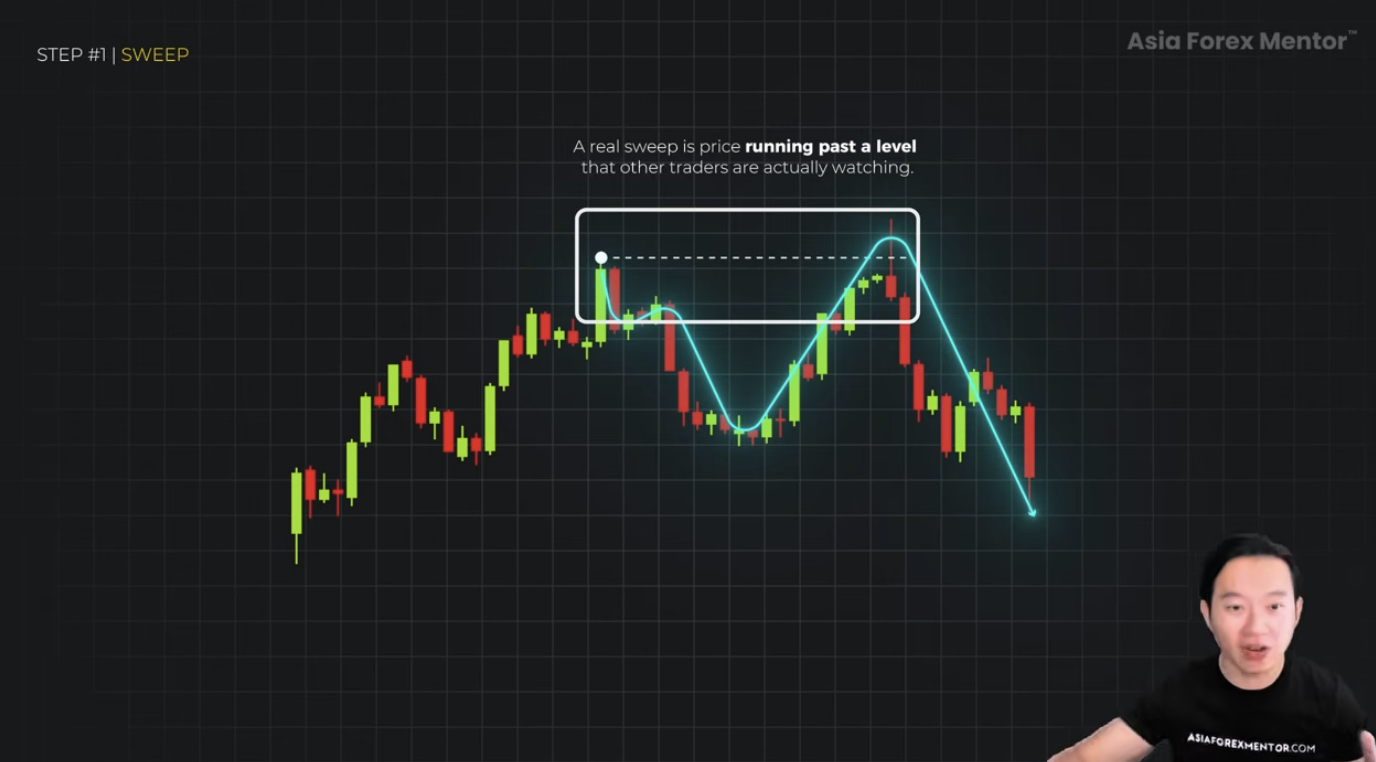
What you do not want is price poking past some random wiggle from 20 minutes ago. Nobody placed stops over there. Nothing gets grabbed. That is not a sweep. That is noise.
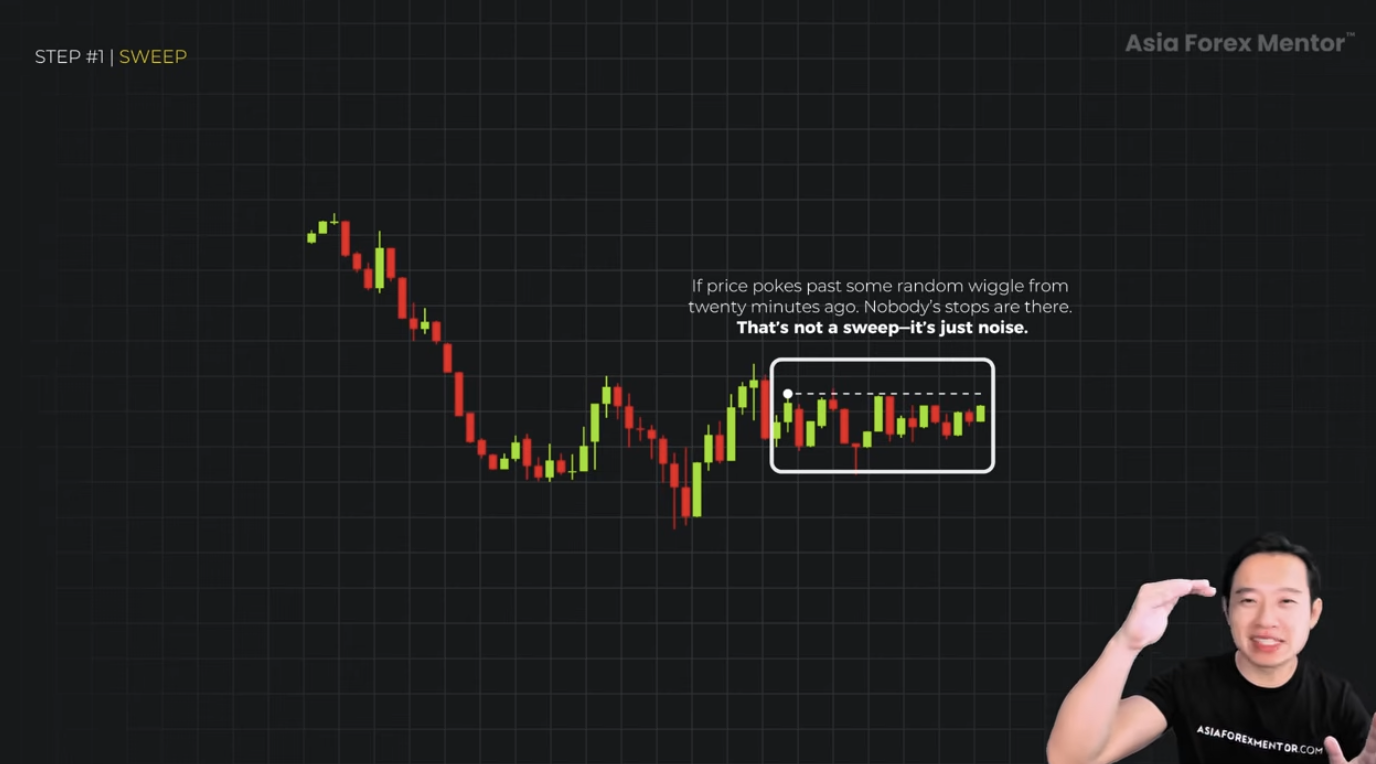
The first question is always the same. Did price take out a level the market actually cares about?
Step 2: The Gap
When price reverses off the sweep, it should move with force. Fast enough that it leaves a gap behind.
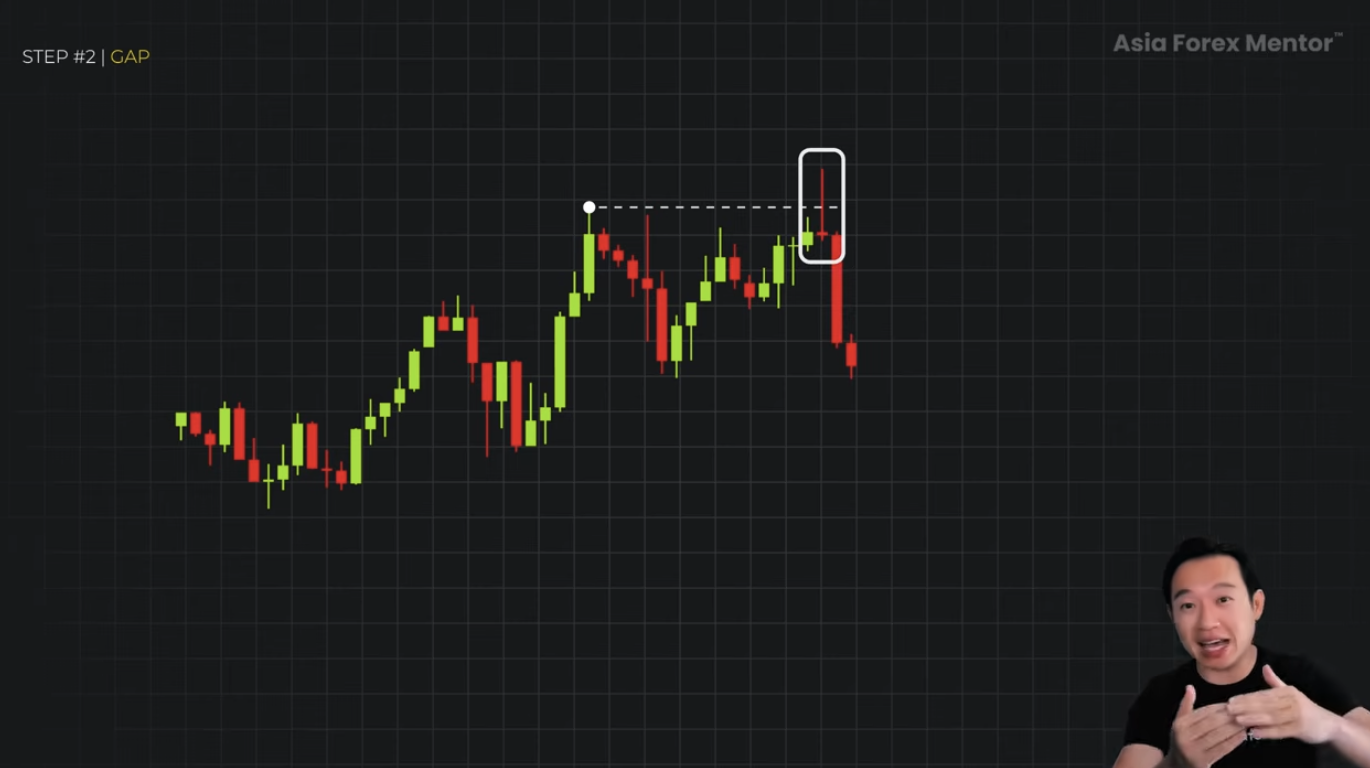
A fair value gap is a small pocket where price moves so quickly that the market skips over a price level entirely. That gap is your proof. It tells you the reversal was not slow. It was not a hesitant drift. Someone stepped in hard.
If price sweeps the level but oozes back sideways with no gap, pass. No gap, no proof. No proof, no trade.
The gap is what separates a genuine rejection from a market that only looked like it came back.
Step 3: The Trigger
Price sweeps. Price gaps. Now price pulls back into that gap. That pullback is the trigger.
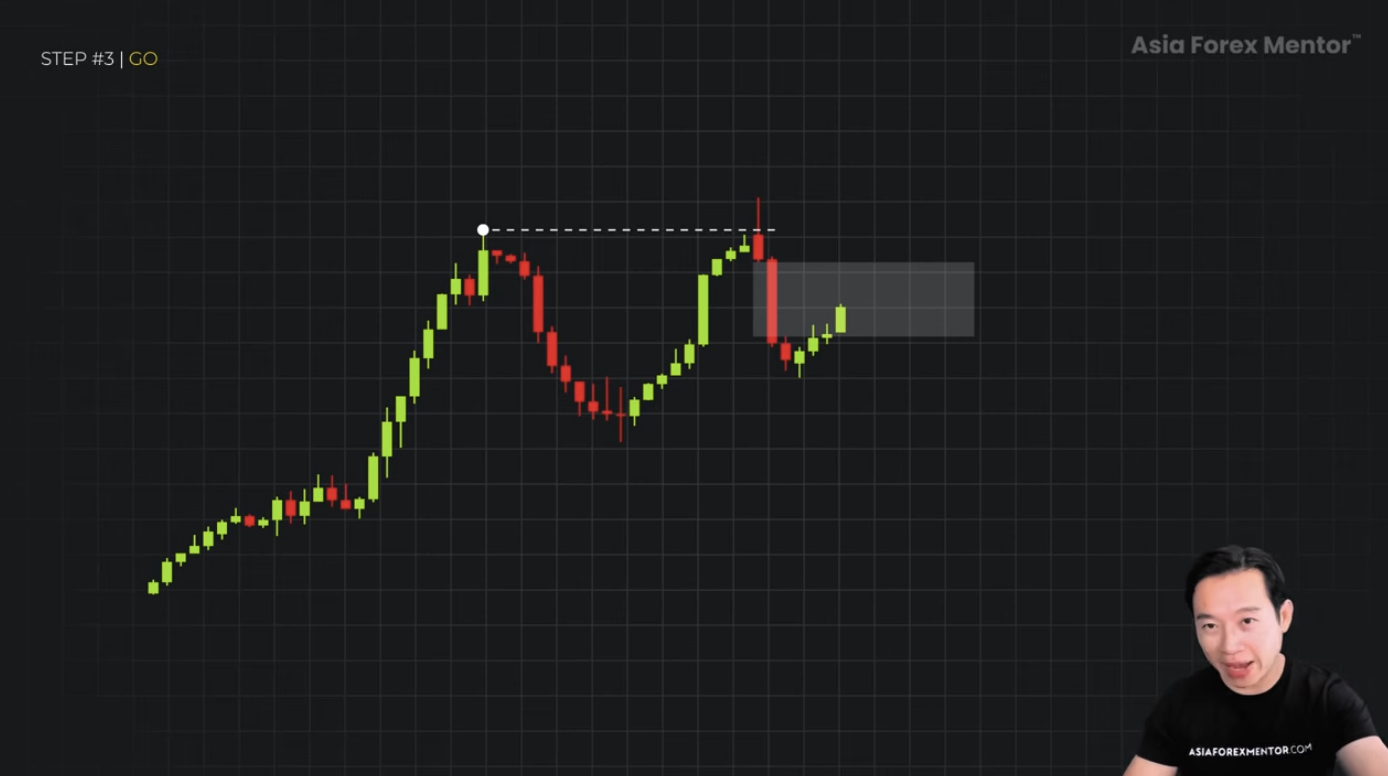
Enter as price returns to the gap in the direction of the reversal. Not the sweep itself. Entering on the sweep is too early. That is guessing. Wait for the market to come back and confirm the gap. That is the entry.
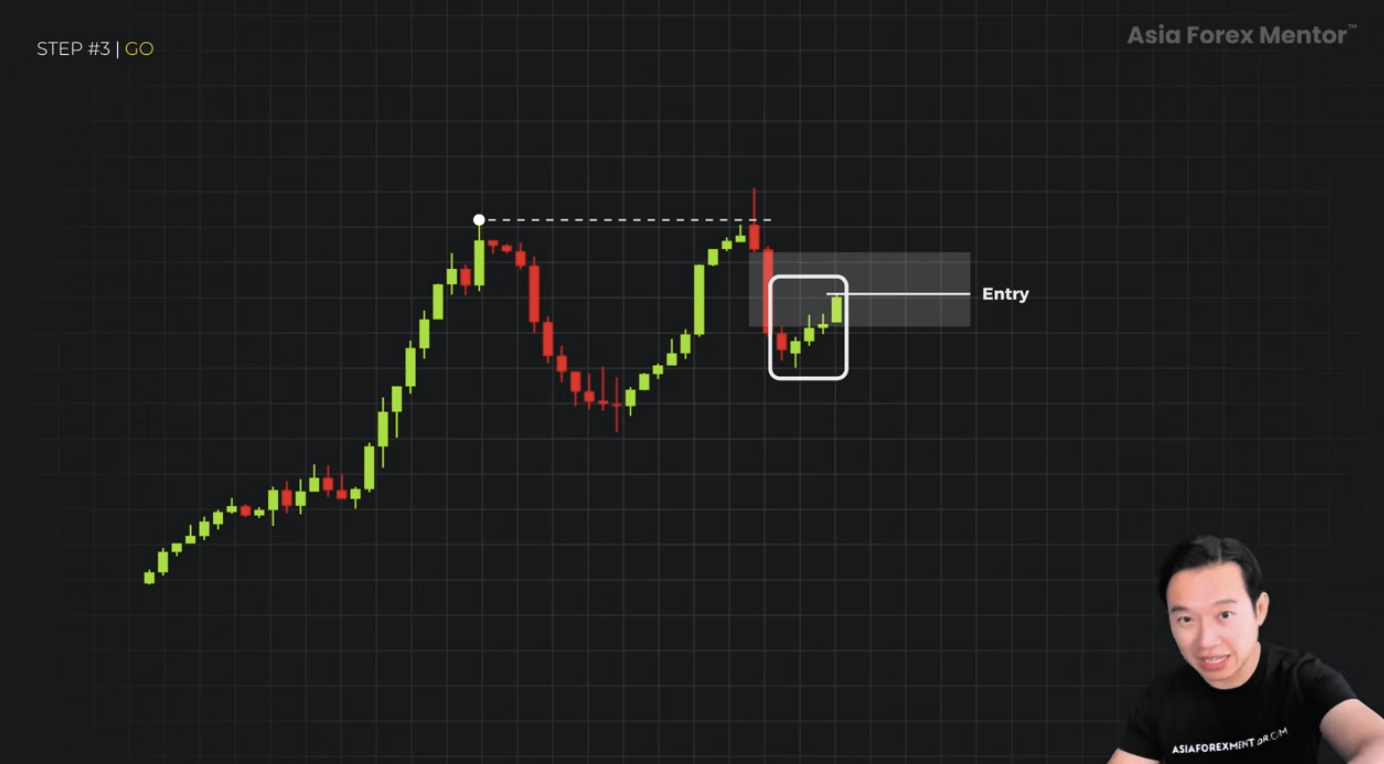
The stop loss goes just beyond the sweep. Past the high that was shorted. Past the low that was longed. Plus a small buffer so a second liquidity grab does not shake you out.
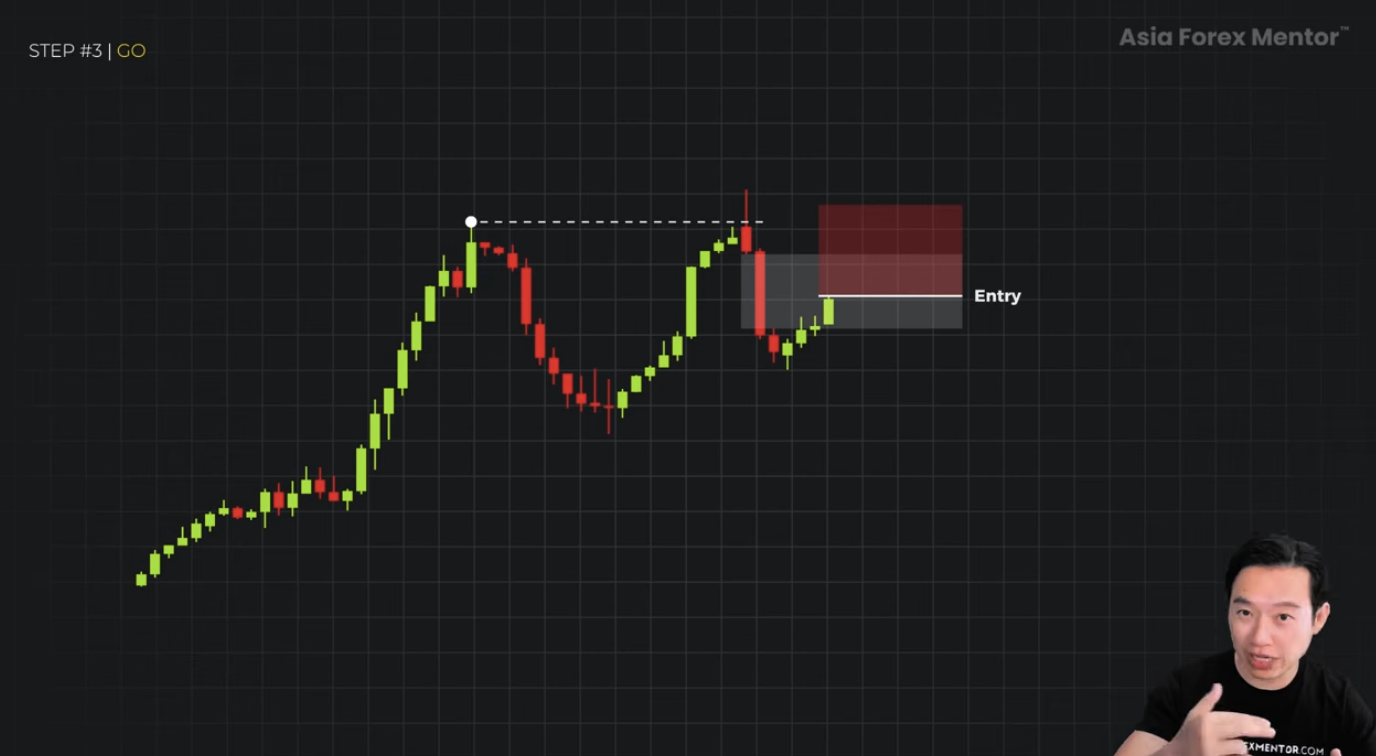
The take profit target is the opposing liquidity. The pool of stops on the other side that the reversal is heading toward.
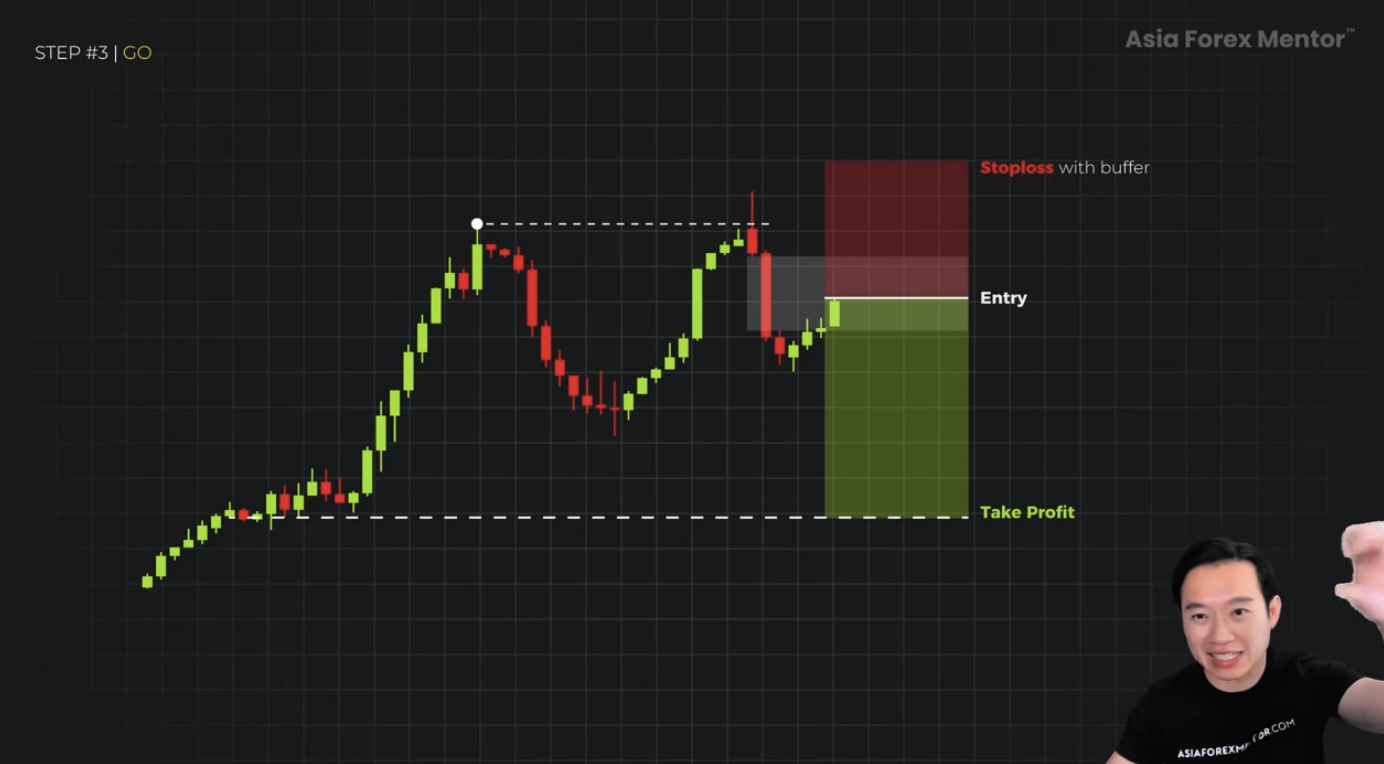
Miss any one of these three and you are back to the textbook version that lost money. A sweep with no gap is a guess. A gap with no real level being swept is a coincidence. All three have to be there.
The Strategy On A Real Chart
This EURUSD setup fires right inside the silver bullet window.
Question one. The sweep. Take a look at the prior session high. Clean level. Obvious to everyone watching. All the stop losses are sitting right above it. Price runs up, takes them out, and rejects. That is a real sweep. Not a random poke. A level the market actually cares about.
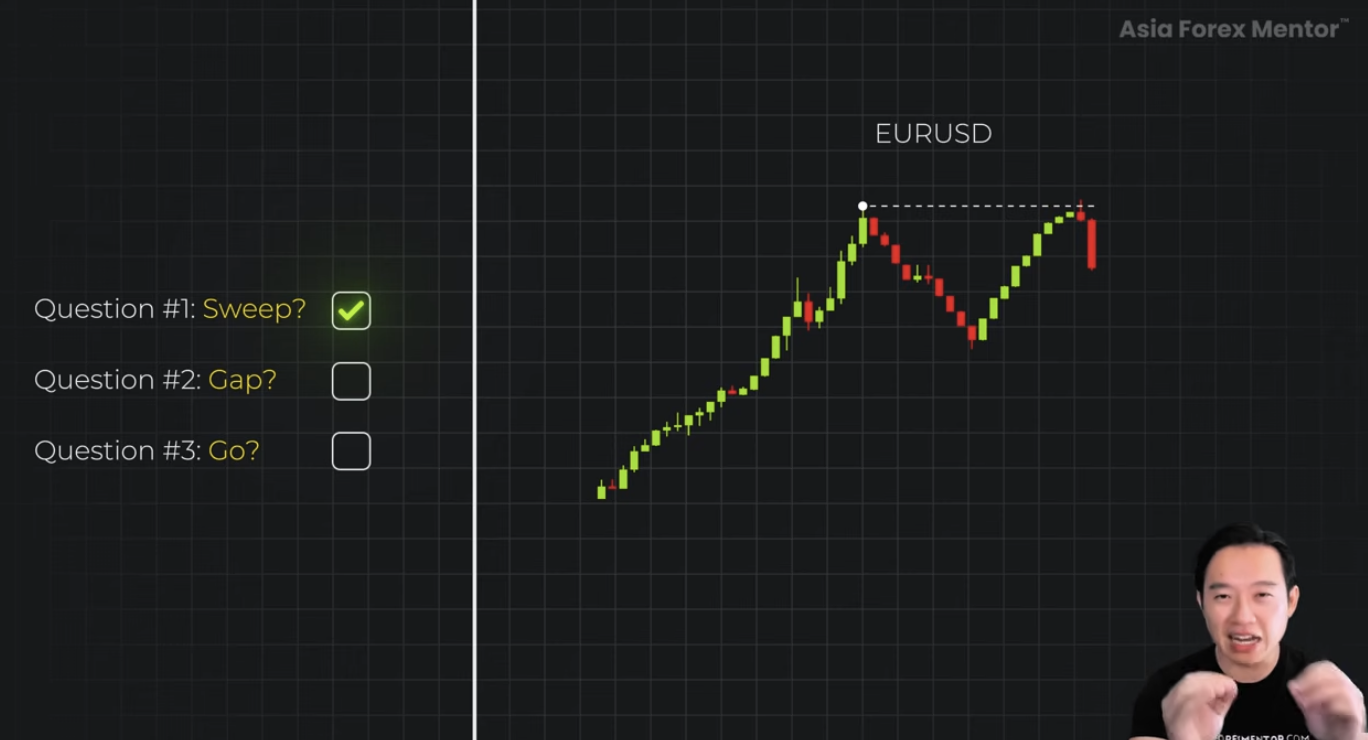
Question two. The gap. Watch for the snapback. Price does not drift down. It drops fast enough that it leaves a fair value gap behind. That gap is proof the reversal has real force.
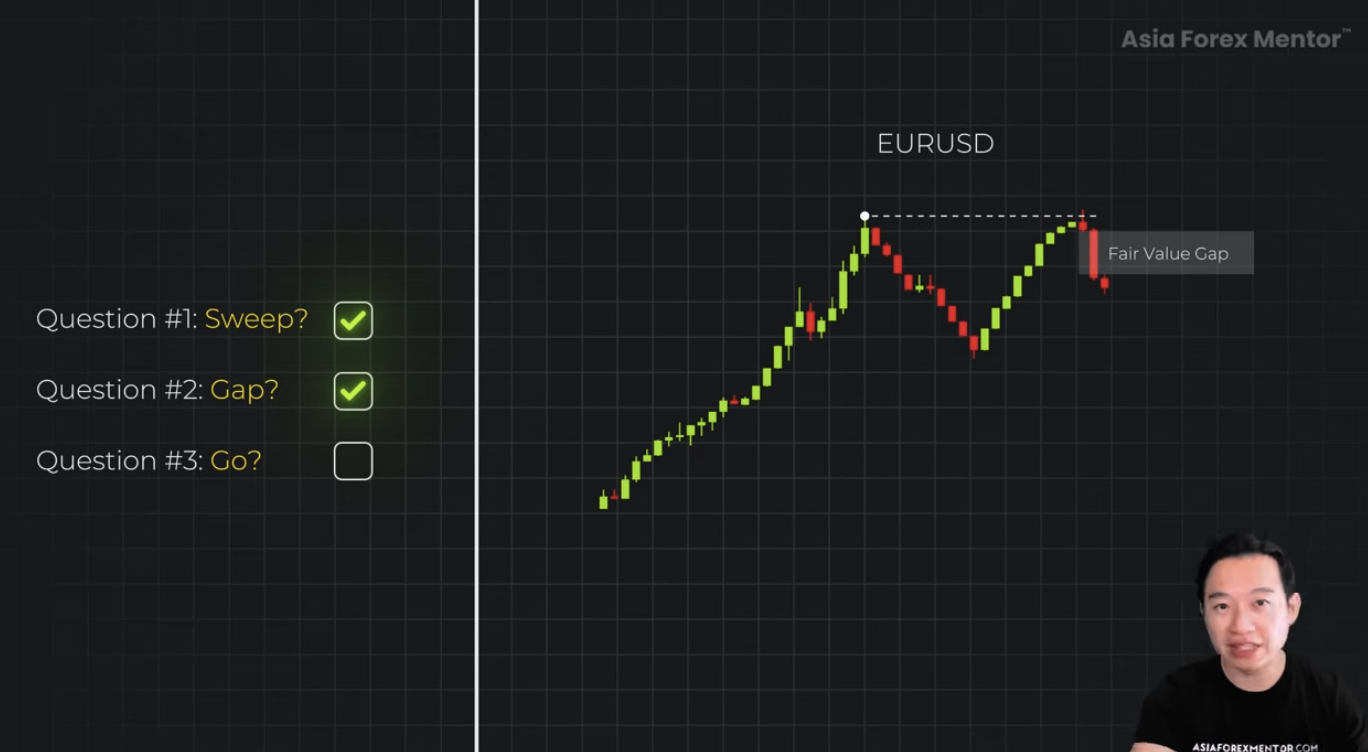
Question three. Go. Price pulls back up into that gap. That is the trigger. Enter short as it returns to the gap in the direction of the reversal.
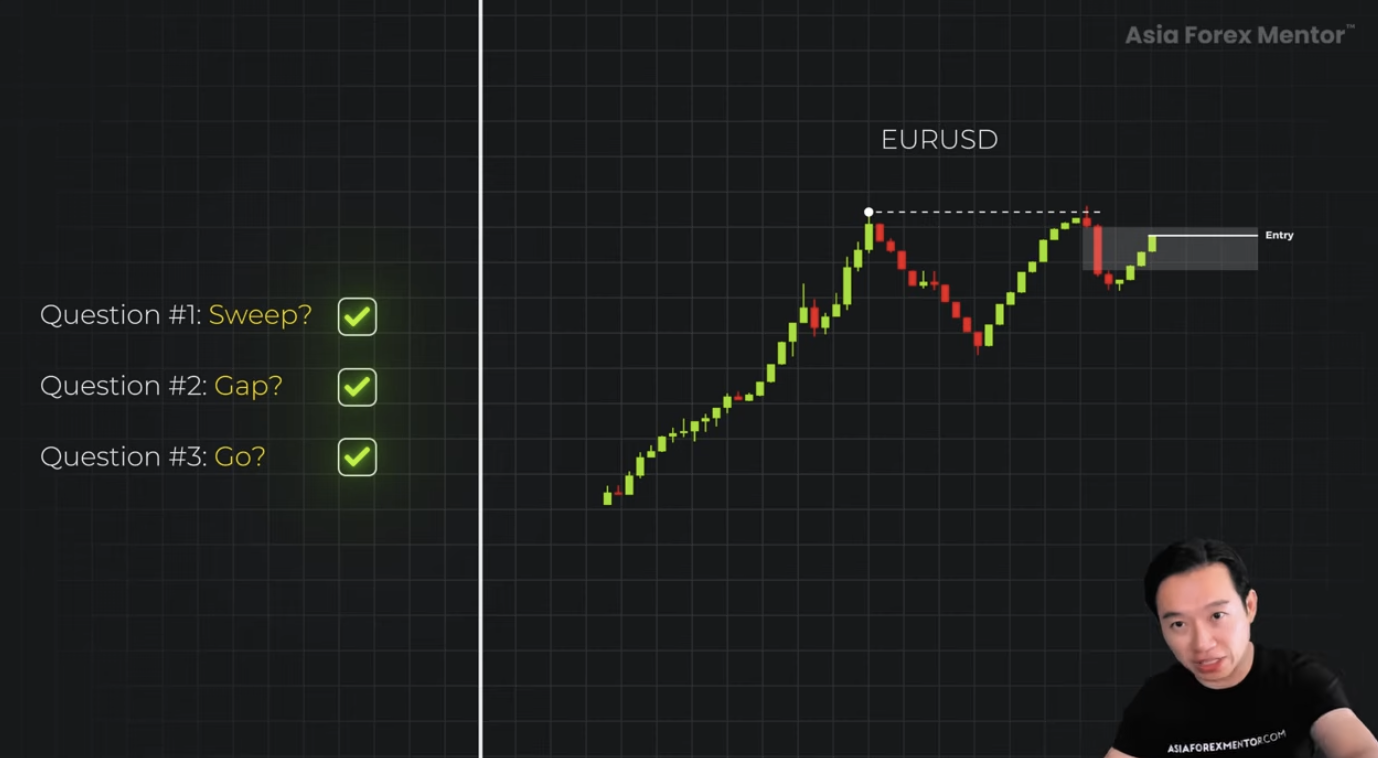
Stop loss goes just above the sweep high plus a small buffer. Take profit at the opposing liquidity on the other side, where the stop losses are resting below the prior session low.
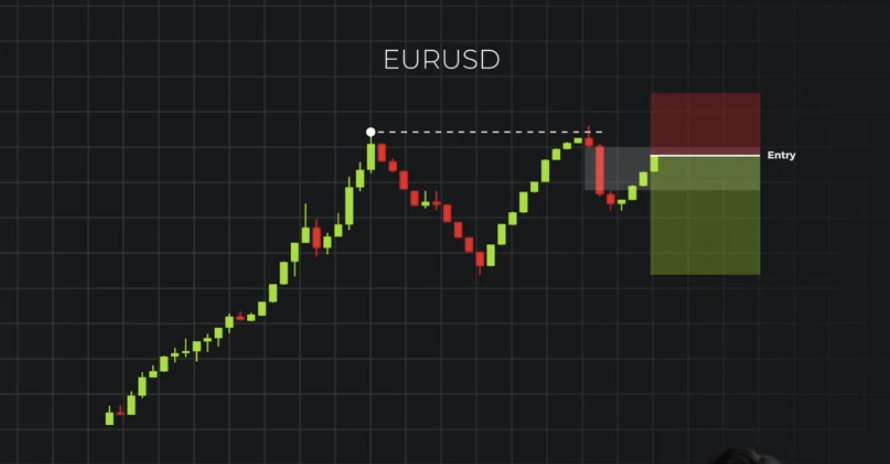
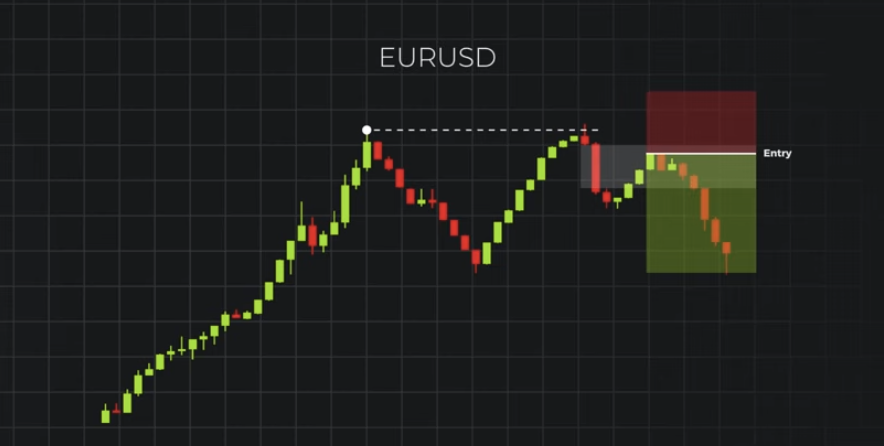
Price fills the gap, rolls over, and drives straight down to that liquidity. Take profit hit. Stop loss never touched.
Sweep. Gap. Go. All three lined up. That is the method.
An Example You Do Not Take
Knowing when to skip a trade is worth just as much as knowing when to enter one.
Another pair. GBPUSD. Same window.
Question one. The sweep. Price runs up and takes out a high. On the surface it qualifies. But a closer look changes things. That high was not a real level. It was an intraday wiggle from 40 minutes ago.
There is no prior session high, no clear swing and no real stops resting there. Nobody got trapped. This is not a genuine sweep. It just looks like one.
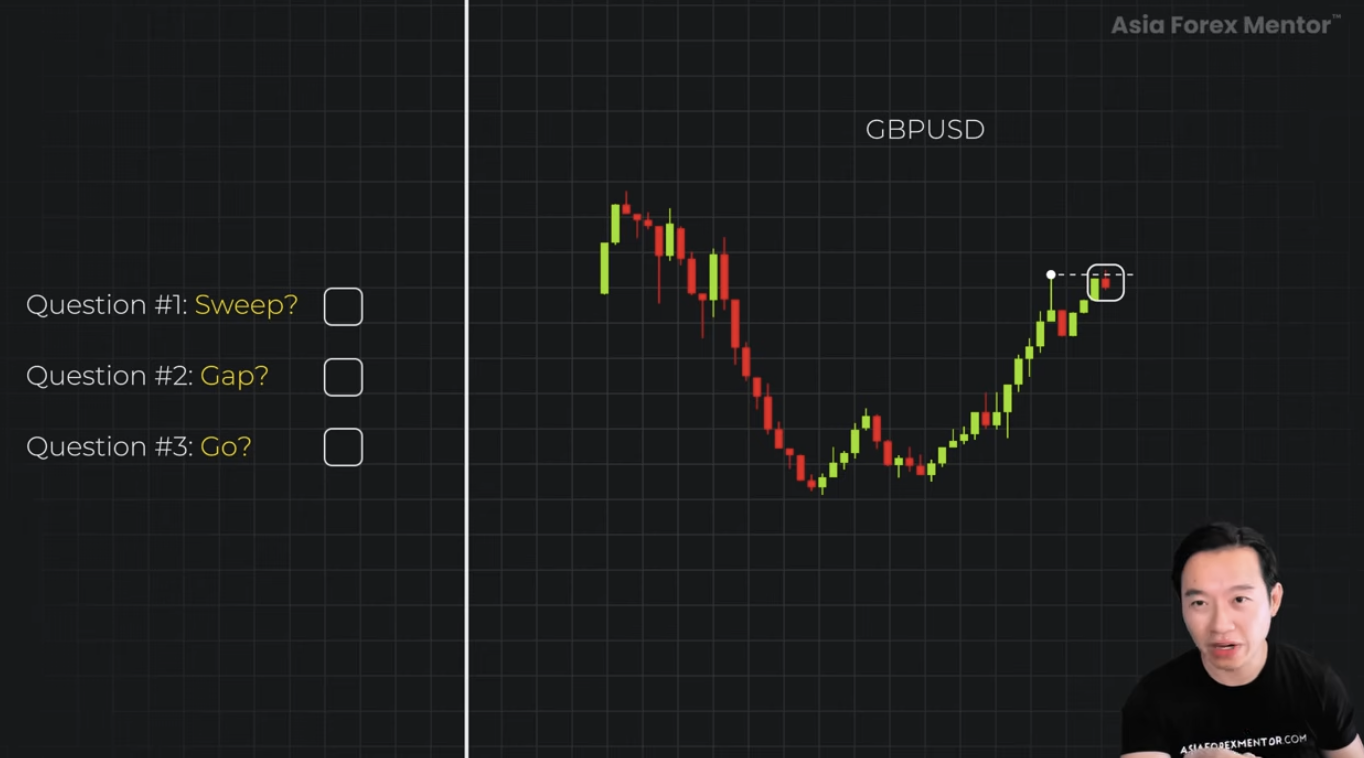
Question two. The gap. Price snaps back and yes, there is a small move down. But there is no clean gap. No fair value gap left behind. Price just moves sideways and lower. The reversal had no force.
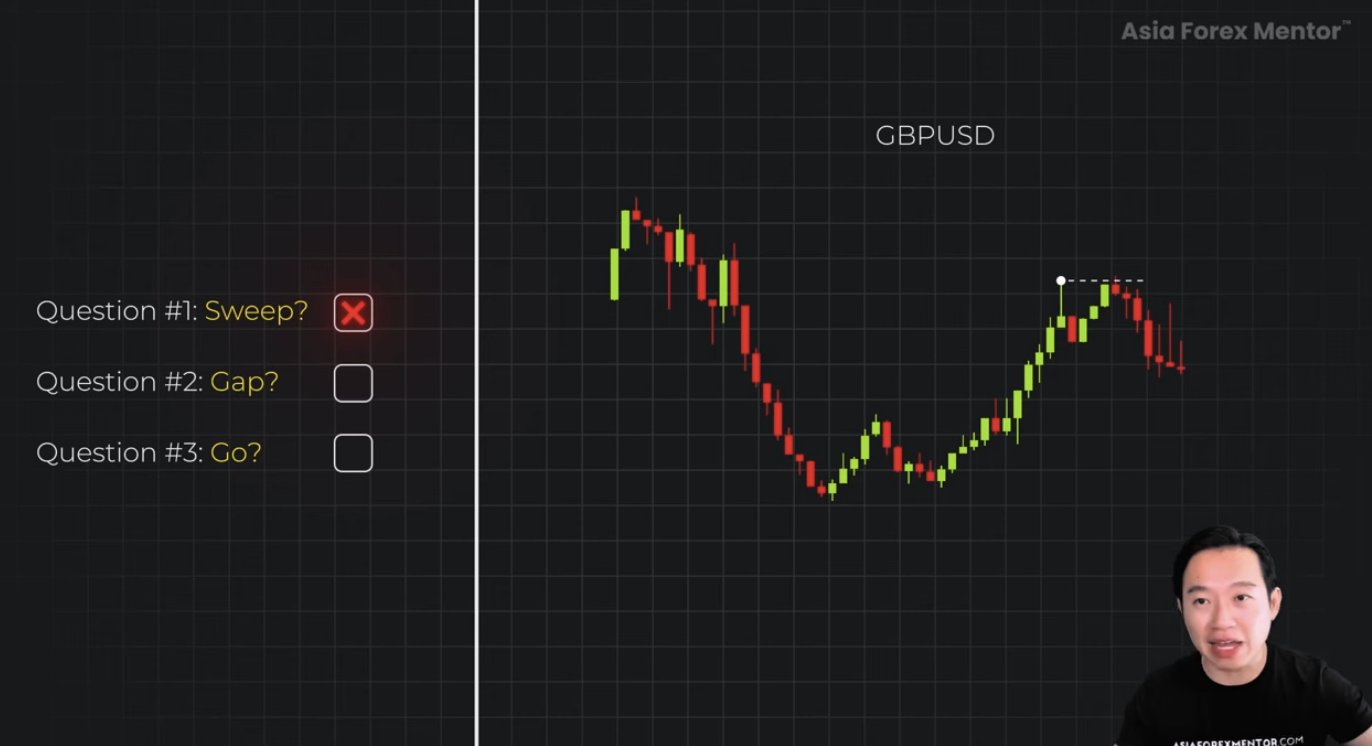
Two of the three are failing.
Even if the trigger fires, even if price pulls back perfectly, you still pass on this trade. A sweep that is not real and a reversal that has no gap is exactly the setup that took $10,000 down to $410.
Sweep. Gap. Go. If the first two are not clean, there is no trade. Close the platform and wait for the next one that has all three.
Also Read: Forex Trading Strategies That Work: A Complete Guide to Consistent Profits
What It All Comes Down To
Number one. The sweep. Price has to take out real liquidity — a level the market actually watches. Not a random poke.
Number two. The gap. The reversal has to leave a fair value gap behind. That is proof it moved with force, not a slow drift.
Number three. Go. Enter on the pullback into that gap. Not on the sweep. Stop loss just beyond the sweep. Take profit at the opposing liquidity.
One honest thing before wrapping up. This will not win every trade. Nothing does. The window will still hand you setups that look perfect and then fail. That is the point of the three checks. They filter out the traps the raw window cannot see.
Out of everything AFM Research Lab tested across 1,200 trades, this was the only version with a real edge. Do not judge it on one trade. Give it enough trades for the edge to show up.
Frequently Asked Questions
What Is The Silver Bullet Trading Strategy?
The silver bullet trading strategy is a time-based forex setup built around a specific one-hour window each session. During that hour, traders watch for price to sweep a prior high or low, then reverse in the opposite direction. The textbook version treats the sweep alone as the entry signal. AFM Research Lab testing showed that version does not work. The version that produced a real edge requires three conditions inside the window: a sweep of a level the market watches, a fair value gap left behind by the reversal, and entry on the pullback into that gap.
Why Does The Silver Bullet Strategy Keep Failing?
The silver bullet strategy fails because the one-hour window cannot tell the difference between a genuine reversal and a liquidity grab on the way through. The sweep fires either way. Traders take the signal, get run over by price continuing in the sweep direction, and repeat the same mistake in the next session. AFM Research Lab tested 1,200 trades on the textbook version and produced a 91.2 percent drawdown. The window tells you when to look. It does not tell you whether the trade is real.
Does The ICT Silver Bullet Strategy Actually Work?
The ICT silver bullet strategy does not work in its textbook form. AFM Research Lab tested it across 1,200 trades and produced a 91.2 percent drawdown, turning a $10,000 sample account into $410. The one-hour time window fires signals regardless of whether the sweep is a real reversal or just liquidity being taken on the way through. The version that produced a real edge in the same test window filters the raw signal by three conditions: a real liquidity sweep, a fair value gap on the reversal, and a pullback entry into that gap.
What Time Is The Silver Bullet Window?
The silver bullet is a specific one-hour window that occurs the same time every session. The window itself is not the strategy. It only tells traders when to watch the market. AFM Research Lab testing showed that entering every sweep inside the window produces near-total account drawdown. The trades worth taking inside the window are the ones that also pass a real level sweep, a fair value gap on the reversal, and a pullback trigger into the gap.
What Is A Fair Value Gap In Silver Bullet Trading?
A fair value gap is a small pocket where price moves so quickly that the market skips over a price range entirely. In silver bullet trading, the gap is proof that the reversal off the sweep moved with force, not as a slow drift. Real institutional activity leaves gaps behind. A reversal that oozes back sideways with no gap is not a genuine rejection. The gap is the difference between a valid silver bullet setup and one that looks the same on the surface but fails.