Learn To Trade Forex • Best Forex Trading Course • AsiaForexMentor

Tilt in Trading – The Hidden Trading Psychology That Can Destroy Your Trading Career

Written by

Ezekiel Chew

Updated on

January 29, 2024

i
Its a default text

Tilt in Trading – The Hidden Trading Psychology That Can Destroy Your Trading Career

Written by:

Last updated on:

January 29, 2024

tilt

Many people have heard about poker tilt and its adverse effects. If you can't control it, tilt in trading can be even more damaging, and most of the time, it takes traders quite a while to recover financially and psychologically from its effects.

Tilt in Trading hurts the most active traders who complete many trades daily. It occurs because a trader has the potential to enter the market at any time and needs some time to control their emotions before they show themselves in full force.

Also Read: Day Trading Options: A Risky Yet Profitable Strategy

Contents

What Is Trading Tilt?

Trading tilt occurs when a trader acts in a state of emotionally solid agitation and either cannot or does not want to control his actions due to being entirely engulfed by emotions. Tilt is commonly thought to be an active process in which a trader is forced to execute ill-thought-out or hurried trades.
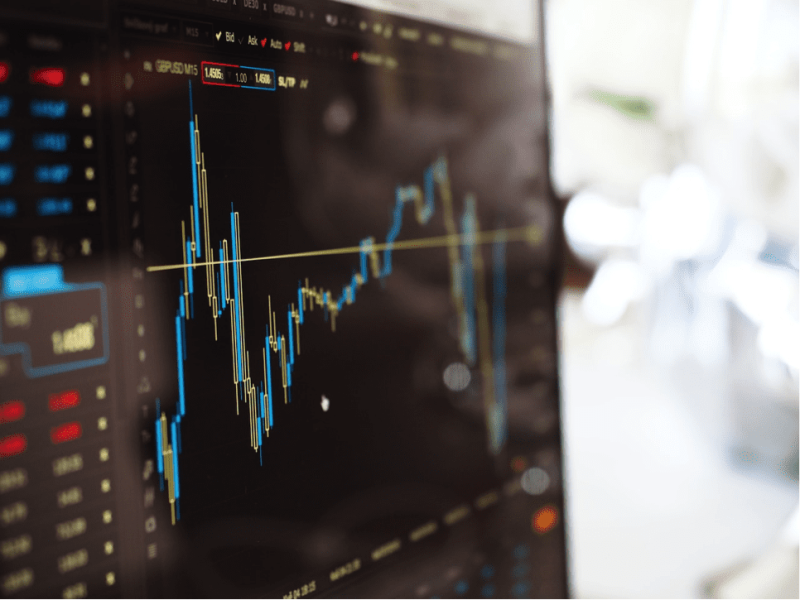
trading tilt
pexels.com

There is also a passive type of trading tilt, which occurs when emotions keep a trader from executing any trade. In this article, we will discuss such tilt, which represents a complete lack of control over actions and, as a result, can have disastrous consequences.

If you haven't been in this situation, consider your most recent disagreement with a close friend. Most people, at least once, said something out of rage that they didn't mean and would prefer to eat, but they couldn't control themselves because strong emotions gripped them.

Back to Top

How to Avoid Tilt In Trading

Many people are terrified of tilt when we discuss trading on the financial markets. Financial losses may result, and there may even be varying degrees of depression. Both novice and seasoned traders are susceptible to it. Therefore, the crucial query is how to avoid it and what to do if you have already been caught in the tilt trap.

Here are three realistic measures that traders can take to prevent going “tilt”.

Prepare for Losses

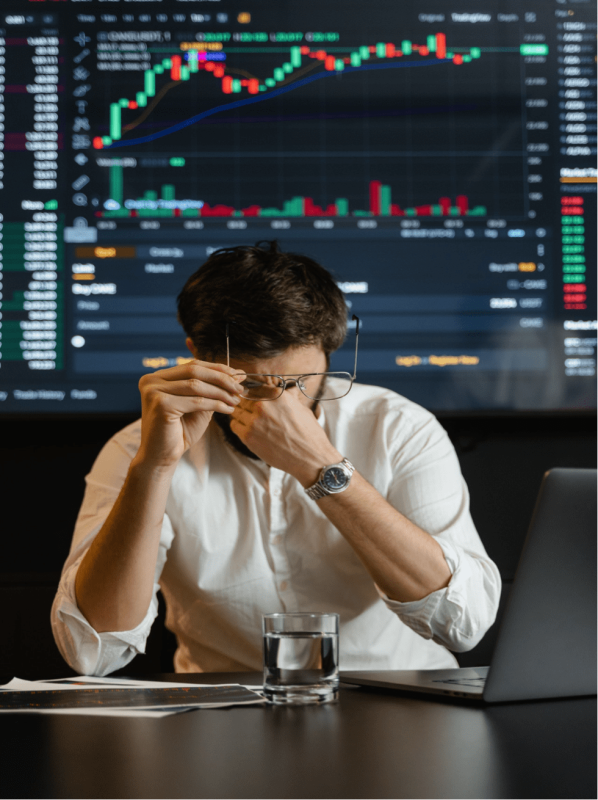
Big expectations result in big disappointments. Every trade should be accompanied by a clear understanding of what would prove you wrong and how much money you're prepared to lose. Losses are more likely to cause mental disruptions when they surprise us and grow too large. Your aim should be to lose smartly and appropriately. You might be surprised and frustrated if all you think about is how much money you want or need.
trading hilt 2
pexels.com

 Take Rest Periods

After significant gains and losses, it's simple for P/L(Profit and failure) to enter our minds. Always take a break after a considerable trade to collect your thoughts and evaluate the opportunity set. Resetting after significant victories and painful losses is equally important.

Both can result in making trades for incorrect motives. Quick meditation exercises can be very beneficial for improving calm and concentration.

Maintain Consistent, Moderate Trading Volume

Extraordinary profits, short-term gains, or abnormal losses may cause emotional fluctuations. Being consistently profitable will enable you to expand while keeping up your consistency. If you need to be successful, that puts undue pressure on your performance and causes emotional signs. Drama is a diversion. No drama in your trading is what you want.
trading hilt 3
pexels.com

Self-awareness provides the biggest trading advantage of all. However, we all experience frustrations during adverse trading conditions. The objective is to be emotionally conscious enough to know when to step away from the screens rather than to trade without feeling anything.

Relief from Trading Tilt

The best advice for those who have experienced the tilt state—which is the majority of many traders—is that maintaining a watchful relationship with your feelings and actions can help you avoid its adverse effects. Once caught in a tilt can be challenging to escape, so knowing how to recognize and create a mechanism to stop its effects can be extremely helpful. It might involve taking a break from using the computer, doing breathing exercises, engaging in brief, intense physical activity, or imposing strict daily weight or stop-loss limits.
trading hilt 4
pexels.com

In actuality, it is better to try to steer clear of tilt altogether. Assuming that you can identify your tilt sensitivity at a particular time, place the trading scenario variant that might act as its trigger, be alert if the trigger is activated, and track the emotional indicators of the tilt state approach.

When you are prepared, avoiding tilt is much simpler than attempting to get out of it. You should read the article about the strong emotional responses of a trader.

Also Read: Investor Emotions And How It Affects The Stock Market

Always have a strategy in place

For each purchase, a trader's entry, exit, and cash management criteria are laid out in a set of rules known as a trading plan.

Today's technology makes it simple to test trading ideas without risking actual funds. Backtesting is the process that enables you to test the viability of your trading idea using historical data. A strategy can be applied in actual trading after development, and backtesting yields favorable results.

Staying on track is crucial in this situation. Even if it is profitable, making trades outside the trading plan is considered a poor strategy.

Examine Market Factors: Fundamental and Technical

Consumer behavior and economic trends are market factors that can impact a specific sales market. It can include any factors or occurrences affecting how much money a company makes.

These factors can be general, like a nation's economy, or more specific, like the demographics of a particular area. Market factors can also change over time, particularly as a location's or a consumer base's demographics change in response to outside events.
trading hilt 5
pexels.com

Even so, the cause of tilt emergence is not always in the trader himself. Market movements can have a significant impact on him as well. A sudden stop-out at the moment of a sharp increase in volatility may cause a sense of helplessness and a ‘fight or flight reaction associated with an adrenaline rush in a dangerous situation.

One of the most severe risks for a trader is losing the ability to act rationally during periods of a sharp increase in market volatility. The news frequently causes erratic behavior and increased market volatility, resulting in tilt and costly losses.

Become a Risk Manager

Without sound risk management, implementing trading strategies and improving your trading methodology is useless. The goal of risk management is to limit your exposure. There are three main ways that exposure occurs.

The allocation of shares would come to mind first (IE: position size). Second, due to the length of the holding period, your position is vulnerable to price volatility and unforeseen circumstances. Thirdly, the time you spend in front of the screens tracking every price adjustment and tick.

Be Psychologically Prepared for the Trading Day

It's critical to develop emotional management skills if you want to become a better trader. The ability to manage emotions can improve overall trading performance and mental health. In the long run, effective emotion management can result in high-caliber work.

trading hilt 6
pexels.com

A collection of resources based on the relationships a business has built over time with its employees' emotions is known as emotional capital (EC). A good EC can result in increased productivity and improved decision-making during complex executions or unexpected market turns.

Trading success and efficiency depend not only on sound strategy but also on a steady frame of mind. Successful traders have exceptional execution and emotional control skills. You can approach your forex trading ideas with diligence and positivity by taking control of your mental attitude. Take advantage of these tried-and-true techniques to effectively manage emotions in a volatile market.

Back to Top

Bottom Line

A trading tilt can happen when the trader is acting with strong emotions. Tilting has been described as a logical activity where a trader can be forced to perform poorly-planned or hasty trades. It also occurs as a passive tilt when emotion keeps a trader from making trades. The above article discusses such tilt, which implies total omission and can cause severe damage.

A trader should always aim for long-term financial success. Few wins and losses shouldn't have an impact on his mental health. They ought to always consider the big picture. They ought to adopt a pragmatic strategy rather than a theoretical one.

Back to Top


About Ezekiel Chew​

Ezekiel Chew, founder and head of training at Asia Forex Mentor, is a renowned forex expert, frequently invited to speak at major industry events. Known for his deep market insights, Ezekiel is one of the top traders committed to supporting the trading community. Making six figures per trade, he also trains traders working in banks, fund management, and prop trading firms.

Best Forex Trading Courses and Formations In New Zealand - AFM

Best Forex Trading Courses and Formations In New Zealand

Finding a quality forex trading course in New Zealand can make the difference between profitable trading and costly mistakes. Whether you’re new to currency markets or looking to sharpen your strategy, the right training program provides structured learning, risk management techniques, and proven methods to trade forex, stocks, and crypto

Read More
Best Forex Trading Courses and Formations in Australia - AFM

Best Forex Trading Courses and Formations in Australia

Finding a quality forex trading course in Australia can make the difference between losing money and building a sustainable trading income. Whether you’re starting fresh or looking to refine your strategies, learning professional trading methodologies with experienced mentors helps you avoid common mistakes that cost most retail traders their capital.

Read More
Best Forex Trading Courses and Formations In Hong Kong - AFM

Best Forex Trading Courses and Formations in Hong Kong

Finding a quality forex trading course in Hong Kong can transform your financial future, giving you the skills to trade profitably in one of the world’s leading financial hubs. Whether you’re a complete beginner or an experienced trader looking to refine your strategy, choosing the right program makes all the

Read More

Forex Trade Update After a 950% Crazy Growth Month

  What if one forex trade could change the way anyone sees the foreign exchange market? Many retail traders open a forex trading account with big expectations, yet face early setbacks. The constant movement of currency prices in the major currency pairs, like EUR USD or the Japanese yen, creates

Read More

Crypto Tax Cut in Japan Could Spark a New Trading Wave

Crypto traders in Japan just got a fresh reason to review their portfolios and call their accountant. Regulators are now exploring a major change in how crypto is treated, and that could transform trading. The shift could affect everyone holding digital coins in the country, especially those watching for clearer

Read More

What Just Sent Gold Prices Racing Again?

Gold price jumped strongly before the government shutdown, and even though it ended, the rally is not fading yet today. Analysts say strong investment demand mixed with steady uncertainty could keep pushing gold higher for the next several months ahead. Gold reached record levels this year, climbing to $4,360 on

Read More

Tilt in Trading – The Hidden Trading Psychology That Can Destroy Your Trading Career

4.0
Overall Trust Index

Written by:

Updated:

January 29, 2024

tilt

Many people have heard about poker tilt and its adverse effects. If you can't control it, tilt in trading can be even more damaging, and most of the time, it takes traders quite a while to recover financially and psychologically from its effects.

Tilt in Trading hurts the most active traders who complete many trades daily. It occurs because a trader has the potential to enter the market at any time and needs some time to control their emotions before they show themselves in full force.

Also Read: Day Trading Options: A Risky Yet Profitable Strategy

Contents

What Is Trading Tilt?

Trading tilt occurs when a trader acts in a state of emotionally solid agitation and either cannot or does not want to control his actions due to being entirely engulfed by emotions. Tilt is commonly thought to be an active process in which a trader is forced to execute ill-thought-out or hurried trades.

trading tilt
pexels.com

There is also a passive type of trading tilt, which occurs when emotions keep a trader from executing any trade. In this article, we will discuss such tilt, which represents a complete lack of control over actions and, as a result, can have disastrous consequences.

If you haven't been in this situation, consider your most recent disagreement with a close friend. Most people, at least once, said something out of rage that they didn't mean and would prefer to eat, but they couldn't control themselves because strong emotions gripped them.

Back to Top

How to Avoid Tilt In Trading

Many people are terrified of tilt when we discuss trading on the financial markets. Financial losses may result, and there may even be varying degrees of depression. Both novice and seasoned traders are susceptible to it. Therefore, the crucial query is how to avoid it and what to do if you have already been caught in the tilt trap.

Here are three realistic measures that traders can take to prevent going "tilt".

Prepare for Losses

Big expectations result in big disappointments. Every trade should be accompanied by a clear understanding of what would prove you wrong and how much money you're prepared to lose. Losses are more likely to cause mental disruptions when they surprise us and grow too large. Your aim should be to lose smartly and appropriately. You might be surprised and frustrated if all you think about is how much money you want or need.

trading hilt 2
pexels.com

 Take Rest Periods

After significant gains and losses, it's simple for P/L(Profit and failure) to enter our minds. Always take a break after a considerable trade to collect your thoughts and evaluate the opportunity set. Resetting after significant victories and painful losses is equally important.

Both can result in making trades for incorrect motives. Quick meditation exercises can be very beneficial for improving calm and concentration.

Maintain Consistent, Moderate Trading Volume

Extraordinary profits, short-term gains, or abnormal losses may cause emotional fluctuations. Being consistently profitable will enable you to expand while keeping up your consistency. If you need to be successful, that puts undue pressure on your performance and causes emotional signs. Drama is a diversion. No drama in your trading is what you want.

trading hilt 3
pexels.com

Self-awareness provides the biggest trading advantage of all. However, we all experience frustrations during adverse trading conditions. The objective is to be emotionally conscious enough to know when to step away from the screens rather than to trade without feeling anything.

Relief from Trading Tilt

The best advice for those who have experienced the tilt state—which is the majority of many traders—is that maintaining a watchful relationship with your feelings and actions can help you avoid its adverse effects. Once caught in a tilt can be challenging to escape, so knowing how to recognize and create a mechanism to stop its effects can be extremely helpful. It might involve taking a break from using the computer, doing breathing exercises, engaging in brief, intense physical activity, or imposing strict daily weight or stop-loss limits.

trading hilt 4
pexels.com

In actuality, it is better to try to steer clear of tilt altogether. Assuming that you can identify your tilt sensitivity at a particular time, place the trading scenario variant that might act as its trigger, be alert if the trigger is activated, and track the emotional indicators of the tilt state approach.

When you are prepared, avoiding tilt is much simpler than attempting to get out of it. You should read the article about the strong emotional responses of a trader.

Also Read: Investor Emotions And How It Affects The Stock Market

Always have a strategy in place

For each purchase, a trader's entry, exit, and cash management criteria are laid out in a set of rules known as a trading plan.

Today's technology makes it simple to test trading ideas without risking actual funds. Backtesting is the process that enables you to test the viability of your trading idea using historical data. A strategy can be applied in actual trading after development, and backtesting yields favorable results.

Staying on track is crucial in this situation. Even if it is profitable, making trades outside the trading plan is considered a poor strategy.

Examine Market Factors: Fundamental and Technical

Consumer behavior and economic trends are market factors that can impact a specific sales market. It can include any factors or occurrences affecting how much money a company makes.

These factors can be general, like a nation's economy, or more specific, like the demographics of a particular area. Market factors can also change over time, particularly as a location's or a consumer base's demographics change in response to outside events.

trading hilt 5
pexels.com

Even so, the cause of tilt emergence is not always in the trader himself. Market movements can have a significant impact on him as well. A sudden stop-out at the moment of a sharp increase in volatility may cause a sense of helplessness and a 'fight or flight reaction associated with an adrenaline rush in a dangerous situation.

One of the most severe risks for a trader is losing the ability to act rationally during periods of a sharp increase in market volatility. The news frequently causes erratic behavior and increased market volatility, resulting in tilt and costly losses.

Become a Risk Manager

Without sound risk management, implementing trading strategies and improving your trading methodology is useless. The goal of risk management is to limit your exposure. There are three main ways that exposure occurs.

The allocation of shares would come to mind first (IE: position size). Second, due to the length of the holding period, your position is vulnerable to price volatility and unforeseen circumstances. Thirdly, the time you spend in front of the screens tracking every price adjustment and tick.

Be Psychologically Prepared for the Trading Day

It's critical to develop emotional management skills if you want to become a better trader. The ability to manage emotions can improve overall trading performance and mental health. In the long run, effective emotion management can result in high-caliber work.

trading hilt 6
pexels.com

A collection of resources based on the relationships a business has built over time with its employees' emotions is known as emotional capital (EC). A good EC can result in increased productivity and improved decision-making during complex executions or unexpected market turns.

Trading success and efficiency depend not only on sound strategy but also on a steady frame of mind. Successful traders have exceptional execution and emotional control skills. You can approach your forex trading ideas with diligence and positivity by taking control of your mental attitude. Take advantage of these tried-and-true techniques to effectively manage emotions in a volatile market.

Back to Top

Bottom Line

A trading tilt can happen when the trader is acting with strong emotions. Tilting has been described as a logical activity where a trader can be forced to perform poorly-planned or hasty trades. It also occurs as a passive tilt when emotion keeps a trader from making trades. The above article discusses such tilt, which implies total omission and can cause severe damage.

A trader should always aim for long-term financial success. Few wins and losses shouldn't have an impact on his mental health. They ought to always consider the big picture. They ought to adopt a pragmatic strategy rather than a theoretical one.

Back to Top


ezekiel chew asiaforexmentor

About Ezekiel Chew

Ezekiel Chew, founder and head of training at Asia Forex Mentor, is a renowned forex expert, frequently invited to speak at major industry events. Known for his deep market insights, Ezekiel is one of the top traders committed to supporting the trading community. Making six figures per trade, he also trains traders working in banks, fund management, and prop trading firms.

RELATED ARTICLES

I consent to receiving emails and/or text message reminders for this event.

REGISTER FOR THE MASTERCLASS!